 Seeking LED
What Is the Lifespan of LED Flood Lights?
92What is the lifespan of LED flood lights in real outdoor use? Discover lifespan factors, maintenance tips, and durability insights from SEEKINGLED lighting experts.
View detailsSearch the whole station
how many amps for high bay lights in warehouse depends mainly on the fixture wattage and supply voltage. A 150W high bay draws about 1.25A at 120V, 0.68A at 220V, and 0.63A at 240V. Actual input current should always be checked on the fixture datasheet.
The quickest calculation is:
Amps = Watts ÷ Volts
So, a 200W LED high bay connected to a 240V supply has a theoretical current of:
200W ÷ 240V = 0.83A
At 120V, the same 200W fixture would require about 1.67A. At 277V, it would be about 0.72A.
| High Bay Wattage | 120V | 208V | 220V | 240V | 277V |
|---|---|---|---|---|---|
| 100W | 0.83A | 0.48A | 0.45A | 0.42A | 0.36A |
| 150W | 1.25A | 0.72A | 0.68A | 0.63A | 0.54A |
| 200W | 1.67A | 0.96A | 0.91A | 0.83A | 0.72A |
| 240W | 2.00A | 1.15A | 1.09A | 1.00A | 0.87A |
These are calculated values, not guaranteed nameplate readings. LED drivers have their own efficiency and power-factor characteristics. For an actual warehouse installation, I use the manufacturer’s input current, voltage range, power factor, and driver specifications rather than sizing a circuit from wattage alone.
SEEKINGLED‘s HBD UFO high bay, for example, is available from 100W to 240W and uses a 100–277V AC, 50/60Hz input. The published output reaches 16,000–38,400 lumens depending on wattage.
This is easy to overlook when comparing warehouse lighting quotations.
A 200W fixture at 120V calculates at 1.67A. The same 200W load at 277V calculates at only 0.72A. That lower operating current can be important when a warehouse has a large number of fixtures distributed across long branch circuits.
For example, 30 × 200W fixtures represent a connected lighting load of:
30 × 200W = 6,000W
At 240V, the theoretical current is 25A. At 277V, it is about 21.7A.
That difference becomes much more noticeable across a large warehouse rather than at a single fixture.
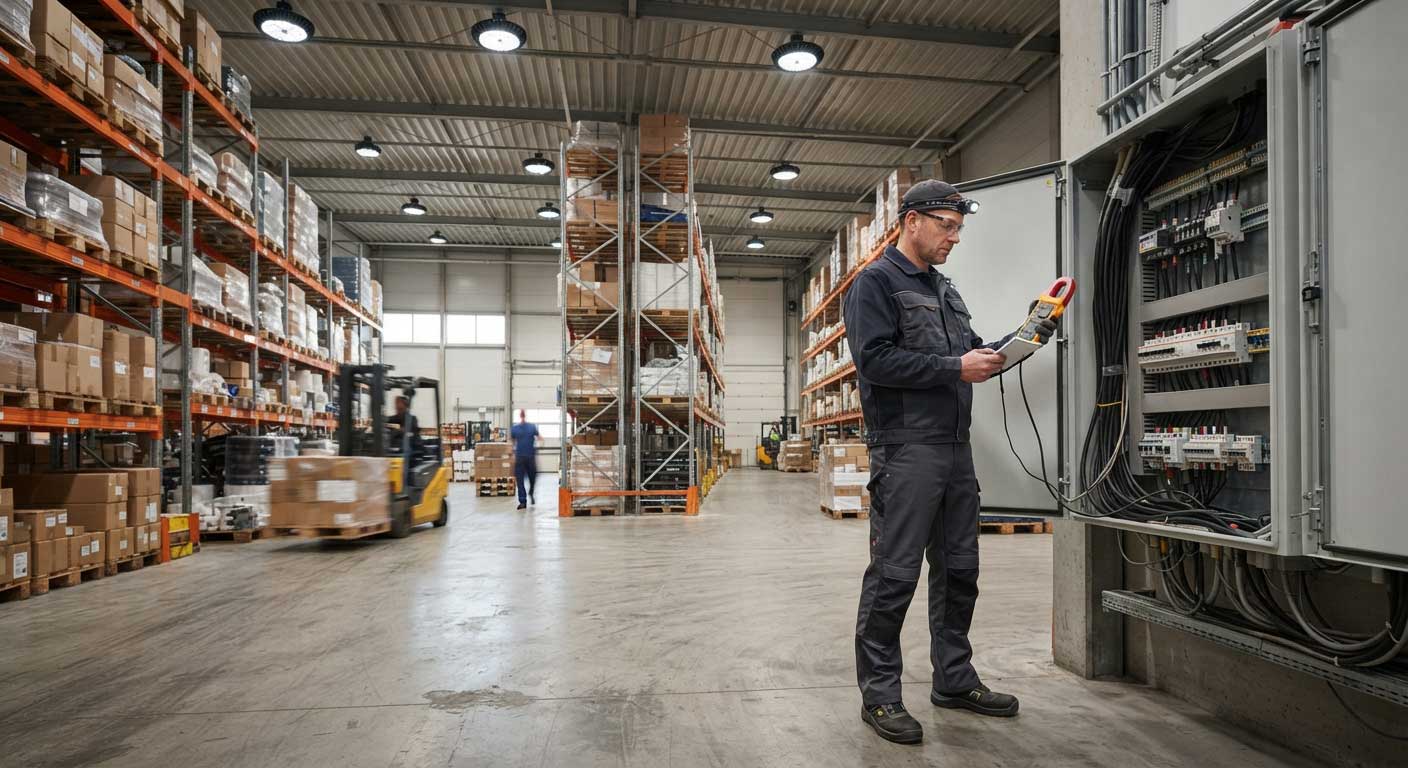
This question comes up frequently during warehouse lighting replacement projects, but there is no single answer such as “20 lights per circuit.”
The number depends on:
Consider 20 × 200W high bays on a 240V system:
Total connected load = 4,000W
4,000W ÷ 240V = 16.67A
That 16.67A figure is useful for estimating the load, but it does not mean a 20A circuit is automatically appropriate.
For installations governed by the NEC, continuous loads are an important part of circuit sizing. NFPA documentation describes the 125% treatment for continuous loads when determining minimum conductor ampacity and overcurrent protection requirements. The final design should therefore be completed against the applicable NEC edition and local authority requirements.
For a quick comparison, a 200W high bay works out approximately as follows:
The calculation is useful during the quotation stage. Once a product has been selected, however, the manufacturer’s electrical specifications should take priority.
That distinction is especially important with LED high bays because two fixtures with the same nominal wattage can have different drivers, power factors and measured input currents.
No. Amperage tells you about electrical demand; it does not tell you whether the warehouse is adequately illuminated.
The U.S. Department of Energy’s Federal Energy Management Program lists 175 lm/W as the minimum luminous-efficacy requirement for its designated industrial high-bay luminaires, with a minimum light output of 10,000 lumens.
That makes lumens per watt a useful efficiency metric when comparing fixtures. But warehouse design still needs to consider mounting height, aisle width, beam angle, rack arrangement, reflectance and the actual work being performed.
OSHA‘s construction illumination standard specifies 5 foot-candles for indoor warehouses under its Table D-3 requirements. OSHA also emphasizes that illumination should be appropriate to the work being performed.
In other words, replacing 250W fixtures with 150W fixtures simply because they draw fewer amps can backfire if the new optics do not put enough light onto the working plane.
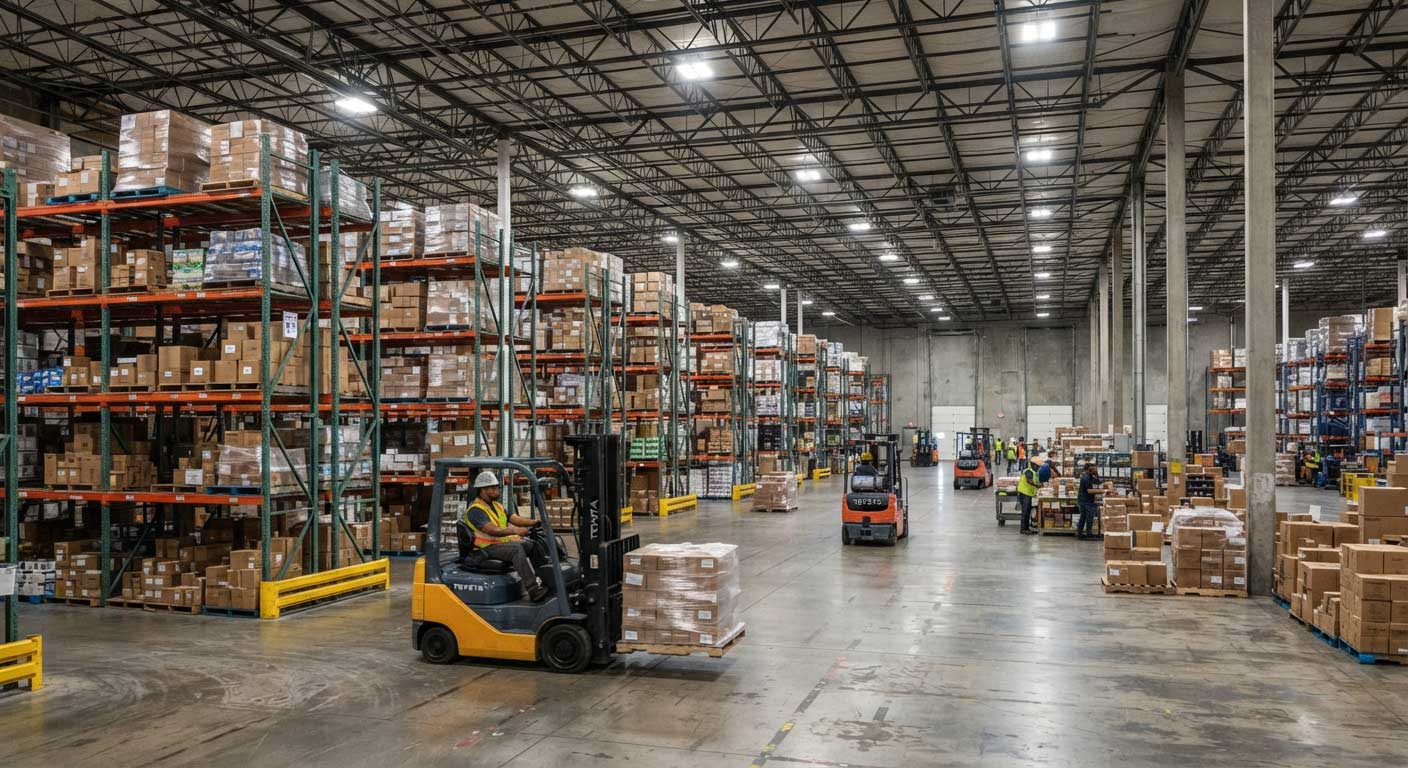
From a manufacturer’s perspective, the electrical figure printed beside the wattage is only one part of the specification. For a serious warehouse project, check these items together:
SEEKINGLED’s HBD high bay is specifically designed for applications including production workshops and large logistics warehouses, with IP66 and IK08 protection options published for the series.
A 100W high bay theoretically draws 0.83A at 120V, 0.42A at 240V, and 0.36A at 277V. Actual current depends on the LED driver.
A 150W fixture calculates to approximately 1.25A at 120V, 0.63A at 240V, and 0.54A at 277V.
A 200W high bay theoretically draws 1.67A at 120V, 0.83A at 240V, and 0.72A at 277V.
Yes. For the same wattage, increasing voltage reduces theoretical current. A 200W fixture is approximately 1.67A at 120V but 0.72A at 277V.
Use watts divided by volts as a preliminary estimate. For final circuit design, use the fixture’s rated input current and account for applicable electrical-code requirements, continuous loads, conductor ampacity and overcurrent protection.
Modern LED high bays can provide substantially higher luminous efficacy than older technologies. DOE’s FEMP guidance sets a 175 lm/W minimum for designated industrial high-bay luminaires.
Multiply the number of fixtures by the manufacturer’s rated input wattage for the connected load, then evaluate voltage, input current, power factor, continuous-load requirements and the applicable electrical code.
how many amps for high bay lights in warehouse is determined by the fixture wattage and supply voltage, but the manufacturer’s rated input current is the figure to use for real electrical planning. A 200W high bay is roughly 0.83A at 240V and 0.72A at 277V before fixture-specific electrical characteristics are considered.
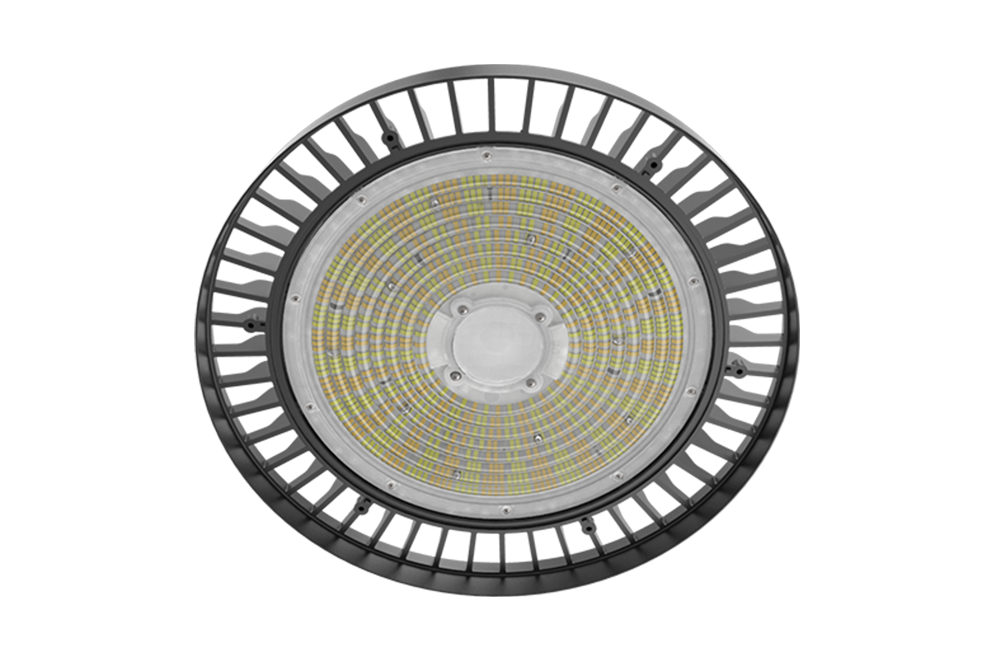
The SEEKING HBC-T Series high bay lights LED offer long-lasting performance for warehouses, production plants and logistics centers. Durable IP65 & IK08 housing, 60°/90° beam angles, up to 150 lm/W, and a lifespan beyond 100,000 hours. Ideal for airport halls, commercial storage, construction sites and large indoor spaces.
View details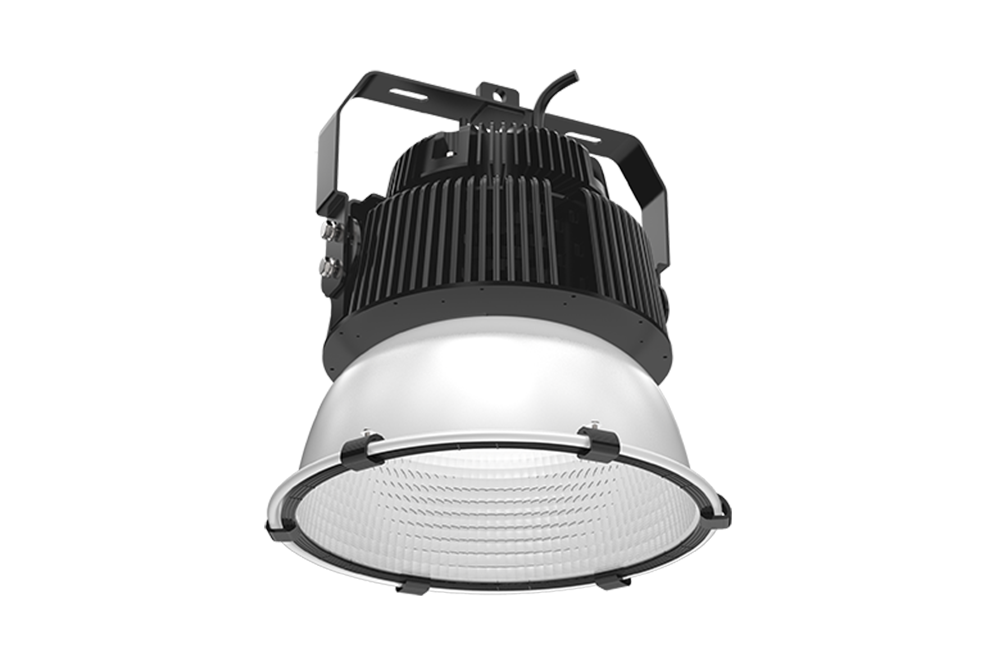
The SEEKING HBS Series LED UFO high bay light delivers 140 lm/W efficiency, IP65 protection and MEAN WELL drivers. A durable high-rise lighting solution for factories, warehouses and commercial halls.
View details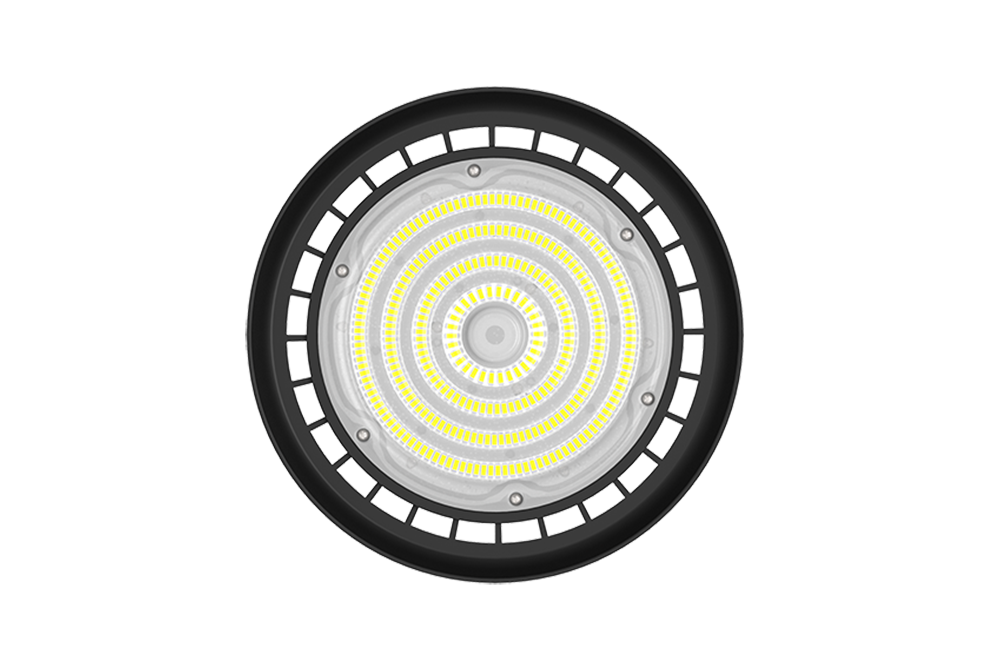
SEEKING HBD Series LED high bay lighting delivers 160 lm/W efficiency, IP66 protection, and long 100,000-hour lifespan. A durable UFO high bay solution for warehouses, workshops, logistics centers and commercial facilities.
View details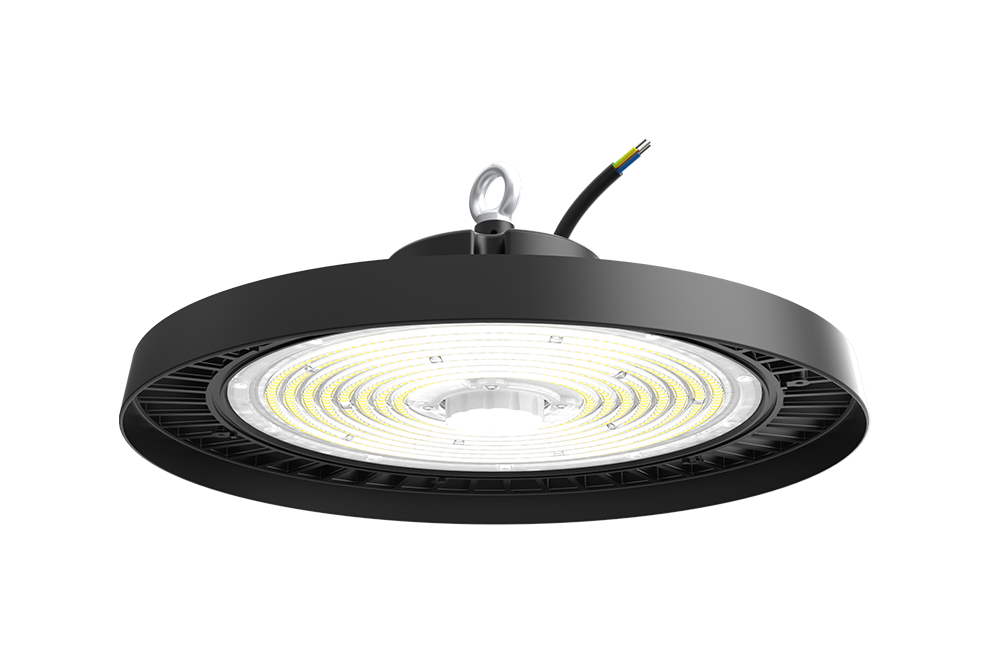
The SEEKING HBC Series high bay LED light fixtures combine strong efficiency, practical design and reliable SOSEN drivers. A durable UFO high bay lighting option for warehouses, workshops and wholesale projects.
View details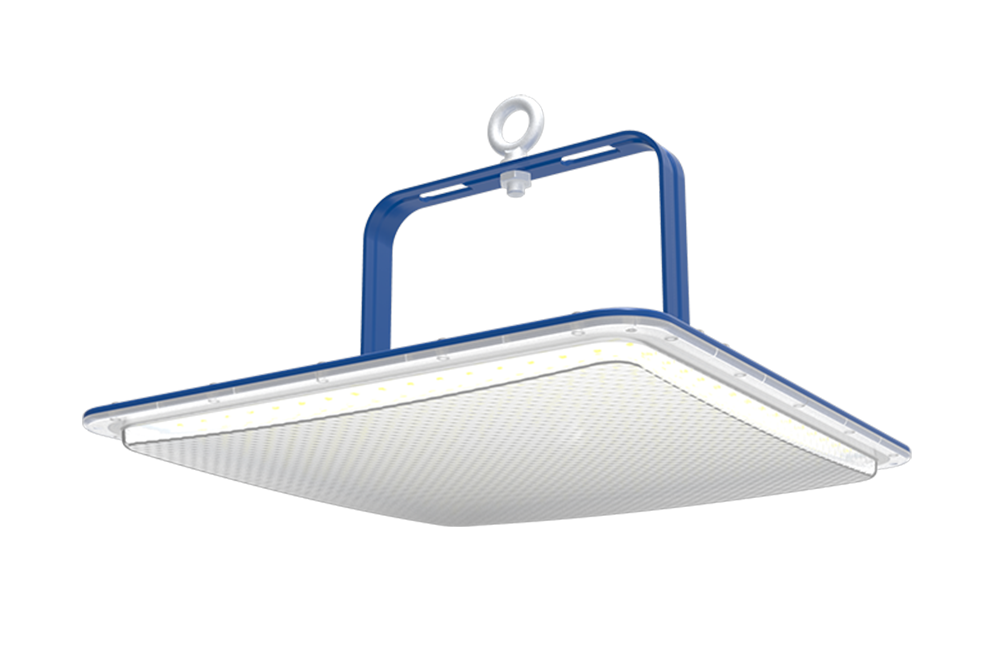
The SEEKING GSL Series high bay LED light delivers powerful, efficient lighting for industrial and commercial spaces. With IP65 protection, flexible mounting, and up to 140 lm/W performance, it’s ideal for warehouses, workshops, and retail areas.
View details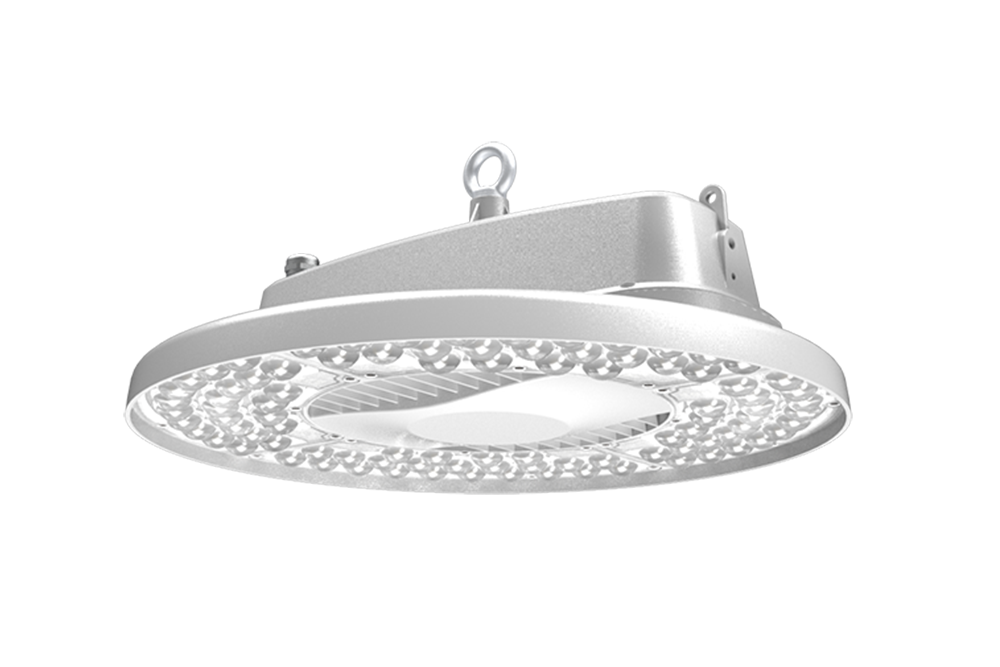
The SEEKING HB15(GLE) Series delivers advanced high bay led lighting with UGR 100,000 h) and reliable illumination for demanding commercial environments.
View details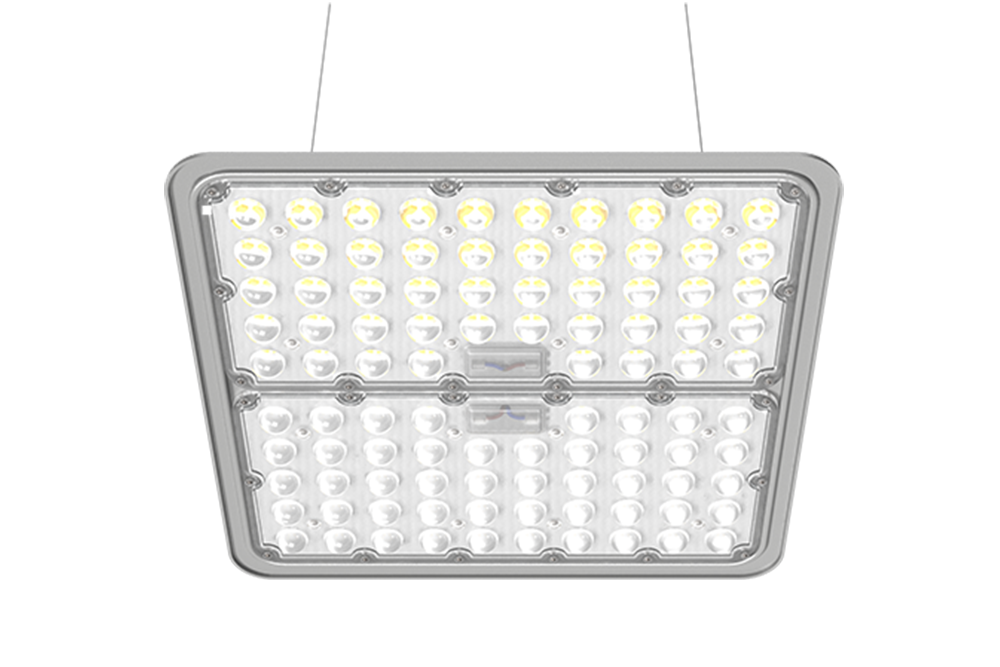
Discover the SEEKING HB13(GLK) Series ufo led high bay light, engineered for sports halls, airport lounges, showrooms, and large commercial spaces. UGR 100,000 h). Ideal for industrial ufo high bay lighting fixtures and commercial retrofits.
View details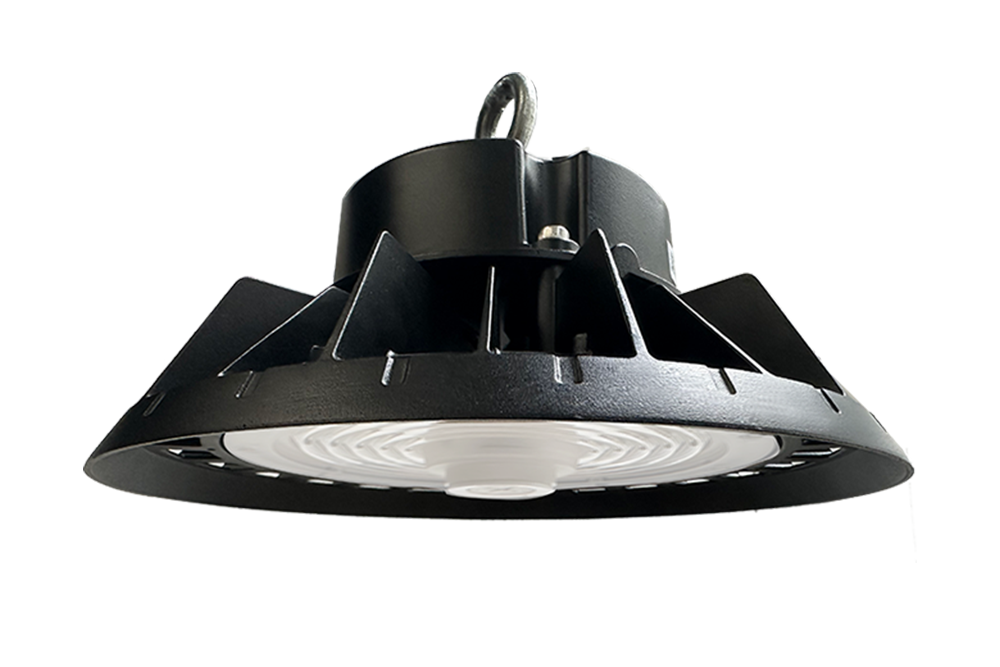
SEEKING HBF Series offers industrial LED high bay lighting with up to 200lm/W efficiency, SOSEN flicker-free driver, IP65 protection and optional microwave motion sensor. Ideal for warehouses, factories and commercial distribution projects.
View details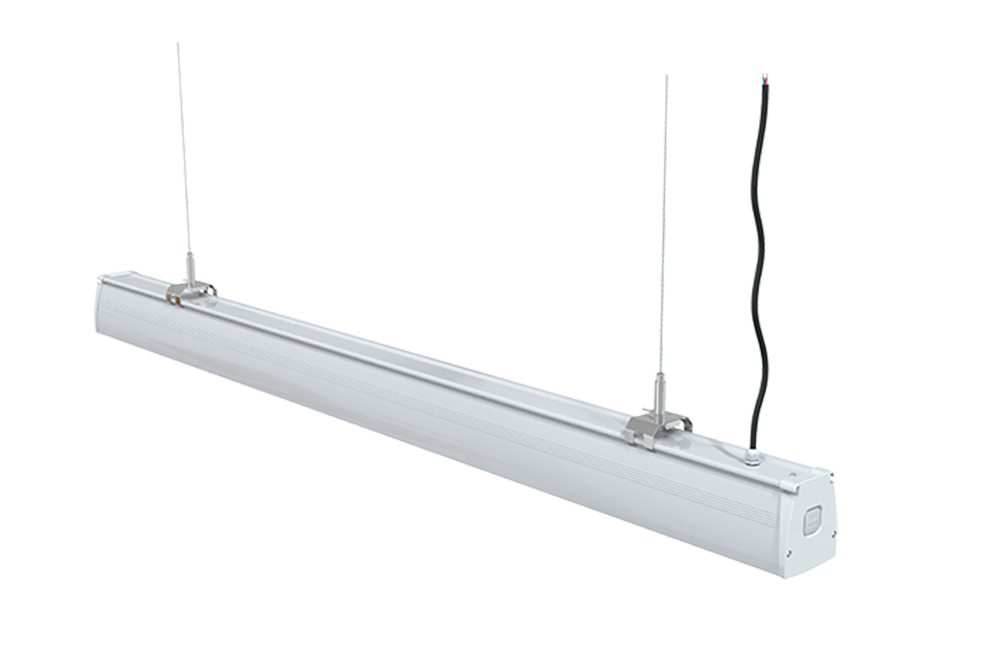
The HLD Series linear high bay LED lights from SEEKING deliver up to 200 lm/W with multiple beam angles and adjustable CCT options for warehouse, workshop, corridor and general industrial lighting.
View details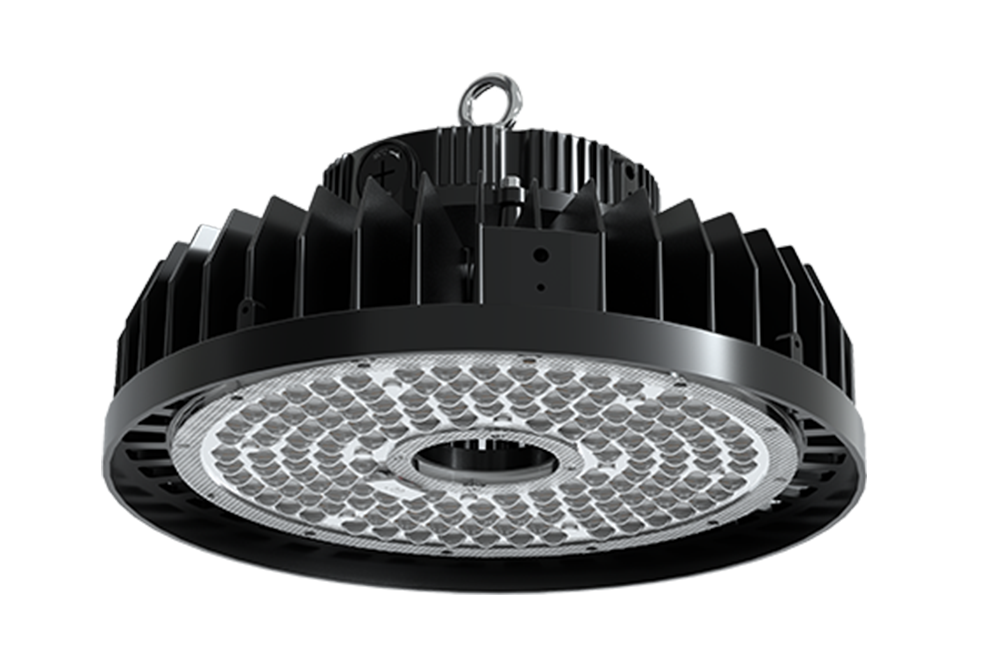
The HBK Series LED high bay light by SEEKING combines 500W power, 160–175 lm/W efficiency and IP65 durability for heavy-duty industrial lighting. Designed for warehouse, factory and production facilities with demanding ceiling heights.
View details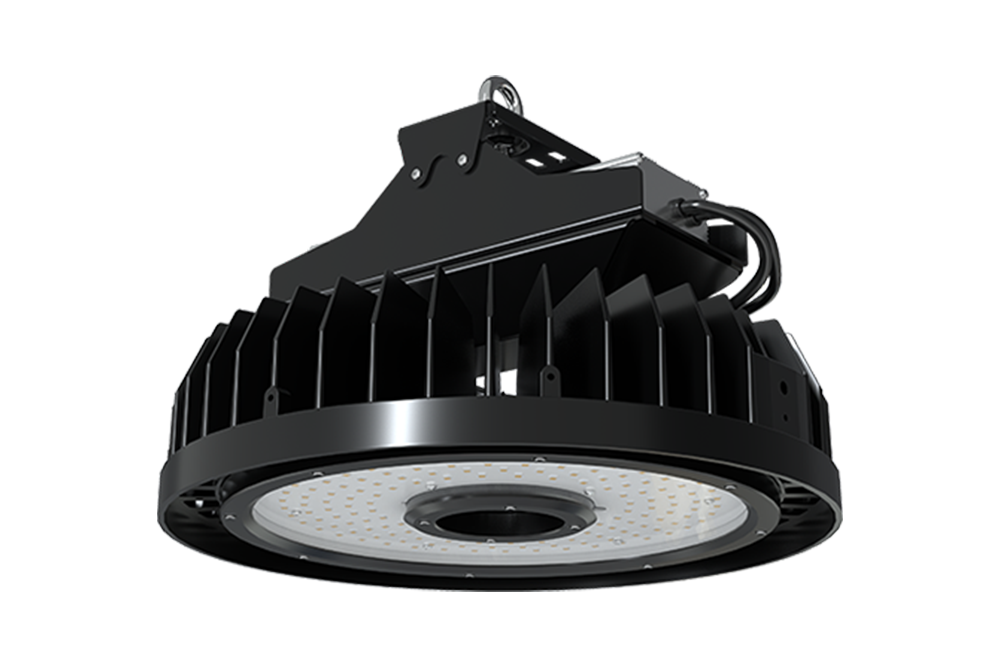
LED high bay lights engineered for extreme heat and low-temperature industrial sites. SEEKING HBK Ultua Series operates from -40°C to +70°C with Nichia LEDs and Inventronics driver.
View details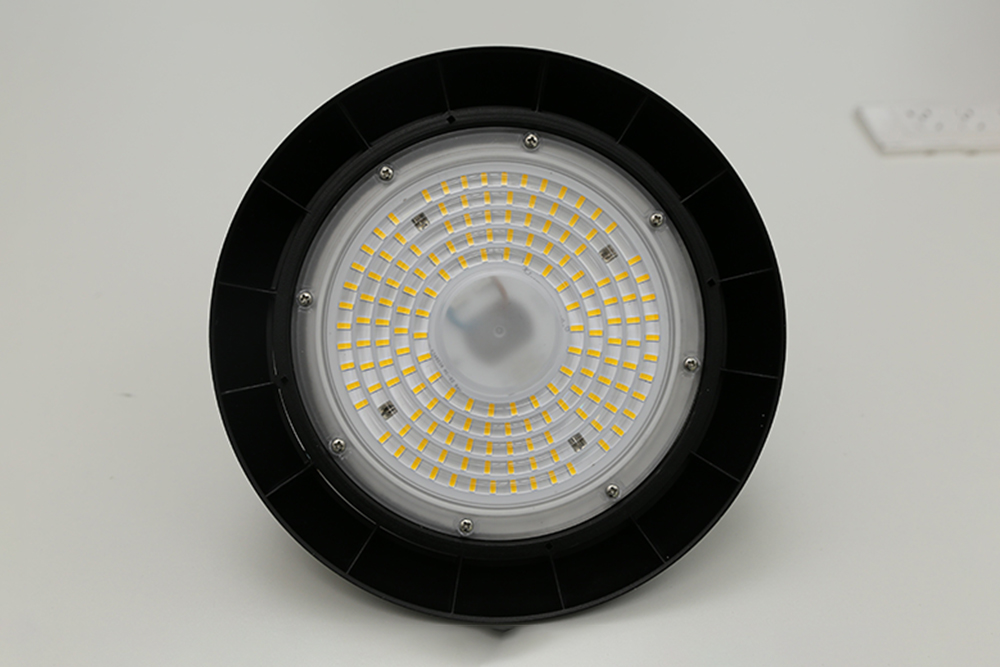
High bay LED lights built for warehouses, production plants and wholesale distribution. SEEKING HBI Series offers up to 200lm/W, IP65, IK08 and optional microwave motion sensor for energy saving operation.
View details
What is the lifespan of LED flood lights in real outdoor use? Discover lifespan factors, maintenance tips, and durability insights from SEEKINGLED lighting experts.
View details
ex proof lamp by SEEKINGLED delivers ATEX & IECEx certified flameproof protection for Zone 1 & 21 hazardous areas with high efficiency and 100,000h life.
View details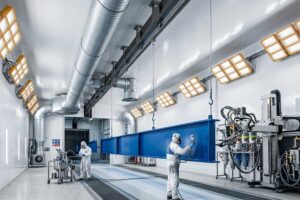
What Makes Explosion Proof Paint Booth Lighting Different? Learn how certified hazardous-area lighting protects paint booths, improves visibility, and reduces ignition risks.
View details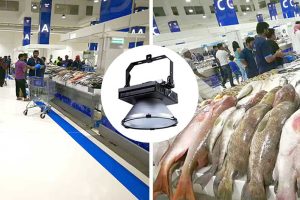
LED High Bay Lighting for Seafood Market was required in a Dubai seafood market where high floor lux was essential. This project record documents multiple Dialux calculations and on-site decision-making using XJ-HBL high bays.
View details