 Seeking LED
Sports Stadium LED Lighting Upgrade in France
360A football stadium in France upgraded its sports lighting usingSports Stadium LED Lighting to improve illuminance, uniformity, and player comfort.
View detailsSearch the whole station
how many lumens for backyard flood light? For most residential backyards, 700–1,300 lumens is a practical starting range for general security and visibility. Larger yards, higher mounting positions, or wider coverage may require 2,000–3,000+ lumens, while careful beam control can make a lower-output fixture work better.
The important detail is that a backyard does not need to be uniformly bright. A 1,300-lumen flood light aimed across a small patio can feel excessively harsh, while the same output mounted high above a large lawn may leave the far edge surprisingly dark.
At SEEKINGLED, we look at the fixture as a complete lighting system—not simply the number printed beside “lm.” Mounting height, beam spread, aiming angle, surface reflectance and the area that actually needs illumination all change the result.
For a typical backyard, these ranges are useful when selecting an LED flood light:
| Backyard application | Practical starting range | Main consideration |
|---|---|---|
| Small patio or seating area | 500–1,000 lm | Avoid excessive glare |
| Small backyard security area | 700–1,300 lm | Good general visibility |
| Medium backyard | 1,000–2,000 lm | Consider beam distribution |
| Large backyard | 2,000–3,000+ lm | Coverage becomes more important |
| Large property / high mounting | 3,000–4,000+ lm | Higher mounting needs more output |
Lowe’s currently recommends 700–1,300 lumens for basic security illumination around small yards and driveways, increasing to 2,000–3,000+ lumens for better coverage or larger areas.
That gives homeowners a useful baseline, but it is not a universal specification.
The Illuminating Engineering Society defines a floodlight as a projector intended to illuminate a scene or object substantially brighter than its surroundings, with beam spreads ranging from relatively narrow angles to more than 100°. In other words, lumens and distribution have to be considered together.
For a compact backyard, side yard, patio edge or garage-facing garden, 700–1,300 lumens is often enough to provide useful visibility without turning the entire property into a brightly lit zone.
The installation matters.
A light mounted around a first-story roofline has a different job from one installed near the peak of a two-story house. Lowe’s gives an upper guideline of 1,900 lumens for first-story roofline installations, 2,000–3,900 lumens for second-story locations, and 4,000+ lumens for higher mounting positions.
That is one reason a homeowner should not simply copy another property’s lumen rating.
A higher output becomes more useful when the backyard includes:
For example, a 3,000-lumen fixture mounted high and aimed across a large lawn may produce more useful coverage than several poorly positioned lower-output fixtures.
But higher output is not automatically better.
Too much light aimed directly toward a neighboring property can create glare and unwanted light trespass. DarkSky International recommends fully shielded outdoor fixtures, careful aiming and lower lumen levels where practical; its home assessment guidance also recommends keeping total lumen output below 1,000 for many residential outdoor tasks.
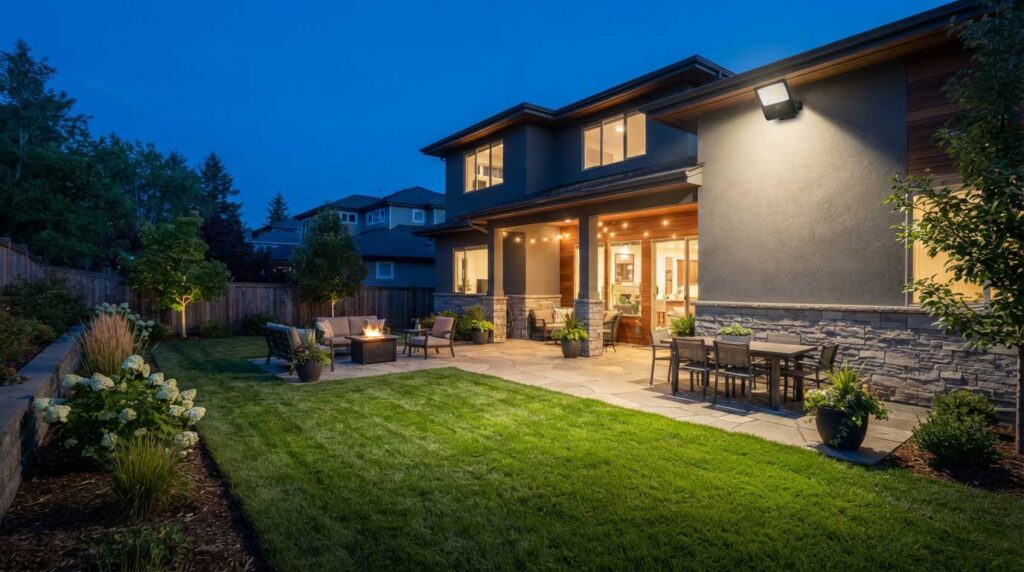
One field detail often gets overlooked: distance changes the visual result quickly.
If the fixture is close to the target, a modest lumen output can appear very effective. Move the same fixture higher and farther away and the light spreads over a much larger area.
For a backyard flood light, check these measurements before selecting output:
This is also where professional photometric data becomes more useful than marketing language. A lumen figure tells you total luminous flux; it does not tell you exactly where that light lands.
A backyard flood light with a very wide beam can cover more ground, but the same output is distributed over a larger area.
A narrower beam concentrates light farther into the yard.
That makes beam selection particularly important for irregular properties. A long, narrow backyard may benefit from a different optical distribution than a roughly square patio.
For security applications, the objective is usually controlled coverage rather than maximum brightness.
The U.S. Department of Energy‘s exterior-lighting guidance also evaluates floodlight luminaires by luminaire efficacy, with a current federal procurement requirement of at least 118 lumens per watt for floodlight luminaires. The DOE notes that higher lumens-per-watt indicates greater efficiency.
So when comparing LED flood lights, look at both lumens and lm/W.
A 2,000-lumen fixture consuming significantly less power may be a more practical installation than an inefficient fixture producing the same output.
Brightness is only half of the nighttime experience.
For residential outdoor environments, 2700K–3000K produces a warmer appearance and can be more comfortable around patios, gardens and seating areas. Lowe’s recommends 2700K–3000K for outdoor lighting, while DarkSky International recommends 2700K or lower when minimizing nighttime environmental impact is a priority.
For a security-focused backyard, 3000K can provide a useful balance between visibility and a residential appearance.
A very cool white fixture may look dramatically brighter even when the lumen rating is similar. That visual impression should not be confused with actual lumen output.
Before buying, use this quick checklist:
Motion control is particularly useful. DarkSky International recommends timers or motion sensors so outdoor lighting operates only when needed, reducing unnecessary energy use and nighttime light.
Yes. 1,000 lumens is a reasonable starting point for many small to medium residential backyard applications, especially when the fixture is mounted at an appropriate height and aimed correctly. Lowe’s and Home Depot both identify 700–1,300 lumens as a common range for basic flood-light applications.
Not necessarily. A 2,000-lumen flood light can be appropriate for a larger backyard or higher mounting position. The beam angle, mounting height and aiming direction determine how much of that output reaches useful areas.
A practical starting range is 2,000–3,000+ lumens, especially where one fixture needs to cover a large area. Multiple fixtures with controlled optics can sometimes provide more even coverage than one extremely bright light.
Yes. Higher mounting generally means the light must cover a greater area and travel farther. Lowe’s specifically provides higher lumen recommendations as mounting height increases.
No. Excessive brightness can create glare and poorly illuminated contrast areas. Effective security lighting depends on useful illumination, controlled distribution, positioning and appropriate operation rather than maximum lumen output.
For residential outdoor areas, 2700K–3000K is a practical range when a warmer, less harsh appearance is desired. DarkSky International recommends 2700K or lower for more night-friendly outdoor lighting.
A motion sensor is useful when the light is primarily for security or occasional movement. It prevents the fixture from operating at full output throughout the night and can reduce unnecessary outdoor lighting. DarkSky International recommends timers or motion sensors where appropriate.
For most residential applications, 700–1,300 lumens is a sensible starting range for a backyard flood light. Move toward 2,000–3,000+ lumens when the property is larger, the mounting point is higher, or wider coverage is genuinely required.
The number alone is never the whole specification. At SEEKINGLED, the useful question is not simply “How many lumens?” It is where those lumens go—and how efficiently, evenly and comfortably they illuminate the actual backyard.
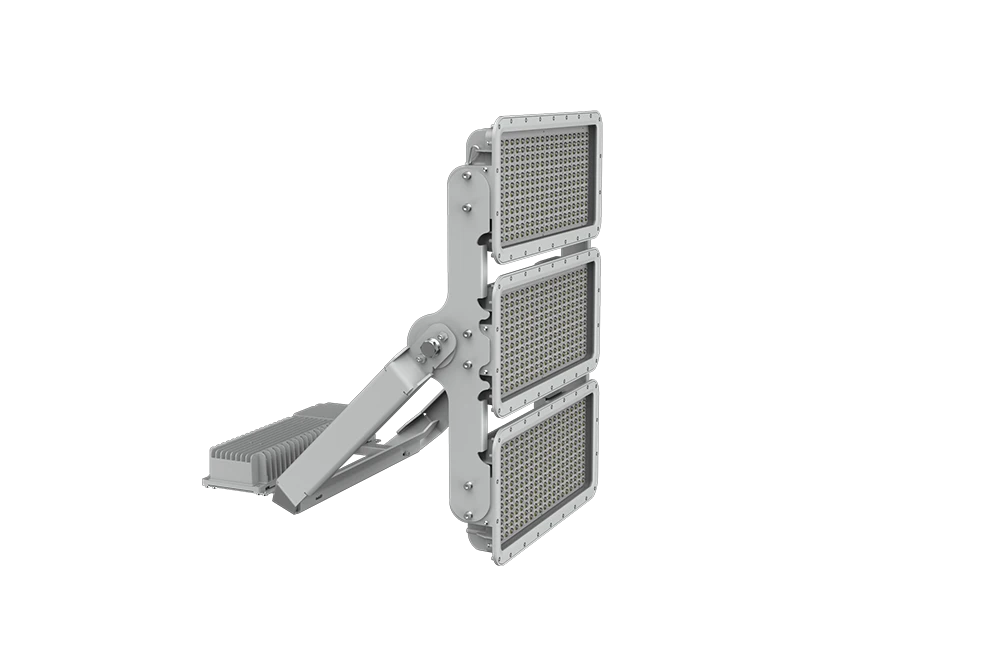
Sports Stadium LED Lighting by SEEKINGLED delivers high mast illumination, precise beam control, and EN 12193 compliant performance for professional venues.
View details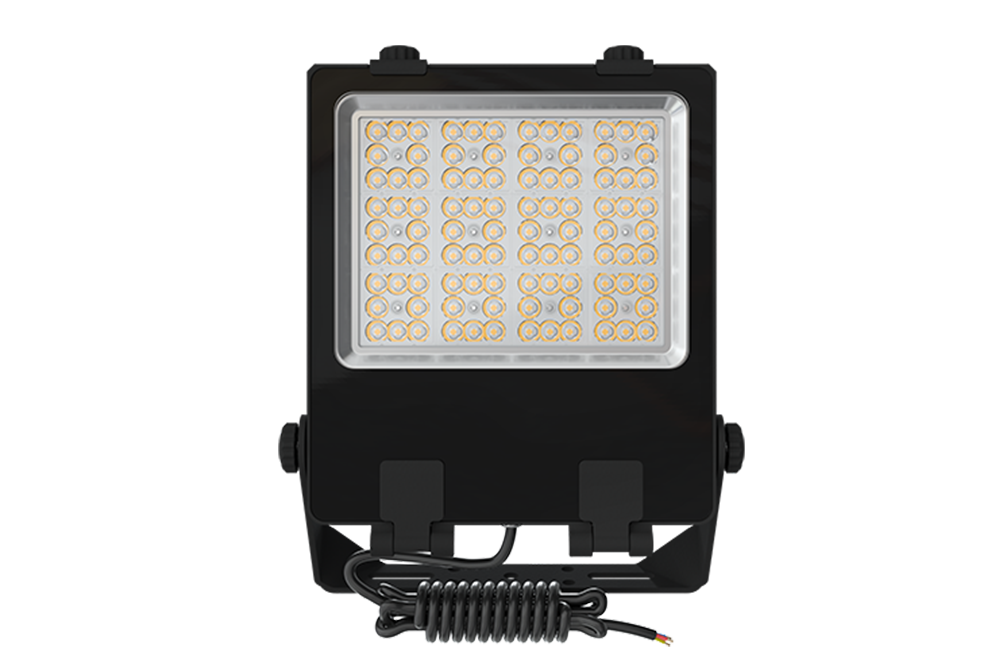
SEEKING FLX Series LED flood light outdoor for sports courts and open-area projects with 170lm/W efficiency, IP66 protection and multiple beam distributions. Designed for long-life commercial and public outdoor use.
View details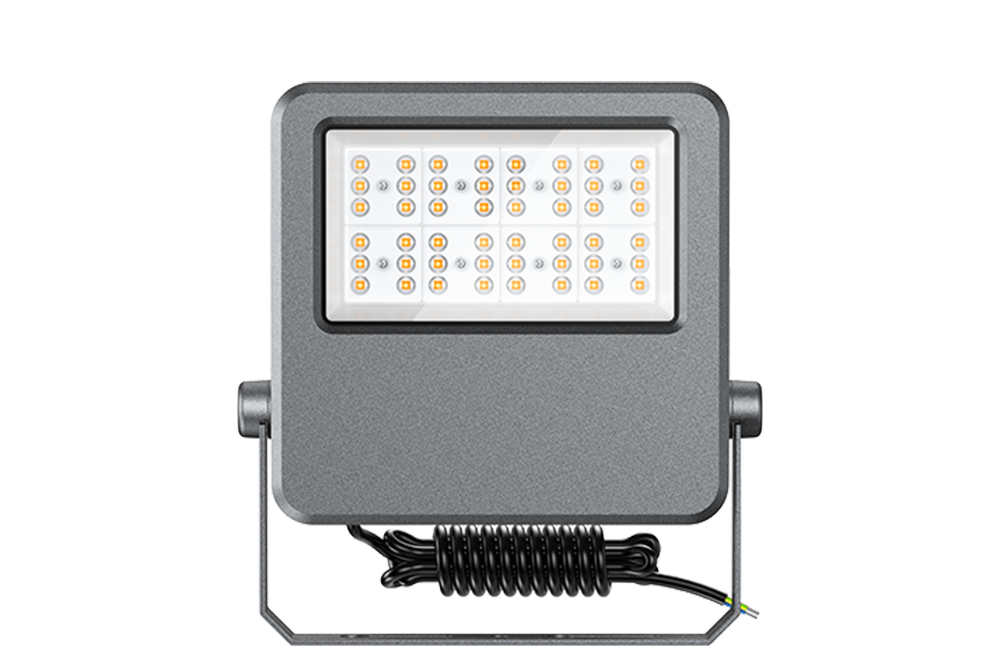
SEEKING FLE Series LED outdoor flood lights for sports grounds and open areas with multiple beam angles, IP66 protection and up to 170lm/W. Designed for long-life outdoor installations with professional driver options.
View details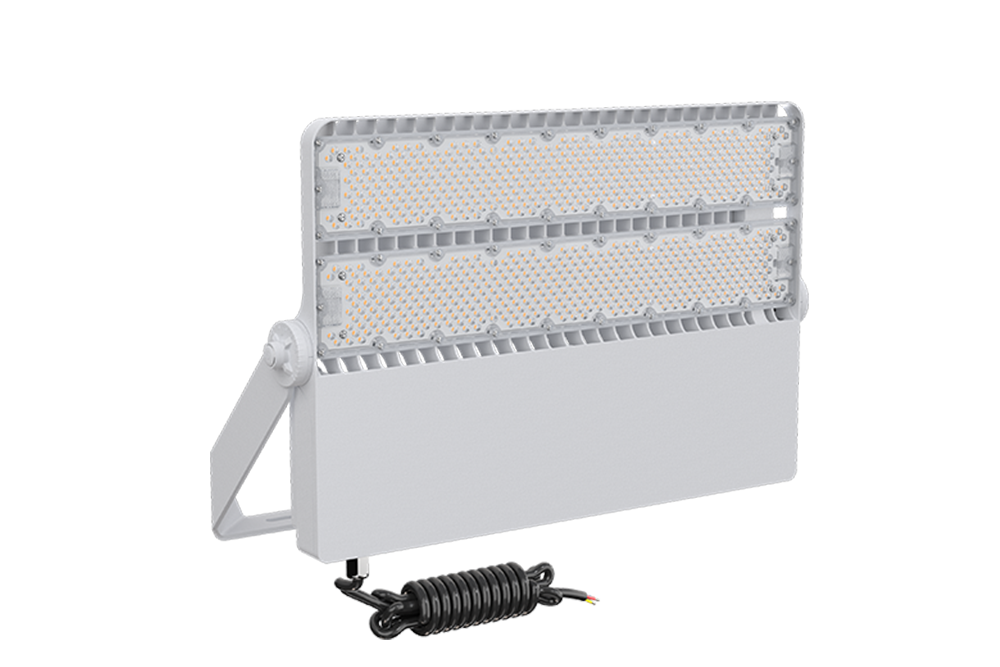
SEEKING FLD Series outdoor LED flood lights and high power led flood light deliver up to 960W with precision beam angles for sports fields, stadiums and large outdoor areas. IK08 & IP66 protection, 170lm/W efficiency and 100,000h lifetime.
View details
A football stadium in France upgraded its sports lighting usingSports Stadium LED Lighting to improve illuminance, uniformity, and player comfort.
View details
LED high bay lighting upgrade for hockey field in Canada. SEEKINGLED XJ-HBS200W replaced 92 units of 400W metal halide with up to 75% energy savings.
View details
What industries use ATEX lighting? Discover where hazardous-area LED lighting is required, from oil refineries to grain plants and offshore platforms.
View details
What is ATEX certified lighting? Learn how ATEX-certified fixtures improve safety in explosive atmospheres and why they are essential for hazardous industrial locations.
View details