 Seeking LED
how many lumens do i need for flood light?
0Flood light lumen needs depend on area, mounting height, beam angle, application, and required illuminance.
View detailsSearch the whole station
Wiring LED flood lights looks simple on paper.
In the field, it’s rarely that clean.
Most wiring failures don’t happen on day one. They show up weeks later—after rain, temperature changes, or vibration. That’s why the way you wire LED flood lights matters more than how fast you do it.
Before touching anything, shut off power at the breaker.
Not the switch. Never the switch.
Then check where you’re actually making connections. If you don’t have a proper junction box, stop there. Wiring LED flood lights without a junction box is asking for moisture trouble later. It always comes back.
Most LED flood lights, including SEEKINGLED outdoor fixtures, use standard wiring:
If your supply wiring doesn’t match these colors exactly, don’t guess. Trace it. I’ve seen too many lights blamed for wiring assumptions that were wrong from the start.
Here’s the part that actually matters:
No creative shortcuts. No doubled wires under one connector unless it’s rated for it.
Use waterproof connectors outdoors. Tape alone doesn’t count. Tape fails quietly, usually after the first season.
A LED flood light can turn on without a ground. That doesn’t mean it’s wired correctly.
If the fixture has a ground terminal, use it.
If the junction box is metal, bond it.
SEEKINGLED designs its flood lights with clear grounding points because outdoor safety depends on it. Skipping ground is one of those mistakes that feels harmless—until it isn’t.
Once wired, mount the LED flood light firmly before testing.
Loose mounts lead to vibration. Vibration loosens connections over time. This is how flicker complaints start months after installation.
Tighten the bracket, leave the final aiming for later, and don’t over-adjust.
Restore power and actually observe the light.
A correctly wired LED flood light turns on clean and steady.
No flicker. No delay. No buzzing.
If something feels off, don’t blame the driver immediately. Recheck the neutral. That’s where most problems hide.
Even experienced installers repeat these:
Every one of these works… until weather gets involved.
If you’re constantly rewiring older flood lights, the issue may not be the wiring.
Modern integrated LED flood lights—like those from SEEKINGLED—are built to simplify outdoor wiring and reduce failure points. Sometimes replacing the fixture is the cleaner solution, not another repair.

Flood light lumen needs depend on area, mounting height, beam angle, application, and required illuminance.
View details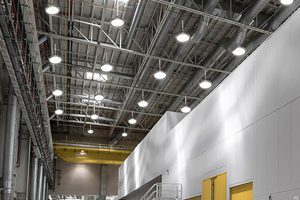
In 2024, a European factory adopted SEEKING XJ-HBC240W LED High Bay Light fixtures, achieving 170 lm/W, 300+ LUX average illuminance, high uniformity and motion-sensing control for extra energy savings.
View details
ATEX approved LED lighting wholesale for hazardous industries. Discover certified explosion-proof lighting solutions trusted in oil, chemical, and marine projects by SEEKINGLED.
View details
Are LED street lights better for cities and roads? This guide explains real advantages, limits, and when LED street lighting actually performs better.
View details