 Seeking LED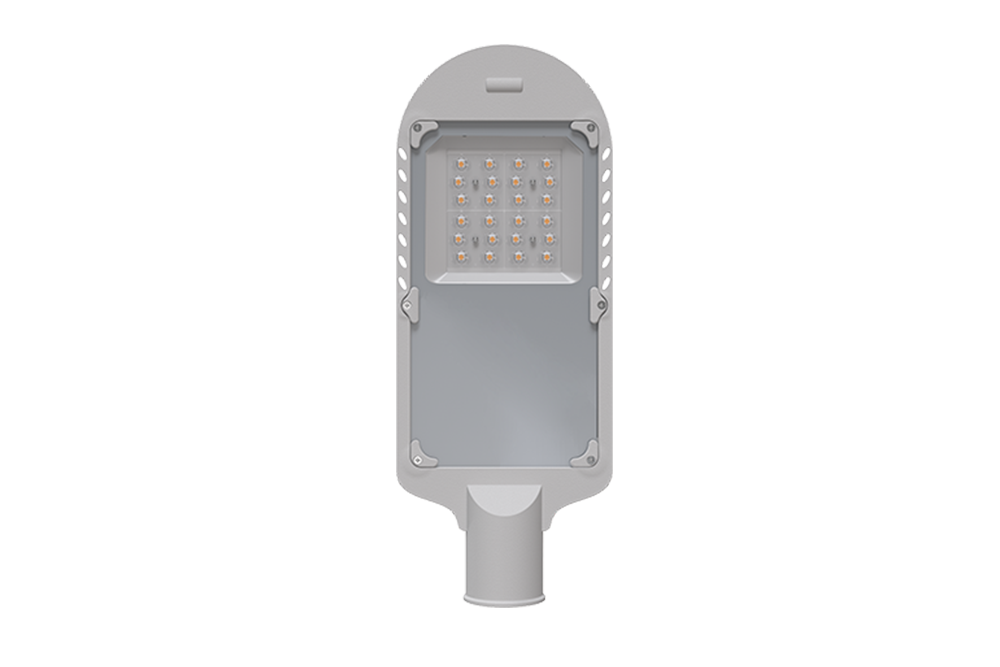
How Far to Space High Bay LED Lights?
261How far to space high bay LED lights depends on ceiling height, beam angle, and usage areas. Learn practical spacing guidelines used in real projects.
View detailsSearch the whole station
The first time I worked on a so-called smart street lighting project, the technology was impressive—and the results were disappointing. Sensors worked, data flowed, dashboards looked beautiful. But after one winter, half the system was running in manual mode because maintenance teams couldn’t rely on it in daily operations.
That experience stayed with me.
I’ve spent over 15 years designing, commissioning, and reviewing outdoor lighting systems for municipal roads, industrial parks, and urban redevelopment projects across Europe and North America. What I’ve learned is simple: a smart LED street light is only smart if it survives real streets, real weather, and real human behavior.
SEEKINGLED develops smart street lighting with that lesson in mind.
In theory, a smart LED street light integrates sensors, communication modules, and control software. In practice, that integration must never compromise basic lighting performance.
From field experience, the priorities for smart street lighting should always follow this order:
According to the U.S. Department of Energy (DOE), networked LED street lighting systems can deliver an additional 20–30% energy savings beyond standard LED retrofits when adaptive dimming and scheduling are applied correctly. The key phrase is “applied correctly.”
Smart control only adds value when the underlying luminaire is stable.
By Daniel R., Senior Outdoor & Smart Lighting Engineer (15+ years experience)
On real projects, smart features prove useful in three specific areas:
What doesn’t work well is over-engineering. Systems overloaded with sensors often become fragile. I’ve seen projects revert to fixed schedules simply because maintenance teams couldn’t justify the complexity.
SEEKINGLED’s approach to smart LED street light systems focuses on essential intelligence, not novelty.
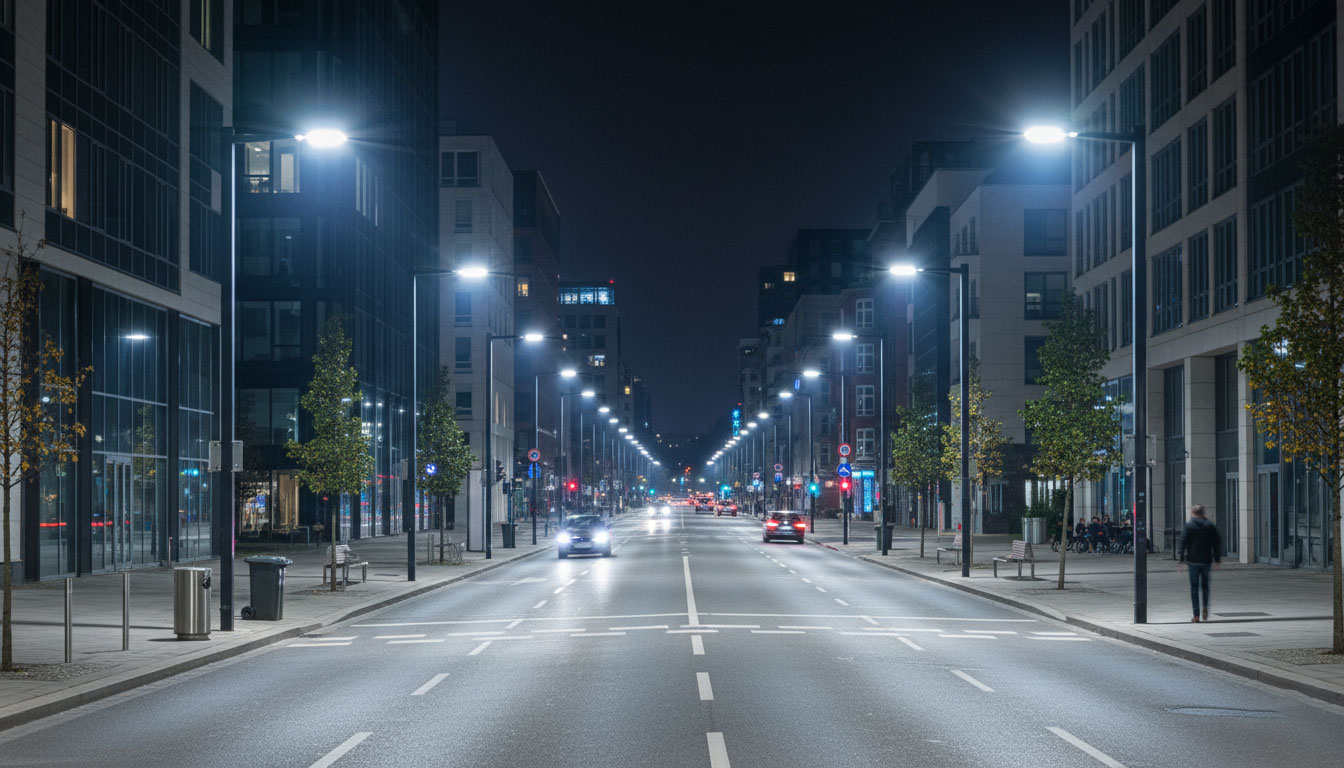
Smart systems don’t replace lighting standards—they must work within them.
The IES RP-8-21 roadway lighting standard still governs:
A smart LED street light that dims incorrectly can violate safety requirements just as easily as a poorly designed fixture. In several early projects I reviewed, excessive dimming caused uneven visibility during unexpected traffic peaks.
That’s why smart control profiles must be designed around road classification, not just energy targets.
Many smart street lighting projects generate massive datasets. Few cities actually use them.
From my experience, the most valuable data points are:
Anything beyond that often becomes background noise.
SEEKINGLED systems focus on actionable data that aligns with real maintenance workflows, rather than abstract analytics dashboards.
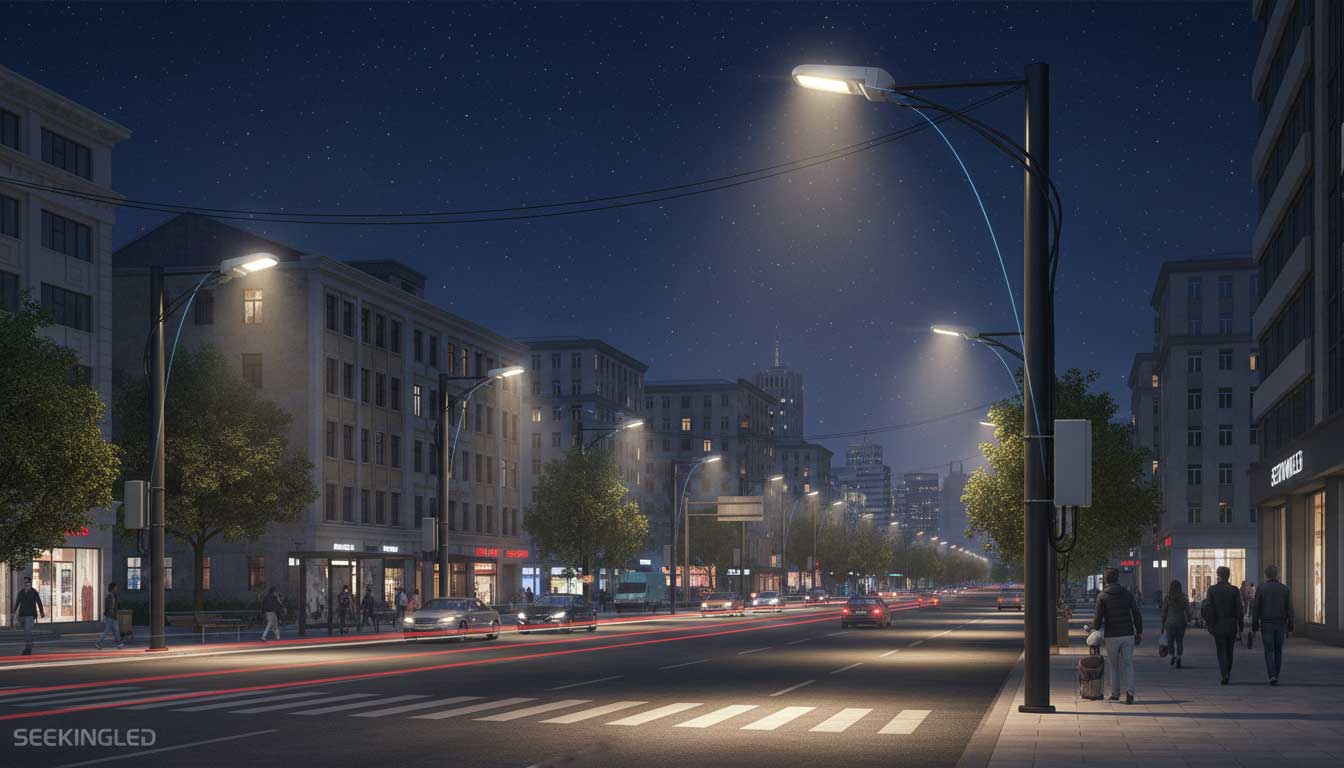
Standard LED street lighting already cuts energy use dramatically. The DOE reports 50–65% energy reduction compared to legacy HPS systems. Smart control builds on that—if implemented carefully.
Adaptive dimming, when matched to traffic patterns, typically delivers:
However, aggressive dimming strategies often backfire. Drivers notice sudden changes in brightness far more than planners expect.
A smart LED street light should feel invisible in operation.
No amount of intelligence compensates for poor construction.
Smart LED street lights must still meet the same physical demands as conventional fixtures:
Electronic control modules are only as reliable as the environment protecting them. SEEKINGLED designs smart fixtures so that control components are isolated from heat and moisture as much as possible.
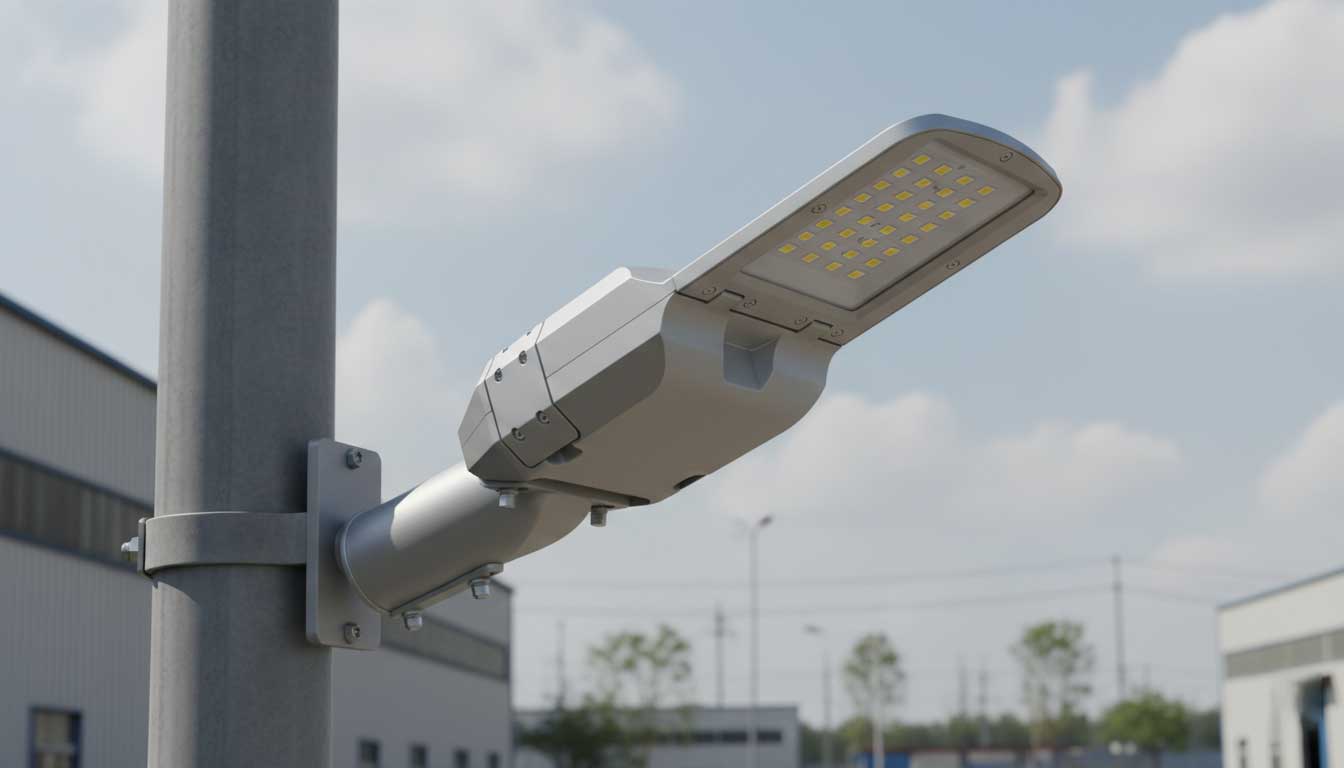
Based on years of project results, smart LED street lighting works best in:
They are not necessary everywhere—and that’s an important design decision.
A smart LED street light should not impress on day one and disappoint on year three. True intelligence in street lighting is restraint: applying technology only where it improves reliability, safety, and efficiency.
SEEKINGLED approaches smart street lighting as a long-term infrastructure tool, not a showcase. After years of watching which systems remain active and which quietly revert to manual mode, that philosophy has proven to be the most sustainable.
When smart lighting feels ordinary—and just works—that’s when it’s done right.
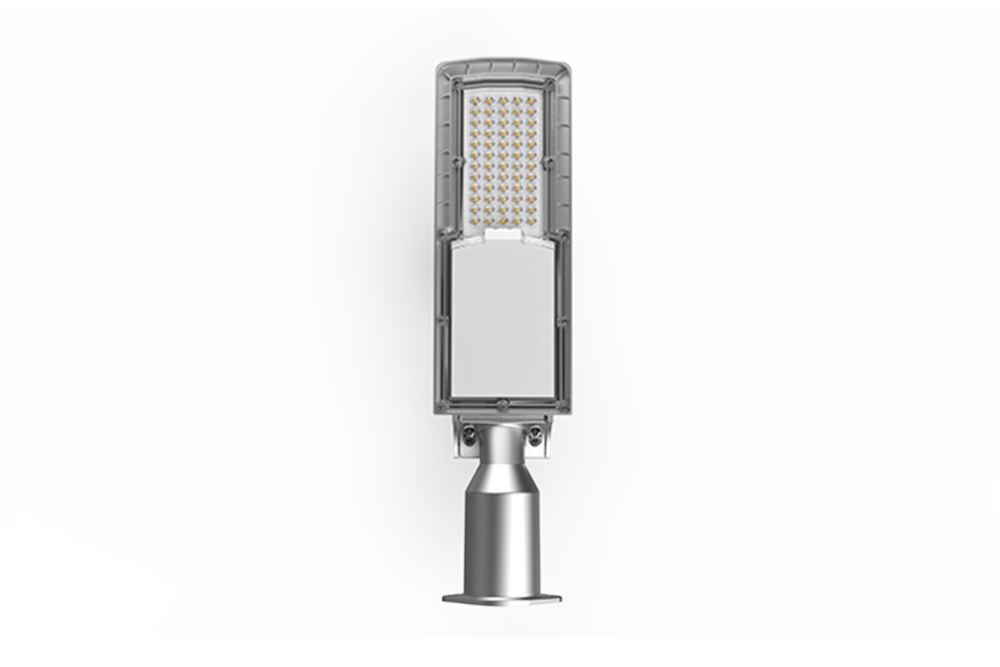
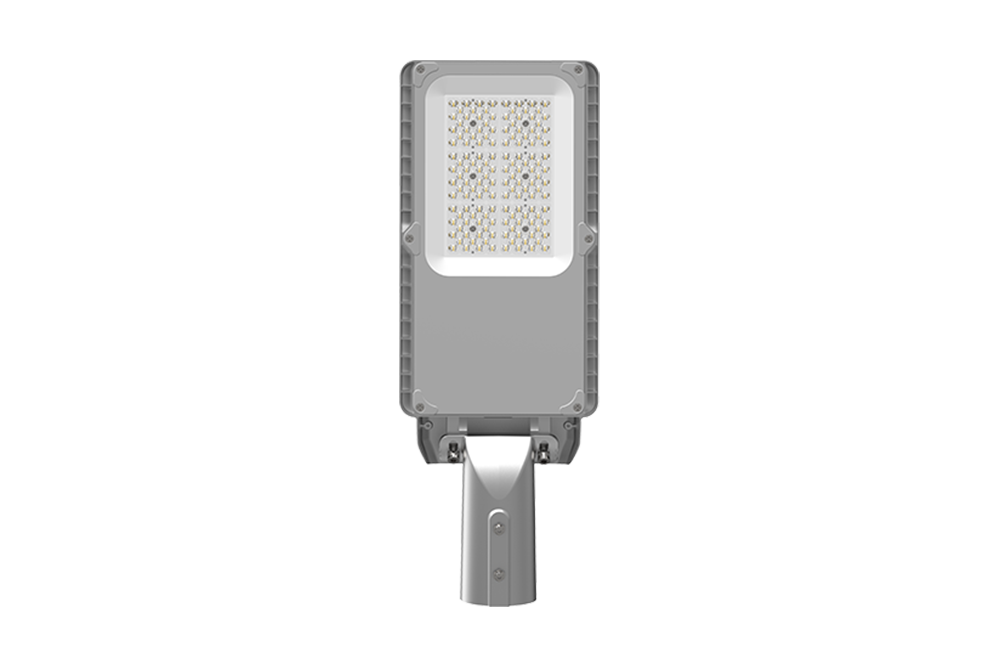
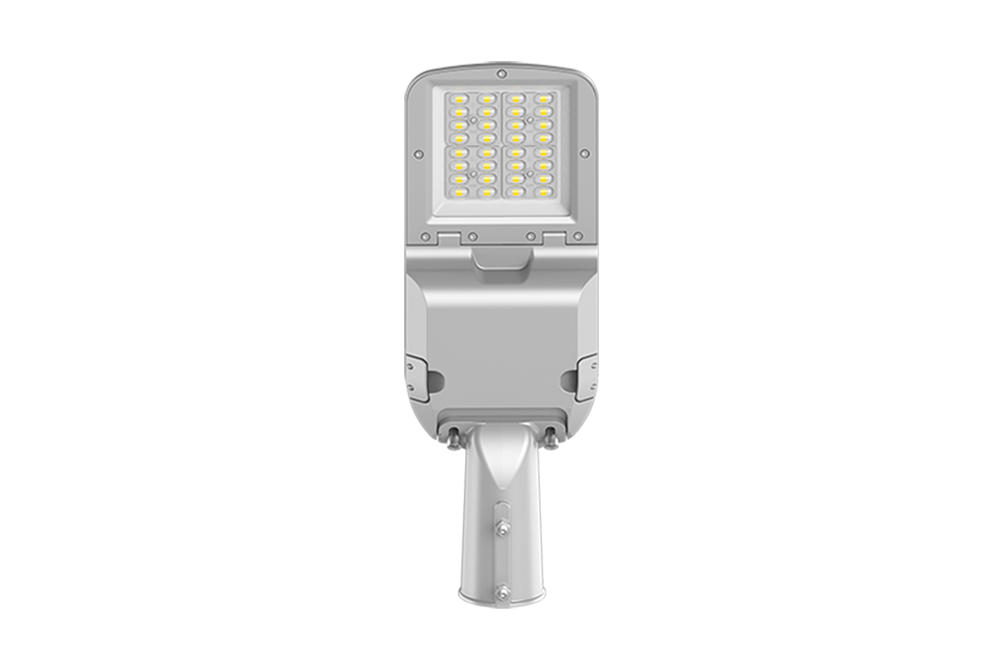
SEEKING STL-Series LED street lights deliver stable performance, 170 lm/W efficiency and 10KV surge protection. Ideal for city streets, parking lots, public roads and outdoor area lighting projects. Durable IP66 & IK08 design for long-term reliabi…
The SEEKING STC Series LED light street light delivers up to 170lm/W efficiency with MOSO drivers, IP66 protection, and a ±15° adjustable arm—ideal for roads, residential areas, and public lighting upgrades.
SEEKING STB Series LED street lighting delivers up to 160 lm/W, 10kV surge protection, IP66 waterproofing, and durable IK08 impact resistance. Ideal for streets, parking lots, and large outdoor areas needing long-lasting, energy-saving LED roadway…
The SEEKING STA Series LED street light delivers strong efficiency, IP66 protection, 10kV surge resistance and multiple beam patterns for roads, parking lots and urban areas. High lumen output, easy installation and reliable performance for long-t…
loading…
This is the last post!

How far to space high bay LED lights depends on ceiling height, beam angle, and usage areas. Learn practical spacing guidelines used in real projects.
View details
What industries use ATEX lighting? Discover where hazardous-area LED lighting is required, from oil refineries to grain plants and offshore platforms.
View details
How long does LED lights last in real conditions? Discover true lifespan, key factors, and why SEEKINGLED lighting delivers longer, stable performance.
View details
How bright is 10W LED flood light in everyday use? This answer looks at real lumen output, coverage, and where a 10W LED flood light actually works, based on practical lighting experience from SEEKINGLED.
View details