 Seeking LED
How Many Amps Does a 50W LED Draw?
181how many amps does a 50w led draw in real lighting systems? Learn the typical current draw at 120V and 240V, plus practical wiring insights from SEEKINGLED engineers.
View detailsSearch the whole station
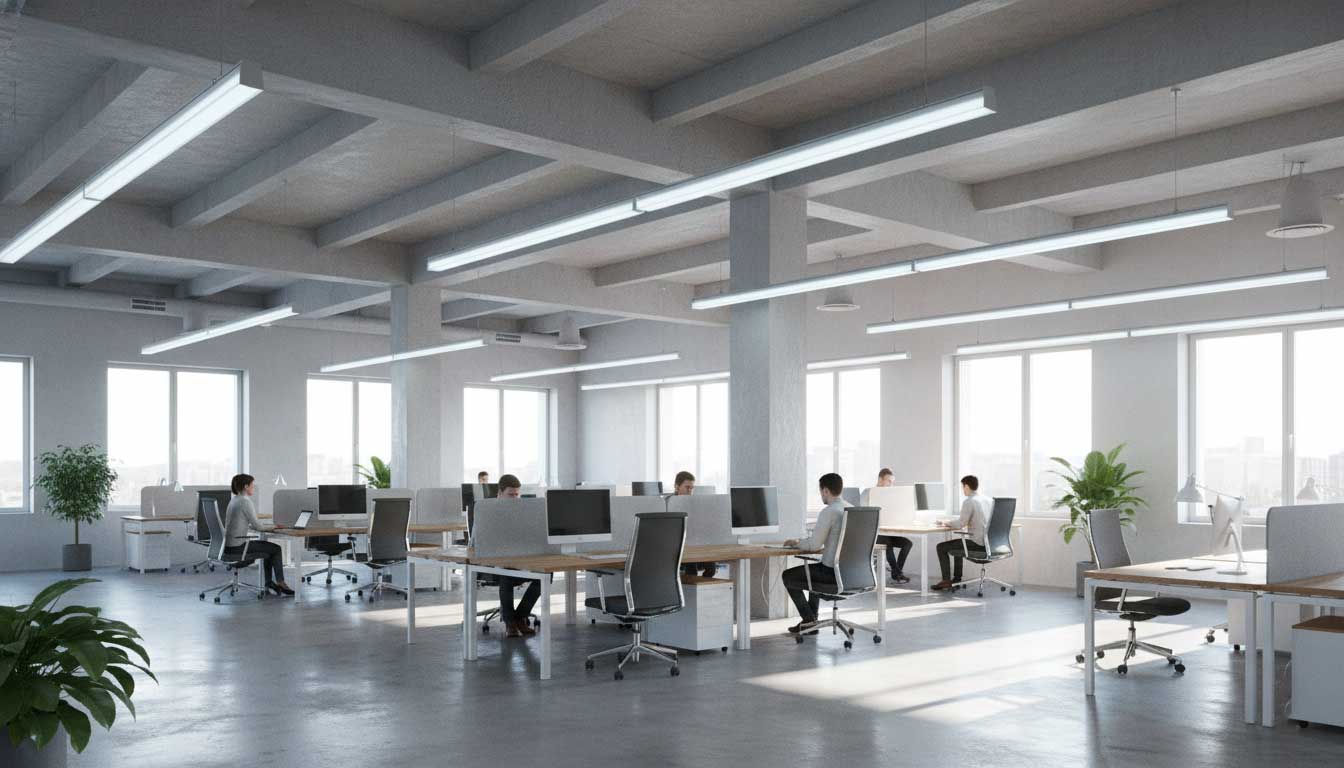
If you walk into a modern warehouse, office, or supermarket today, chances are the ceiling lighting doesn’t come from round panels or individual fixtures anymore. Instead, you’ll see long, clean lines of light running across the space. That’s usually a linear LED light.
So, what is a linear LED light in practical terms?
It’s a lighting fixture designed to produce continuous, even illumination along a straight line, rather than lighting one spot at a time. The goal isn’t just brightness—it’s consistency, visual comfort, and efficiency over large areas.
Traditional lighting works in points. One lamp, one pool of light. To cover a big space, you add more fixtures, more cables, and more installation time.
Linear LED lighting works the other way around. A single system can run several meters, sometimes dozens, using connected modules. Power, mounting, and wiring are integrated into one structure. The ceiling looks cleaner, and installers spend less time on ladders.
In systems like the SEEKINGLED HLS Series, the lighting, trunking, and electrical connections are combined. That means fewer parts on site and fewer chances for installation mistakes.
On drawings, linear lights look simple. In real spaces, they change how a room feels.
In warehouses, linear LED lights usually follow aisles, keeping light exactly where forklifts and workers need it. In offices, they form neat rows that match desk layouts. In supermarkets, they help shelves look organized and evenly lit, without harsh shadows.
Because the light output is continuous, you don’t get the bright–dark–bright pattern that older fixtures often create.
The reason linear LED systems are used so widely today isn’t just aesthetics.
They save time during installation.
They reduce cable clutter.
They make future changes easier.
With modular systems like the HLS Series, beam angles, power levels, and even control options can be selected based on the space. If a layout changes later, the system can often be adjusted without starting from scratch.
Efficiency also plays a role. With outputs reaching up to 180 lm/W, linear LED lights can reduce energy consumption while still meeting strict lighting standards.
You’ll most often see linear LED lighting in:
Anywhere that needs even light over a large area tends to benefit from a linear approach.
If you’re asking what is a linear LED light, think of it less as a “lamp” and more as a lighting system.
It’s designed to disappear into the architecture while doing its job quietly and efficiently. When it’s working well, people don’t comment on the light itself—they just notice that the space feels clear, comfortable, and well organized.
That’s exactly what systems like the SEEKINGLED HLS Series are built to deliver.

how many amps does a 50w led draw in real lighting systems? Learn the typical current draw at 120V and 240V, plus practical wiring insights from SEEKINGLED engineers.
View details
Learn how explosion proof paint booth lighting improves safety, visibility, and compliance in hazardous spray areas. Expert insights from SEEKINGLED.
View details
Is LED light street legit? This guide explains how to verify LED street light suppliers, avoid scams, and identify legitimate manufacturers based on real industry experience.
View details
How do high bay lights work? Learn how LED high bay lighting uses advanced LEDs, drivers, optics, and heat management to illuminate large industrial spaces efficiently.
View details