 Seeking LED
ATEX LED Flood Light for Hazardous Industrial Environments
0ATEX LED flood light solutions deliver safe, powerful illumination for hazardous zones. Learn certifications, Zone ratings, durability, and industrial uses.
View detailsSearch the whole station
What is ATEX? ATEX is a European safety framework that defines how equipment must be designed and approved for environments where explosive gases, vapors, or combustible dust may occur. It helps prevent ignition risks in hazardous industrial workplaces.
When customers ask us “Can this LED light be installed in an ATEX area?”, they are usually not asking about brightness first. They want to know whether the product will survive the environment they work in.
During hazardous lighting projects, our engineering team at SEEKINGLED normally checks three things before recommending a fixture: the hazardous zone, the material around the equipment, and the required protection level. A lighting mistake in an ordinary warehouse may cause inconvenience. The same mistake beside fuel vapor or chemical dust can create a completely different safety concern.
SEEKINGLED has been involved in industrial lighting applications since 2010, supplying LED solutions for factories, warehouses, energy facilities, and demanding industrial environments. Through these projects, we found that ATEX is often misunderstood as a product certificate only. In reality, it is a method of controlling explosion risks from the beginning of equipment design.Visit the product page: Explosion Proof Lighting
ATEX comes from the French term “ATmosphères EXplosibles”, meaning explosive atmospheres.
The regulation was developed in Europe because industries handling flammable materials needed a unified safety approach. Before harmonized requirements existed, different countries used different testing methods, creating confusion for manufacturers and operators.
Today, ATEX mainly refers to:
| Regulation | Purpose |
|---|---|
| 2014/34/EU | Requirements for equipment used in explosive atmospheres |
| 1999/92/EC | Minimum workplace safety requirements for explosive areas |
According to the European Commission, Directive 2014/34/EU applies to equipment and protective systems intended for use in potentially explosive atmospheres.
For industrial lighting, ATEX certification affects much more than the external housing. Engineers evaluate possible ignition sources including electrical sparks, overheating components, and maximum surface temperature.
A common example we see in factories:
A customer replaces old fluorescent lights with LED fixtures because energy costs increased. The new lights produce better efficiency, but the installation location is near solvent storage. At this point, normal commercial LED lighting is no longer the correct category. The question changes from “How many lumens do we need?” to “What protection level is required here?”
That is where ATEX becomes practical.
ATEX areas are divided according to how often explosive atmospheres may exist.
For gases and vapors:
| Zone | Meaning |
|---|---|
| Zone 0 | Explosive atmosphere exists continuously or for long periods |
| Zone 1 | Explosive atmosphere may occur during normal operation |
| Zone 2 | Explosive atmosphere is unlikely but may appear briefly |
For combustible dust:
| Zone | Meaning |
|---|---|
| Zone 20 | Dust clouds are continuously or frequently present |
| Zone 21 | Dust clouds may occur during normal operation |
| Zone 22 | Dust clouds are unlikely except abnormal conditions |
The classification is not decided by the equipment supplier. It normally comes from the facility’s hazardous area assessment.
This is an important detail many online articles overlook.
A lighting manufacturer can provide an ATEX-certified fixture, but the facility owner or safety engineer must determine whether the location requires Zone 1, Zone 2, or another protection level.
Many customers see markings such as:
II 2G Ex db IIC T6 Gb
on explosion proof lighting products but do not know what each part represents.
The marking is not decorative. Each symbol tells engineers where and how the equipment can be used.
| Marking | Explanation |
|---|---|
| II | Equipment group for surface industries |
| 2G | Category suitable for gas hazardous areas with high protection |
| Ex | Equipment designed for explosive atmospheres |
| db | Flameproof enclosure protection method |
| IIC | Suitable for the most demanding gas group |
| T6 | Maximum surface temperature classification |
| Gb | Equipment Protection Level for gas environments |
For LED lighting installed in chemical plants, fuel terminals, and oil & gas facilities, temperature classification is one of the details we pay close attention to.
A fixture may work perfectly electrically, but if its external surface temperature exceeds the ignition temperature of surrounding gases, it is not suitable for that location.
The IEC 60079 series provides international requirements for equipment used in explosive atmospheres, including protection methods and temperature considerations.
Source:
https://www.iec.ch/standards
A frequent misunderstanding in industrial projects is assuming that “ATEX certified” automatically means the product fits every hazardous location.
It does not.
The certification must match:
For example, a Zone 2 warehouse storing packaged materials may have very different requirements compared with a Zone 1 chemical processing area where flammable vapor can appear during normal production.
At SEEKINGLED, we usually review technical drawings or site information before recommending hazardous area lighting. During one overseas industrial project, the original request was simply to replace aging metal halide fixtures with LED models.
The customer expected a direct watt-for-watt replacement.
After reviewing the application, our team noticed the fixtures were installed above a production area where combustible vapors could occasionally accumulate. The final solution focused on certified explosion proof LED lighting with the correct protection level rather than only improving energy efficiency.
The energy savings were important, but the installation decision started with safety.
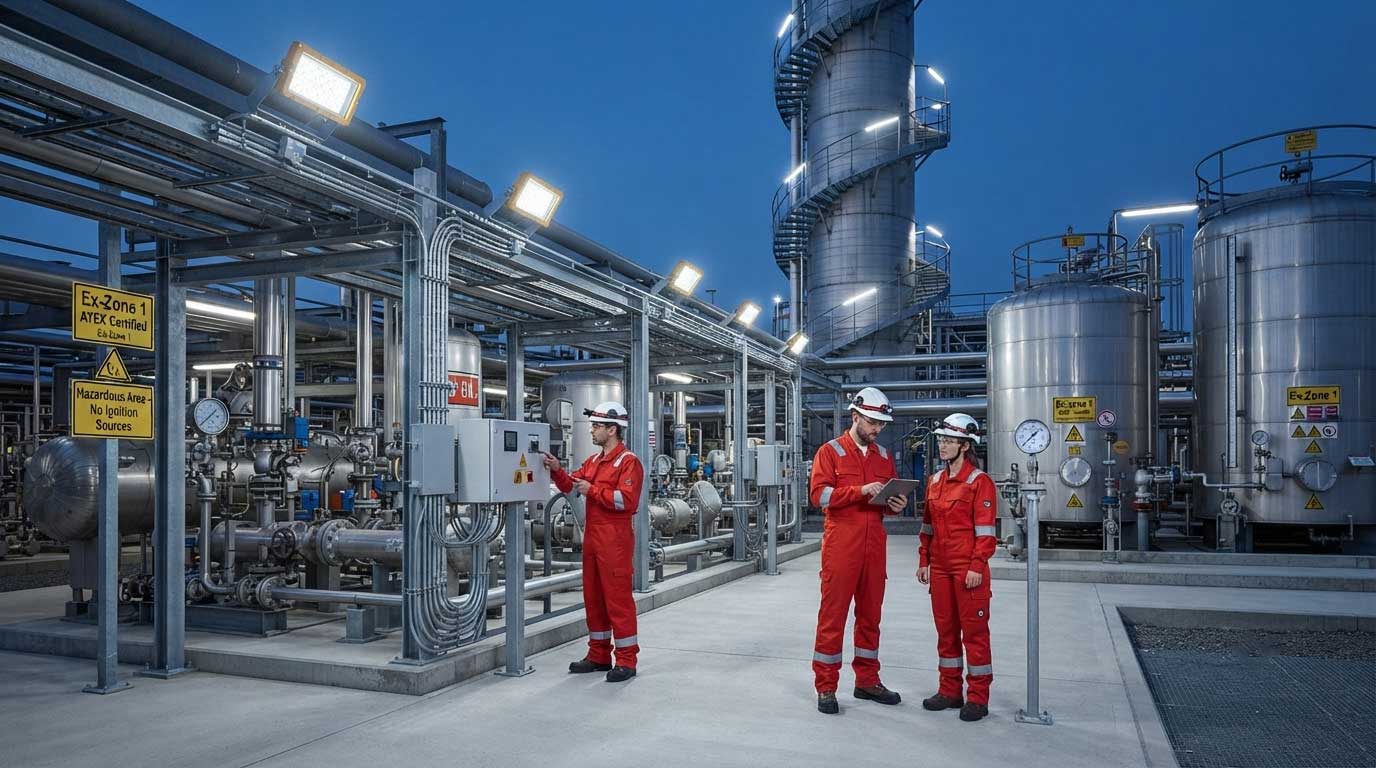
ATEX is widely used in Europe, but international projects often involve additional certification systems.
| Standard | Main Region | Common Application |
|---|---|---|
| ATEX | European Union | Explosive atmosphere equipment |
| IECEx | International markets | Global hazardous area certification |
| Class I Division 1/2 | North America | Hazardous location electrical equipment |
The IECEx system was created to provide a globally accepted approach for testing and certifying equipment used in explosive environments.
Source:
https://www.iecex.com/
For companies operating internationally, choosing lighting products with recognized hazardous area certifications can simplify project approvals and maintenance planning.
ATEX equipment is widely used in industries where combustible materials are processed, stored, or transported.
Typical applications include:
| Industry | Possible Hazard |
|---|---|
| Oil and gas facilities | Hydrocarbon vapor |
| Chemical plants | Solvents and gases |
| Pharmaceutical factories | Fine powder and chemicals |
| Food processing plants | Combustible dust |
| Mining operations | Methane and coal dust |
| Marine terminals | Fuel vapor |
The European Agency for Safety and Health at Work notes that explosive atmospheres can occur in workplaces where flammable substances are present in the form of gases, vapors, mists, or dust.
Source:
https://osha.europa.eu/
ATEX certification is used to confirm that equipment can operate safely in potentially explosive environments. It applies to products designed for areas containing flammable gases, vapors, or combustible dust.
ATEX Zone 1 means an explosive atmosphere may occur during normal operation, while Zone 2 indicates that explosive conditions are not expected during normal operation but may appear temporarily.
Not exactly. ATEX is a European regulatory system, while explosion proof describes a protection method designed to prevent equipment from becoming an ignition source or containing internal explosions.
No. Standard LED fixtures are not designed for hazardous environments. ATEX explosion proof lighting is engineered with specific protection methods, temperature controls, and certified components.
The hazardous area classification is normally determined by facility operators, safety engineers, or qualified professionals after evaluating the materials and operating conditions.
ATEX is mainly a European requirement, but many international companies select ATEX-certified equipment because it is widely recognized and often used together with IECEx requirements.
What is ATEX? It is a safety framework that helps industries use equipment safely in locations where explosive gases, vapors, or dust may exist.
After years working with industrial LED lighting applications, our experience at SEEKINGLED is that hazardous area projects are rarely solved by choosing the brightest fixture or the lowest-cost option.
The right decision comes from understanding the environment first.
A well-designed ATEX lighting solution considers the hazardous zone, operating conditions, certification requirements, and long-term maintenance needs together.
For facilities handling flammable materials, reliable lighting is not only about visibility. It is part of the overall safety system that keeps production running.
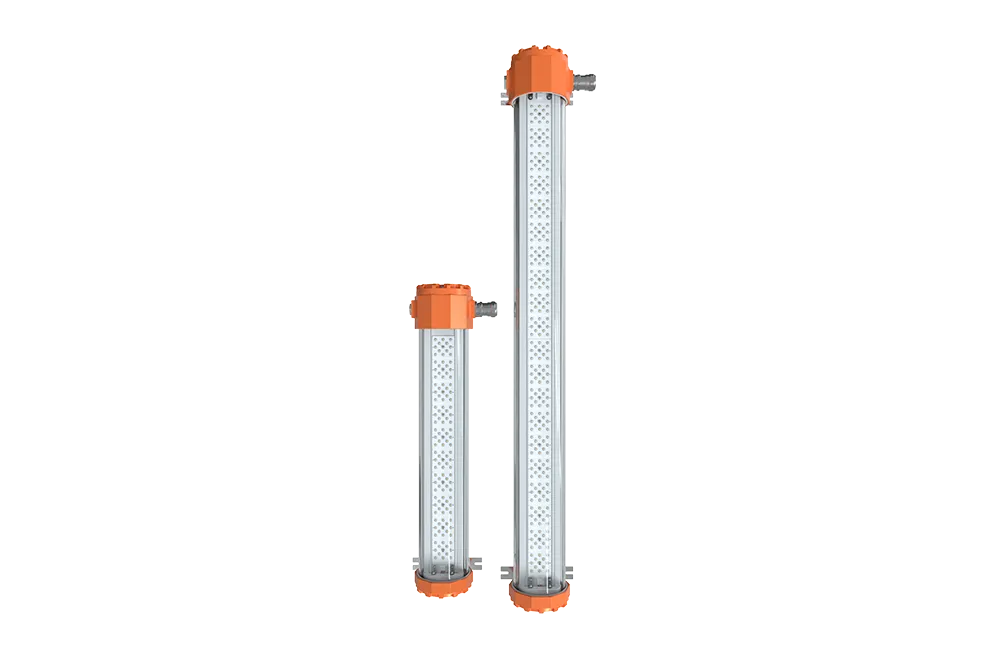
SEEKINGLED LED Linear Explosion Proof Light and Explosion Proof lighting is ATEX and IECEx certified for Zone 1, Zone 2, Zone 21 and Zone 22 hazardous locations, built for long-term industrial use.
View details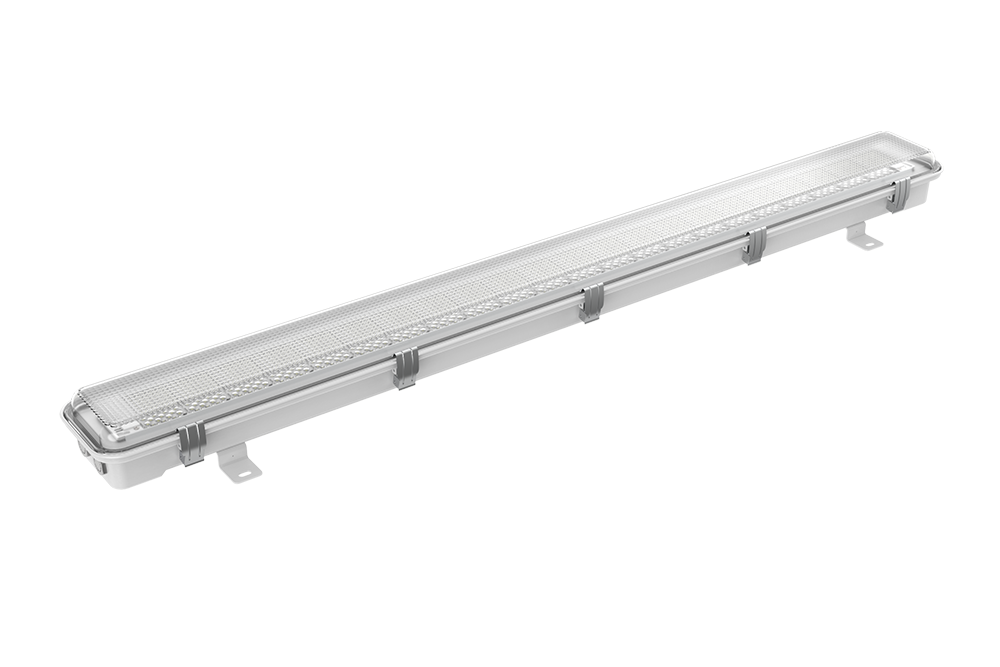
LED Linear Explosion Proof Lights and EX Proof lights for Zone 1, Zone 2, Zone 21 and Zone 22 hazardous areas. ATEX & IECEx certified explosion proof LED linear lighting with emergency function, adjustable power and IP67 protection by SEEKINGLED.
View details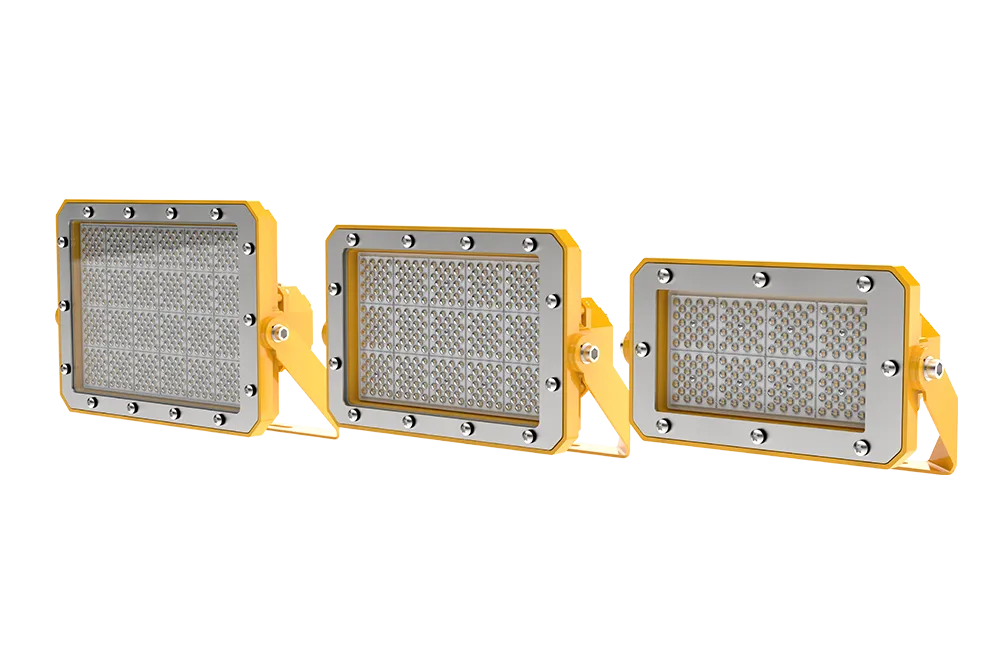
SEEKINGLED LED Explosion Proof Flood Lights are ATEX certified for Zone 2 and Zone 22 hazardous areas, offering high efficiency, adjustable power and integrated junction box.
View details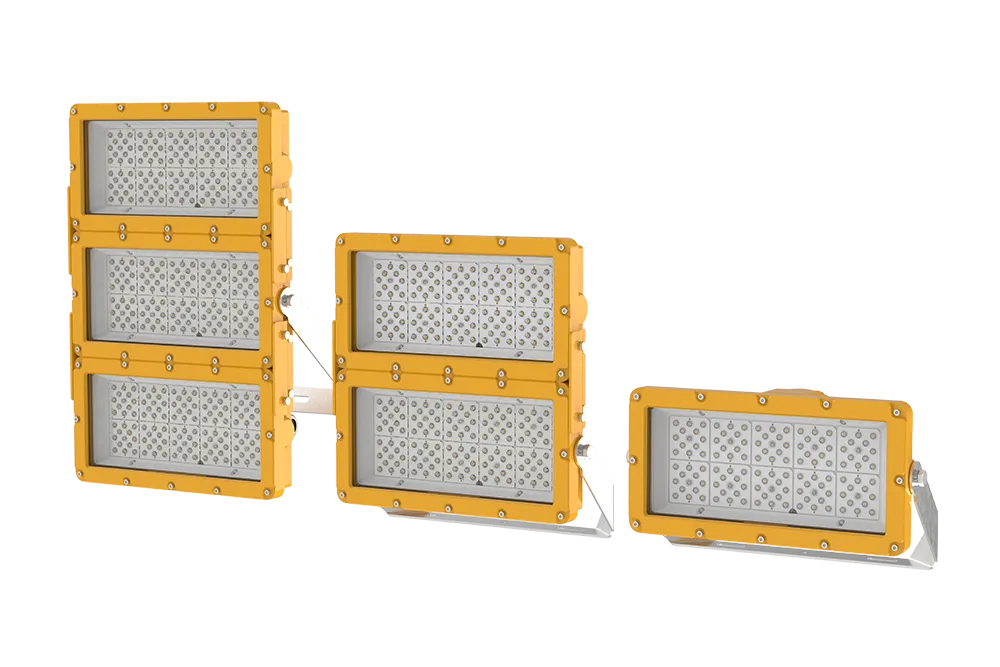
SEEKINGLED LED Explosion Proof Flood Lights are flameproof ATEX and IECEx certified for Zone 1 and Zone 2 hazardous areas, offering high power, adjustable output and long service life.
View details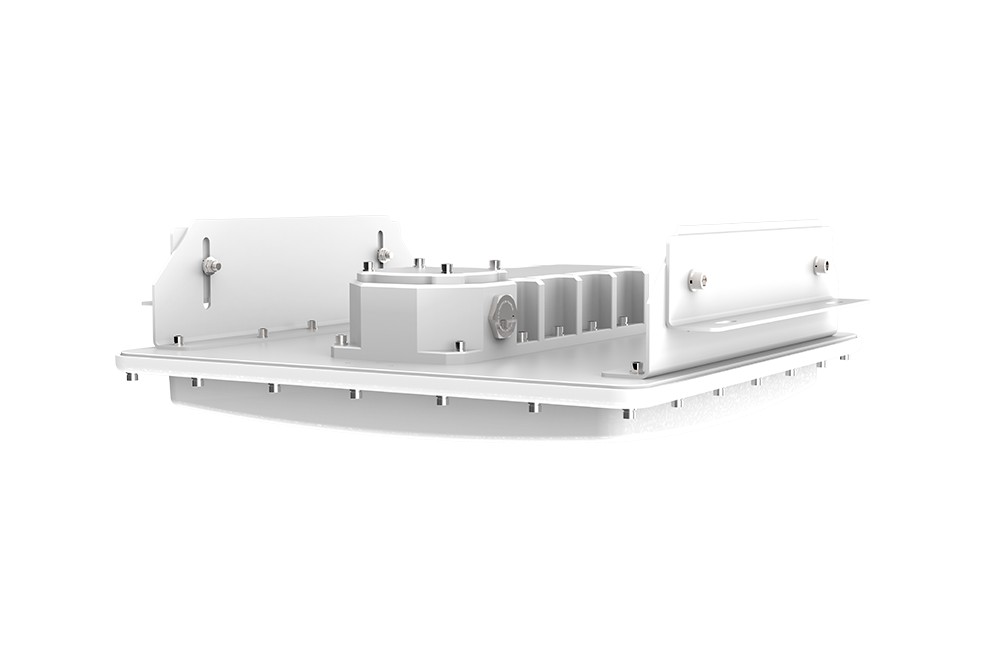
SEEKINGLED LED Gas Station Canopy Lights are ATEX certified for Zone 2 and Zone 22 hazardous areas, featuring adjustable power and built-in explosion-proof junction box.
View details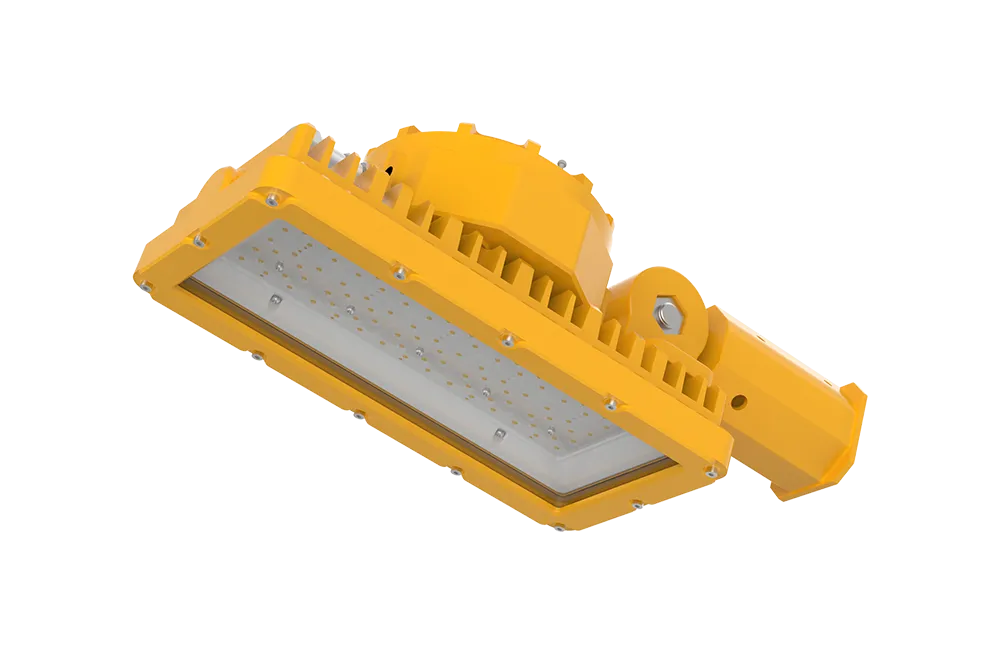
ATEX: Ex II 2G Ex db IIB T6/T5 GbEx II 2D Ex tb IIIC T80°C/ T95°C Db IECEx Ex db IIB T6 Gb;Ex tb IIIC T80°C Db Feature: ● For Zone 1,2 and Zone 21,22● Flameproof type, the strongest● 100W can replace 250W HID,energy saving● Power:60W,80W,100W Application: Oil and gas, marine, Chemical, pharmaceutical, semiconductor,mining,military industr…
View details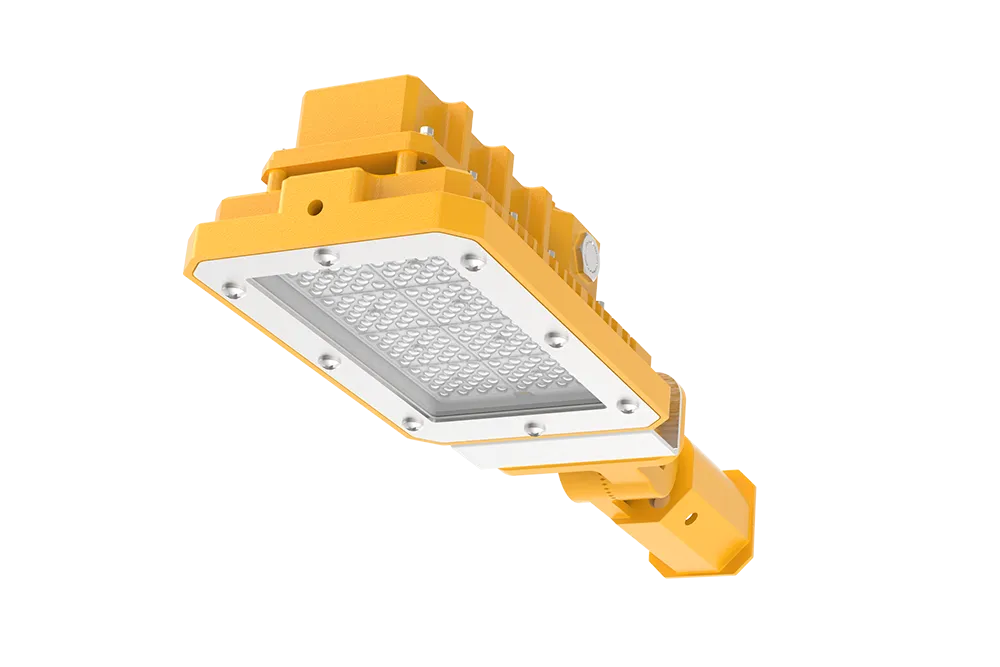
ATEX: II 3G Ex nR ⅡC T5/T6 GcII 3D Ex tc ⅢC T80℃/T95℃Dc ATEX Certificate NO: TÜV CY 26 ATEX 0207611 X Feature: ● For Zone 2 and Zone 22● 150W can replace 250W HID lamps,Energy saving● Power:50W,75W,100W,150W,200W Application: Oil and gas, marine, Chemical, pharmaceutical, semiconductor,mining,military industry, paint booth,power plant ETC…
View details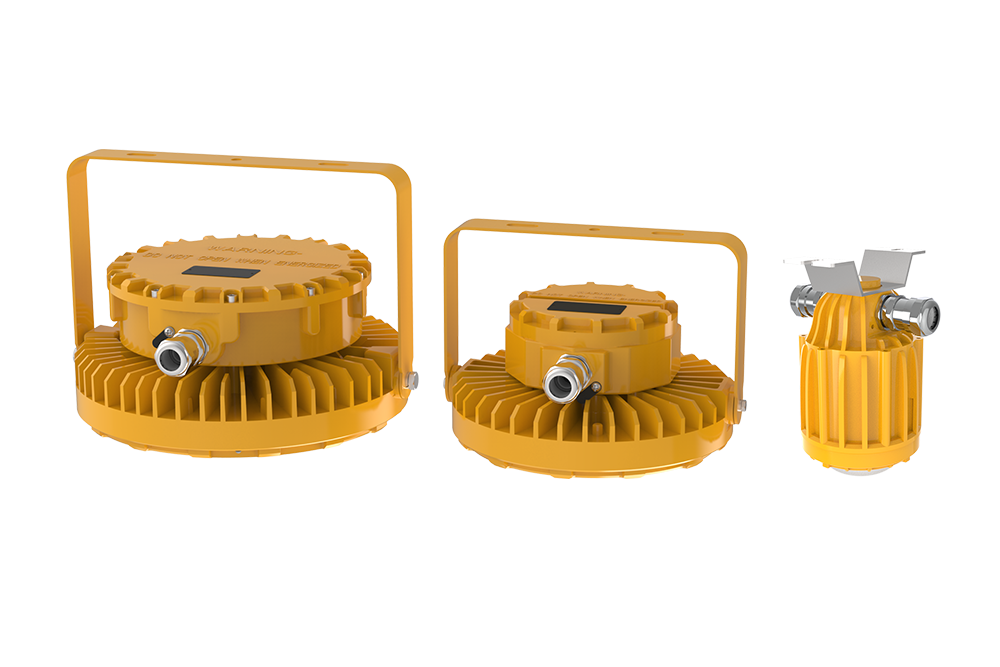
LED explosion proof high bay lights are designed for Zone 1, Zone 2, Zone 21 and Zone 22 hazardous areas. This page introduces the HB21 Series from SEEKING, including certifications, power options and real application considerations.
View details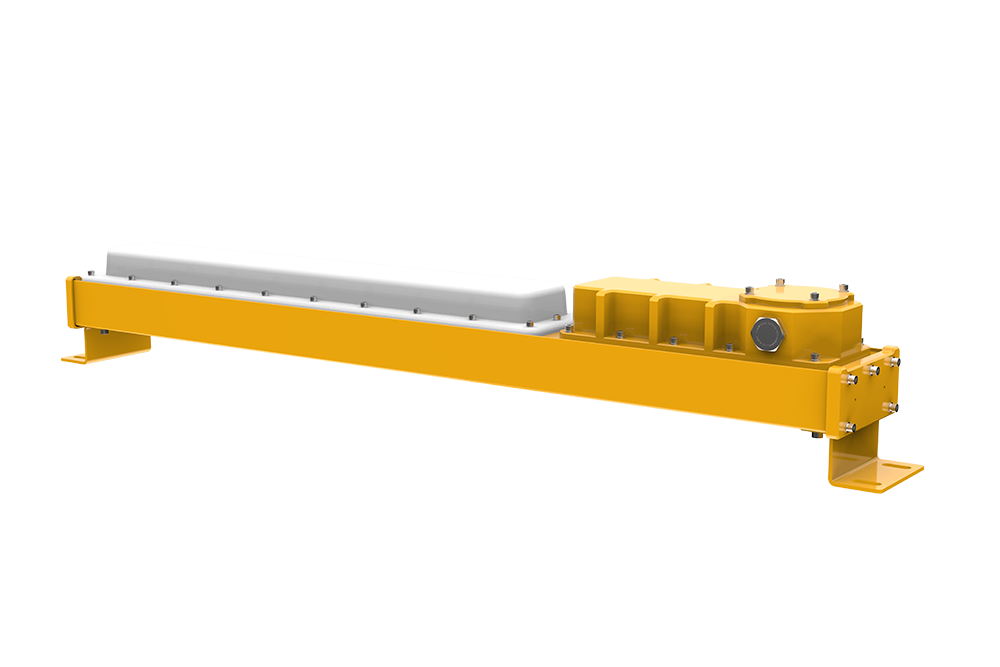
LED Linear Explosion Proof Lights from SEEKINGLED. LU Series Flame Proof lights ATEX-certified explosion proof LED linear lighting for Zone 2 gas and Zone 22 dust areas, IP69K, IK10, long lifetime and flexible power options.
View details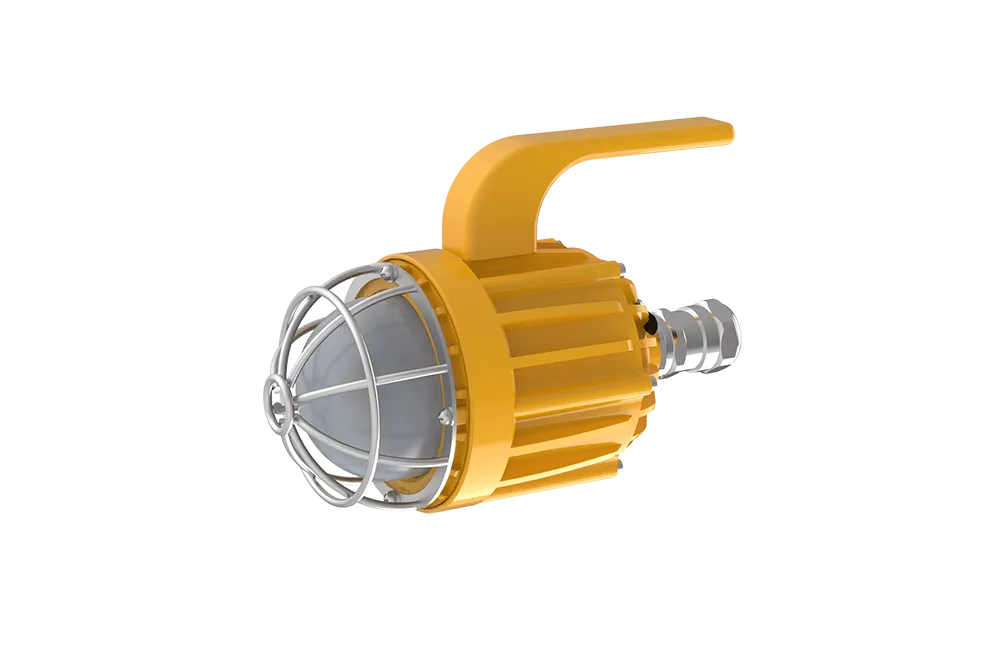
Certified explosion proof work lights for Zone 1 & 21 hazardous areas. Portable, ATEX & IECEx approved, built for oil, gas and chemical plants by SEEKINGLED.
View details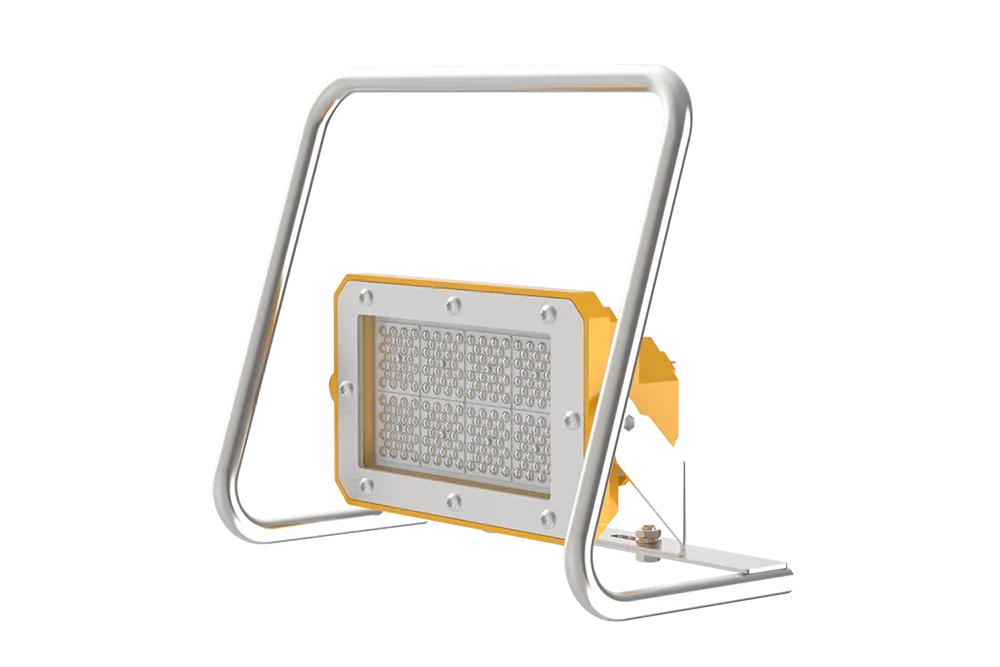
ATEX: II 3G Ex nR ⅡC T6 GcII 3D Ex tc ⅢC T80℃ Dc ATEX Certificate NO: TÜV CY 26 ATEX 0207611 X Feature: ● For Zone 2 and Zone 22● Accepts battery-powered supply● indestructible● Power:AC input:50W,75W,100WDC input:15W,25W,35W Application: Oil and gas, marine, Chemical, pharmaceutical, semiconductor,mining,military industry, paint booth,po…
View details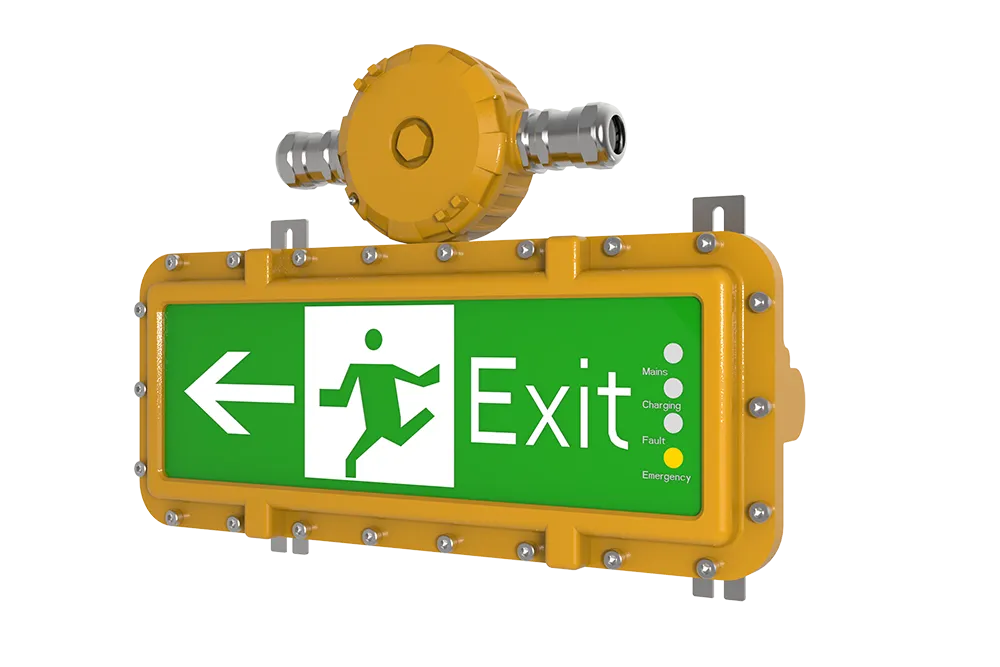
ATEX: Ex II 2G Ex db IIB T6 GbEx II 2D Ex tb IIIC T80°C Db IECEx Ex db IIB T6 Gb;Ex tb IIIC T80°C Db Feature: ● For Zone 1,2 and Zone 21,22● Flameproof type, the strongest Application: Oil and gas, marine, Chemical, pharmaceutical, semiconductor,mining,military industry, paint booth,power plant ETC hazardous area. Technical Specifications:…
View details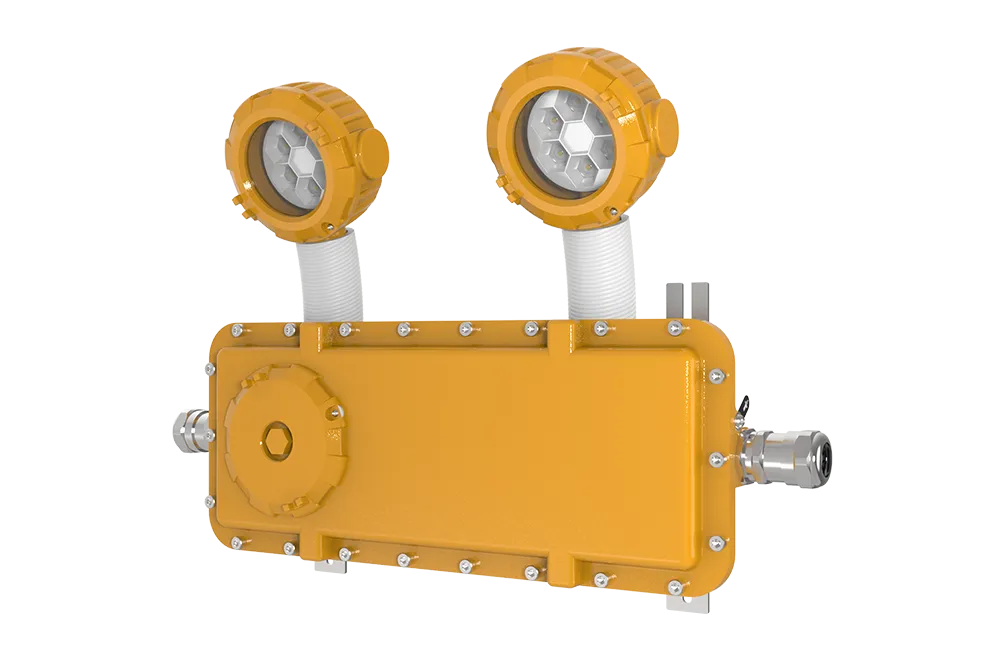
ATEX: Ex II 2G Ex db IIB T6 GbEx II 2D Ex tb IIIC T80°C Db IECEx Ex db IIB T6 Gb;Ex tb IIIC T80°C Db Feature: ● For Zone 1,2 and Zone 21,22● Flameproof type, the strongest Application: Oil and gas, marine, Chemical, pharmaceutical, semiconductor,mining,military industry, paint booth,power plant ETC hazardous area. Technical Specifications:…
View details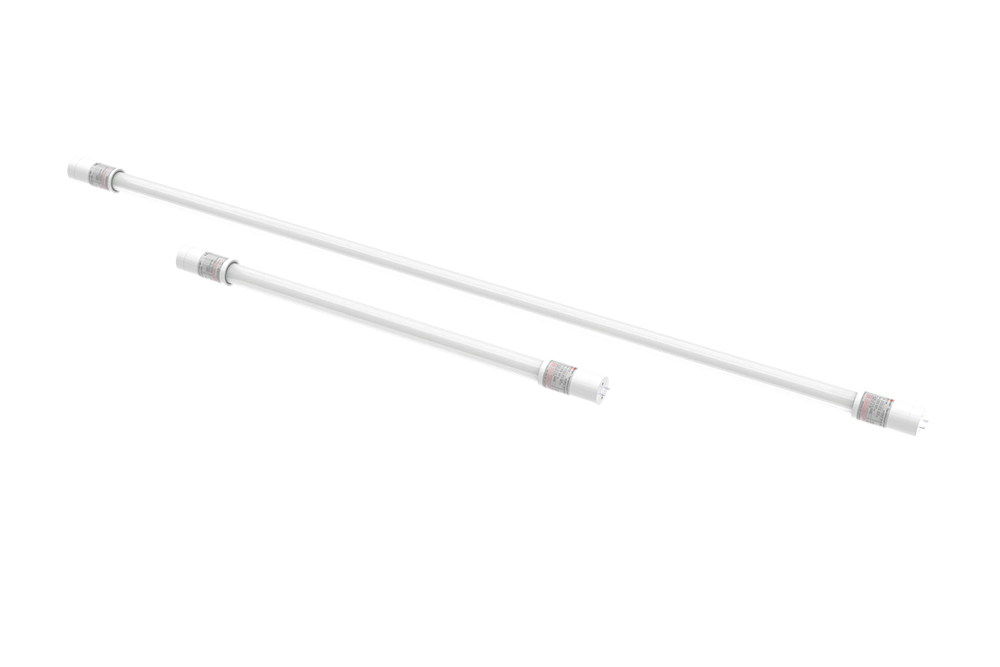
ATEX: Ex II 2G Ex d e IIB T6 Gb ATEX: Ex d e IIB T6 Gb; Feature: ● For Zone 1,2● 9W can replace 18W fluorescent lamps,50% Energy saving Application: Oil and gas, marine, Chemical, pharmaceutical, semiconductor,mining,military industry, paint booth,power plant ETC hazardous area. Technical Specifications: Standards:60079-0, 60079-1, 60079…
View details
ATEX LED flood light solutions deliver safe, powerful illumination for hazardous zones. Learn certifications, Zone ratings, durability, and industrial uses.
View details
Why does my LED flood light stay on all night? Discover real causes like sensor faults, wiring issues, or photocell problems, and how SEEKINGLED lighting solves them.
View details
Where can I find a list of explosion-proof lighting manufacturers? Learn how engineers identify certified suppliers for hazardous area lighting. By SEEKINGLED.
View details
How to install LED street light on poles, roads, and parking areas. A practical installation guide based on real projects, common mistakes, and field experience.
View details