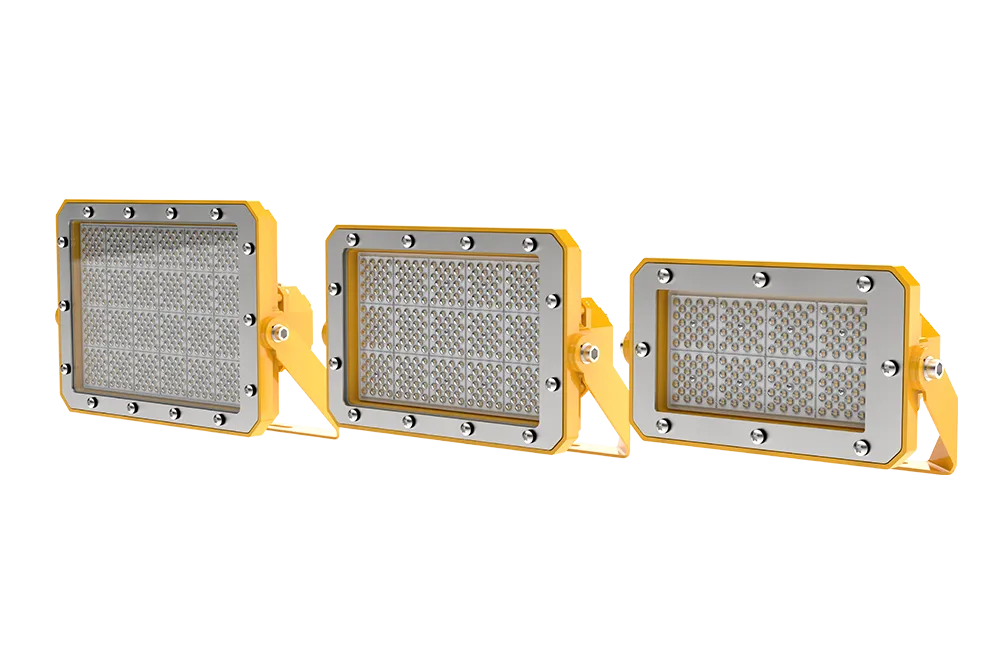
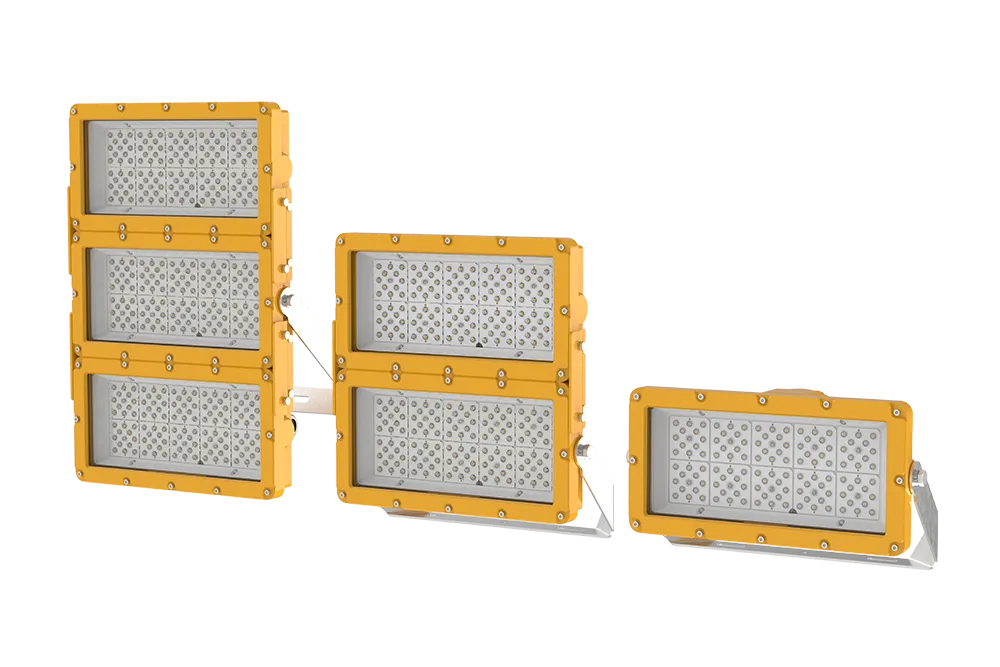
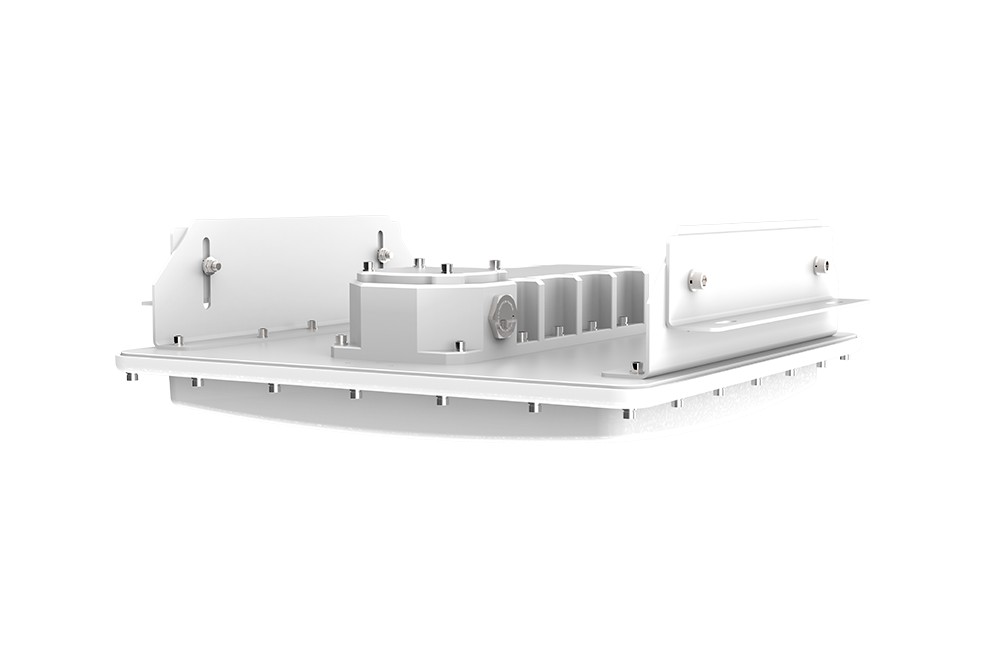
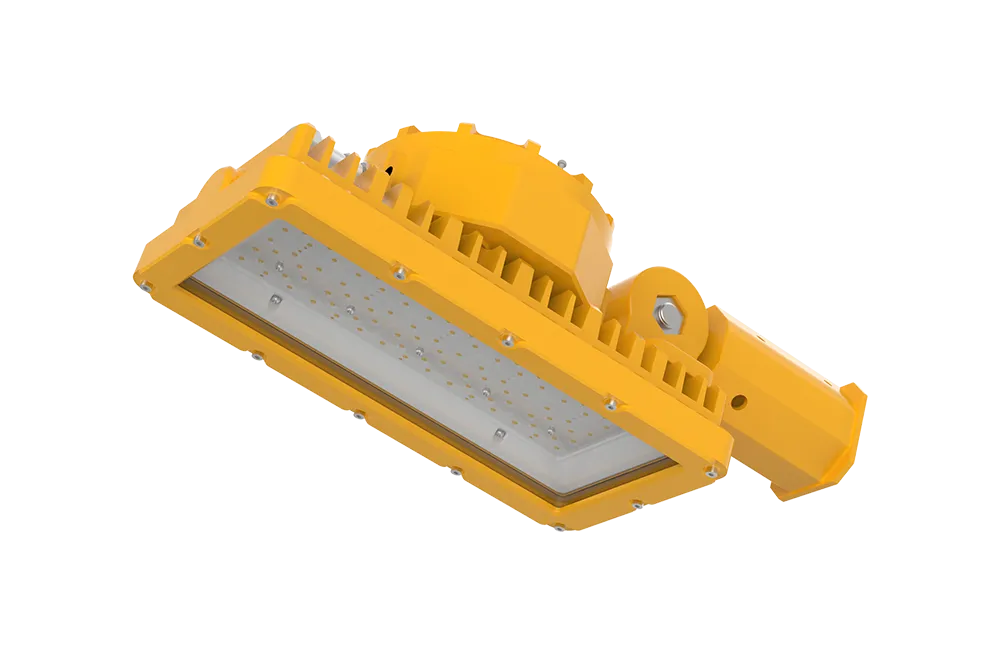
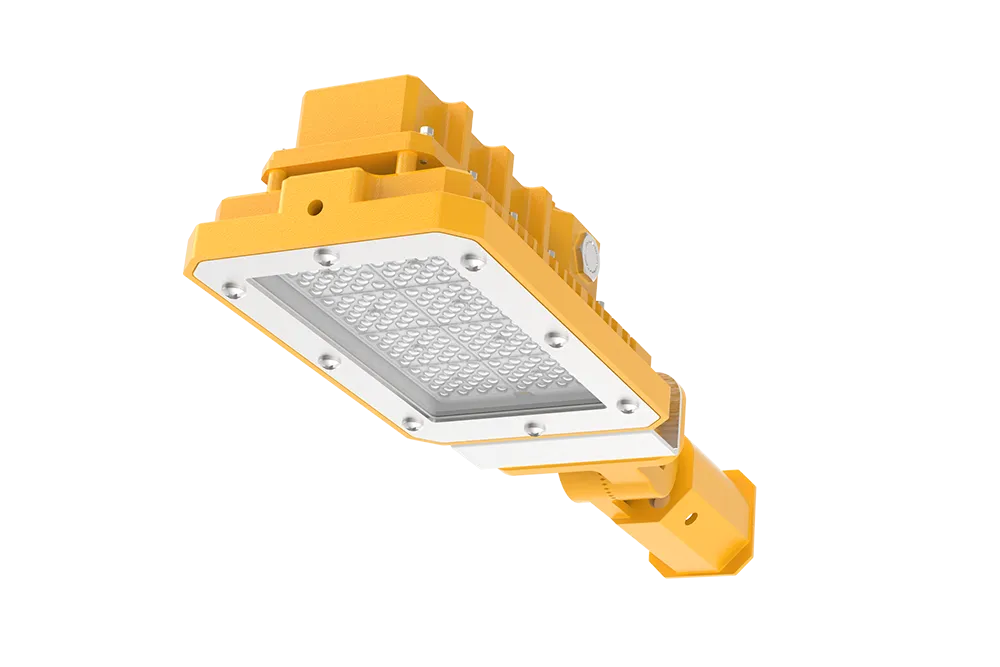
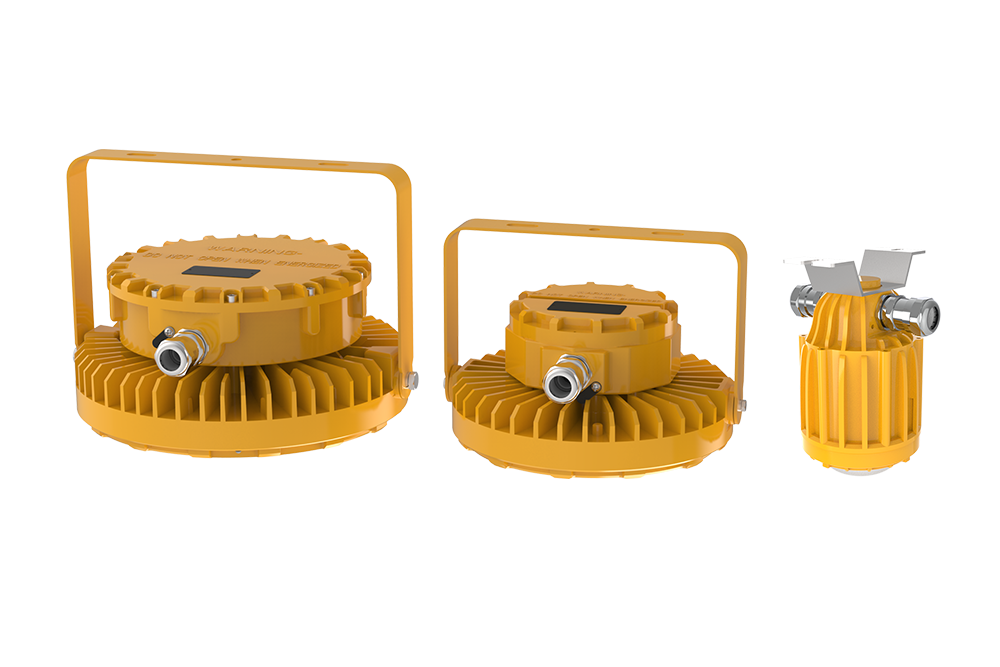
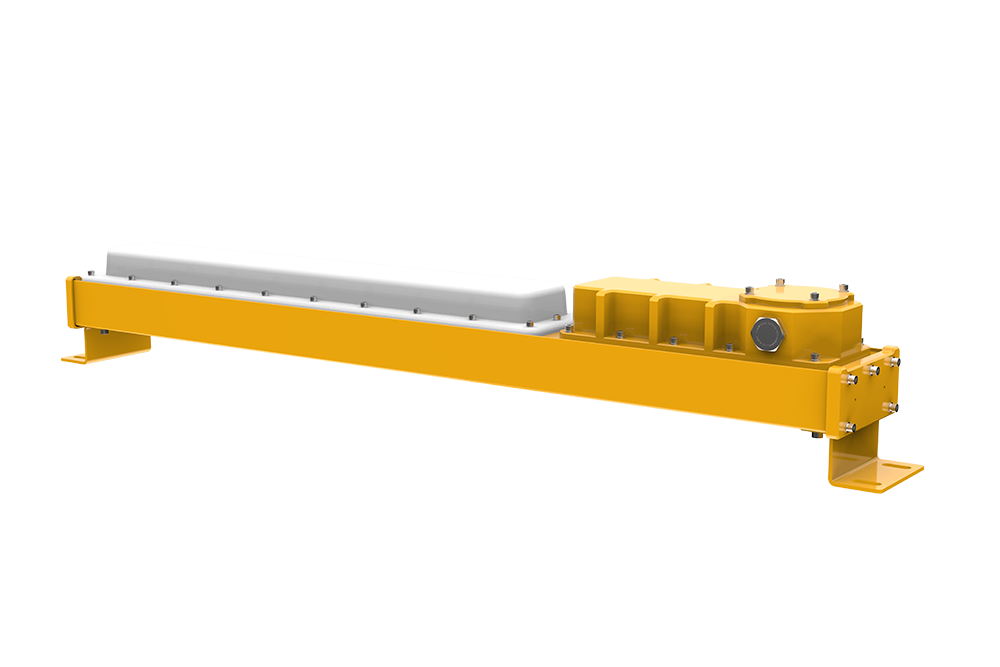
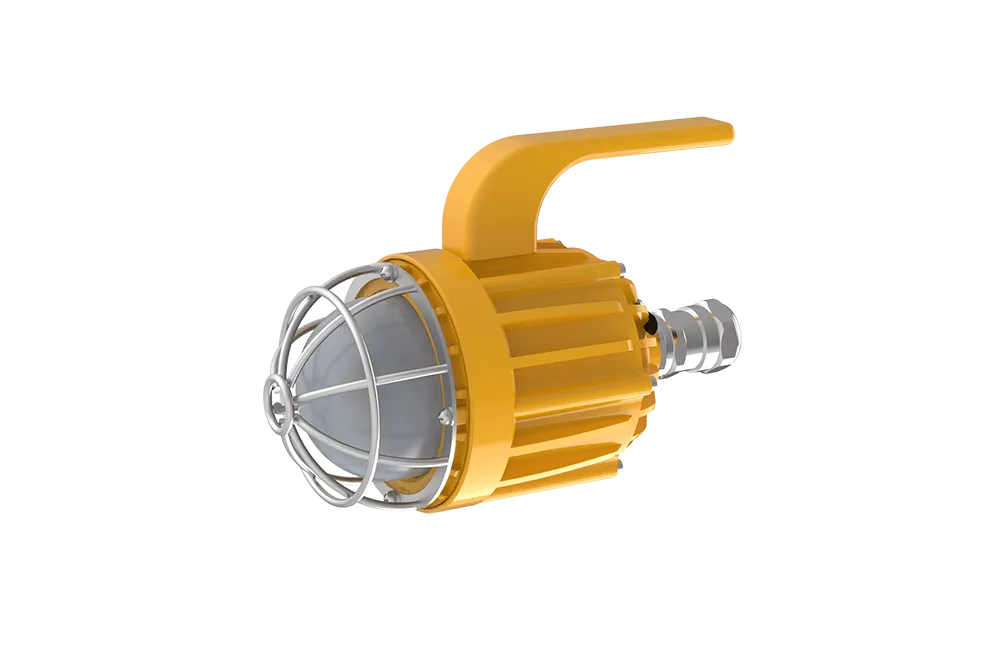
Explosion-proof lighting is specially engineered to prevent industrial lighting fixtures from igniting flammable gas, vapor, or combustible dust in hazardous environments. These systems are designed to contain internal sparks, control surface temperatures, and maintain safe operation in areas where a normal light fixture could trigger a catastrophic explosion.
Most people outside heavy industry think explosion-proof lighting simply means “stronger lights.” That’s not even close.
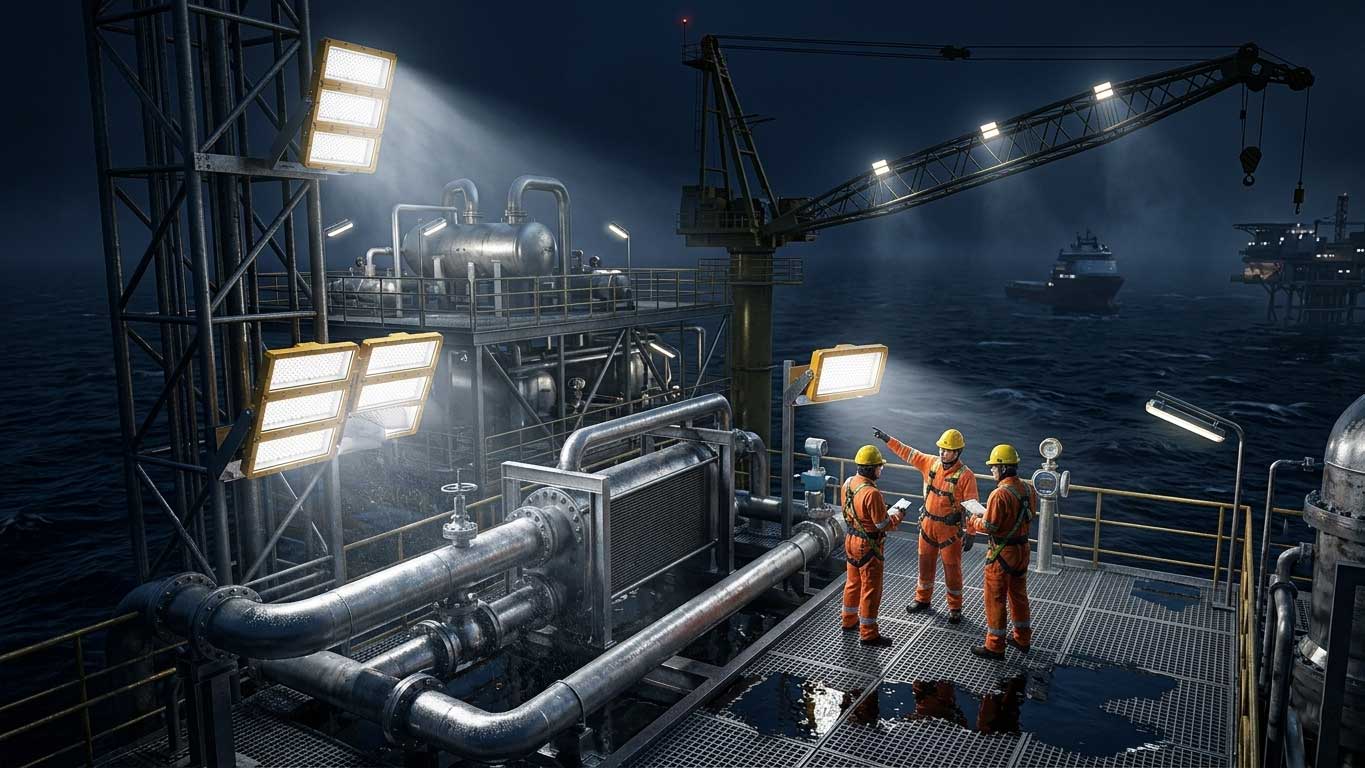
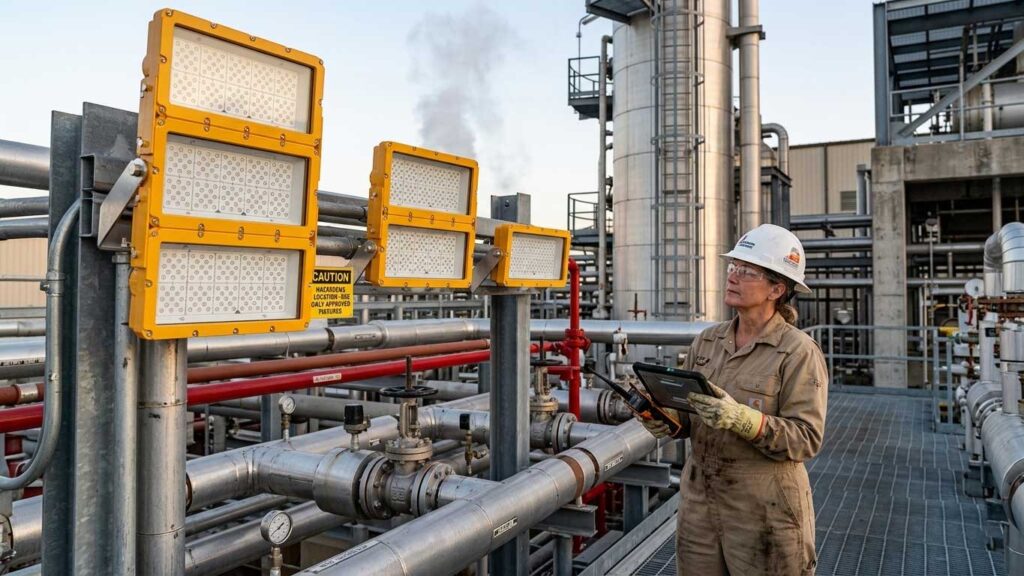
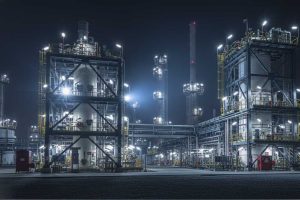
I first understood the difference years ago while walking through a gas-condensate processing unit during a retrofit inspection. The air smelled faintly of hydrocarbons. Every conduit fitting was sealed. Every fixture carried certification markings. The lighting wasn’t installed there to improve visibility alone — it was part of the facility’s ignition-control strategy.
In hazardous environments, lighting becomes safety equipment.
Why Explosion-Proof Lighting Exists
Industrial explosions happen faster than most people imagine.
According to the U.S. Chemical Safety and Hazard Investigation Board (CSB), combustible gas and vapor explosions continue to cause major industrial accidents across petrochemical, food-processing, and energy facilities. Meanwhile, OSHA hazardous-location regulations require properly certified electrical equipment in classified areas.
The objective behind explosion-proof lighting is simple:
Prevent ignition
Protect workers
Reduce facility risk
Maintain compliance
Control insurance liability
Improve operational reliability
A single arc inside a standard fixture can ignite methane, hydrogen, acetylene, or solvent vapor instantly.
That is why certified explosion-proof lighting matters.
What Makes Explosion-Proof Lighting Different?
It Does Not Mean “Explosion Resistant”
This is one of the most misunderstood concepts online.
Explosion-proof lighting is not designed to survive a refinery explosion occurring outside the fixture.
Instead, the fixture is engineered so that if ignition happens internally, flames and hot gases cannot escape and ignite the surrounding hazardous atmosphere.
That distinction changes the entire engineering philosophy.
Core Protection Methods
Modern explosion-proof lighting commonly uses several protection concepts:
Protection Type
Code
Main Principle
Typical Application
Flameproof
Ex d
Contains internal explosion
Refineries, oil & gas
Increased Safety
Ex e
Prevents sparks and overheating
Terminal compartments
Encapsulation
Ex m
Resin-sealed electronics
LED drivers
Intrinsic Safety
Ex i
Limits ignition energy
Portable systems
Type n
Ex n
Non-sparking protection
Zone 2 areas
Many modern LED explosion-proof fixtures combine multiple methods simultaneously.
SEEKINGLED systems often integrate Ex d + Ex e + Ex m concepts depending on the project environment and certification requirements.
Hazardous Area Classifications Matter
Different Regions Use Different Systems
Not all hazardous-area standards are identical.
North America commonly uses:
NEC Class/Division system
Class I Div 1
Class I Div 2
Europe and many international projects use:
ATEX Zones
IECEx standards
Typical ATEX zone classifications:
Zone
Hazard Frequency
Zone 0
Continuous explosive atmosphere
Zone 1
Likely during normal operation
Zone 2
Unlikely and short duration
Lighting certification must match the exact zone classification.
Installing the wrong fixture can fail inspection immediately.
Why LED Changed Explosion-Proof Lighting
Traditional HID hazardous lighting created enormous heat.
That heat created multiple problems:
Higher energy consumption
Shorter lifespan
More maintenance shutdowns
Increased temperature-class challenges
LED technology changed hazardous-area lighting dramatically.
According to the U.S. Department of Energy, LED systems can reduce lighting energy consumption significantly compared to legacy HID systems.
Lower operating temperatures matter even more in hazardous zones.
Temperature Codes Are Critical
Ignition can occur without sparks.
Hot surfaces alone can ignite flammable gas.
That is why explosion-proof lighting uses T-ratings.
Temperature Class
Maximum Surface Temperature
T1
450°C
T2
300°C
T3
200°C
T4
135°C
T5
100°C
T6
85°C
Modern industrial projects often require T4 or higher.
In hydrogen-rich environments, thermal management becomes extremely important.
Real-World Failure Points Most Buyers Ignore
Corrosion Destroys More Fixtures Than Explosions
People focus heavily on certification labels.
But offshore and chemical environments destroy poorly built fixtures long before electrical failure happens.
I’ve inspected coastal LNG facilities where cheap hazardous fixtures showed:
Rusted fasteners
Failed seals
Fogged lenses
Corroded conduit entries
Water intrusion inside driver compartments
The hazardous certification was technically valid.
The fixture itself was already dying.
That’s why serious explosion-proof lighting manufacturers focus heavily on:
Marine-grade powder coatings
Stainless-steel hardware
IP66/IP67 sealing
Thermal isolation
Anti-corrosion housing design
SEEKINGLED hazardous lighting systems are commonly engineered specifically for aggressive industrial environments with salt spray and chemical exposure.
Explosion-proof lighting is certified hazardous-area lighting designed to prevent fixtures from igniting surrounding explosive gas, vapor, or dust atmospheres.
Can explosion-proof lights be used outdoors?
Yes. Many hazardous-area fixtures are specifically designed for offshore, marine, refinery, and outdoor industrial environments.
Is ATEX the same as explosion-proof?
ATEX is a European hazardous-area certification system. Explosion-proof is a protection concept commonly associated with Ex d flameproof equipment.
Why are explosion-proof fixtures heavier?
They use reinforced housings capable of containing internal ignition pressure safely.
Are LED explosion-proof lights better than HID?
In most industrial applications, yes. LEDs provide lower energy consumption, reduced maintenance, lower surface temperatures, and longer service life.
Why Industrial Projects Use SEEKINGLED Explosion-Proof Lighting
SEEKINGLED designs hazardous-area lighting systems for:
Oil & gas facilities
Chemical processing plants
Marine environments
LNG infrastructure
Industrial manufacturing
Hazardous storage areas
Core features commonly include:
ATEX & IECEx support
T4–T6 temperature ratings
High-efficiency LED systems
Corrosion-resistant construction
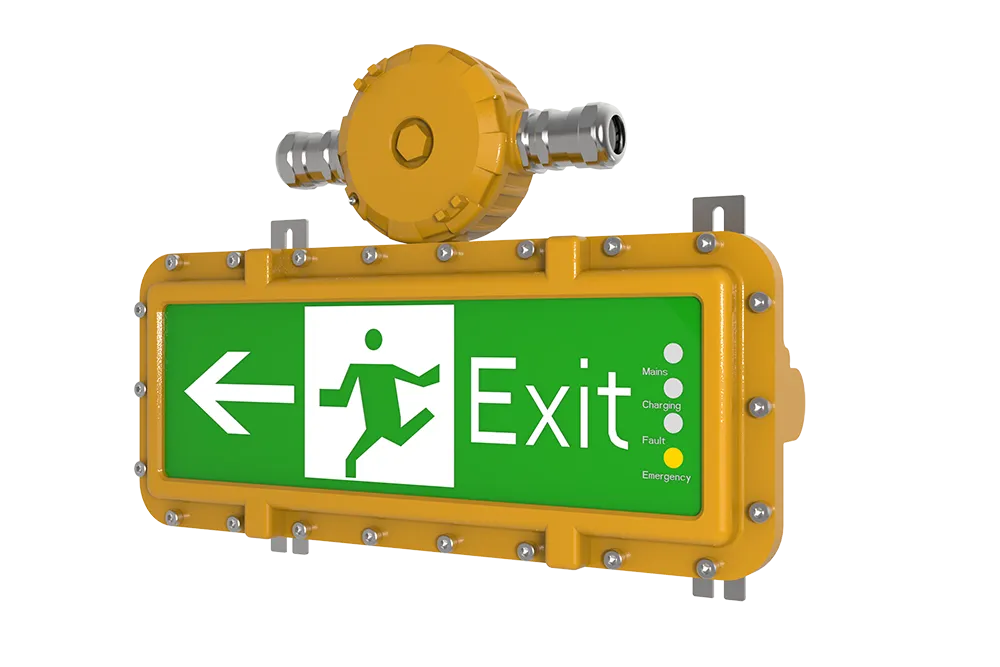
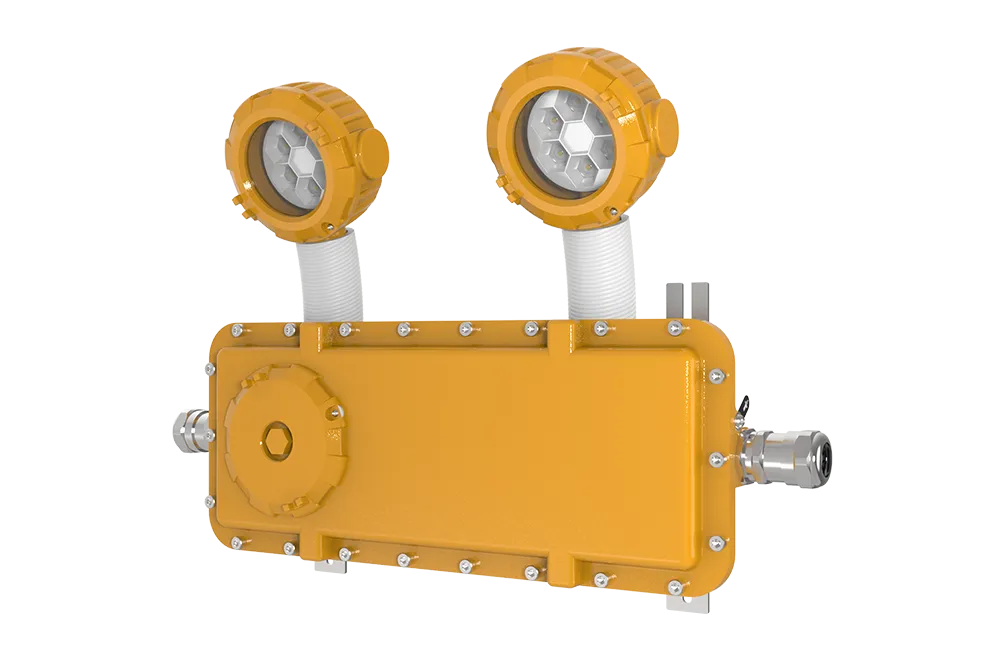
Emergency backup options
Long operational lifespan
Industrial-grade sealing performance
These systems are engineered for environments where lighting failure becomes a safety issue — not just an inconvenience.
Daweiboss specializes in explosion-proof LED lighting systems and hazardous-area industrial illumination. His experience includes refinery retrofit projects, offshore platform lighting upgrades, petrochemical safety compliance consulting, and hazardous-location engineering support across international industrial facilities.
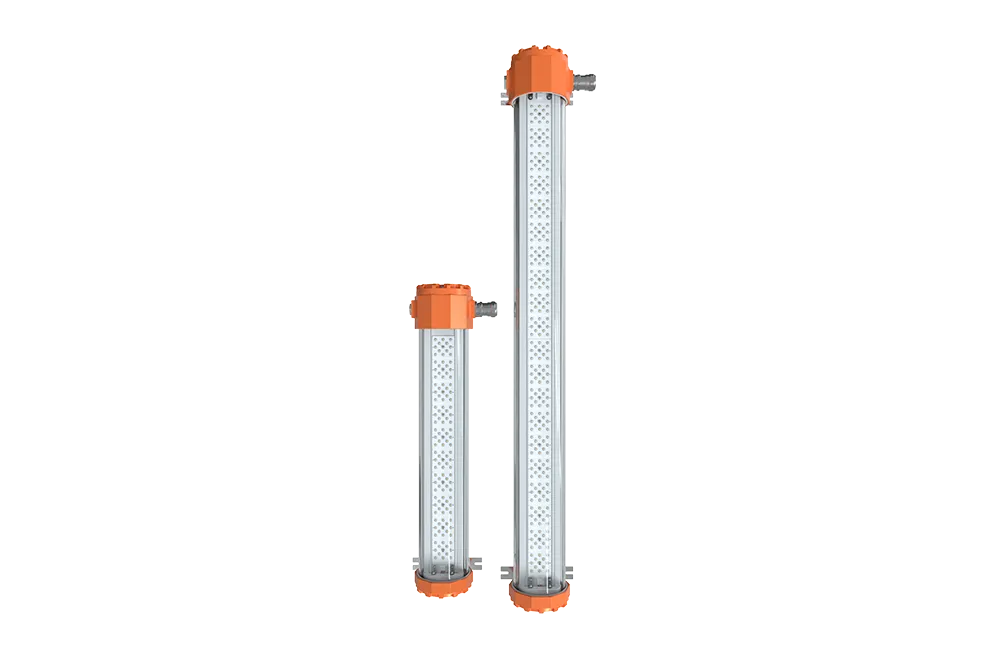
SEEKINGLED LED Linear Explosion Proof Light and Explosion Proof lighting is ATEX and IECEx certified for Zone 1, Zone 2, Zone 21 and Zone 22 hazardous locations, built for long-term industrial use.
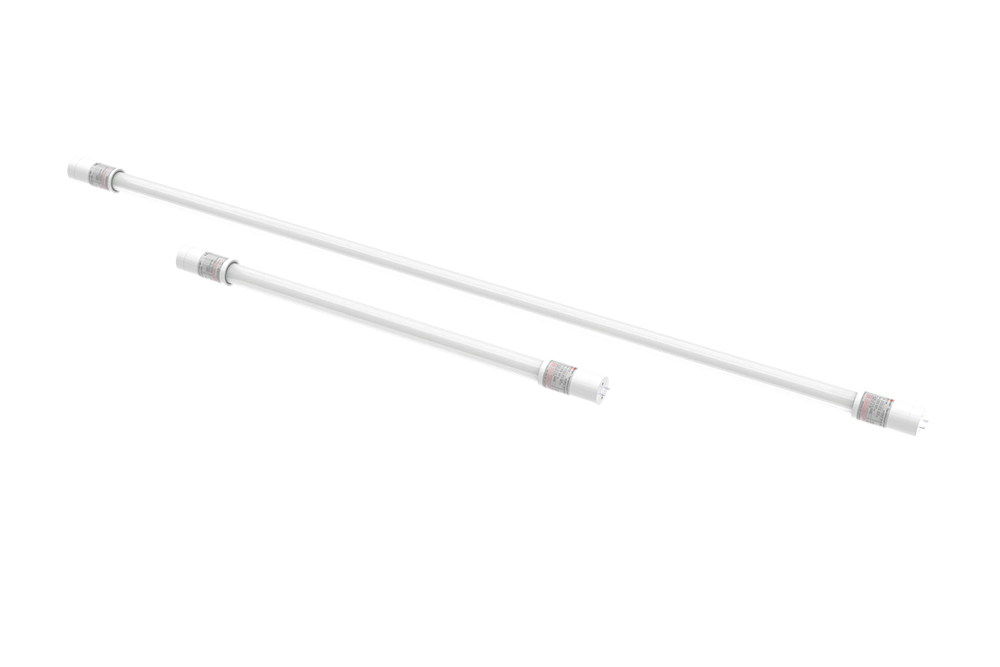
LED Linear Explosion Proof Lights and EX Proof lights for Zone 1, Zone 2, Zone 21 and Zone 22 hazardous areas. ATEX & IECEx certified explosion proof LED linear lighting with emergency function, adjustable power and IP67 protection by SEEKINGLED.
SEEKINGLED LED Explosion Proof Flood Lights are ATEX certified for Zone 2 and Zone 22 hazardous areas, offering high efficiency, adjustable power and integrated junction box.
SEEKINGLED LED Explosion Proof Flood Lights are flameproof ATEX and IECEx certified for Zone 1 and Zone 2 hazardous areas, offering high power, adjustable output and long service life.
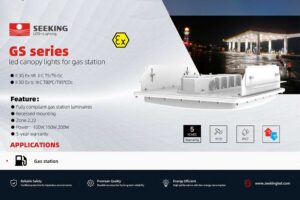
SEEKINGLED LED Gas Station Canopy Lights are ATEX certified for Zone 2 and Zone 22 hazardous areas, featuring adjustable power and built-in explosion-proof junction box.
ATEX: Ex II 2G Ex db IIB T6/T5 GbEx II 2D Ex tb IIIC T80°C/ T95°C Db IECEx Ex db IIB T6 Gb;Ex tb IIIC T80°C Db Feature: ● For Zone 1,2 and Zone 21,22● Flameproof type, the strongest● 100W can replace 250W HID,energy saving● Power:60W,80W,100W Application: Oil and gas, marine, Chemical, pharmaceutical, semiconductor,mining,military industr…
ATEX: II 3G Ex nR ⅡC T5/T6 GcII 3D Ex tc ⅢC T80℃/T95℃Dc ATEX Certificate NO: TÜV CY 26 ATEX 0207611 X Feature: ● For Zone 2 and Zone 22● 150W can replace 250W HID lamps,Energy saving● Power:50W,75W,100W,150W,200W Application: Oil and gas, marine, Chemical, pharmaceutical, semiconductor,mining,military industry, paint booth,power plant ETC…
LED explosion proof high bay lights are designed for Zone 1, Zone 2, Zone 21 and Zone 22 hazardous areas. This page introduces the HB21 Series from SEEKING, including certifications, power options and real application considerations.
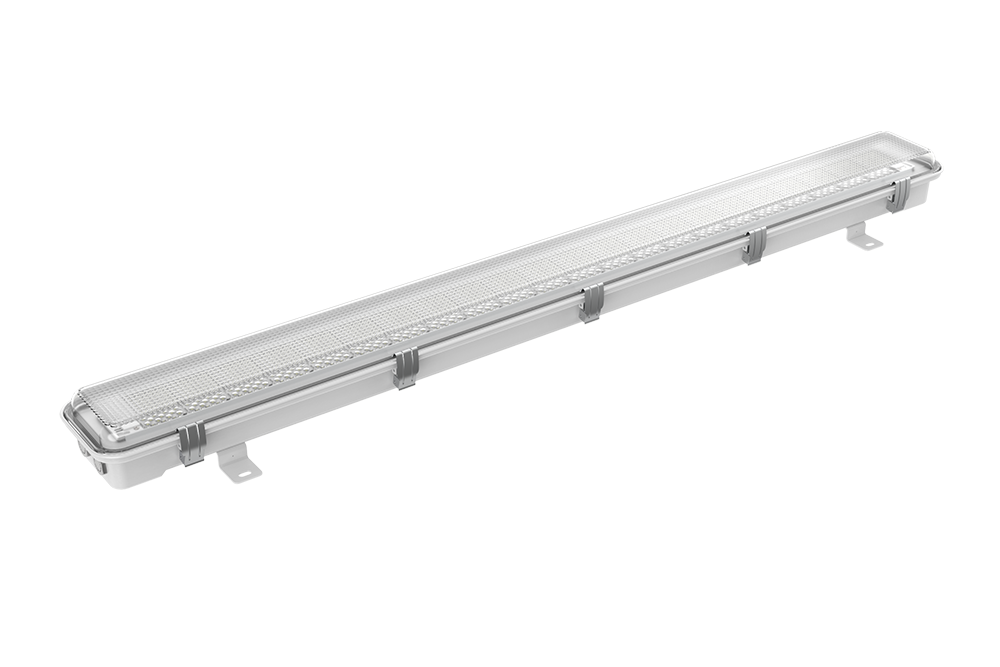
LED Linear Explosion Proof Lights from SEEKINGLED. LU Series Flame Proof lights ATEX-certified explosion proof LED linear lighting for Zone 2 gas and Zone 22 dust areas, IP69K, IK10, long lifetime and flexible power options.
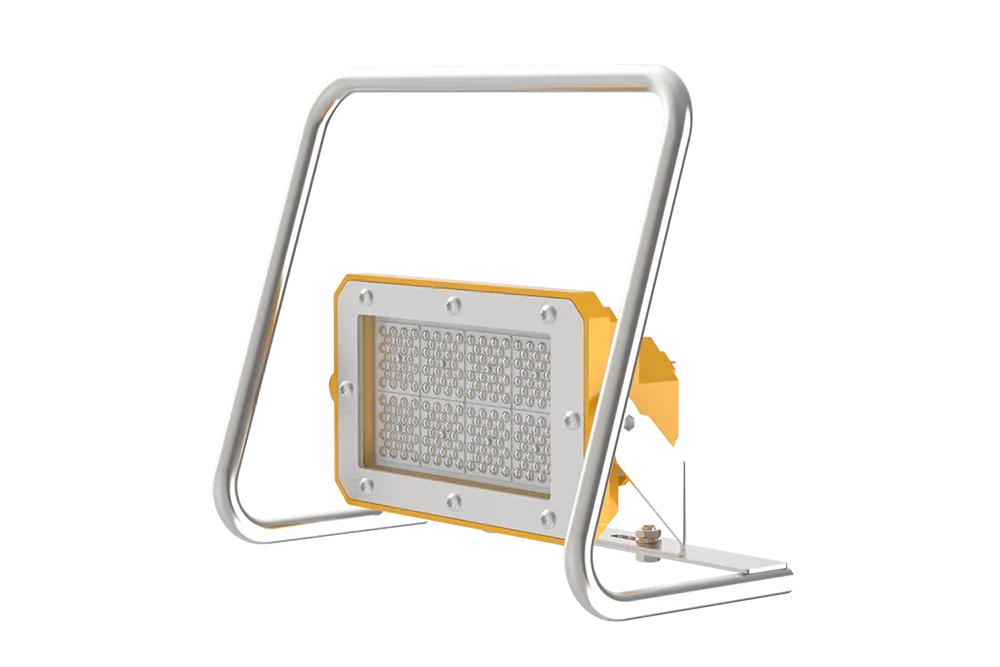
Certified explosion proof work lights for Zone 1 & 21 hazardous areas. Portable, ATEX & IECEx approved, built for oil, gas and chemical plants by SEEKINGLED.
ATEX: II 3G Ex nR ⅡC T6 GcII 3D Ex tc ⅢC T80℃ Dc ATEX Certificate NO: TÜV CY 26 ATEX 0207611 X Feature: ● For Zone 2 and Zone 22● Accepts battery-powered supply● indestructible● Power:AC input:50W,75W,100WDC input:15W,25W,35W Application: Oil and gas, marine, Chemical, pharmaceutical, semiconductor,mining,military industry, paint booth,po…
ATEX: Ex II 2G Ex db IIB T6 GbEx II 2D Ex tb IIIC T80°C Db IECEx Ex db IIB T6 Gb;Ex tb IIIC T80°C Db Feature: ● For Zone 1,2 and Zone 21,22● Flameproof type, the strongest Application: Oil and gas, marine, Chemical, pharmaceutical, semiconductor,mining,military industry, paint booth,power plant ETC hazardous area. Technical Specifications:…
ATEX: Ex II 2G Ex db IIB T6 GbEx II 2D Ex tb IIIC T80°C Db IECEx Ex db IIB T6 Gb;Ex tb IIIC T80°C Db Feature: ● For Zone 1,2 and Zone 21,22● Flameproof type, the strongest Application: Oil and gas, marine, Chemical, pharmaceutical, semiconductor,mining,military industry, paint booth,power plant ETC hazardous area. Technical Specifications:…
ATEX: Ex II 2G Ex d e IIB T6 Gb ATEX: Ex d e IIB T6 Gb; Feature: ● For Zone 1,2● 9W can replace 18W fluorescent lamps,50% Energy saving Application: Oil and gas, marine, Chemical, pharmaceutical, semiconductor,mining,military industry, paint booth,power plant ETC hazardous area. Technical Specifications: Standards:60079-0, 60079-1, 60079…
In hazardous areas such as oil & gas, chemical plants, coal mines and pharmaceuticals, explosion-proof lights are critical safety equipment. Many people find the prices high at first glance. Here is a clear look at current market ranges and th...
What is the cut line on LED lights? Learn how cut lines control glare, improve safety, and why beam precision matters in industrial and outdoor LED lighting.
 Seeking LED