how many lumens do i need for flood light depends on the area, mounting height, beam angle, application, and required illuminance. As a practical starting point, small residential areas may use 1,000–3,000 lumens, while driveways, yards, parking areas, and commercial spaces commonly require 3,000–15,000+ lumens. Larger industrial or sports applications can require much more.
How Many Lumens Do I Need for a Flood Light?
There is no single lumen rating that works for every flood light installation.
A 2,000-lumen fixture mounted three meters above a small entrance can look extremely bright. Put the same fixture on a high warehouse wall and the result can be disappointing.
This is where many lighting purchases go wrong.
The useful question is not simply “How many lumens?” It is “How many lumens reach the surface I actually need to illuminate?”
The Illuminating Engineering Society (IES) bases lighting recommendations on maintained illuminance targets rather than fixture lumens alone. Its Illuminance Selector provides recommended maintained illuminance values and uniformity criteria for different applications.
For professional flood-lighting projects, I normally look at four things together:
Target area
Required illuminance
Mounting height
Beam distribution
Only then does the lumen number become meaningful.
Flood Light Lumens Guide by Application
The following ranges are practical starting points for selecting LED flood lights, not universal IES requirements:
Application
Typical starting range
Main consideration
Small entrance
1,000–2,000 lm
Glare and coverage
Backyard / patio
1,500–3,000 lm
Beam spread
Driveway
2,000–5,000 lm
Mounting height
Residential security
2,000–5,000 lm
Sensor and aiming
Small parking area
5,000–10,000 lm
Uniformity
Warehouse yard
8,000–20,000 lm
Height and optics
Commercial façade
5,000–20,000+ lm
Beam angle
Large industrial area
15,000–40,000+ lm
Layout and spacing
Sports field
20,000+ lm per fixture
Photometric design
These ranges should not replace a photometric calculation. In a real project, fixture spacing and mounting geometry can change the required lumens considerably.
Why Lumens Alone Can Be Misleading
Consider two 10,000-lumen flood lights.
Fixture A uses a wide beam and spreads its output across a large area.
Fixture B uses a tighter distribution and concentrates more light toward a distant target.
Both fixtures produce 10,000 lumens.
They will not produce the same illuminance at the target.
IES defines floodlights as projectors capable of directing light toward a scene or object, with field angles ranging from roughly 10° to more than 100°.
That is a surprisingly large range. It explains why a lumen-only comparison often produces poor real-world decisions.
How Many Lumens for Outdoor Flood Lights?
For residential outdoor lighting, 2,000–5,000 lumens is often a useful starting range for a driveway, side yard, garage approach, or security application.
But mounting height changes everything.
A fixture installed close to the ground does not need to throw light very far. A fixture mounted high on a building has to cover a much larger area, and its beam distribution becomes increasingly important.
For a commercial parking or loading area, 5,000–15,000 lumens per fixture may be a reasonable initial range, but the final selection should be based on layout and target illuminance.
ANSI/IES RP-8 specifically recognizes floodlighting as a method of projecting controlled light over long distances or onto particular surfaces, while warning that improper use can increase glare compared with conventional roadway luminaires.
This is why I would never specify a commercial flood light from lumens alone.
How Many Lumens for a Warehouse or Industrial Area?
Industrial applications usually need substantially more output because fixtures are mounted higher and the illuminated area is larger.
For example, imagine a warehouse loading yard with:
12 m mounting height
Large truck access area
Multiple loading bays
Nighttime operation
Limited surrounding ambient light
A 3,000-lumen residential flood light may technically illuminate the ground beneath it, but it is unlikely to provide the distribution and uniformity required across the entire working area.
A commercial fixture in the 10,000–30,000+ lumen range may be more appropriate, depending on spacing and optics.
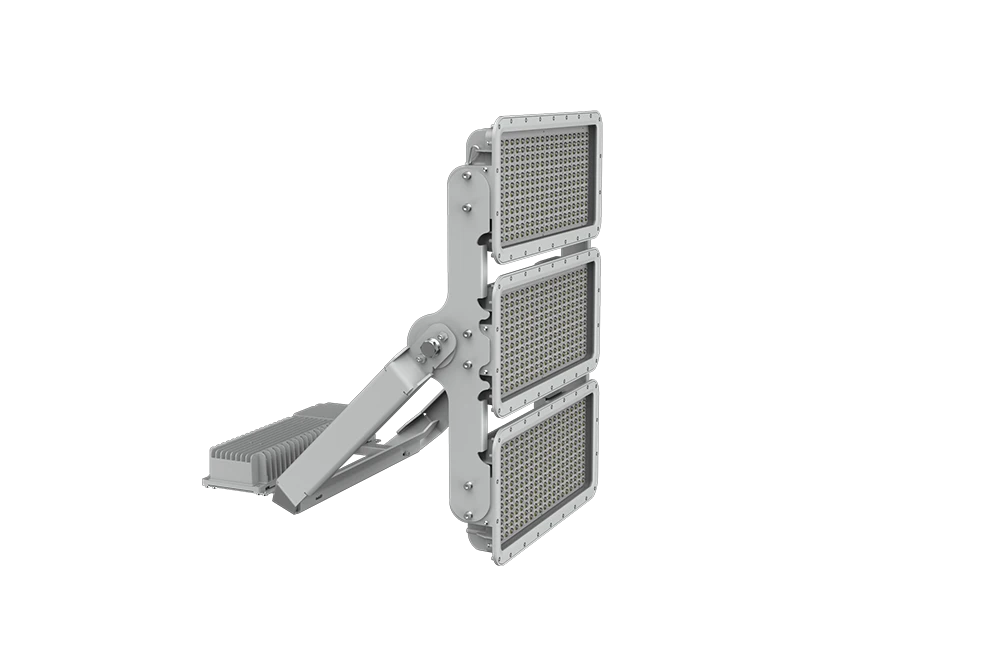
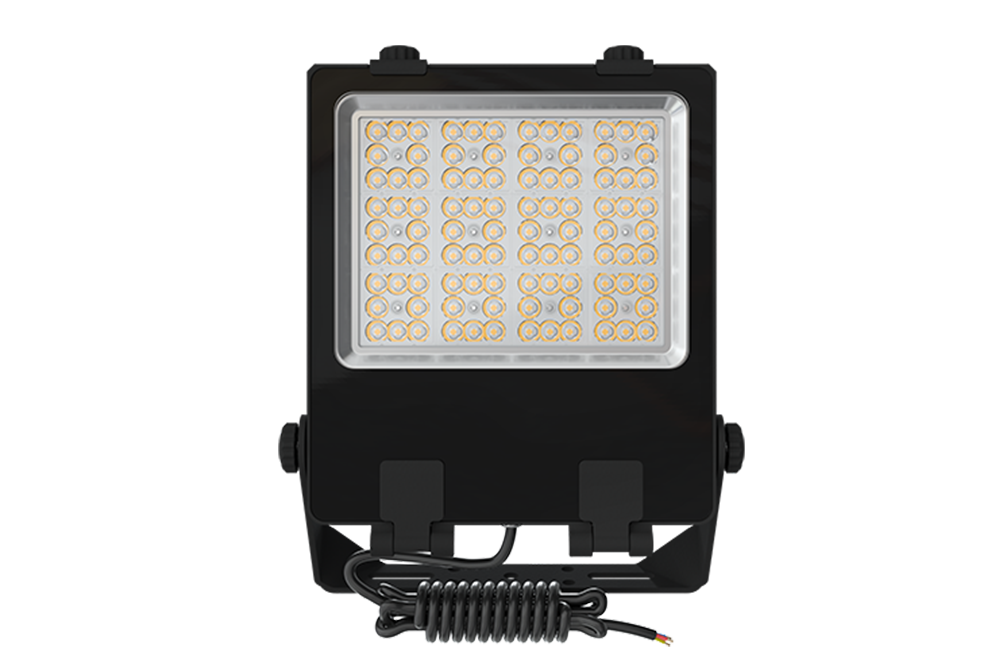
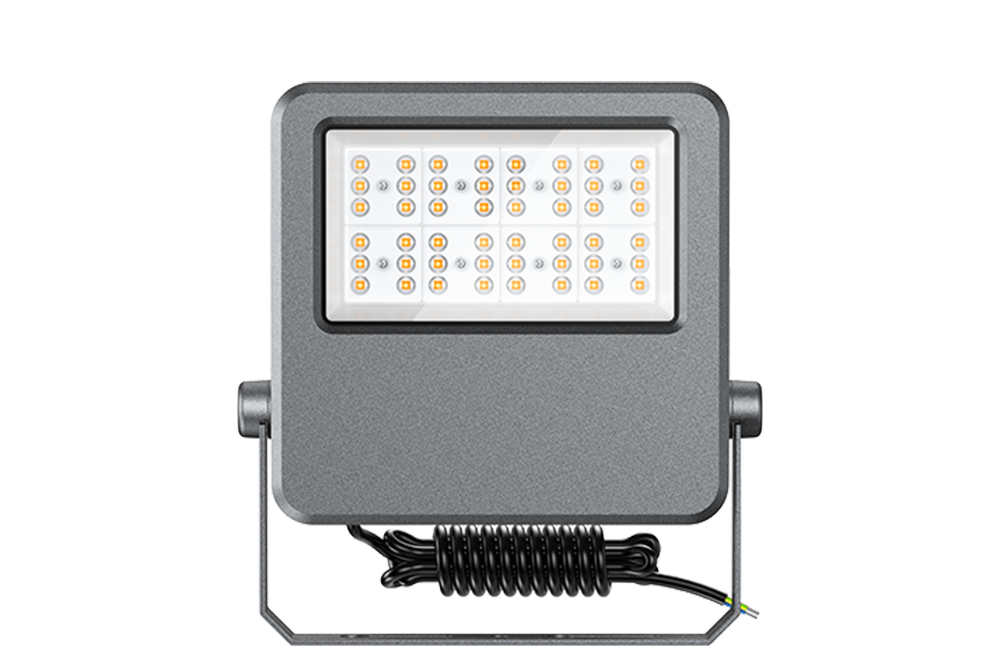
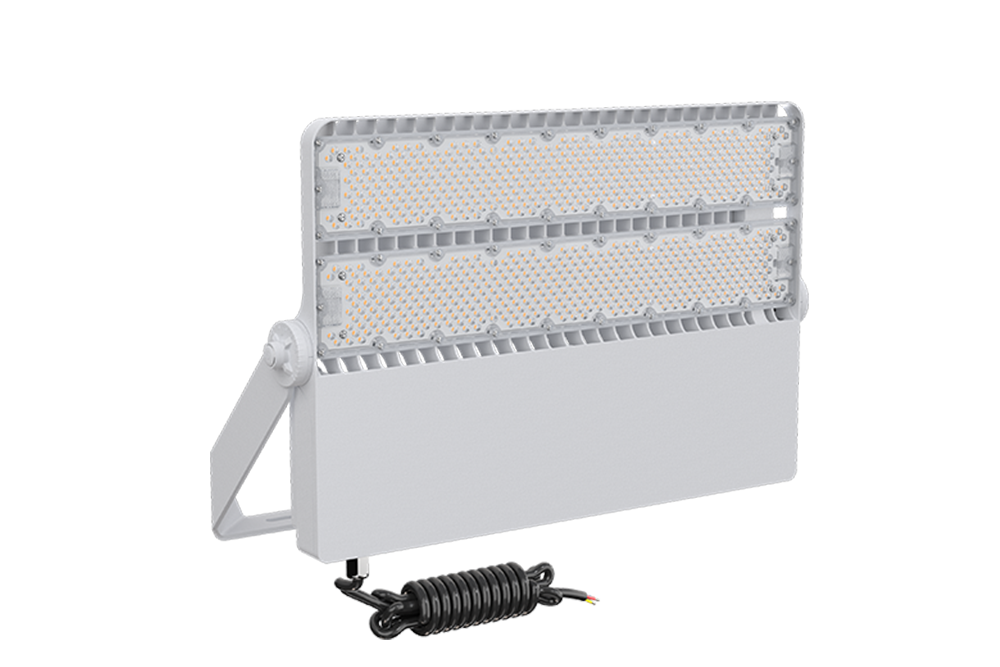
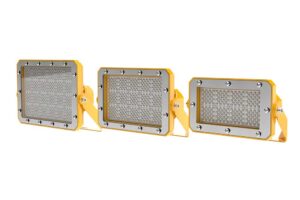
SEEKINGLED‘s commercial flood-light portfolio is designed around different power levels, optical distributions, mounting conditions, and outdoor environments rather than treating wattage as the only selection criterion.
How to Calculate Flood Light Lumens
A useful first calculation is based on illuminance.
The basic relationship is:
Lumens ≈ Lux × Area
For example, if a small outdoor area covers 100 m² and the design target were 50 lux:
50 lux × 100 m² = 5,000 lumens
That 5,000 lumens represents the theoretical light reaching the area before accounting for practical losses and distribution.
The installed fixture may therefore need a higher lumen output.
This distinction matters because lumens describe the total visible light produced by a source, while lux describes light arriving at a surface.
IES lighting recommendations are expressed using illuminance and also consider uniformity, which is much closer to what people actually experience on the ground.
Add More Fixtures Instead of One Extremely Powerful Fixture?
Often, yes.
One extremely bright flood light can create a bright center and dark edges. Several correctly positioned fixtures can produce better uniformity with less extreme contrast.
For a long warehouse façade, for example, three appropriately aimed fixtures can make more sense than one oversized fixture pointed at the center.
The goal is not to create the brightest point.
The goal is to create useful light where people, vehicles, equipment, or cameras need it.
Lumens vs Watts for LED Flood Lights
Watts measure electrical power consumption.
Lumens measure visible light output.
They are not interchangeable.
DOE’s Federal Energy Management Program currently lists 118 lm/W as the minimum luminaire efficacy requirement for floodlight luminaires within its exterior-lighting procurement guidance.
So, as a simple illustration, a 100W fixture operating at 120 lm/W would produce approximately:
100W × 120 lm/W = 12,000 lumens
Actual product output depends on the complete luminaire, driver, optics, thermal conditions, and testing method.
That is why comparing two flood lights only by wattage is no longer a useful professional buying method.
What Else Should I Check Besides Lumens?
Before selecting a SEEKINGLED flood light, check:
Beam angle: Determines where the light goes.
Mounting height: Higher installations usually require more output and careful optics.
IP rating: Important for outdoor exposure.
IK rating: Relevant where mechanical impact is possible.
Color temperature: Affects visual appearance and application suitability.
CRI: Important where color recognition matters.
Surge protection: Particularly relevant to exposed outdoor installations.
Driver quality: Influences reliability and electrical performance.
Photometric data: Essential for professional layouts.
A 20,000-lumen fixture with poor optics can be less useful than a 12,000-lumen fixture correctly matched to the application.
FAQ About How Many Lumens Do I Need for Flood Light
How many lumens do I need for a driveway flood light?
A practical starting point is around 2,000–5,000 lumens, depending on driveway size, mounting height, beam angle, surrounding darkness, and desired security level.
How many lumens do I need for a backyard?
For a typical residential backyard, 1,500–5,000 lumens can be a useful starting range. Larger yards may require multiple fixtures rather than one extremely bright light.
How many lumens do I need for security lighting?
Around 2,000–5,000 lumens can work for many residential security applications, but camera visibility, mounting position, beam control, and glare should also be considered.
Is 10,000 lumens enough for a flood light?
Yes, 10,000 lumens can be sufficient for many medium-sized outdoor areas. Whether it is enough depends on mounting height, area, beam distribution, and required illuminance.
How many lumens do I need for a parking lot?
A small parking area may start around 5,000–10,000 lumens per fixture, while larger commercial lots often require higher-output fixtures and multiple mounting points. A photometric layout is preferable for final selection.
Are more lumens always better?
No. Excessive output can increase glare, spill light, energy use, and visual discomfort. ANSI/IES guidance emphasizes controlled aiming and appropriate floodlight application.
What is more important, lumens or beam angle?
Both matter. Lumens describe total light output, while beam distribution determines where that output is concentrated. For flood lights, the two specifications should be evaluated together.
Final Answer
how many lumens do i need for flood light depends on the application rather than a universal lumen number. A useful starting range is 1,000–5,000 lumens for smaller residential areas, 5,000–15,000 for many commercial spaces, and 15,000–40,000+ for larger industrial applications. The final choice should combine lumens, beam angle, mounting height, area, and required illuminance.
Discover vintage explosion proof lighting, its industrial origins, safety standards, restoration challenges, and modern hazardous-area alternatives for demanding environments.
Learn what are flood lights used for in security, sports, warehouses, parking, and architecture. Discover how beam angle and aiming shape real lighting results.
LED lights for street lighting designed for roads, parking areas, and industrial zones. Learn how SEEKINGLED street lights solve maintenance, energy, and durability challenges.
LED Explosion-Proof Lights run cooler, achieve T6 ratings, and offer superior safety over HID and fluorescent fixtures. Upgrade hazardous area protection today.
 Seeking LED