 Seeking LED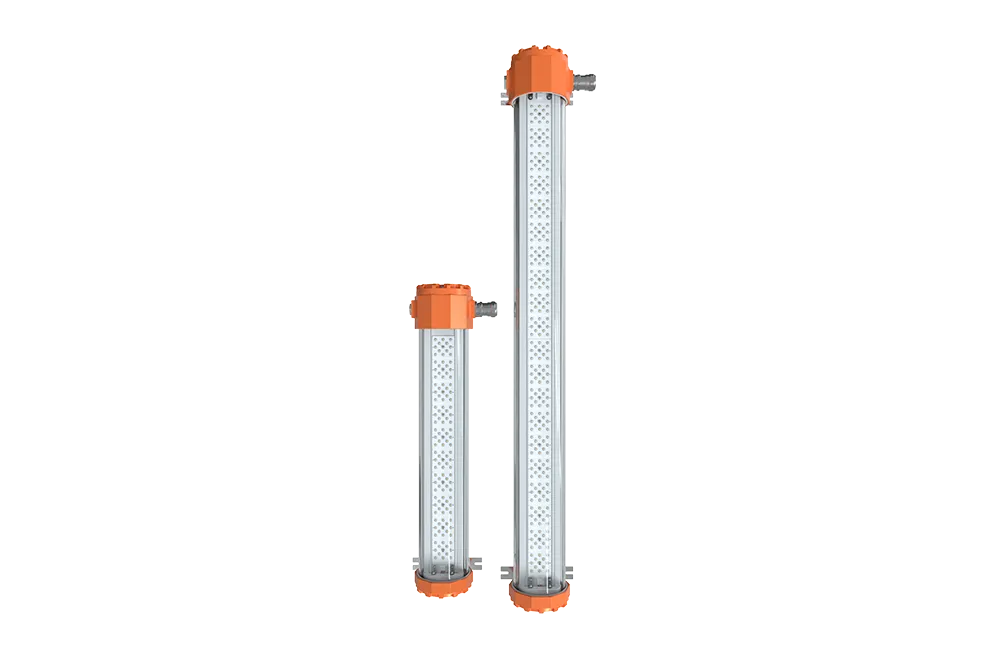
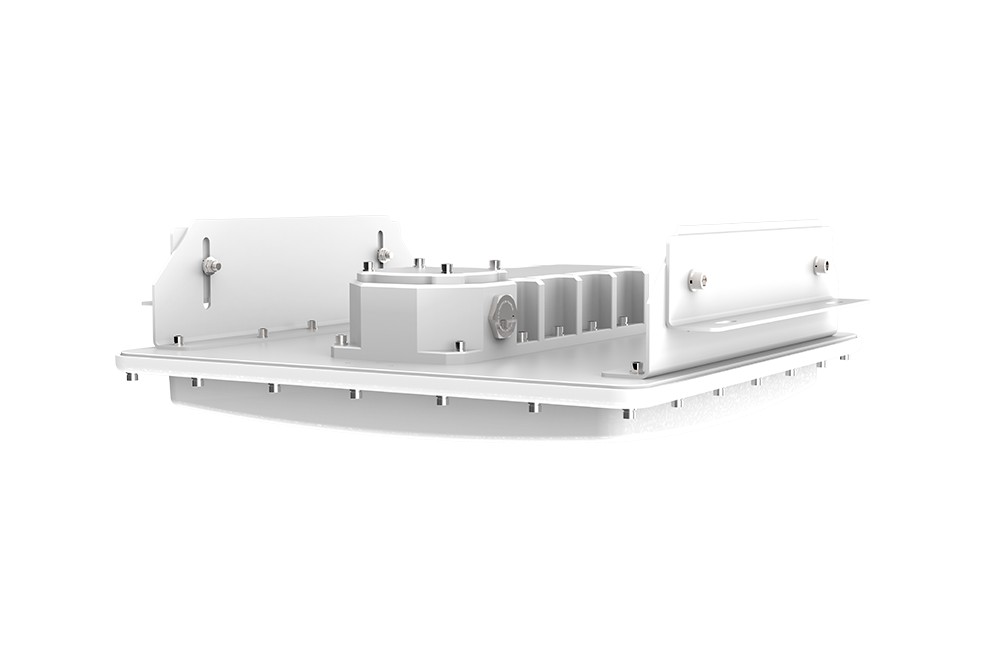
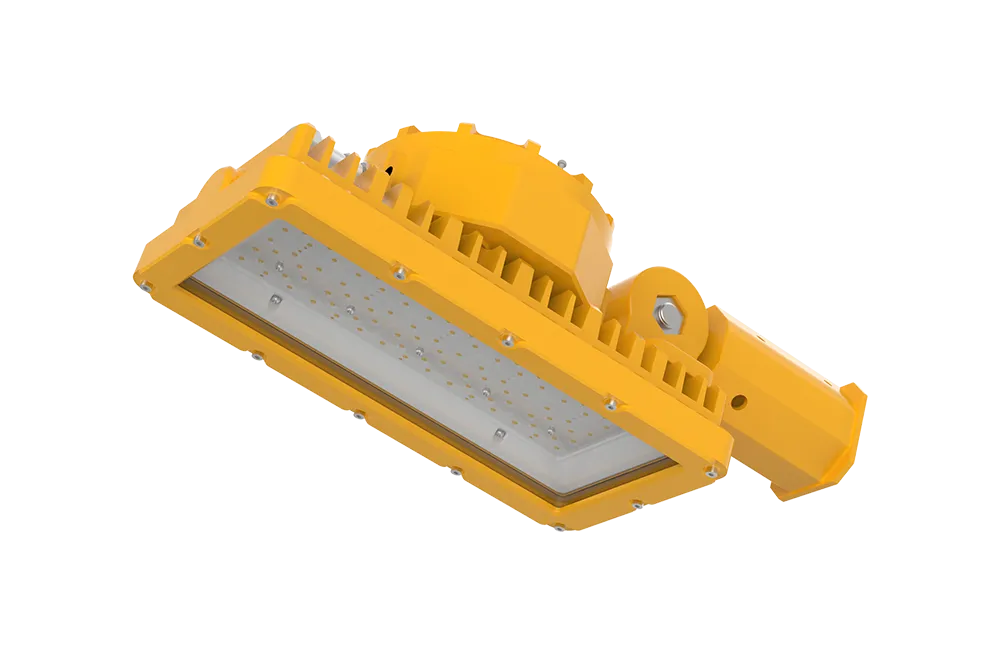
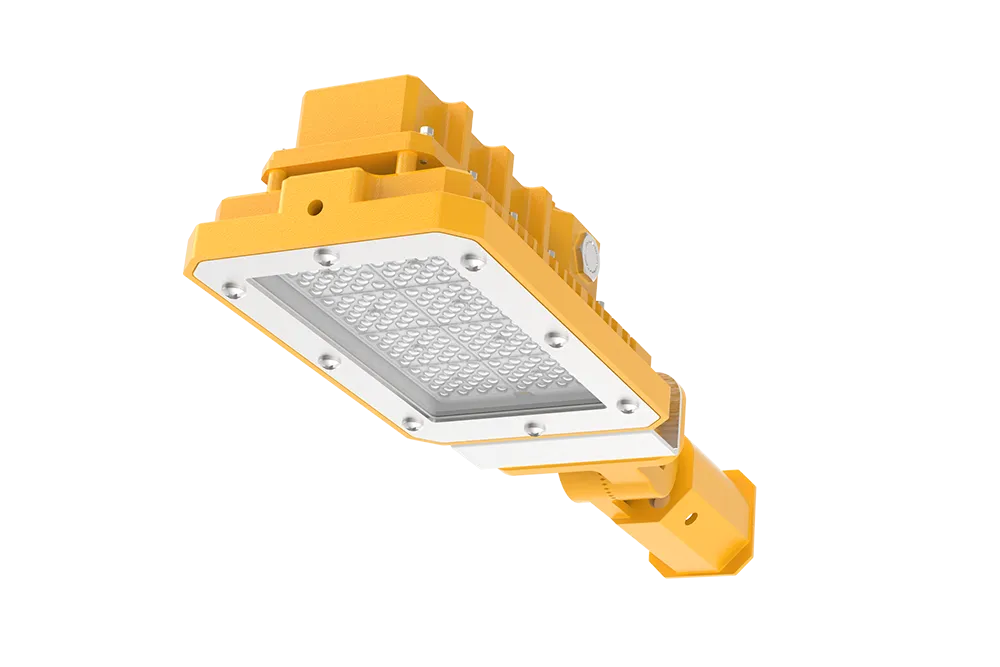
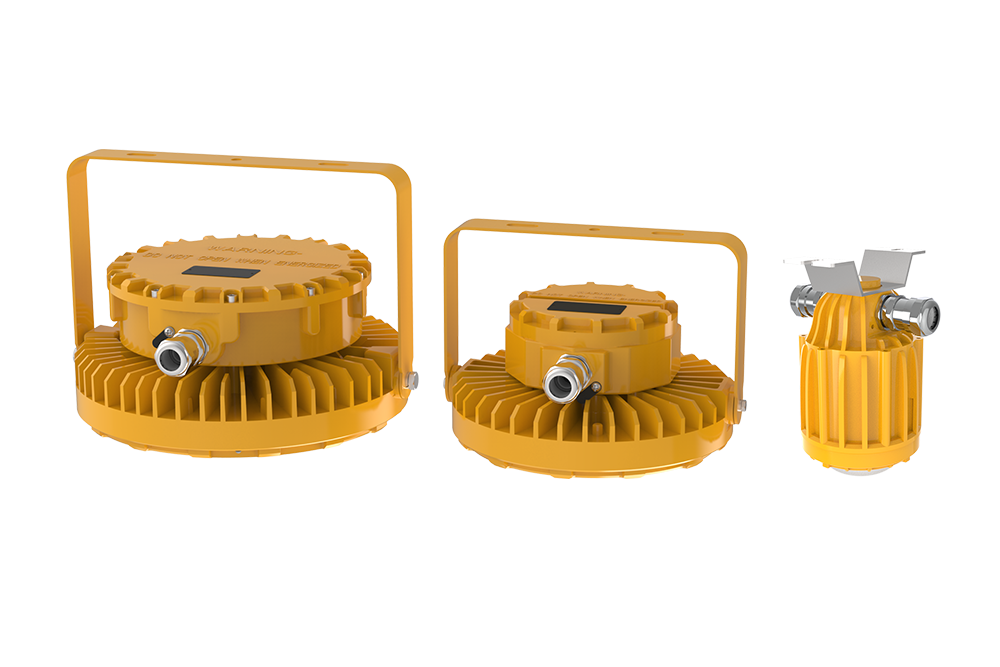
ATEX Approved LED Lighting in Hazardous Industrial Sites
90ATEX approved LED lighting for hazardous zones in oil, gas, and chemical plants. Discover how certified explosion-proof lighting improves safety and efficiency with SEEKINGLED.
View detailsSearch the whole station
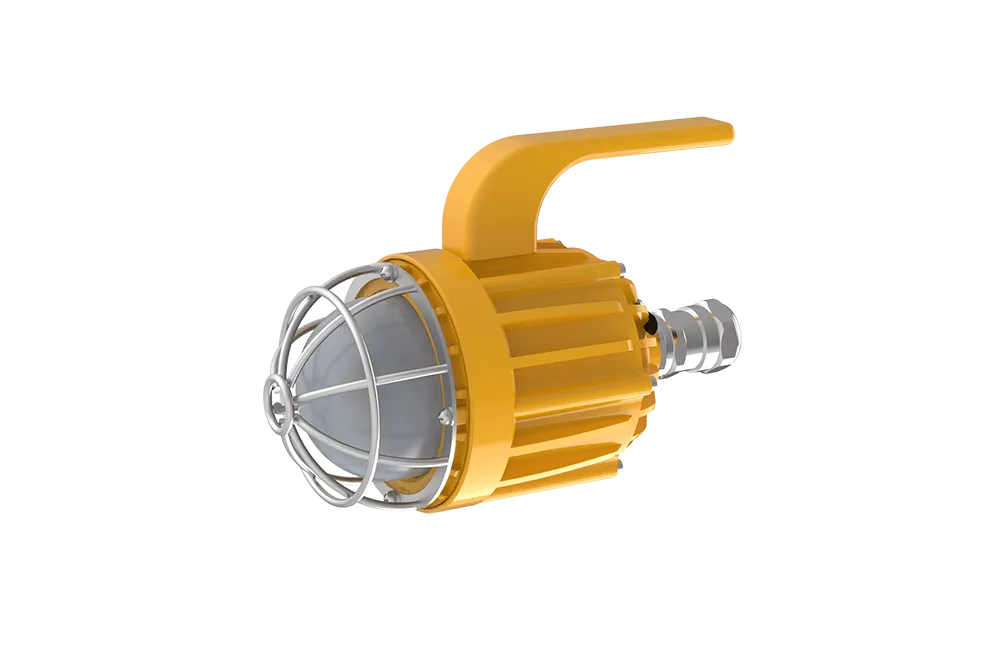
The first time I relied on an explosion proof hand lamp wasn’t during a product demo.
It was inside a refinery vessel during a shutdown.
No dramatic moment. Just heat, metal walls, and a confined space where fixed lighting couldn’t reach the weld seam we needed to inspect.
When portable lighting fails in that environment, nothing explodes.
It simply goes dark.
And that silence changes the atmosphere instantly.
That experience reshaped how I look at portable hazardous lighting.
I’ve worked in hazardous-area lighting engineering for over a decade, supporting refinery retrofits, offshore maintenance projects, and confined-space inspections through SEEKINGLED. Fixed luminaires get most of the design attention. Portable devices? They’re often treated as accessories.
They shouldn’t be.
An explosion proof hand lamp carries more engineering complexity than many fixed fixtures.
You’re dealing with:
Standards under the International Electrotechnical Commission IEC 60079 framework define protection concepts like Ex d (flameproof) and Ex ib (intrinsic safety). In North America, hazardous classifications align with requirements from the National Fire Protection Association.
But standards don’t tell you how a lamp behaves after being dropped on steel grating at 2 a.m.
That’s where reality starts.
LED efficiency is a huge advantage. The U.S. Department of Energy reports industrial LED systems can reduce energy use by 50–70% compared to legacy sources.
For portable lamps, that means longer runtime and lower surface temperature.
In theory.
In practice, compact battery compartments trap heat. During one offshore project in Northern Europe, ambient temperature was only 8°C — yet internal battery temperature climbed significantly during continuous high-output use. Cold air outside, heat building inside.
Runtime dropped faster than expected.
That wasn’t a marketing problem.
It was a thermal management oversight.
Since then, we test runtime under:
Because portable lighting isn’t used in laboratory conditions.
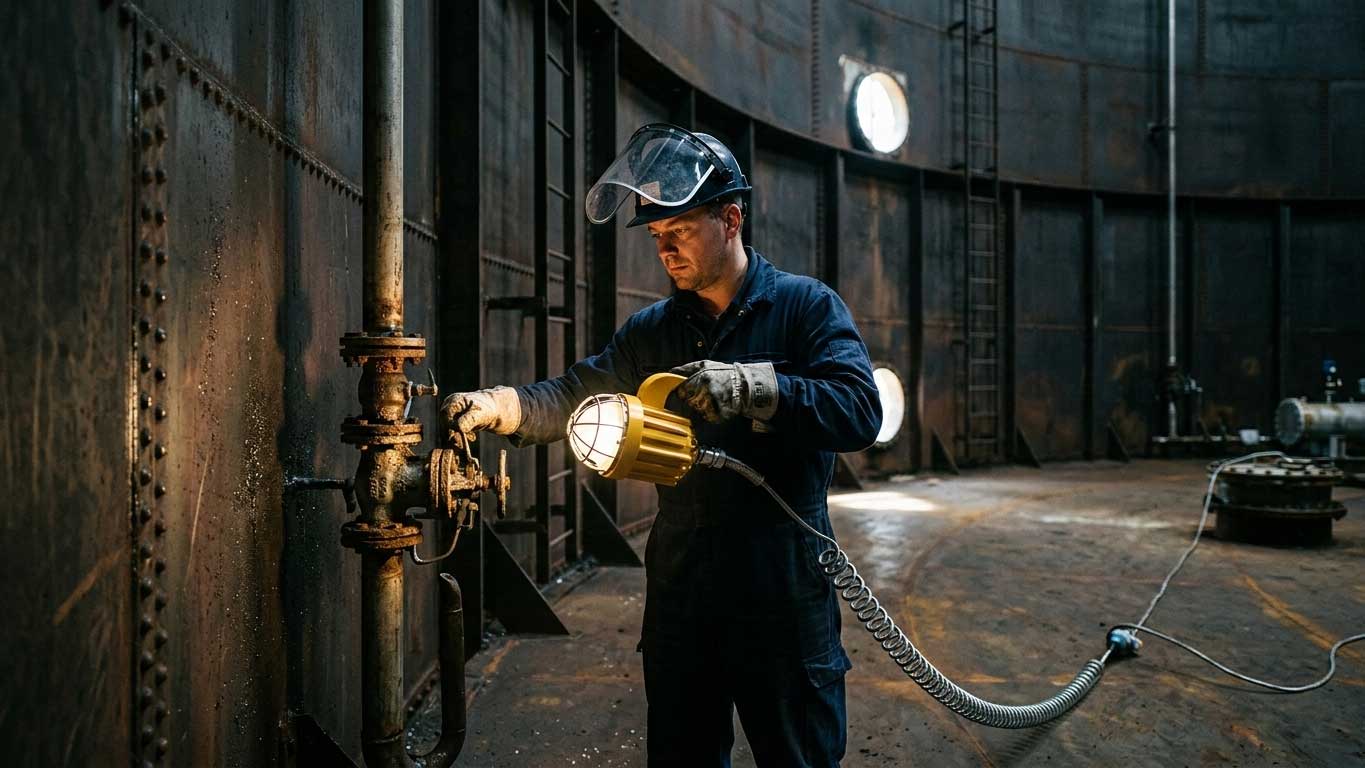
Switch design sounds minor until you try operating a small recessed button with thick chemical-resistant gloves.
One early prototype we evaluated had a perfectly sealed micro-switch. Technically excellent. Field usability? Poor.
Technicians struggled to activate it under load.
Portable hazardous lighting must consider ergonomics:
These aren’t marketing extras. They affect safety.
When a worker fumbles with controls inside a confined Zone 1 area, stress levels rise quickly.
According to the International Energy Agency, reliability is central to industrial system efficiency. In hazardous sites, reliability isn’t just operational — it’s procedural.
Portable lamps get:
I’ve inspected failed units where nothing electrical was wrong. The issue was gasket compression fatigue. A millimeter gap allowed moisture ingress. Months later, corrosion appeared near contact points.
The failure started quietly.
That’s why a serious explosion proof hand lamp needs:
Certification alone doesn’t guarantee durability.
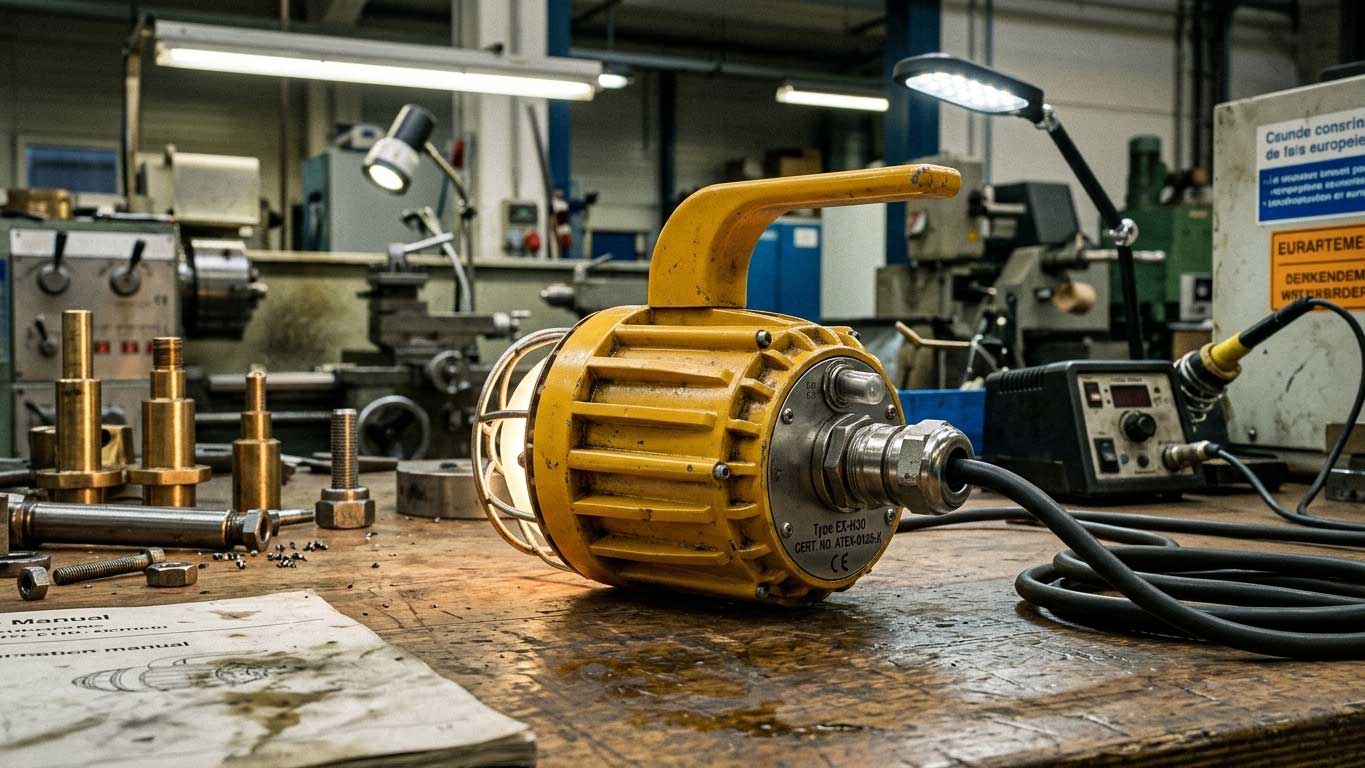
Most portable hazardous lamps today use lithium-based rechargeable systems. Intrinsic safety certification must address:
Mismatch between battery certification and enclosure approval can invalidate compliance.
I’ve seen procurement teams focus on lumen output and ignore battery documentation entirely.
That’s a mistake.
Portable energy sources require the same scrutiny as fixed power supplies.
Even for handheld devices.
Each explosion proof hand lamp must clearly indicate:
Field inspectors verify markings. Missing or inconsistent data can delay work permits.
At SEEKINGLED, we maintain production traceability tied to certification records because audits don’t happen only during installation — they happen randomly.
An explosion proof hand lamp doesn’t attract attention when everything works.
It becomes important when something else fails — when fixed lighting can’t reach, when inspection moves into confined areas, when portable visibility determines whether work continues or stops.
After years inside hazardous environments, I don’t view portable lamps as accessories. I see them as last-line lighting tools.
At SEEKINGLED, we design every explosion proof hand lamp with that reality in mind — because the person holding it isn’t thinking about certification paperwork.
They’re thinking about finishing the job safely.
And that’s exactly what an explosion proof hand lamp should enable.
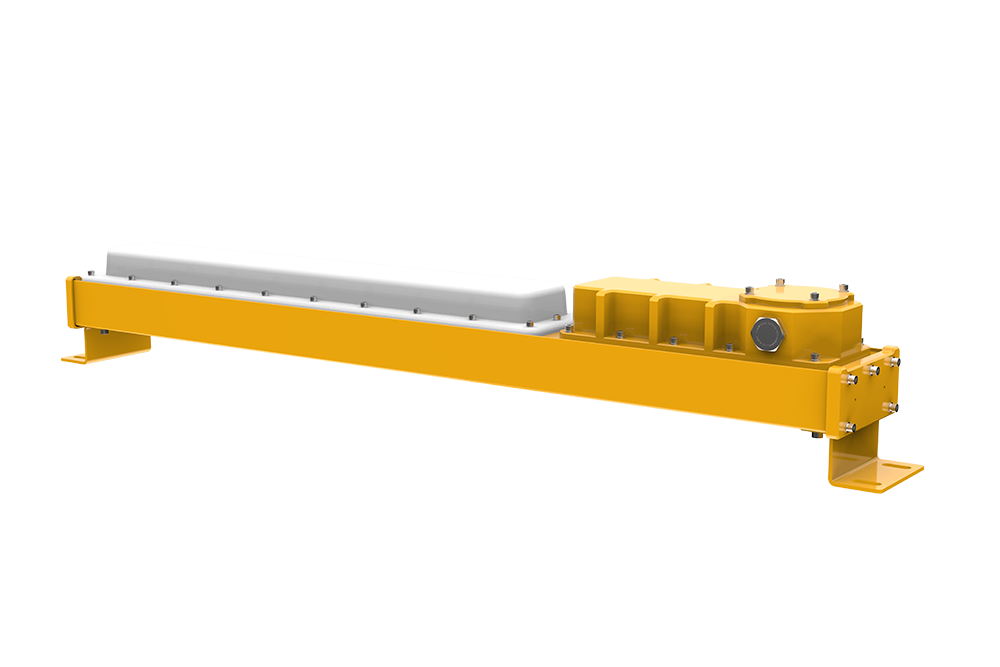
SEEKINGLED LED Linear Explosion Proof Light and Explosion Proof lighting is ATEX and IECEx certified for Zone 1, Zone 2, Zone 21 and Zone 22 hazardous locations, built for long-term industrial use.
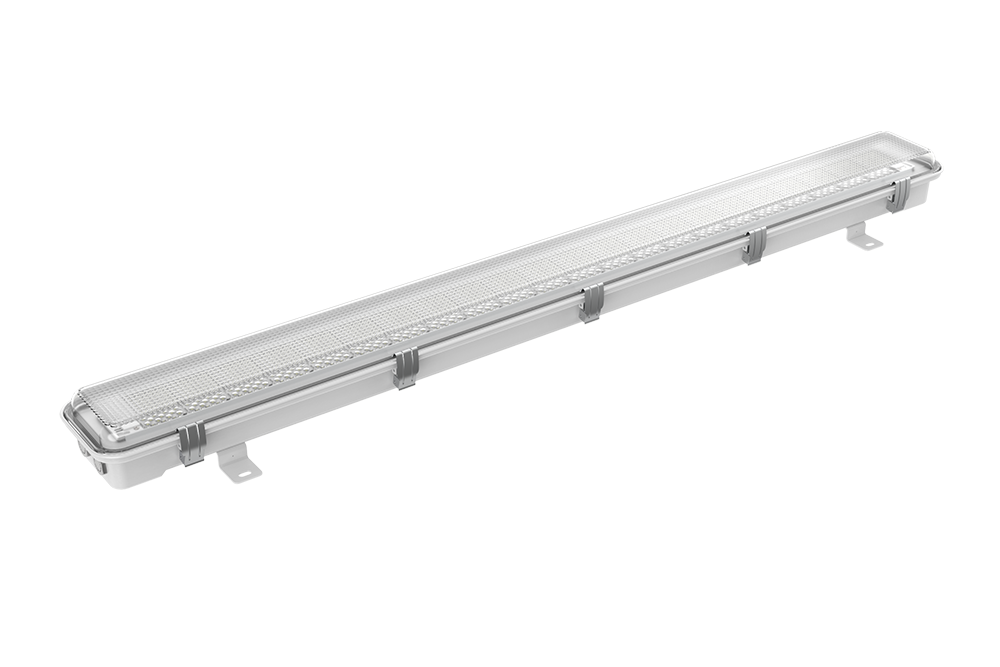
LED Linear Explosion Proof Lights and EX Proof lights for Zone 1, Zone 2, Zone 21 and Zone 22 hazardous areas. ATEX & IECEx certified explosion proof LED linear lighting with emergency function, adjustable power and IP67 protection by SEEKINGLED.
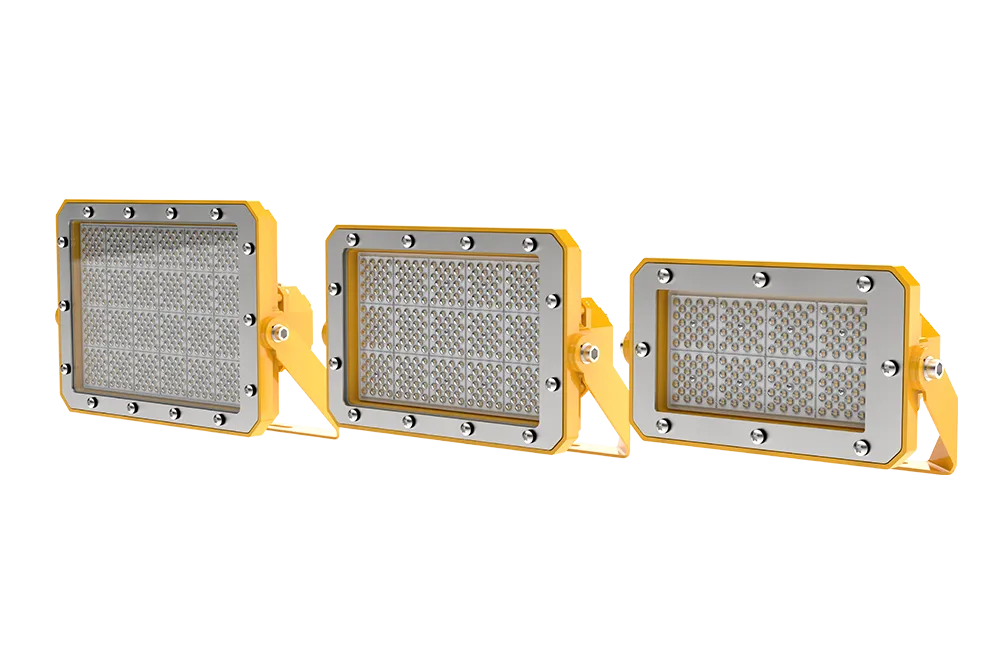
SEEKINGLED LED Explosion Proof Flood Lights are ATEX certified for Zone 2 and Zone 22 hazardous areas, offering high efficiency, adjustable power and integrated junction box.
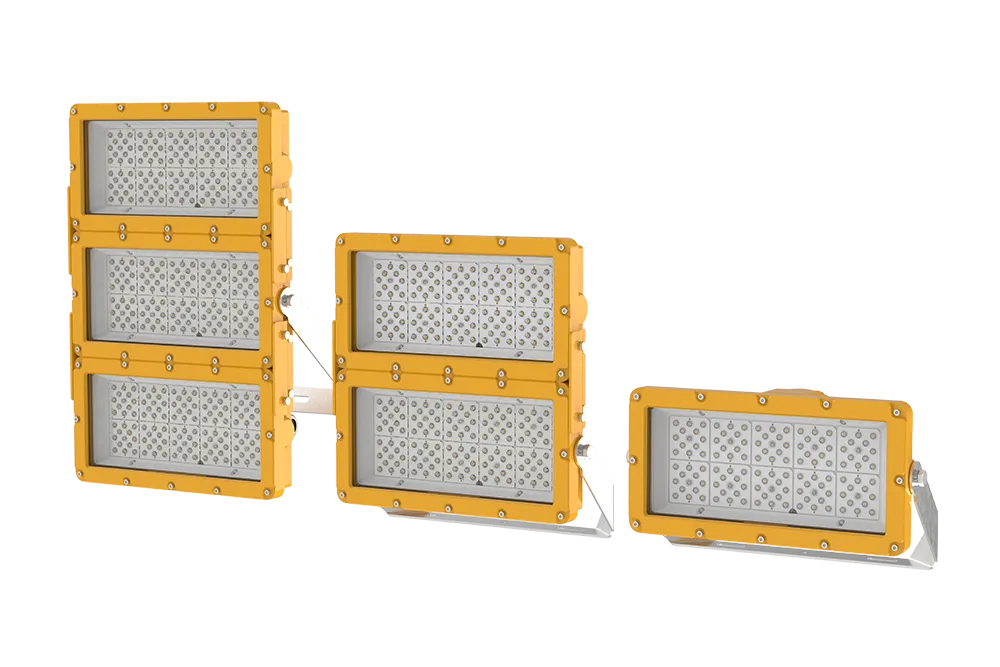
SEEKINGLED LED Explosion Proof Flood Lights are flameproof ATEX and IECEx certified for Zone 1 and Zone 2 hazardous areas, offering high power, adjustable output and long service life.
SEEKINGLED LED Gas Station Canopy Lights are ATEX certified for Zone 2 and Zone 22 hazardous areas, featuring adjustable power and built-in explosion-proof junction box.
ATEX: Ex II 2G Ex db IIB T6/T5 GbEx II 2D Ex tb IIIC T80°C/ T95°C Db IECEx Ex db IIB T6 Gb;Ex tb IIIC T80°C Db Feature: ● For Zone 1,2 and Zone 21,22● Flameproof type, the strongest● 100W can replace 250W HID,energy saving● Power:60W,80W,10…
ATEX: II 3G Ex nR ⅡC T5/T6 GcII 3D Ex tc ⅢC T80℃/T95℃Dc ATEX Certificate NO: TÜV CY 26 ATEX 0207611 X Feature: ● For Zone 2 and Zone 22● 150W can replace 250W HID lamps,Energy saving● Power:50W,75W,100W,150W,200W Application: Oil and gas, m…
LED explosion proof high bay lights are designed for Zone 1, Zone 2, Zone 21 and Zone 22 hazardous areas. This page introduces the HB21 Series from SEEKING, including certifications, power options and real application considerations.
LED Linear Explosion Proof Lights from SEEKINGLED. LU Series Flame Proof lights ATEX-certified explosion proof LED linear lighting for Zone 2 gas and Zone 22 dust areas, IP69K, IK10, long lifetime and flexible power options.
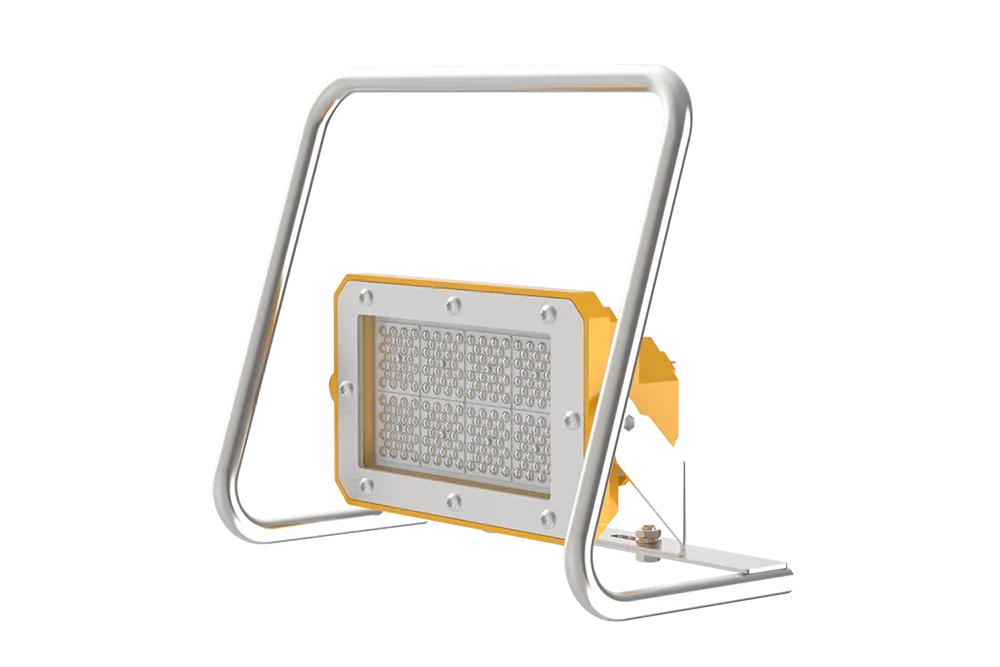
Certified explosion proof work lights for Zone 1 & 21 hazardous areas. Portable, ATEX & IECEx approved, built for oil, gas and chemical plants by SEEKINGLED.
ATEX: II 3G Ex nR ⅡC T6 GcII 3D Ex tc ⅢC T80℃ Dc ATEX Certificate NO: TÜV CY 26 ATEX 0207611 X Feature: ● For Zone 2 and Zone 22● Accepts battery-powered supply● indestructible● Power:AC input:50W,75W,100WDC input:15W,25W,35W Application: O…
ATEX: Ex II 2G Ex db IIB T6 GbEx II 2D Ex tb IIIC T80°C Db IECEx Ex db IIB T6 Gb;Ex tb IIIC T80°C Db Feature: ● For Zone 1,2 and Zone 21,22● Flameproof type, the strongest Application: Oil and gas, marine, Chemical, pharmaceutical, semicondu…
ATEX: Ex II 2G Ex db IIB T6 GbEx II 2D Ex tb IIIC T80°C Db IECEx Ex db IIB T6 Gb;Ex tb IIIC T80°C Db Feature: ● For Zone 1,2 and Zone 21,22● Flameproof type, the strongest Application: Oil and gas, marine, Chemical, pharmaceutical, semicondu…
ATEX: Ex II 2G Ex d e IIB T6 Gb ATEX: Ex d e IIB T6 Gb; Feature: ● For Zone 1,2● 9W can replace 18W fluorescent lamps,50% Energy saving Application: Oil and gas, marine, Chemical, pharmaceutical, semiconductor,mining,military industry, pain…
loading…
This is the last post!
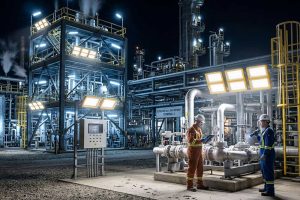
ATEX approved LED lighting for hazardous zones in oil, gas, and chemical plants. Discover how certified explosion-proof lighting improves safety and efficiency with SEEKINGLED.
View details
Learn what is a high bay light fixture, how it works, where it is used, and how to choose the right industrial lighting solution from SEEKINGLED experts.
View details
When fixing LED high bay lighting costs more than replacing, small upgrades stop making sense. Learn when repair turns into wasted money.
View details
Smart LED street light systems combining energy efficiency, remote control, and long-term reliability for urban roads and cities by SEEKINGLED.
View details