 Seeking LED
LED Explosion-Proof Lighting for Hazardous Industrial Applications
0LED explosion-proof lighting for hazardous industries. Certified, energy-efficient, and durable solutions by SEEKINGLED for oil, gas, and chemical sites.
View detailsSearch the whole station
Explosion proof linear light fixtures are certified hazardous-area luminaires engineered to safely illuminate environments containing flammable gas, vapor, or combustible dust. Unlike standard industrial strip lights, they use flameproof housings, sealed electrical chambers, and controlled surface temperatures to prevent ignition in Zone 1, Zone 2, Class I Division 1, and Division 2 locations.
Most people outside petrochemical or marine industries assume linear fixtures are simple products. Just long lights mounted above walkways or equipment.
That assumption disappears the first time you walk into a classified process area.
Several years ago, I joined a retrofit inspection inside a coastal solvent-processing plant where condensation dripped constantly from steel piping overhead. The facility had already replaced dozens of corroded fluorescent fixtures within three years. Some failed drivers overheated. Others developed water ingress. One housing cracked near the conduit entry because of vibration.
The maintenance supervisor said something I still remember:
“We don’t buy lighting anymore. We buy reliability.”
That sentence explains why explosion proof linear light systems matter.
An explosion proof linear light is a hazardous-location lighting fixture designed to operate safely in explosive atmospheres without igniting surrounding gases or dust.
These fixtures are commonly installed in:
Unlike ordinary industrial linear lights, explosion proof models are engineered with:
The purpose is simple:
The fixture itself must never become an ignition source.
Many hazardous environments do not “look dangerous.”
That is what makes them risky.
Hydrogen.
Methane.
Propane vapor.
Combustible grain dust.
None of them announce themselves visually.
According to the U.S. Chemical Safety Board (CSB), combustible atmosphere incidents continue to cause severe industrial explosions globally. Facilities handling flammable materials are required to use certified hazardous-location equipment to reduce ignition risks.
Lighting becomes part of that protection strategy.
Explosion proof linear lights are usually mounted in locations where workers spend hours daily:
If those lights fail, visibility becomes a safety issue immediately.
That operational role is very different from decorative commercial lighting.
Many explosion proof linear light fixtures use Ex d flameproof protection.
If ignition occurs inside the fixture:
The machining tolerances matter enormously.
SEEKINGLED explosion proof linear lighting systems commonly use precision flame-path engineering combined with reinforced industrial housings.
Hot surfaces alone can ignite hazardous gas.
That is why explosion proof lighting systems use T-ratings.
| T-Code | Maximum Surface Temperature |
|---|---|
| T1 | 450°C |
| T2 | 300°C |
| T3 | 200°C |
| T4 | 135°C |
| T5 | 100°C |
| T6 | 85°C |
Modern LED explosion proof linear light fixtures commonly achieve T4–T6 ratings because LEDs operate far cooler than traditional fluorescent or HID systems.
In hazardous environments, lower heat means lower ignition risk.
Before LED technology became dominant, hazardous-area linear fixtures often used fluorescent tubes.
They worked.
But not particularly well.
I still remember offshore maintenance crews carrying replacement fluorescent tubes during rough-weather inspections because vibration frequently damaged lamps.
Common fluorescent issues included:
LED systems dramatically improved reliability.
According to the U.S. Department of Energy, industrial LED systems can significantly reduce lighting energy consumption compared with traditional technologies.
Modern explosion proof linear light fixtures commonly achieve:
That matters especially offshore where maintenance access is extremely expensive.
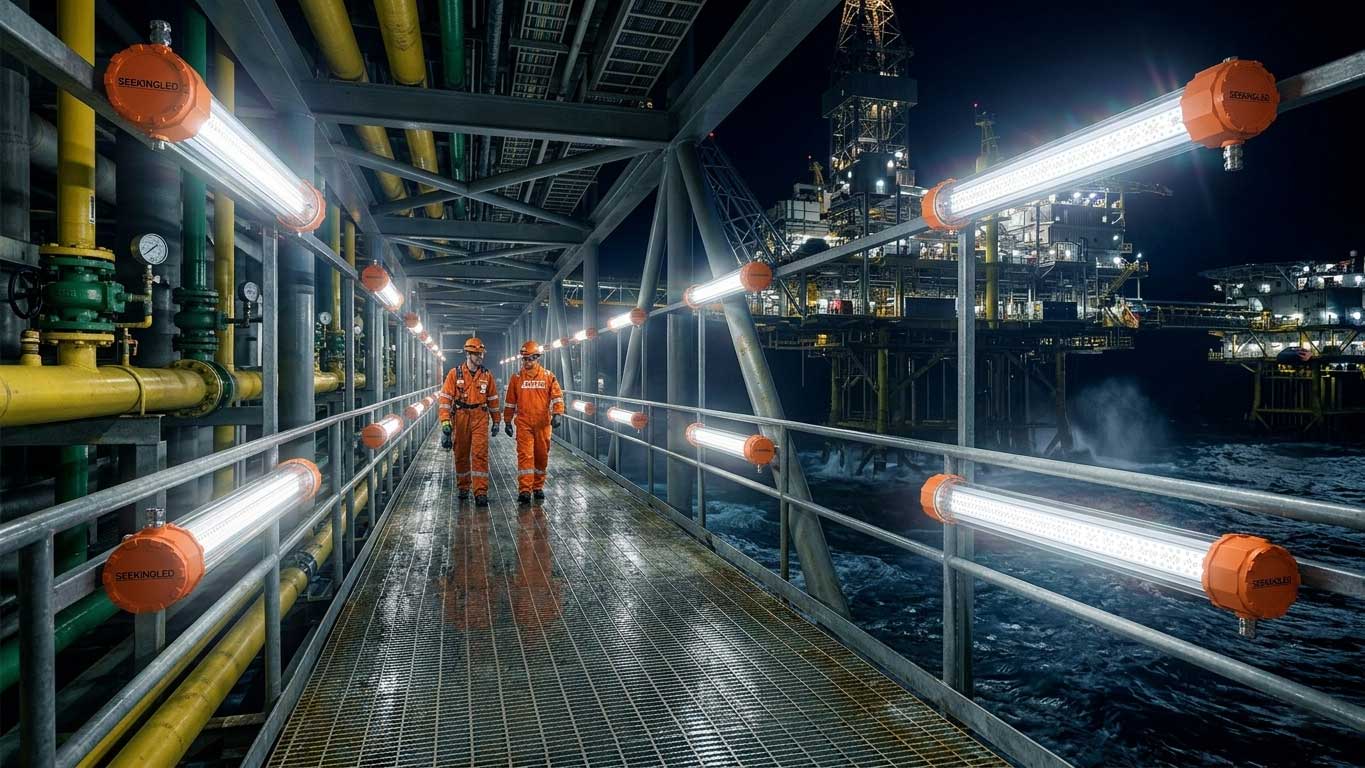
Explosion proof linear lights may carry:
These certifications verify the fixture can safely operate in classified hazardous environments.
| System | Region |
|---|---|
| ATEX / IECEx Zones | Europe & International |
| NEC Divisions | North America |
Typical hazardous classifications include:
SEEKINGLED hazardous-area linear fixtures are commonly engineered for both international and North American industrial projects.
One thing buyers often underestimate:
Corrosion destroys hazardous lighting faster than electricity does.
Marine salt spray, chemical vapor, and moisture attack everything.
I once inspected fixtures near a wastewater processing basin where the housing exterior looked acceptable, but internal fasteners had already begun severe corrosion.
That hidden damage eventually compromises sealing integrity.
High-quality explosion proof linear light systems commonly use:
Without those protections, hazardous fixtures age very quickly.
Combustible dust environments include:
Dust explosions are often underestimated until accidents happen.
Explosion proof linear lights are significantly heavier than ordinary industrial strip lights.
That additional weight comes from:
On offshore projects, structural engineers sometimes review mounting systems separately because vibration loads can become substantial.
One of the most common inspection failures involves cable entries.
Even a certified explosion proof linear light becomes non-compliant if installers use:
I have personally seen facilities fail hazardous-area inspection because contractors substituted cheaper cable glands during installation.
The fixture itself passed certification.
The installation did not.
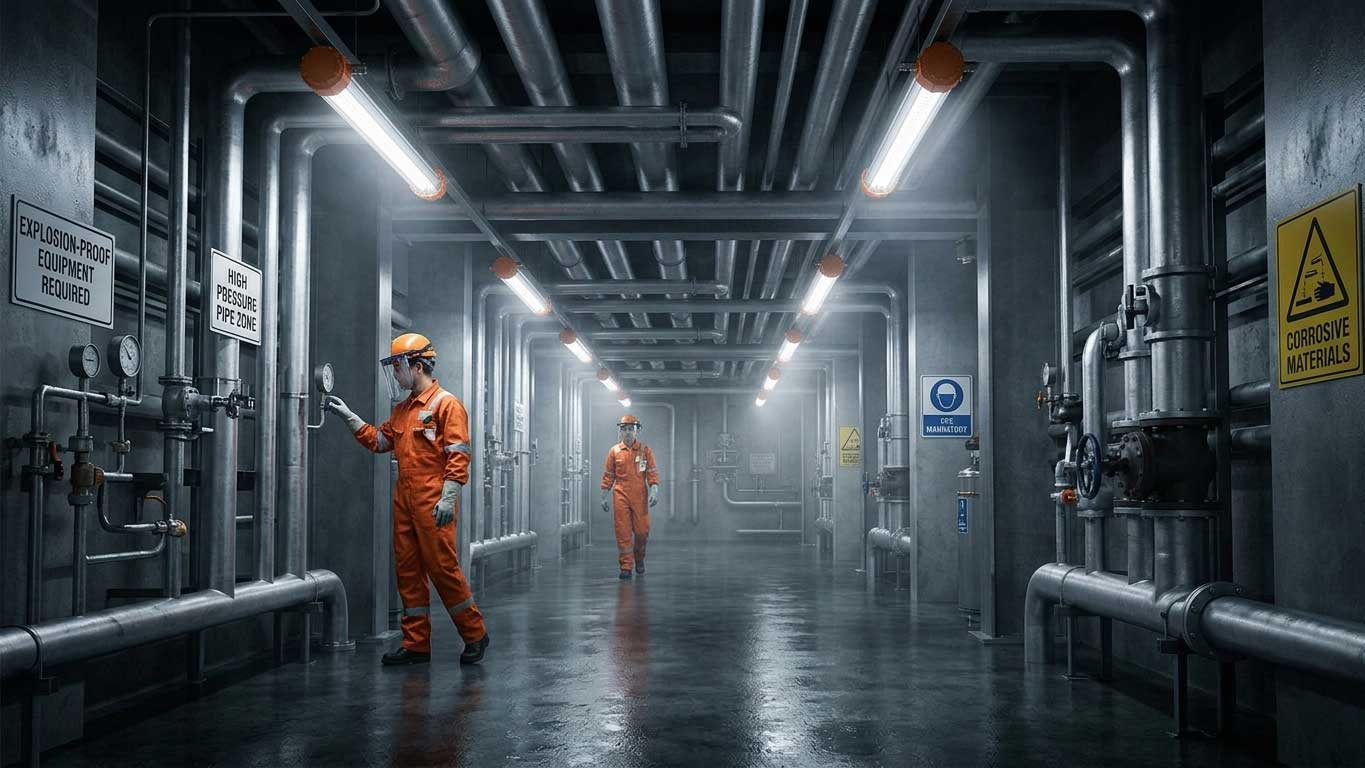
Before selecting fixtures, confirm:
Brightness alone is not enough.
Poor beam distribution can leave dangerous dark zones in maintenance walkways even with high lumen output.
Many industrial facilities now require emergency operation capability.
Modern explosion proof linear light systems may include:
That feature becomes critical during:
It is a hazardous-area linear lighting fixture engineered to prevent ignition in explosive gas or dust environments.
Common applications include oil refineries, offshore platforms, chemical plants, marine facilities, and hazardous industrial corridors.
Yes. Modern LED hazardous-area fixtures commonly achieve high efficiency while reducing maintenance requirements.
Depending on region, certifications may include ATEX, IECEx, UL844, or CSA approvals.
Yes. Many fixtures are engineered with IP66 or IP67 sealing for outdoor industrial environments.
SEEKINGLED develops hazardous-area LED lighting systems for demanding industrial applications including:
Key features include:
In hazardous environments, lighting reliability directly affects operational safety.
That is why industrial buyers increasingly prioritize long-term durability instead of simply comparing upfront fixture cost.
Author: Daweiboss
Brand: SEEKINGLED
Daweiboss specializes in explosion-proof and hazardous-area LED lighting systems for offshore oil platforms, petrochemical facilities, marine engineering projects, and industrial processing plants. His experience includes hazardous-location retrofit projects, ATEX compliance consulting, and industrial LED system optimization for high-risk operating environments.
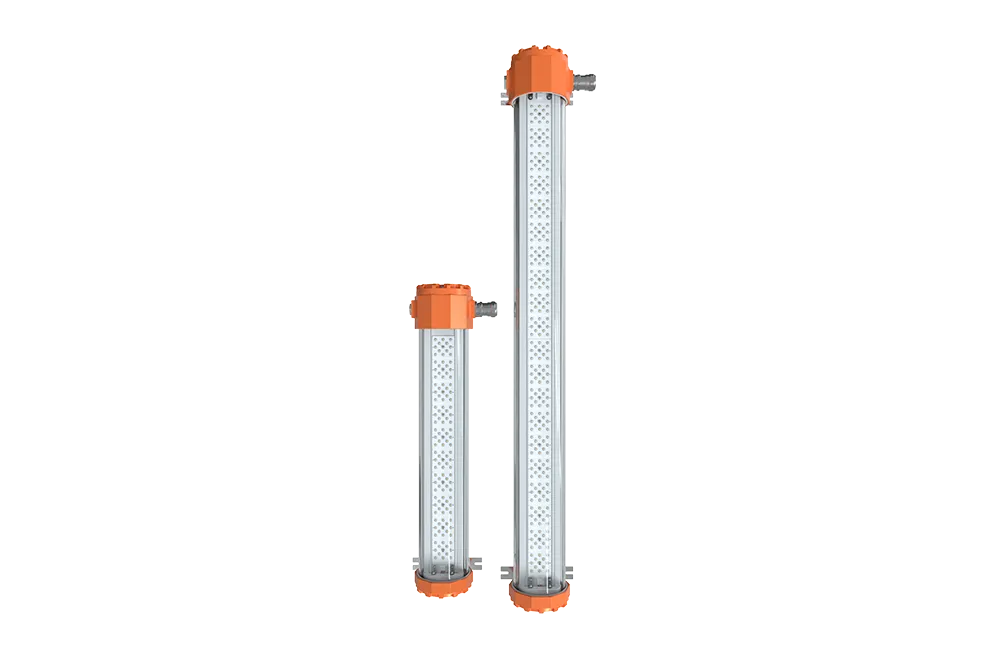
SEEKINGLED LED Linear Explosion Proof Light and Explosion Proof lighting is ATEX and IECEx certified for Zone 1, Zone 2, Zone 21 and Zone 22 hazardous locations, built for long-term industrial use.
View details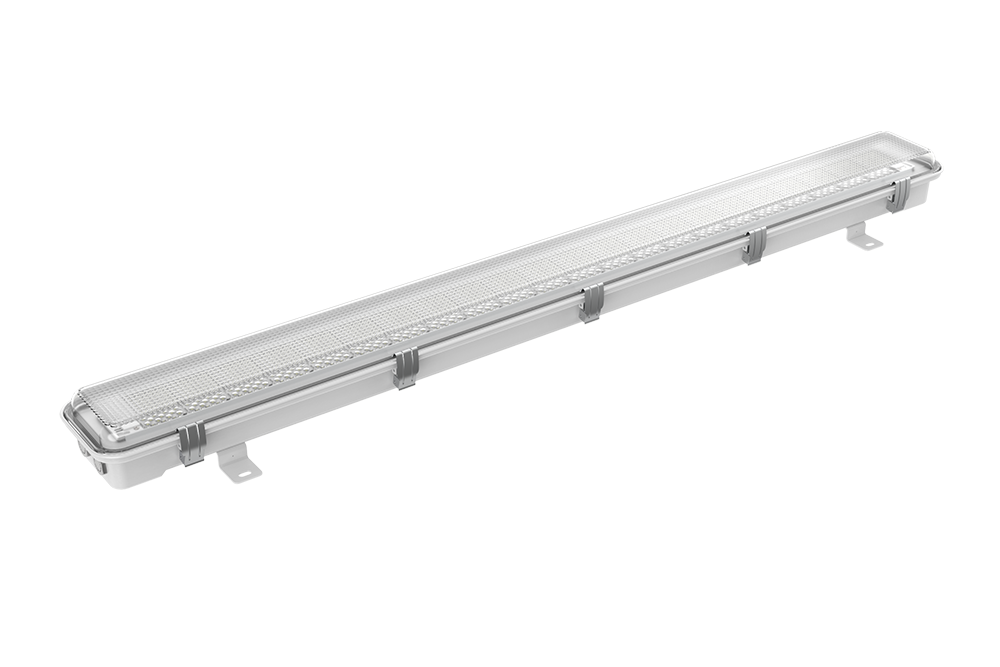
LED Linear Explosion Proof Lights and EX Proof lights for Zone 1, Zone 2, Zone 21 and Zone 22 hazardous areas. ATEX & IECEx certified explosion proof LED linear lighting with emergency function, adjustable power and IP67 protection by SEEKINGLED.
View details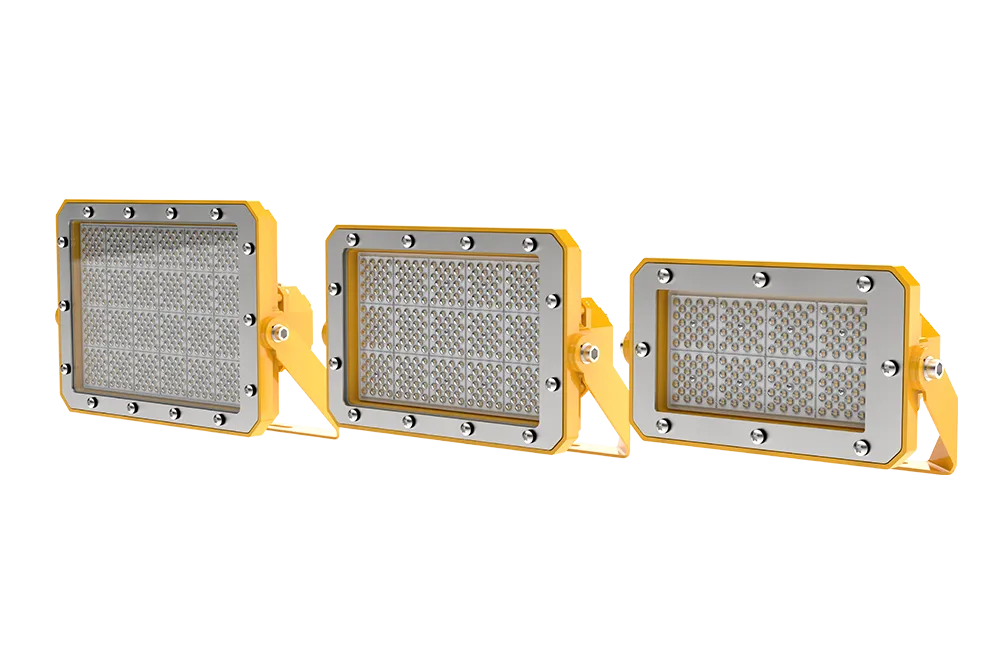
SEEKINGLED LED Explosion Proof Flood Lights are ATEX certified for Zone 2 and Zone 22 hazardous areas, offering high efficiency, adjustable power and integrated junction box.
View details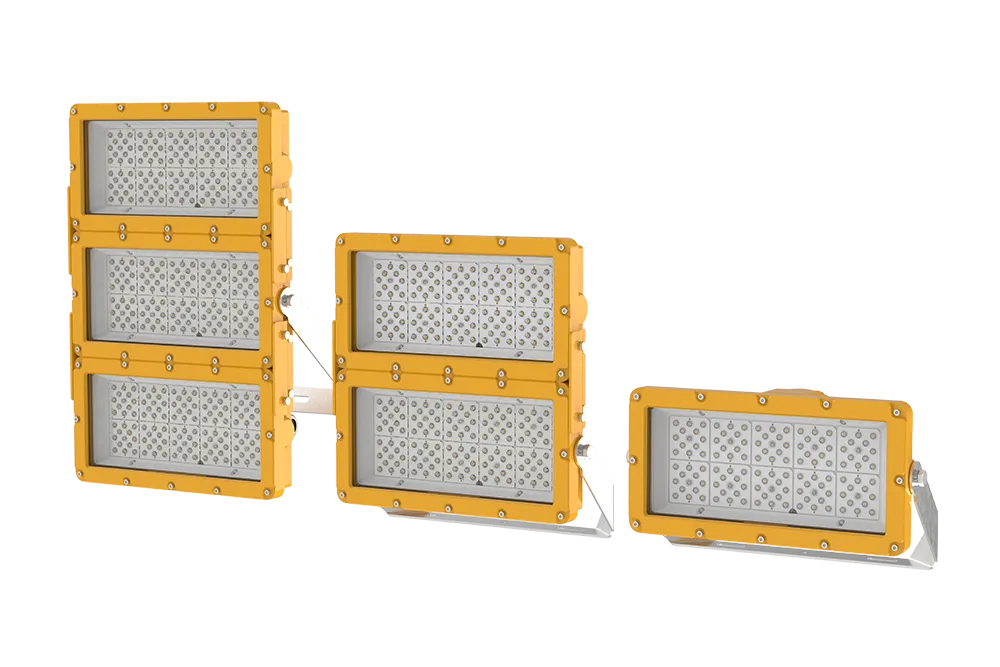
SEEKINGLED LED Explosion Proof Flood Lights are flameproof ATEX and IECEx certified for Zone 1 and Zone 2 hazardous areas, offering high power, adjustable output and long service life.
View details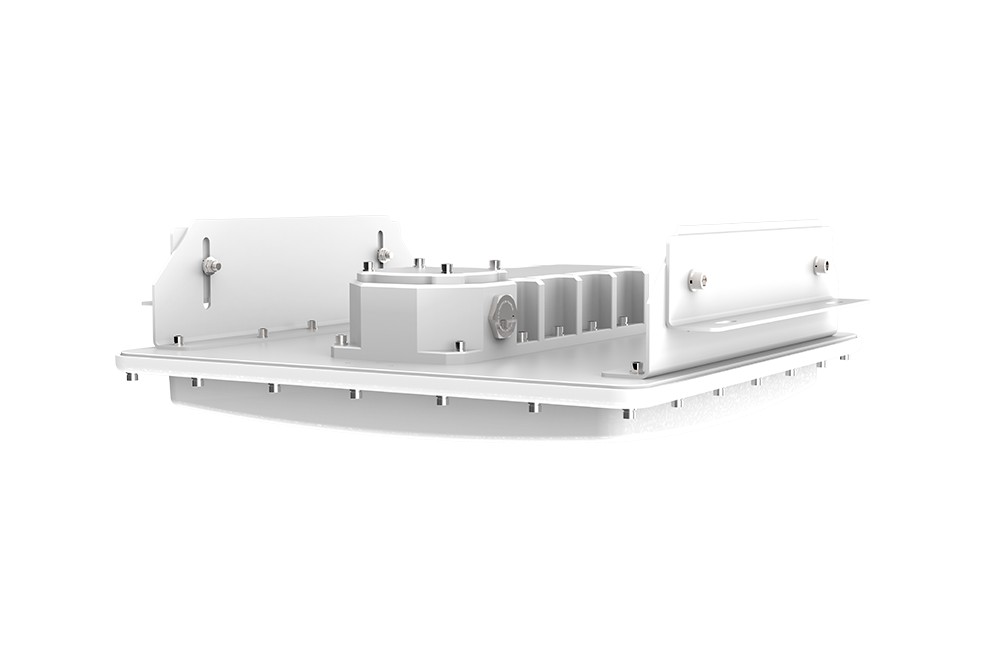
SEEKINGLED LED Gas Station Canopy Lights are ATEX certified for Zone 2 and Zone 22 hazardous areas, featuring adjustable power and built-in explosion-proof junction box.
View details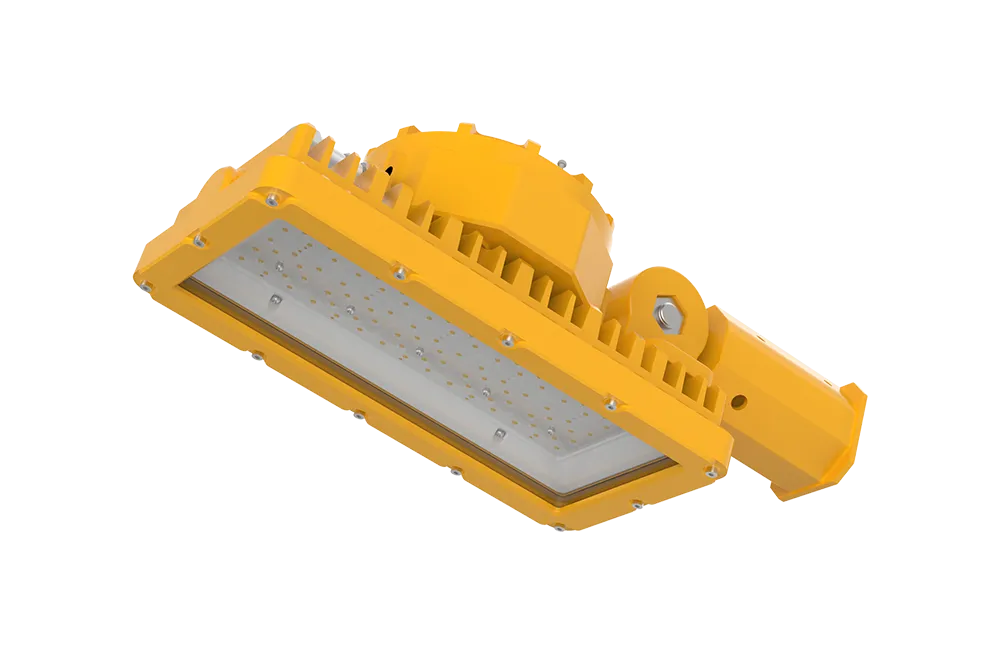
ATEX: Ex II 2G Ex db IIB T6/T5 GbEx II 2D Ex tb IIIC T80°C/ T95°C Db IECEx Ex db IIB T6 Gb;Ex tb IIIC T80°C Db Feature: ● For Zone 1,2 and Zone 21,22● Flameproof type, the strongest● 100W can replace 250W HID,energy saving● Power:60W,80W,100W Application: Oil and gas, marine, Chemical, pharmaceutical, semiconductor,mining,military industr…
View details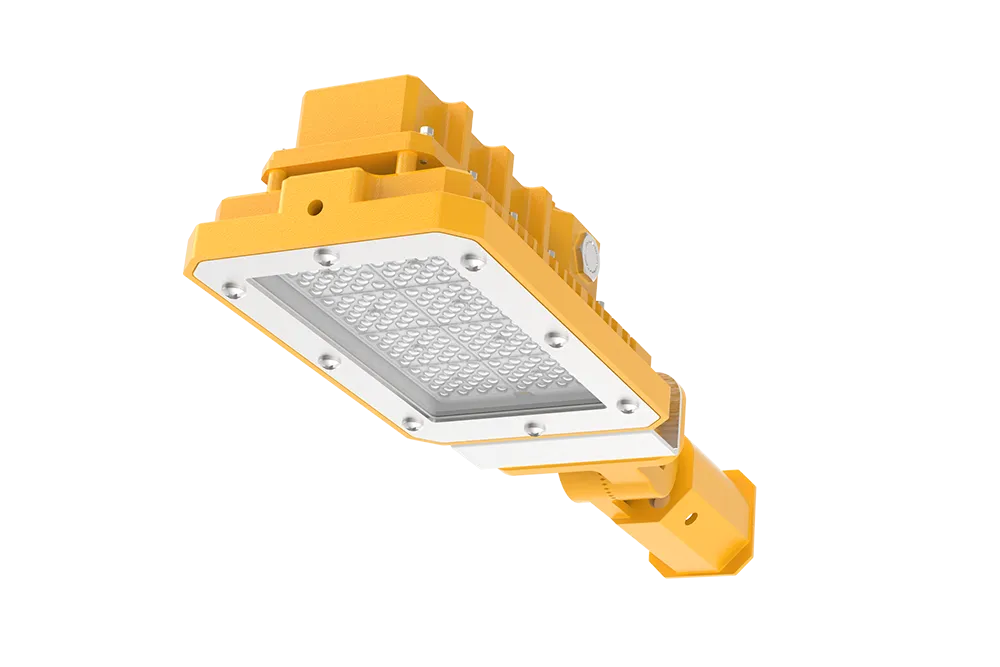
ATEX: II 3G Ex nR ⅡC T5/T6 GcII 3D Ex tc ⅢC T80℃/T95℃Dc ATEX Certificate NO: TÜV CY 26 ATEX 0207611 X Feature: ● For Zone 2 and Zone 22● 150W can replace 250W HID lamps,Energy saving● Power:50W,75W,100W,150W,200W Application: Oil and gas, marine, Chemical, pharmaceutical, semiconductor,mining,military industry, paint booth,power plant ETC…
View details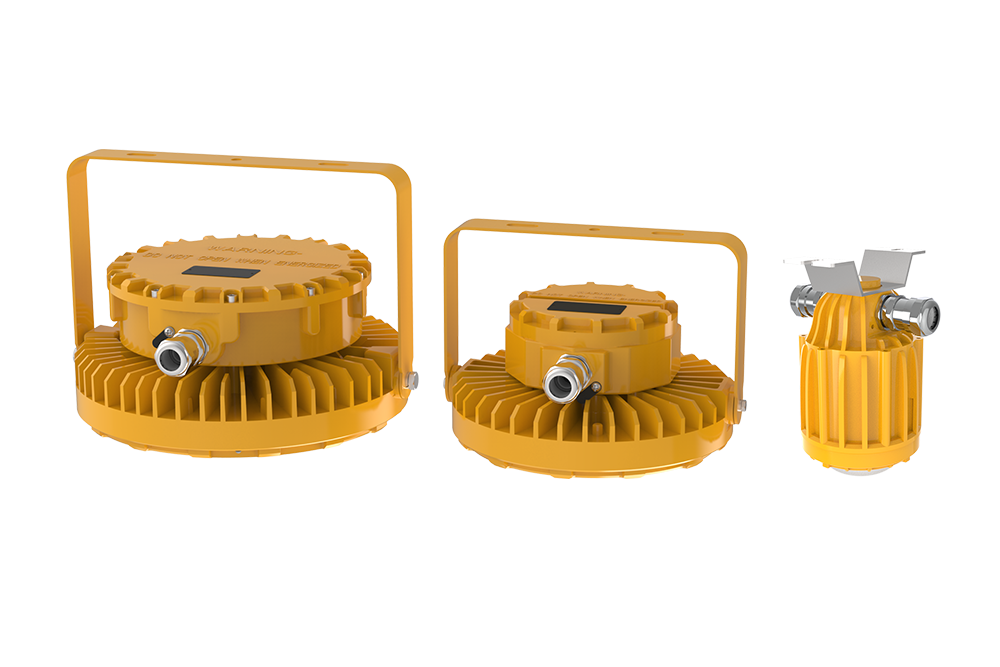
LED explosion proof high bay lights are designed for Zone 1, Zone 2, Zone 21 and Zone 22 hazardous areas. This page introduces the HB21 Series from SEEKING, including certifications, power options and real application considerations.
View details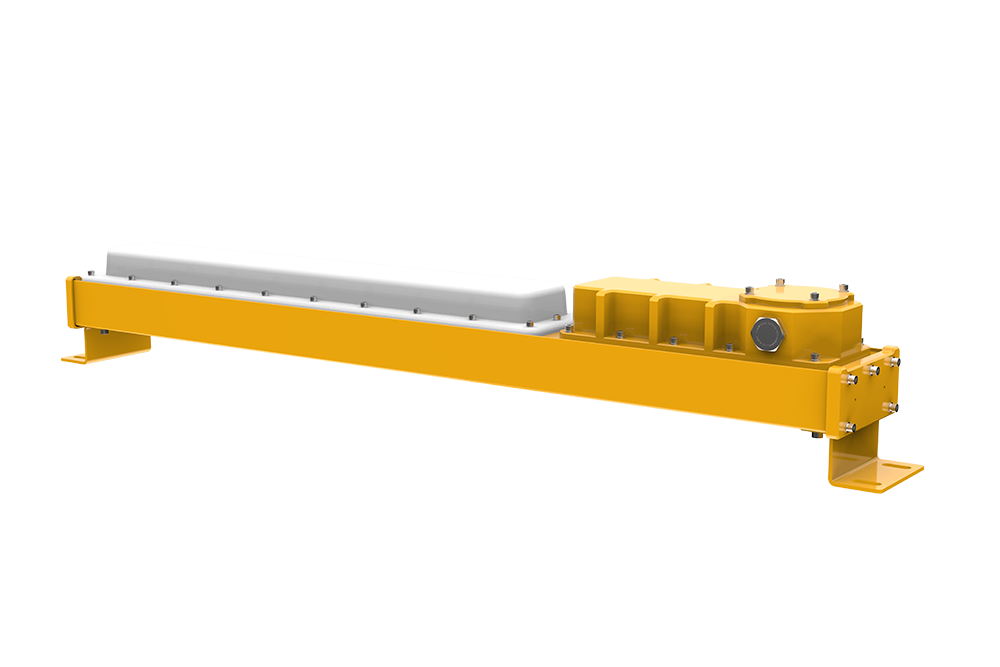
LED Linear Explosion Proof Lights from SEEKINGLED. LU Series Flame Proof lights ATEX-certified explosion proof LED linear lighting for Zone 2 gas and Zone 22 dust areas, IP69K, IK10, long lifetime and flexible power options.
View details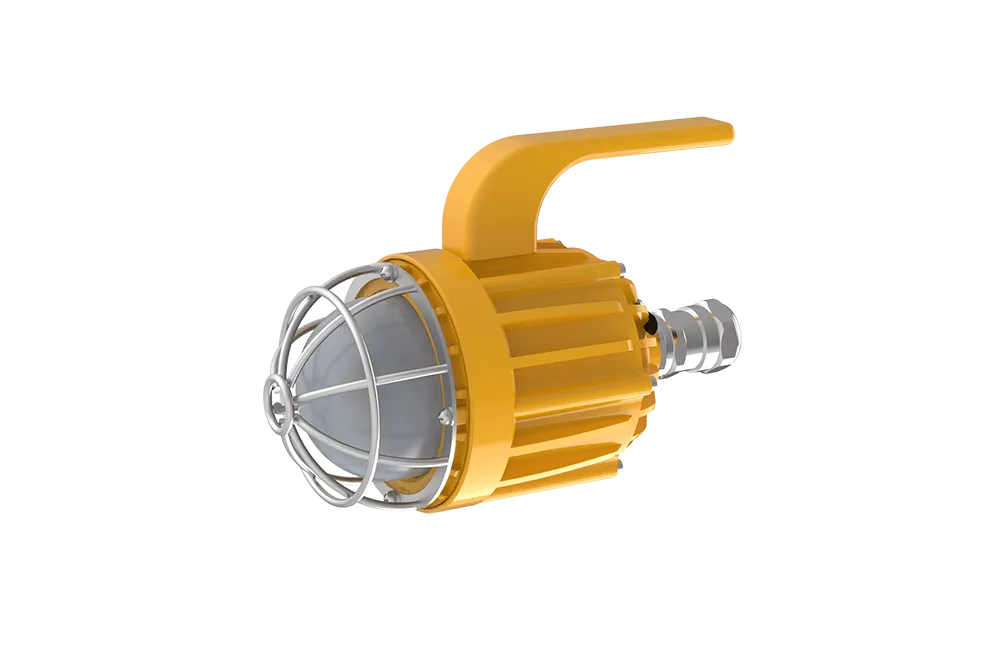
Certified explosion proof work lights for Zone 1 & 21 hazardous areas. Portable, ATEX & IECEx approved, built for oil, gas and chemical plants by SEEKINGLED.
View details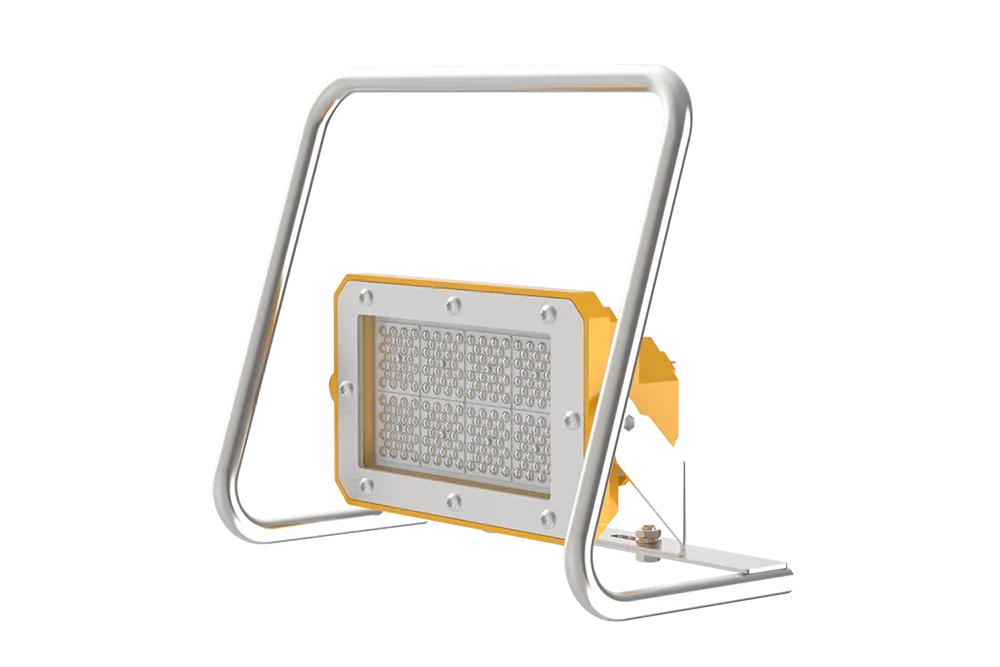
ATEX: II 3G Ex nR ⅡC T6 GcII 3D Ex tc ⅢC T80℃ Dc ATEX Certificate NO: TÜV CY 26 ATEX 0207611 X Feature: ● For Zone 2 and Zone 22● Accepts battery-powered supply● indestructible● Power:AC input:50W,75W,100WDC input:15W,25W,35W Application: Oil and gas, marine, Chemical, pharmaceutical, semiconductor,mining,military industry, paint booth,po…
View details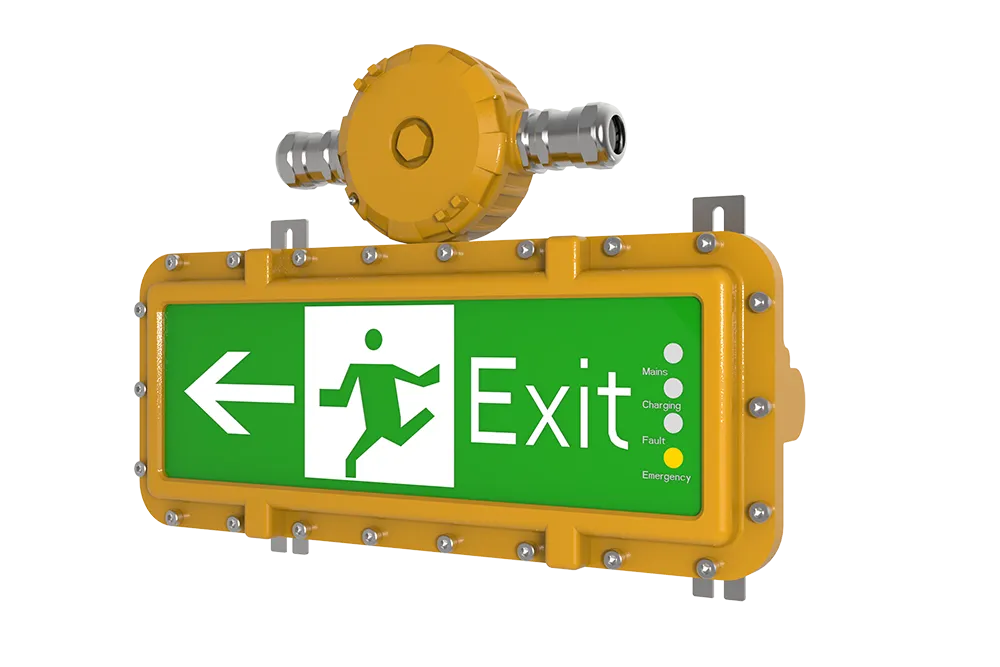
ATEX: Ex II 2G Ex db IIB T6 GbEx II 2D Ex tb IIIC T80°C Db IECEx Ex db IIB T6 Gb;Ex tb IIIC T80°C Db Feature: ● For Zone 1,2 and Zone 21,22● Flameproof type, the strongest Application: Oil and gas, marine, Chemical, pharmaceutical, semiconductor,mining,military industry, paint booth,power plant ETC hazardous area. Technical Specifications:…
View details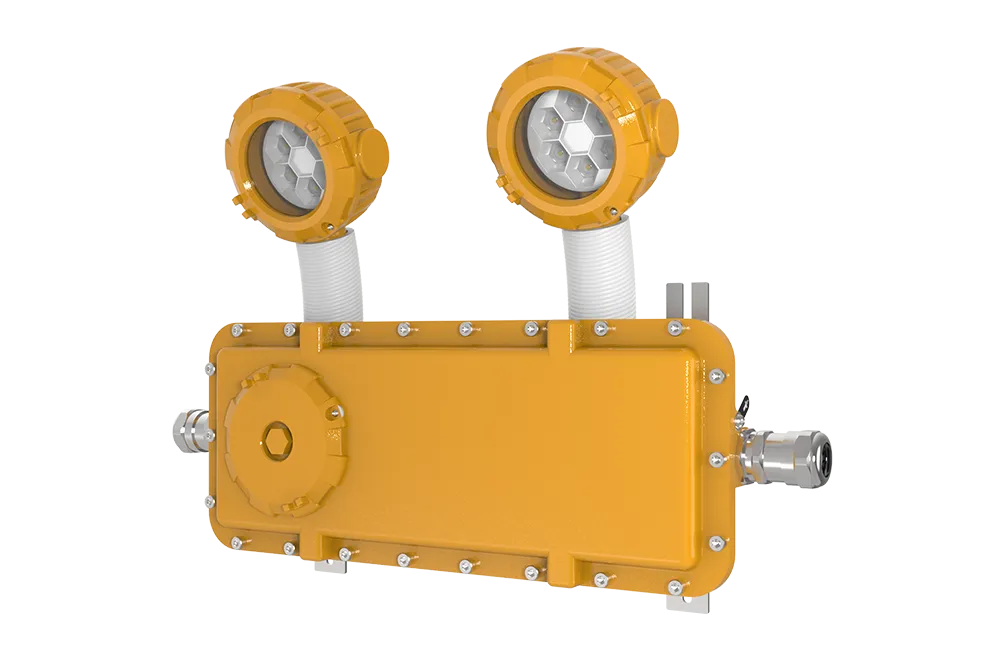
ATEX: Ex II 2G Ex db IIB T6 GbEx II 2D Ex tb IIIC T80°C Db IECEx Ex db IIB T6 Gb;Ex tb IIIC T80°C Db Feature: ● For Zone 1,2 and Zone 21,22● Flameproof type, the strongest Application: Oil and gas, marine, Chemical, pharmaceutical, semiconductor,mining,military industry, paint booth,power plant ETC hazardous area. Technical Specifications:…
View details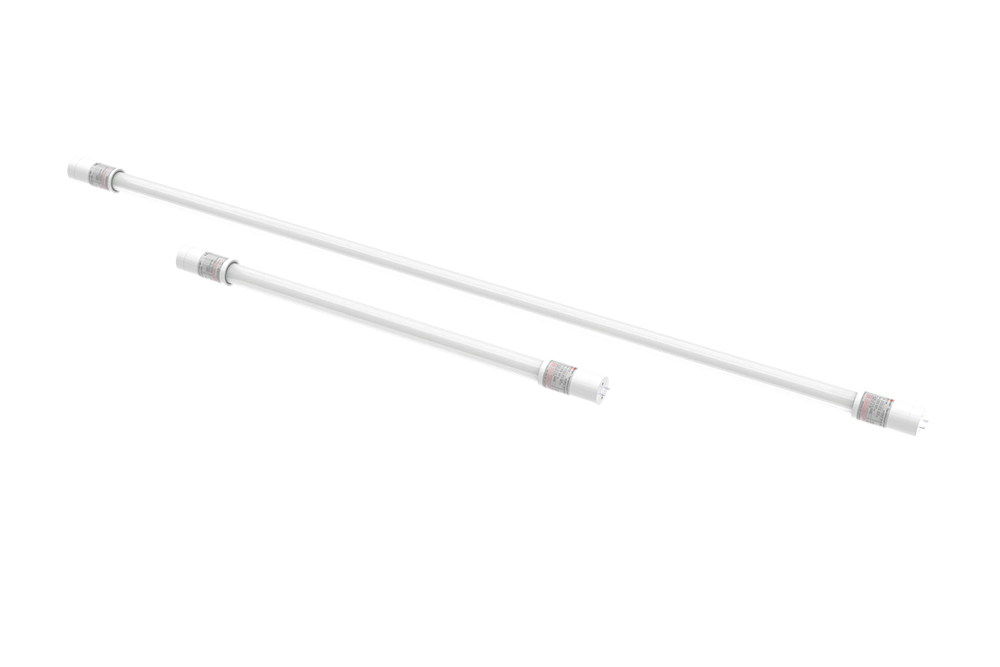
ATEX: Ex II 2G Ex d e IIB T6 Gb ATEX: Ex d e IIB T6 Gb; Feature: ● For Zone 1,2● 9W can replace 18W fluorescent lamps,50% Energy saving Application: Oil and gas, marine, Chemical, pharmaceutical, semiconductor,mining,military industry, paint booth,power plant ETC hazardous area. Technical Specifications: Standards:60079-0, 60079-1, 60079…
View details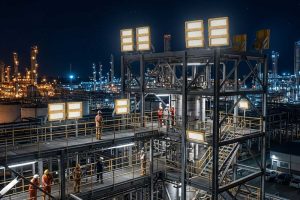
LED explosion-proof lighting for hazardous industries. Certified, energy-efficient, and durable solutions by SEEKINGLED for oil, gas, and chemical sites.
View details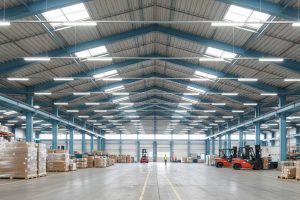
Linear LED high bay light solutions for warehouses, logistics centers and industrial corridors. Learn how SEEKINGLED linear high bay fixtures solve uneven lighting, energy waste and installation challenges.
View details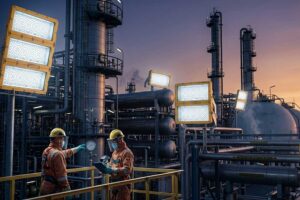
How to Select the Right Hazardous Area – Zone 1 & 2 ATEX Lighting? Learn ATEX zone classification, gas groups, temperature classes, and expert selection tips for safer industrial lighting.
View details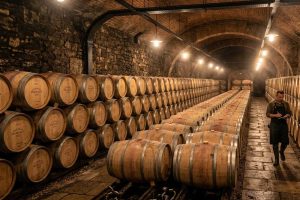
Wine cellar lighting for winery fermentation spaces. Low heat, moisture-resistant, and stable illumination for barrels and production by SEEKINGLED.
View details