 Seeking LED
Are LED Flood Lights Waterproof?
436Are LED flood lights waterproof? Learn how IP ratings work, which LED flood lights handle rain and washdown, and what “waterproof” really means in outdoor use.
View detailsSearch the whole station
Zone 1 hazardous area lighting is specifically engineered for locations where explosive gas atmospheres are likely to occur during normal operation. Unlike standard industrial luminaires, these certified fixtures are designed to eliminate ignition risks while delivering reliable illumination in demanding environments.
When people first hear “Zone 1,” they often imagine an extremely dangerous place filled with flames or constant gas leaks. The reality is more nuanced.
I’ve spent years working alongside EPC contractors, refinery maintenance teams, and offshore engineers, and one thing has become clear: the greatest risk isn’t always what you can see—it’s the invisible combination of flammable gas, oxygen, and an unexpected ignition source.
Lighting, surprisingly, is one of the first pieces of equipment engineers evaluate.
Zone classifications come from the IEC 60079 standards and are widely adopted under the ATEX Directive and the IECEx Certification Scheme.
A Zone 1 location is defined as:
An area in which an explosive gas atmosphere is likely to occur occasionally during normal operation.
Unlike Zone 2, where explosive gas is only expected under abnormal conditions, Zone 1 assumes the presence of hazardous gas during routine industrial activities.
Examples include:
Reference:
IEC Explosive Atmospheres (IEC 60079)
https://www.iec.ch
Ordinary lighting equipment wasn’t designed with explosive atmospheres in mind.
Inside a conventional luminaire, several components can become potential ignition sources:
Normally these present no issue.
But inside a Zone 1 classified area, one electrical fault may become catastrophic.
This explains why zone 1 hazardous area lighting follows far stricter engineering standards than commercial lighting.
Every industrial safety engineer learns the same basic concept.
An explosion requires only three ingredients.
| Element | Example |
|---|---|
| Fuel | Methane, propane, hydrogen |
| Oxygen | Ambient air |
| Ignition Source | Electrical spark, hot surface |
Remove one element.
The explosion cannot occur.
Certified lighting focuses on eliminating the ignition source.
Not every factory needs certified fixtures.
These industries almost always do.
| Industry | Common Hazard |
|---|---|
| Oil & Gas | Hydrocarbon gases |
| Petrochemical | Flammable solvents |
| Pharmaceutical | Alcohol vapor |
| Paint Manufacturing | Organic solvent vapor |
| LNG Facilities | Methane |
| Marine Fuel Terminals | Fuel vapor |
| Chemical Plants | Process gases |
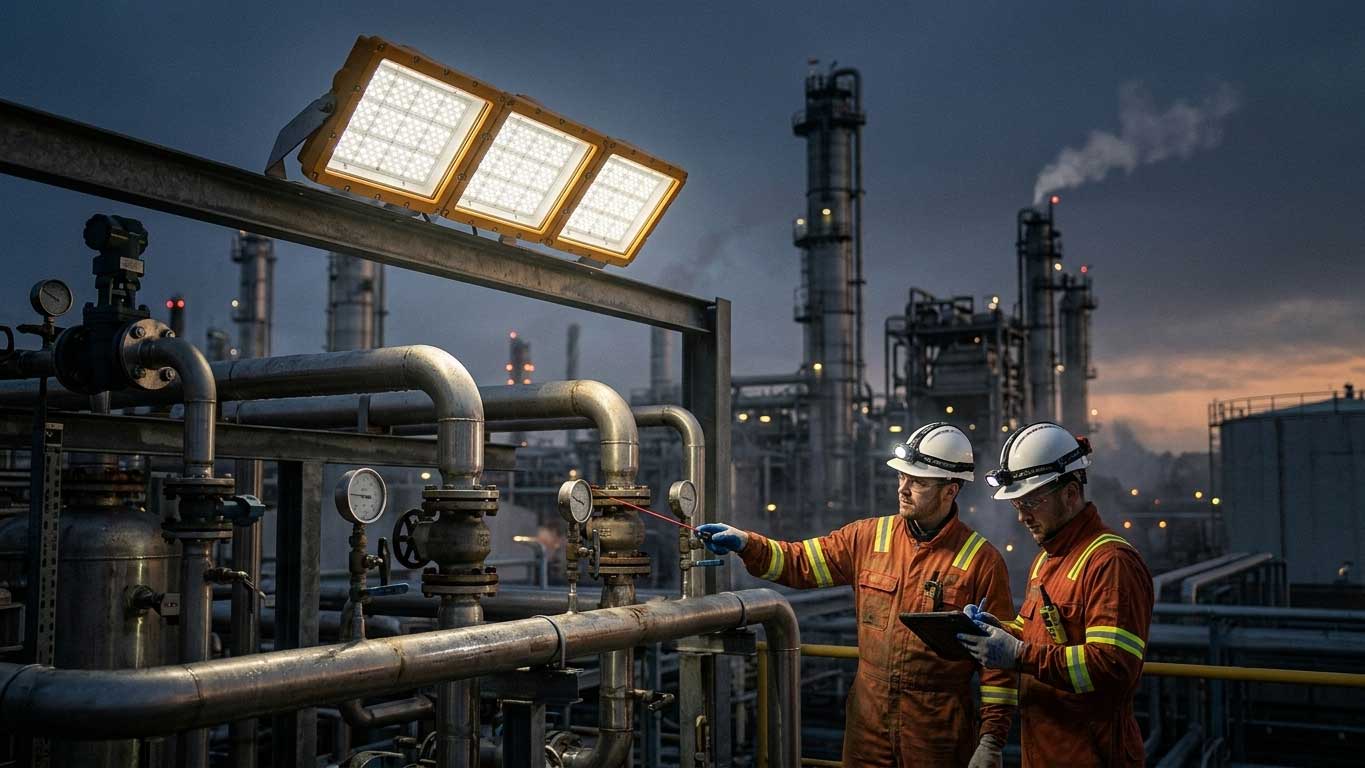
According to the International Association of Oil & Gas Producers (IOGP), hazardous area classification is a fundamental engineering control used throughout upstream and downstream facilities.
Reference:
Many buyers ask this question first.
The answer affects certification, pricing, engineering design, and safety.
| Feature | Zone 1 | Zone 2 |
|---|---|---|
| Gas Presence | Likely during normal operation | Rare and short duration |
| Risk Level | Higher | Lower |
| Certification | More stringent | Less demanding |
| Typical Installation | Process areas | Utility areas |
| Equipment Design | Higher protection | Moderate protection |
A procurement manager once joked during a refinery project:
“Zone 2 forgives mistakes. Zone 1 doesn’t.”
While simplified, the comment captures the engineering mindset perfectly.
Certification is not optional.
For international projects, the most common approvals include:
The marking may include:
Ex db IIC T6 GbEach section has meaning.
| Marking | Meaning |
|---|---|
| Ex | Explosion Protection |
| db | Flameproof enclosure |
| IIC | Hydrogen & acetylene gas group |
| T6 | Maximum surface temperature 85°C |
| Gb | Equipment Protection Level |
Understanding these markings often tells engineers more than a product brochure.
Ten years ago, metal halide fixtures still dominated many hazardous facilities.
Today, LED has become the preferred solution.
Reasons include:
According to the U.S. Department of Energy, modern industrial LED systems can significantly reduce maintenance costs while improving energy efficiency.
Reference:
https://www.energy.gov/eere/ssl
Many premium hazardous fixtures today achieve:
These specifications matter because many installations are located 15 to 30 meters above operating equipment.
Replacing a failed fixture may require shutting down an entire production line.
I usually recommend customers answer six questions before comparing products.
Different gases require different gas groups.
Examples include:
Outdoor facilities may experience:
The driver and thermal design must accommodate both extremes.
Typical installations:
Mounting height directly affects beam angle selection.
Marine environments demand:
Poor coatings often fail long before LEDs do.
Ask yourself:
Can maintenance crews safely reach the fixture?
If not, choose longer-life components.
Always verify:
Never assume one certification automatically replaces another.
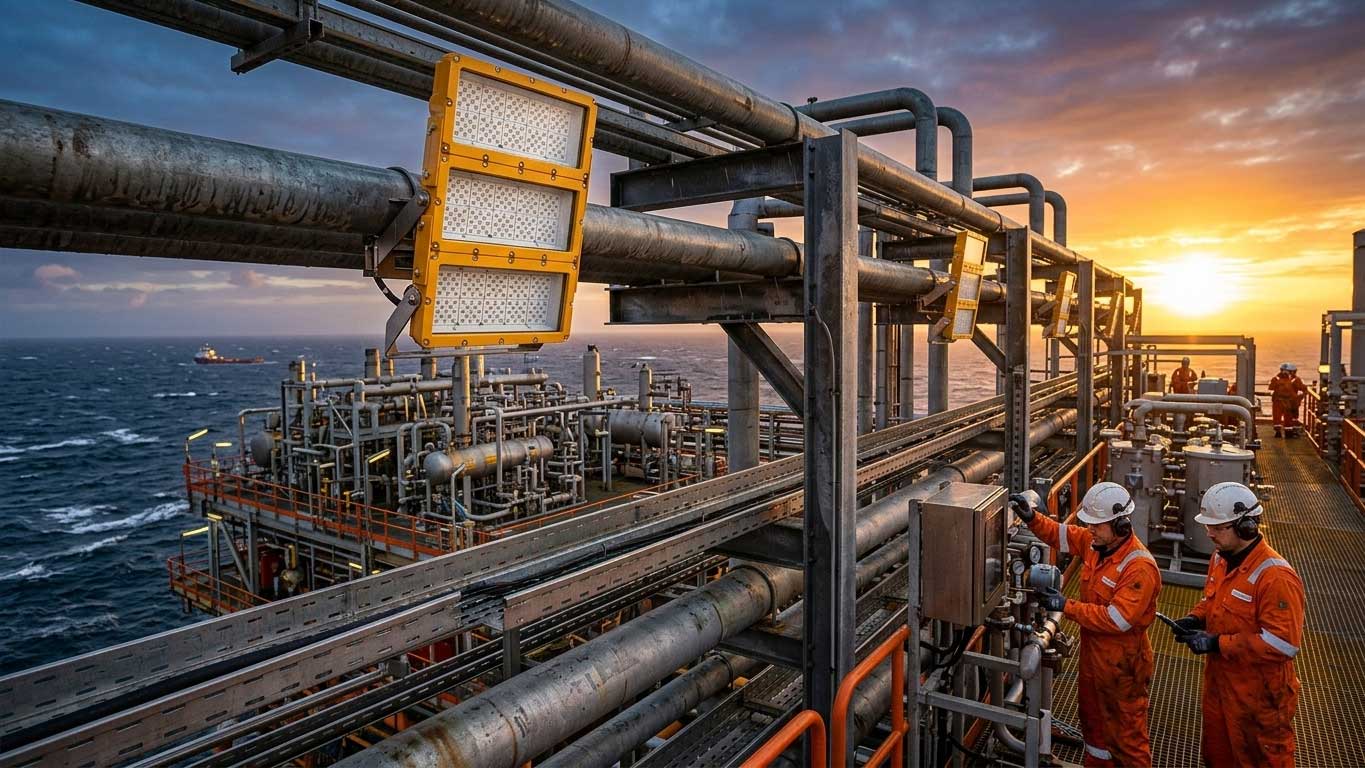
Installing zone 1 hazardous area lighting is never just an electrical task. In my experience supporting EPC contractors and industrial maintenance teams, most project delays were not caused by the luminaires themselves—they were caused by incorrect cable glands, incompatible accessories, or misunderstanding the hazardous area classification.
A certified luminaire can lose its compliance if it is installed with uncertified components.
Before installation, every project should verify:
Ignoring any one of these items may invalidate the protection concept.
| Installation Type | Typical Application | Key Consideration |
|---|---|---|
| Ceiling Mount | Pump rooms | Uniform illumination |
| Wall Mount | Processing areas | Eliminate shadow zones |
| Pole Mount | Outdoor loading bays | Wind resistance |
| Pendant Mount | High ceilings | Vibration control |
| Adjustable Bracket | Skids & platforms | Flexible aiming |
One misconception I often hear is:
“LED fixtures don’t need maintenance.”
The LED chips may last for many years, but hazardous-area equipment still requires periodic inspection.
According to IEC 60079-17, explosion-protected electrical installations should undergo regular inspection throughout their service life.
Typical maintenance includes:
Facilities operating continuously in corrosive marine environments often shorten inspection intervals compared with inland installations.
Replace the luminaire immediately if inspectors observe:
Never attempt field modifications on certified explosion-protected luminaires.
Zone 1 lighting is commonly installed across industries where flammable gases or vapors may occur during normal operations.
Examples include:
| Industry | Typical Zone 1 Location |
|---|---|
| Oil & Gas | Wellheads, separators, compressor stations |
| LNG | Loading arms, storage process areas |
| Chemical Plants | Solvent production |
| Refineries | Distillation units |
| Offshore Platforms | Processing decks |
| Marine Fuel Terminals | Transfer manifolds |
| Pharmaceutical Manufacturing | Solvent handling rooms |
| Aviation Fuel Depots | Pumping stations |
Each industry presents different corrosion levels, temperatures, and maintenance practices, making product selection equally important.
At SEEKINGLED, we have spent years working alongside industrial distributors, engineering contractors, and hazardous-area specialists.
Rather than simply supplying luminaires, we focus on helping customers match certified products to real operating conditions.
Our Zone 1 lighting solutions offer:
From refinery upgrades in the Middle East to offshore platforms in Europe and chemical plants across Southeast Asia, our engineering team has supported projects where reliability matters every day—not just during commissioning.
Yes. Equipment certified for Zone 1 can generally be installed in the less hazardous Zone 2, provided all certification markings match the site’s gas group, temperature class, and environmental conditions.
No. Zone 0 represents areas where explosive gas atmospheres are present continuously or for long periods. Zone 1 is for areas where explosive atmospheres are likely during normal operation.
Modern LED fixtures typically generate less heat, provide instant full brightness, reduce maintenance frequency, and consume significantly less energy than conventional HID systems while maintaining certified explosion protection.Visit the product page: Explosion proof lights
High-quality industrial LED luminaires are commonly rated for L70 lifetimes exceeding 100,000 hours, although actual service life depends on ambient temperature, operating hours, installation quality, and maintenance practices.
Ask suppliers for:
Choosing zone 1 hazardous area lighting is about far more than buying a bright fixture. It requires matching certified explosion-protection methods to the site’s hazardous classification, gas group, temperature class, environmental conditions, and maintenance strategy. When these factors are aligned, properly certified LED luminaires deliver safer operation, longer service life, and lower lifecycle costs.
At SEEKINGLED, we combine certified engineering, real-world project experience, and rigorous quality control to help industrial customers specify dependable lighting solutions for demanding Zone 1 environments.
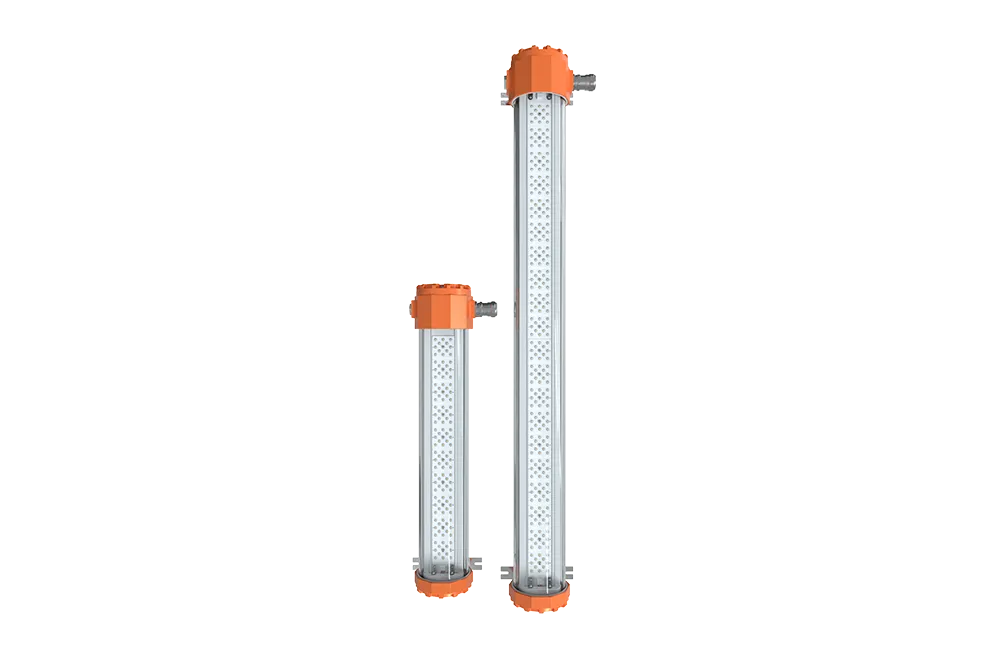
SEEKINGLED LED Linear Explosion Proof Light and Explosion Proof lighting is ATEX and IECEx certified for Zone 1, Zone 2, Zone 21 and Zone 22 hazardous locations, built for long-term industrial use.
View details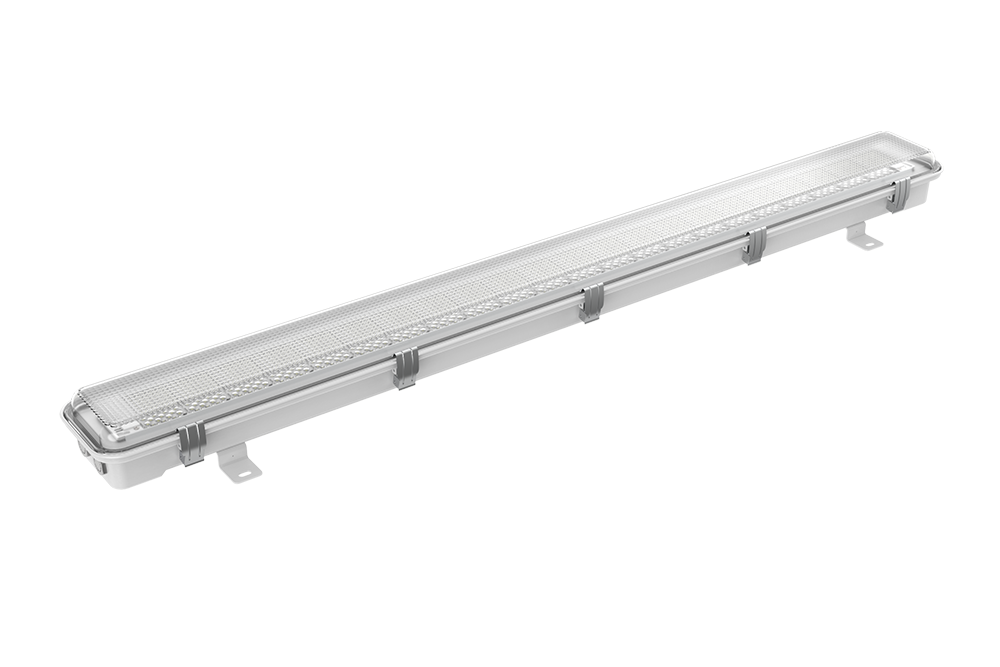
LED Linear Explosion Proof Lights and EX Proof lights for Zone 1, Zone 2, Zone 21 and Zone 22 hazardous areas. ATEX & IECEx certified explosion proof LED linear lighting with emergency function, adjustable power and IP67 protection by SEEKINGLED.
View details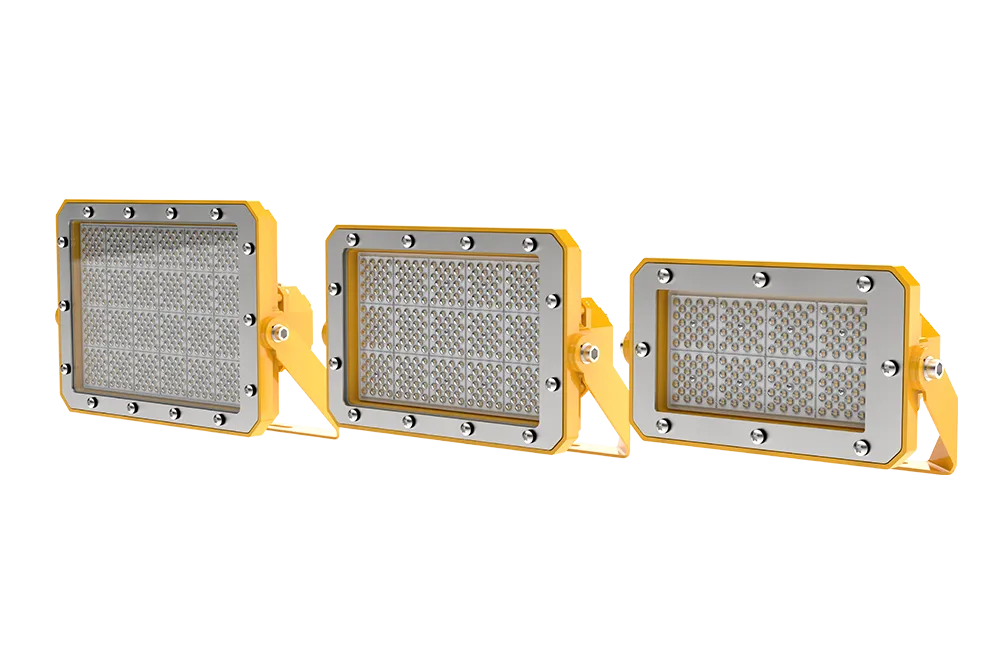
SEEKINGLED LED Explosion Proof Flood Lights are ATEX certified for Zone 2 and Zone 22 hazardous areas, offering high efficiency, adjustable power and integrated junction box.
View details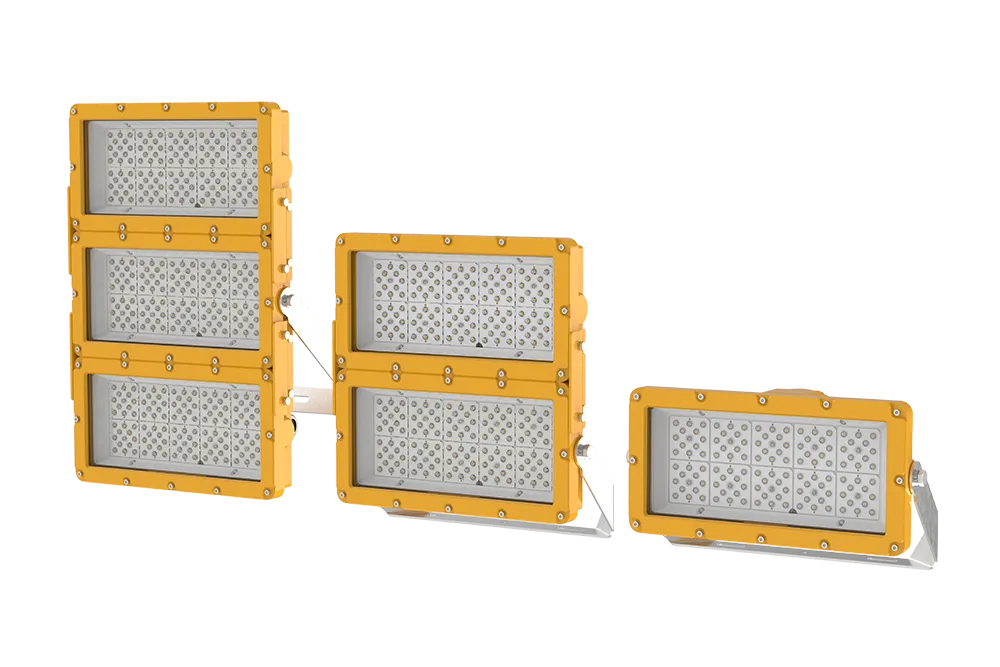
SEEKINGLED LED Explosion Proof Flood Lights are flameproof ATEX and IECEx certified for Zone 1 and Zone 2 hazardous areas, offering high power, adjustable output and long service life.
View details
SEEKINGLED LED Gas Station Canopy Lights are ATEX certified for Zone 2 and Zone 22 hazardous areas, featuring adjustable power and built-in explosion-proof junction box.
View details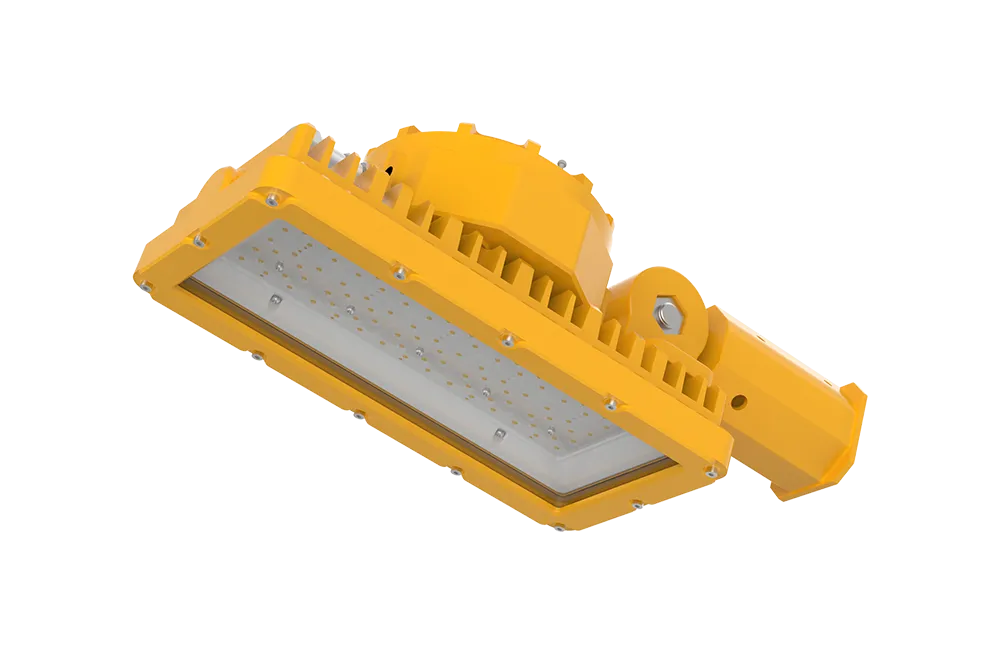
ATEX: Ex II 2G Ex db IIB T6/T5 GbEx II 2D Ex tb IIIC T80°C/ T95°C Db IECEx Ex db IIB T6 Gb;Ex tb IIIC T80°C Db Feature: ● For Zone 1,2 and Zone 21,22● Flameproof type, the strongest● 100W can replace 250W HID,energy saving● Power:60W,80W,100W Application: Oil and gas, marine, Chemical, pharmaceutical, semiconductor,mining,military industr…
View details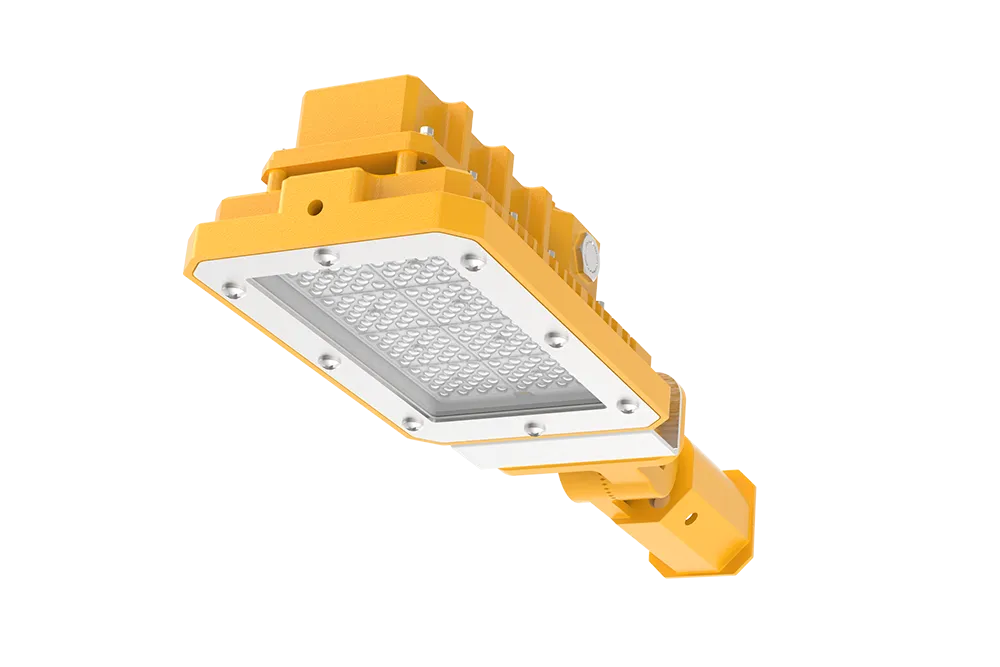
ATEX: II 3G Ex nR ⅡC T5/T6 GcII 3D Ex tc ⅢC T80℃/T95℃Dc ATEX Certificate NO: TÜV CY 26 ATEX 0207611 X Feature: ● For Zone 2 and Zone 22● 150W can replace 250W HID lamps,Energy saving● Power:50W,75W,100W,150W,200W Application: Oil and gas, marine, Chemical, pharmaceutical, semiconductor,mining,military industry, paint booth,power plant ETC…
View details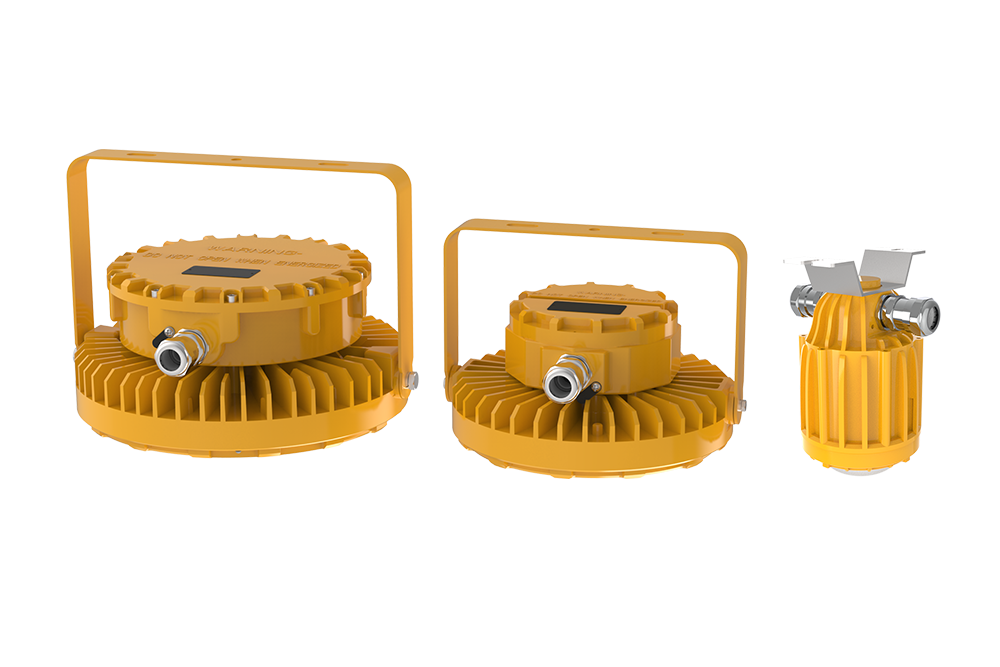
LED explosion proof high bay lights are designed for Zone 1, Zone 2, Zone 21 and Zone 22 hazardous areas. This page introduces the HB21 Series from SEEKING, including certifications, power options and real application considerations.
View details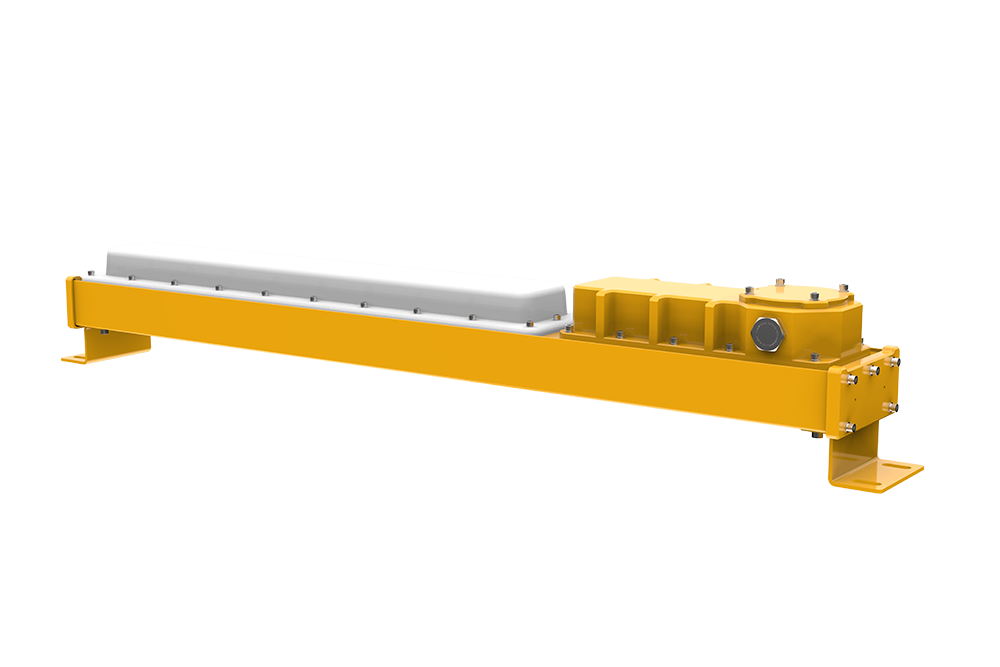
LED Linear Explosion Proof Lights from SEEKINGLED. LU Series Flame Proof lights ATEX-certified explosion proof LED linear lighting for Zone 2 gas and Zone 22 dust areas, IP69K, IK10, long lifetime and flexible power options.
View details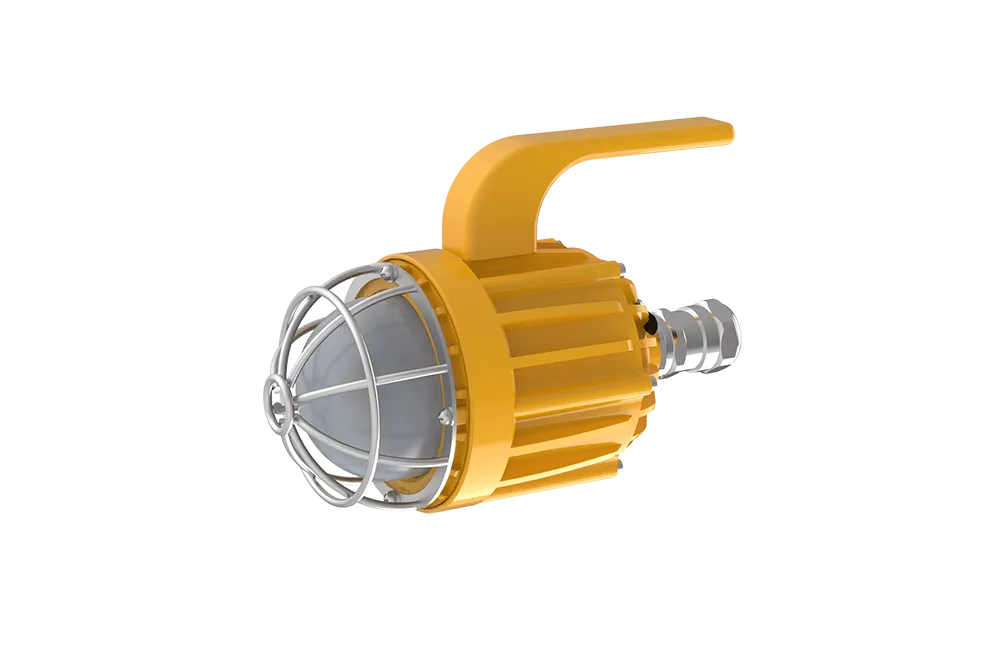
Certified explosion proof work lights for Zone 1 & 21 hazardous areas. Portable, ATEX & IECEx approved, built for oil, gas and chemical plants by SEEKINGLED.
View details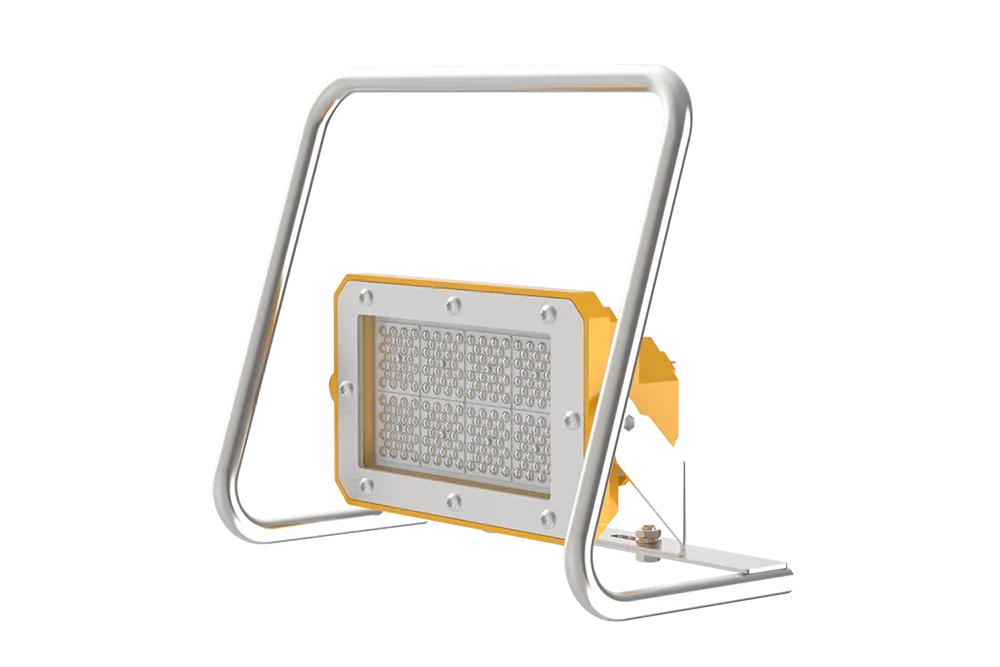
ATEX: II 3G Ex nR ⅡC T6 GcII 3D Ex tc ⅢC T80℃ Dc ATEX Certificate NO: TÜV CY 26 ATEX 0207611 X Feature: ● For Zone 2 and Zone 22● Accepts battery-powered supply● indestructible● Power:AC input:50W,75W,100WDC input:15W,25W,35W Application: Oil and gas, marine, Chemical, pharmaceutical, semiconductor,mining,military industry, paint booth,po…
View details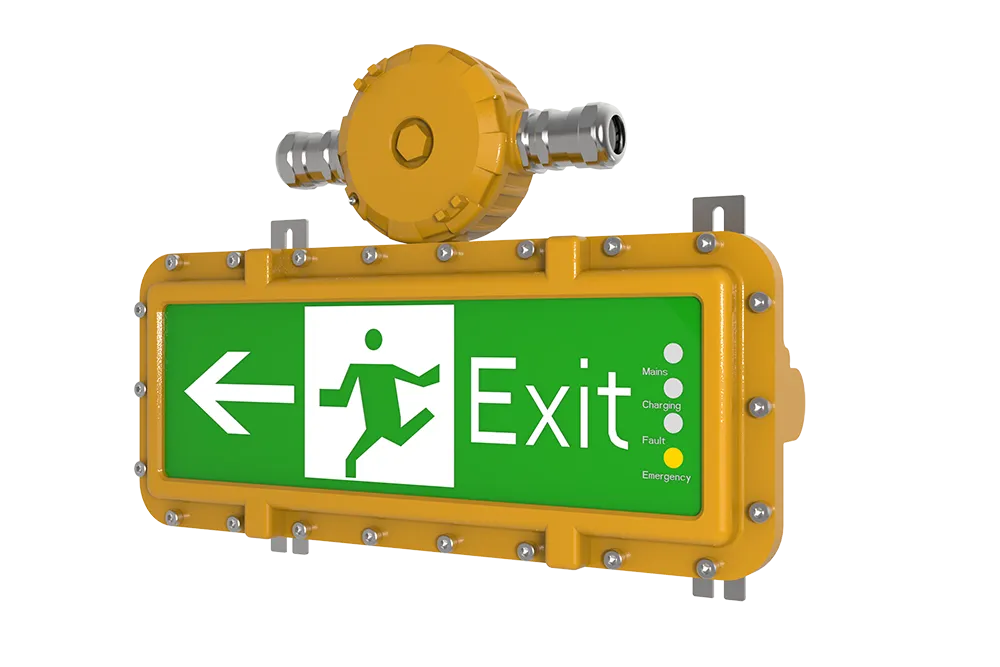
ATEX: Ex II 2G Ex db IIB T6 GbEx II 2D Ex tb IIIC T80°C Db IECEx Ex db IIB T6 Gb;Ex tb IIIC T80°C Db Feature: ● For Zone 1,2 and Zone 21,22● Flameproof type, the strongest Application: Oil and gas, marine, Chemical, pharmaceutical, semiconductor,mining,military industry, paint booth,power plant ETC hazardous area. Technical Specifications:…
View details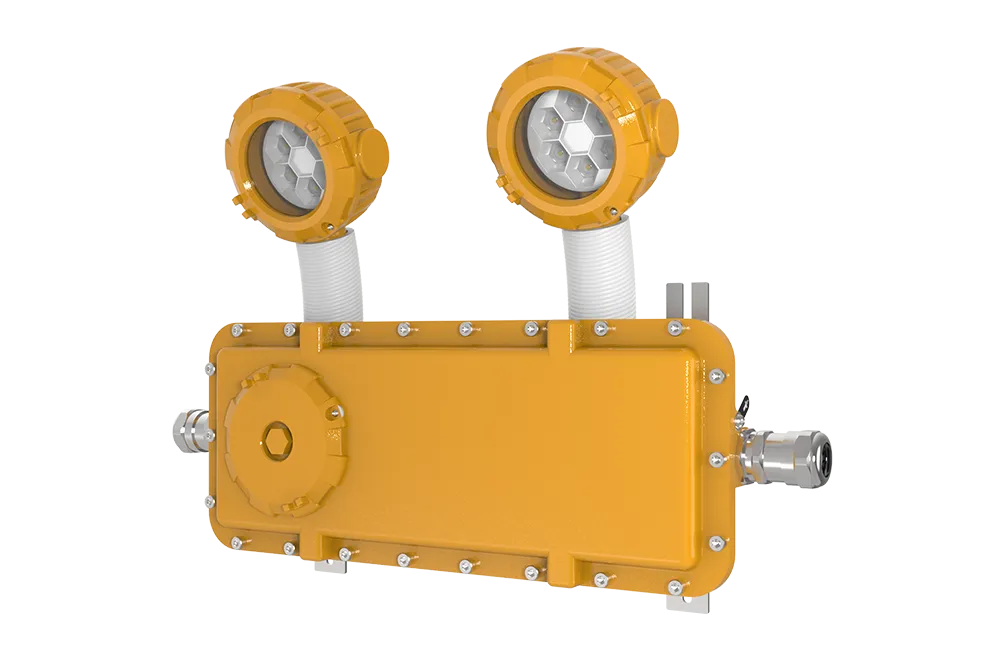
ATEX: Ex II 2G Ex db IIB T6 GbEx II 2D Ex tb IIIC T80°C Db IECEx Ex db IIB T6 Gb;Ex tb IIIC T80°C Db Feature: ● For Zone 1,2 and Zone 21,22● Flameproof type, the strongest Application: Oil and gas, marine, Chemical, pharmaceutical, semiconductor,mining,military industry, paint booth,power plant ETC hazardous area. Technical Specifications:…
View details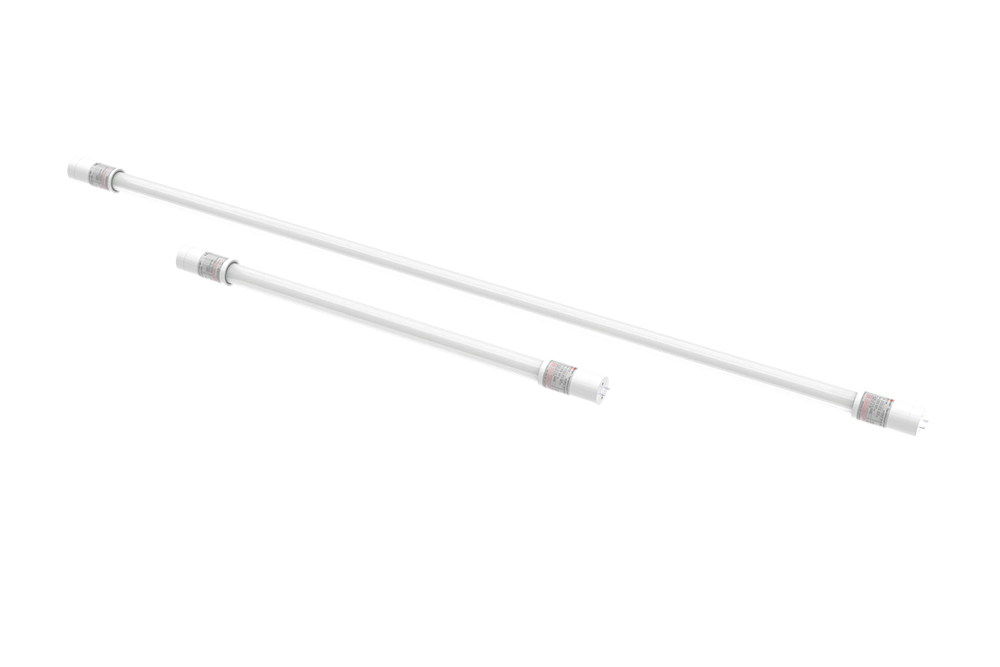
ATEX: Ex II 2G Ex d e IIB T6 Gb ATEX: Ex d e IIB T6 Gb; Feature: ● For Zone 1,2● 9W can replace 18W fluorescent lamps,50% Energy saving Application: Oil and gas, marine, Chemical, pharmaceutical, semiconductor,mining,military industry, paint booth,power plant ETC hazardous area. Technical Specifications: Standards:60079-0, 60079-1, 60079…
View details
Are LED flood lights waterproof? Learn how IP ratings work, which LED flood lights handle rain and washdown, and what “waterproof” really means in outdoor use.
View details
Where to find high quality high bay LED lights wholesale? This Q&A explains trusted sourcing channels, factory criteria, and how to evaluate wholesale suppliers.
View details
Can LED lights be used in an explosion proof area? Learn when LEDs are safe, certification requirements, and real-world insights for hazardous locations.
View details
High Bay LED Lights 200W deliver stable output, energy savings, and long lifespan. Discover how to choose reliable industrial lighting that performs in real environments.
View details