 Seeking LED
How long do hazardous area LED fixtures last?
0How long do hazardous area LED fixtures last? Learn the real service life, maintenance factors, temperature effects, and lifespan expectations for hazardous LED lighting.
View detailsSearch the whole station
From an engineering standpoint, Dialux stadium lighting design is less about software features and more about control. Control over light levels, uniformity, glare, and eventually, what really happens after installation.
In stadium projects, lighting decisions are rarely made only by appearance. Most discussions start with standards, camera requirements, and maintenance constraints. Whether the project involves Sports Stadium LED Lighting for football, athletics, or multi-purpose venues, the challenge is always the same: how to predict real lighting performance before anything is installed. This is where Dialux becomes part of daily engineering work.

In practice, Dialux is mainly used during the early design and verification stages. Engineers build a simplified but accurate stadium model, define pole heights, mounting angles, and lighting zones. The goal is not to create perfect renderings, but to understand how light behaves across the field and seating areas. Over-lighting is as much a problem as under-lighting, especially when energy budgets are tight.
At SEEKINGLED, Dialux calculations are often used to compare different fixture layouts rather than to “sell” a single solution. For example, when selecting LED Flood Light optics, small changes in beam angle can affect uniformity far more than total wattage. Dialux allows engineers to see this early, before fixtures are fixed on poles.
Daytime conditions are another factor often overlooked. Stadiums are not used only at night. With Dialux daylight simulation, designers can check how natural light interacts with artificial lighting. This is especially relevant for open stadiums, where LED Street Light and surrounding Garden Lights LED also influence visual comfort and safety around the venue.
Inside auxiliary areas, such as corridors, equipment rooms, and indoor training halls, Dialux is used more selectively. LED High Bay Light, Linear LED Light, and LED Tri-proof Lamp layouts are usually simpler, but still need to meet uniformity and glare limits. In some infrastructure zones, Explosion Proof Light solutions are included, and their placement must respect both safety standards and maintenance access.
One important lesson from real projects is that Dialux results are only as good as the input data. Accurate mounting height, tilt angle, and photometric files matter. Engineers often re-check calculations after site surveys, because a one-meter difference in pole height can change results more than expected.
Night-time simulation is where Dialux proves its value most clearly. Engineers can verify whether the field meets broadcast requirements, whether shadows appear near goal areas, and whether spectator seating receives consistent light. These checks reduce on-site adjustments later, saving both time and cost.
Dialux does not replace engineering judgment. It supports it. Final decisions still depend on experience, especially when balancing performance, budget, and long-term operation. This is why SEEKINGLED treats Dialux as a tool, not a promise.
In real stadium projects, Dialux stadium lighting design helps engineers make fewer assumptions and fewer corrections later. That alone makes it an essential part of modern Sports Stadium LED Lighting work.
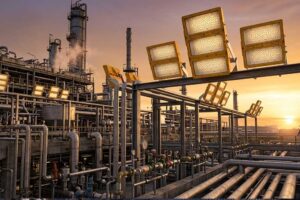
How long do hazardous area LED fixtures last? Learn the real service life, maintenance factors, temperature effects, and lifespan expectations for hazardous LED lighting.
View details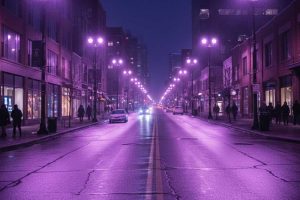
Why do LED street lights turn purple over time? This Q&A explains the real reasons behind purple street lights, how phosphor failure happens, and what cities usually do next.
View details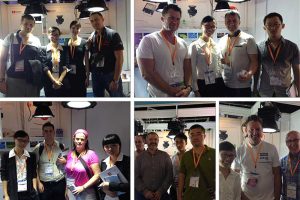
27-Oct-2013 Boot NO.:5B-B29We launch two series product. 100W, 150W, 200W, 300W, 400W, 480W LED high bay light, which use SMD3020 LED chip, 25°、60°、90°、120° beam angle for choice. Effectively solved the disadvantages of heat ...
View details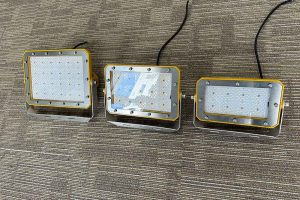
Explosion proof junction boxes engineered for hazardous areas. SEEKINGLED ATEX-certified enclosures ensure safe cable connections in oil, gas, mining and chemical plants.
View details