 Seeking LED
What Is an ATEX LED Flood Light?
0What is an ATEX LED flood light? Learn how ATEX-certified explosion-proof LED flood lights work in hazardous zones, oil plants, and chemical facilities with SEEKINGLED.
View detailsSearch the whole station
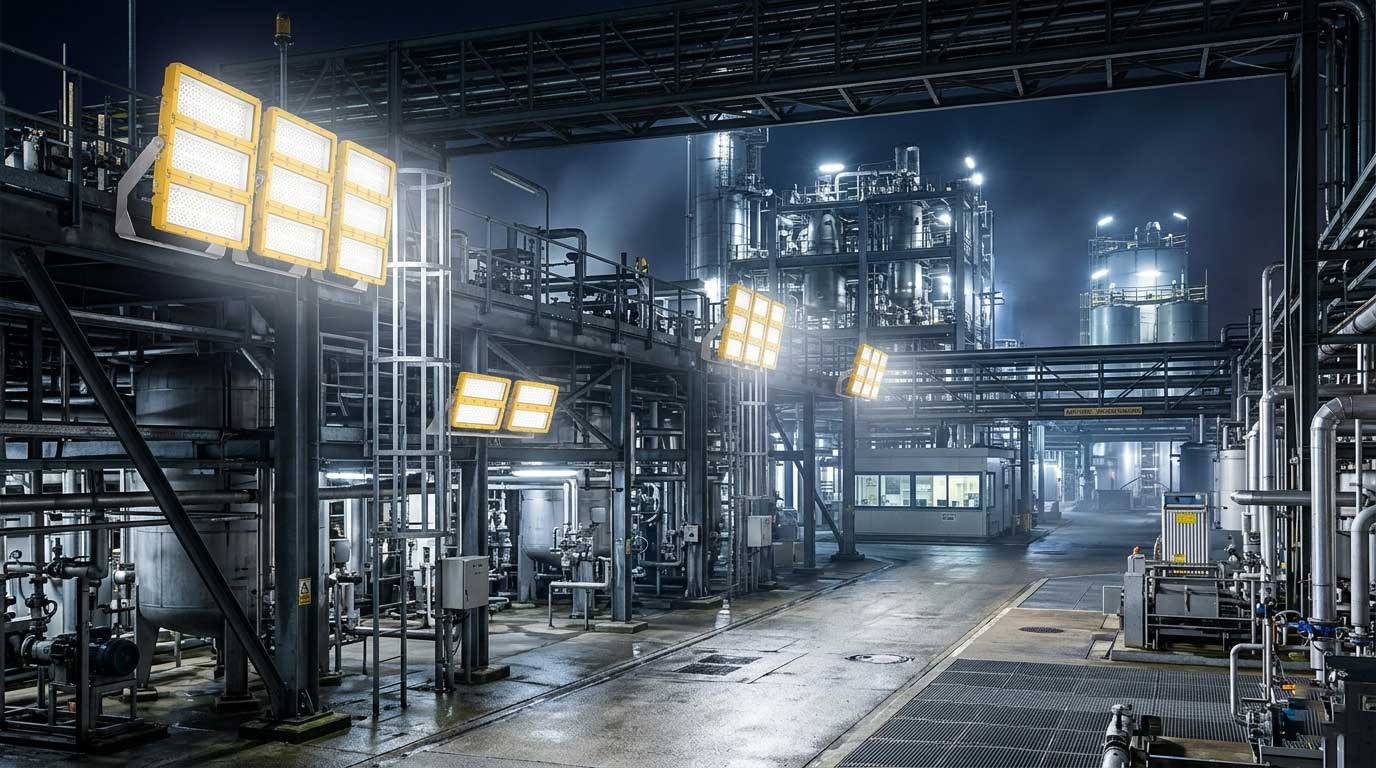
Selecting an ex proof lamp for hazardous areas is not about brightness first. It is about compliance, containment integrity, thermal control, and long-term reliability under extreme industrial conditions. In this article, I share field experience from oil & gas and petrochemical lighting projects, reference international explosion protection standards, and explain how SEEKINGLED’s FL7 Series (ATEX & IECEx certified) addresses high-risk environments with practical engineering rather than marketing claims.
In hazardous locations, the wrong fixture is not a minor issue — it is a liability.
The FL7 Series is built under IEC/EN 60079-0 and 60079-1 standards. These are not optional references. IEC 60079 governs equipment used in explosive atmospheres, defining requirements for flameproof (Ex d) enclosures capable of containing internal explosions without transmitting flame to the surrounding atmosphere.
From my experience working with industrial EPC contractors, Zone classification is often misunderstood.
An ex proof lamp that covers Zone 1 and Zone 21 provides significantly broader deployment capability than Zone 2-only luminaires. This flexibility matters in refinery pipe racks, offshore platforms, chemical blending areas, and fuel storage terminals.
The term “flameproof” is often misused. Ex d construction means the housing is designed to withstand internal ignition and prevent flame propagation outside the enclosure.
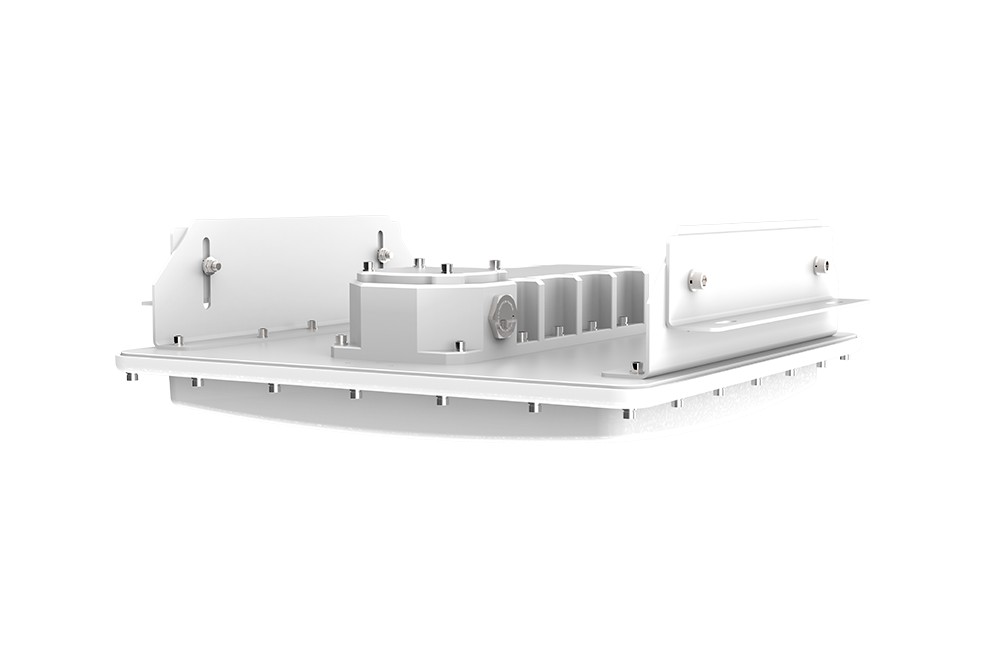
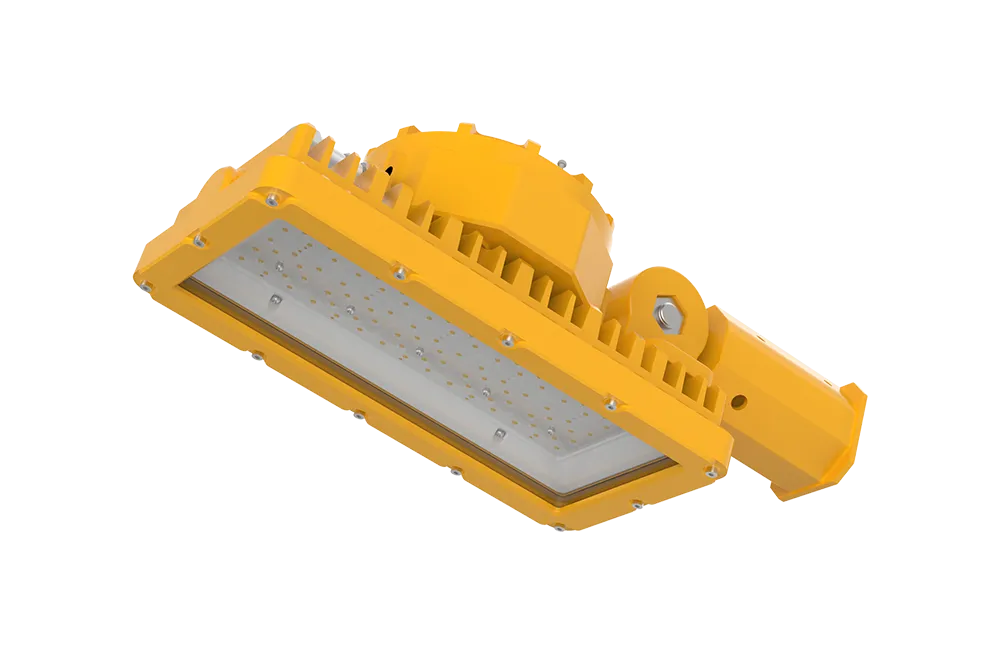
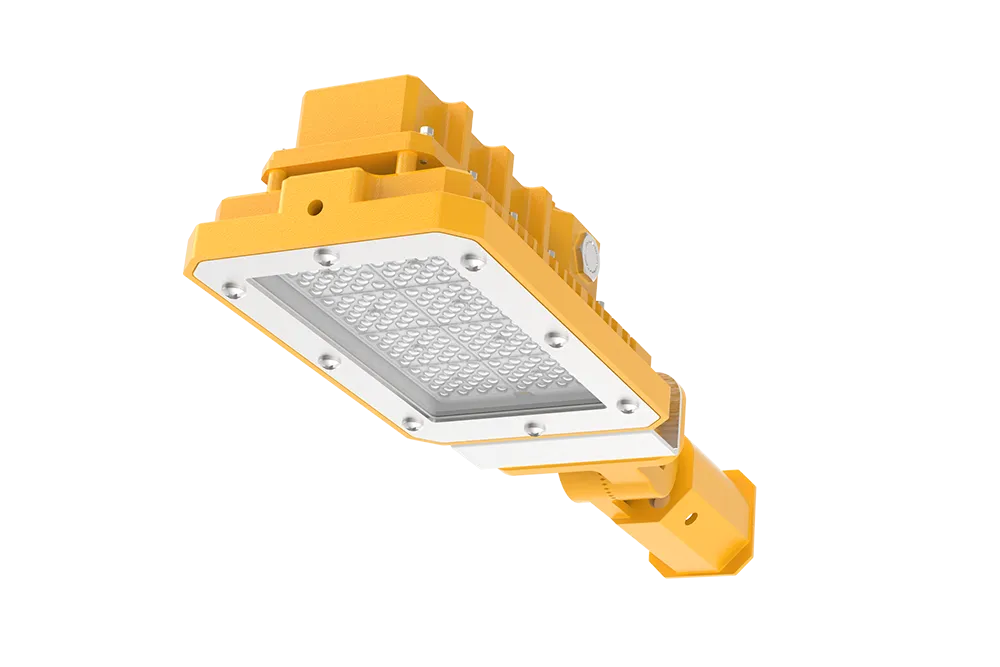
The FL7 Series uses a heavy-duty enclosure with threaded flame paths, built-in explosion-proof junction box, and certified cable entries (2xM25x1.5).
This is aligned with ATEX marking:
II 2G Ex db IIC T6/T5 Gb
II 2D Ex tb IIIC T80°C/T95°C Db
These classifications indicate suitability for high-risk gas groups (IIC – hydrogen, acetylene) and combustible dust environments. That’s not entry-level protection. That’s serious industrial deployment.
Safety is primary. But performance still matters.
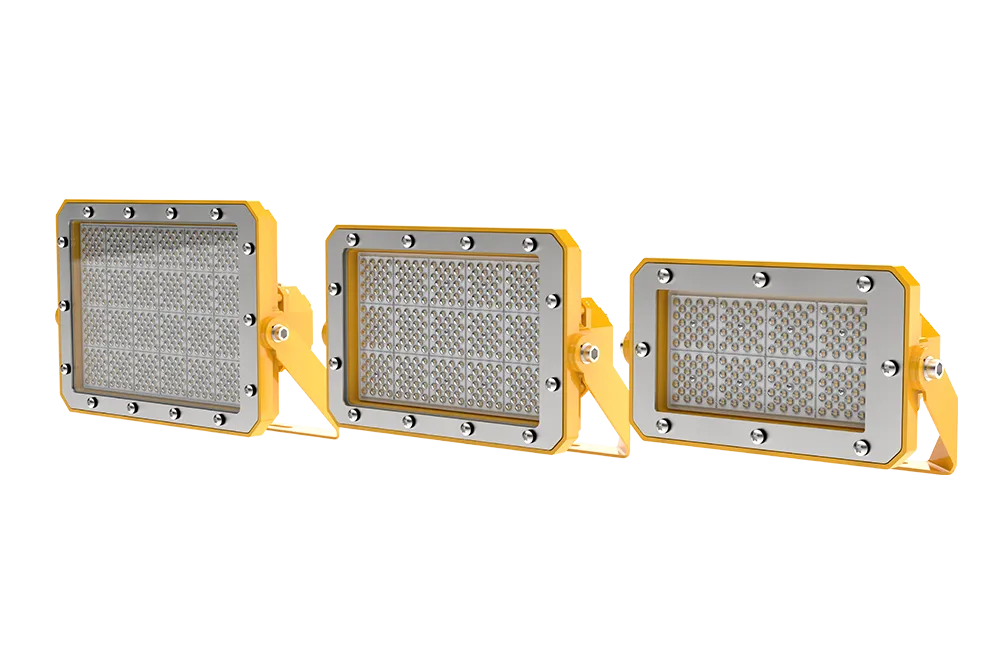
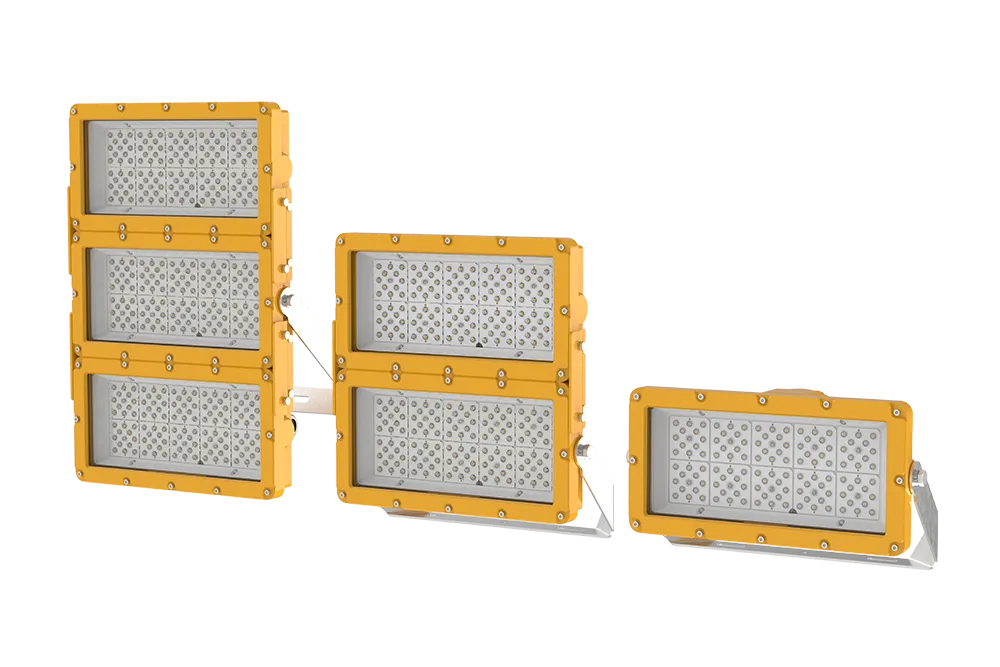
The FL7 ex proof lamp offers power options from 100W to 400W, reaching up to 52,000 lumens at CRI 80. With efficacy up to 150 lm/W, it delivers strong illumination without excessive thermal load.
According to the International Energy Agency (IEA), LED lighting continues to outperform legacy sources in energy efficiency and lifecycle cost across industrial applications. In hazardous areas where maintenance access is difficult and expensive, reducing relamping frequency has measurable financial impact.
Compared to traditional halogen floodlights:
Downtime reduction alone justifies the upgrade in many refineries I’ve consulted for.
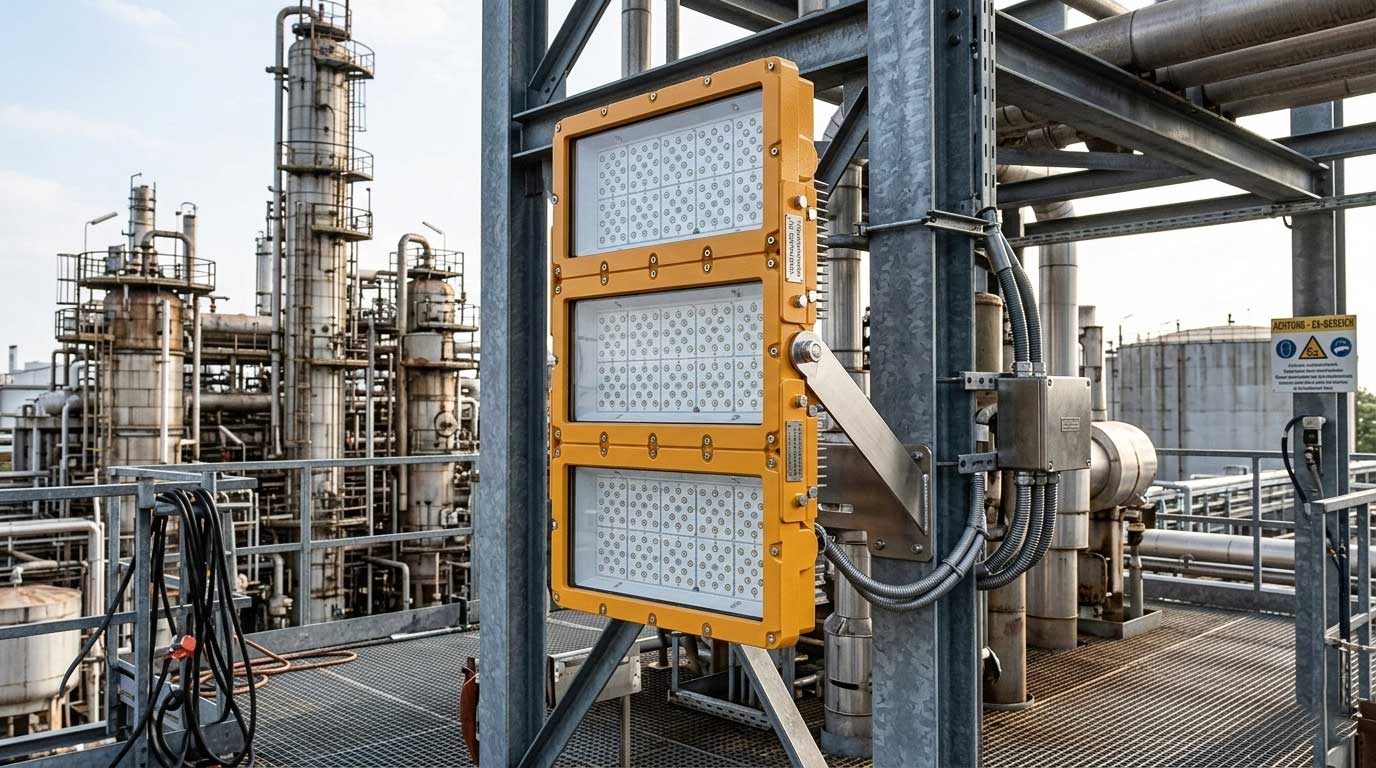
Hazardous area luminaires must control surface temperature. The FL7 operates within -20°C to +55°C ambient conditions.
Temperature class markings (T6/T5) ensure the surface temperature does not exceed specified limits, preventing ignition of surrounding gases. This aligns with IECEx and ATEX temperature classification principles.
Thermal management is not cosmetic. Excessive heat shortens driver life and risks compliance failure. The aluminum housing supports heat dissipation while maintaining enclosure integrity.
The 3-step adjustable power feature reduces SKU complexity. For distributors managing international hazardous area LED lighting projects, fewer SKUs mean easier stock planning.
Instead of carrying multiple wattage variants, adjustment allows flexibility without sacrificing certification scope.
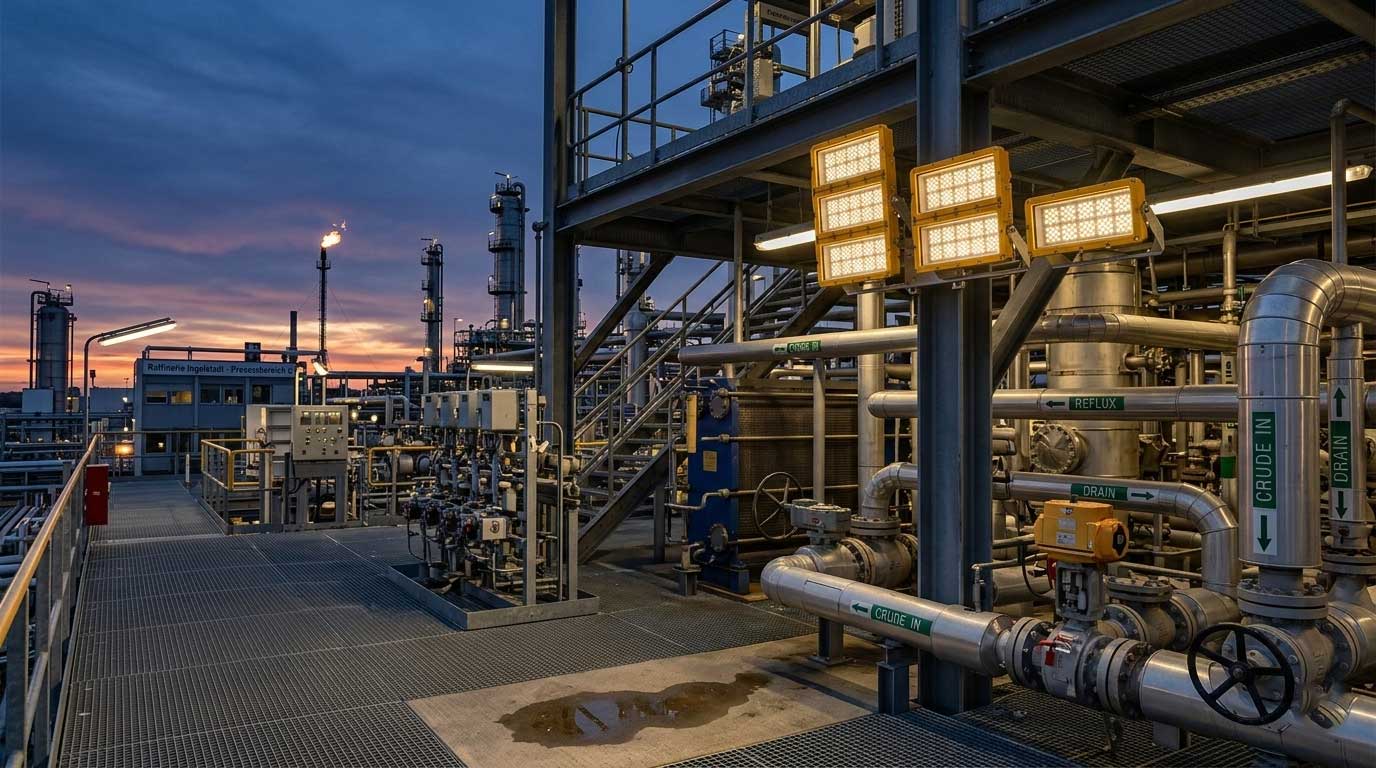
Certification is where many products fail.
CSA-issued ATEX + IECEx certification supports acceptance across the EU and IECEx member countries. For multinational oil & gas operators, this avoids region-specific re-approval complications.
Compliance under both systems simplifies specification approval in EPC documentation.
In real procurement reviews, incomplete certification is often the reason bids are rejected — not performance.
Marine environments introduce corrosion. Military sites demand durability. Airport fuel zones require strict safety compliance.
The FL7 ex proof lamp provides:
In offshore lighting upgrades I have reviewed, corrosion-resistant construction and proper sealing were decisive factors.
After more than a decade working with industrial lighting projects, I’ve seen failures caused by:
An ex proof lamp must be selected as part of a system — not isolated hardware. Certification, thermal design, and proper installation practices are inseparable.
The SEEKINGLED FL7 Series ex proof lamp combines ATEX & IECEx certified flameproof protection, strong luminous performance, and global compliance for hazardous environments.
In oil & gas, petrochemical, marine, and military projects, reliability and certification outweigh marketing claims. When safety standards, performance efficiency, and long lifecycle align, operators gain both protection and operational confidence.
In hazardous zones, compromise is not acceptable. The right ex proof lamp makes that decision straightforward.
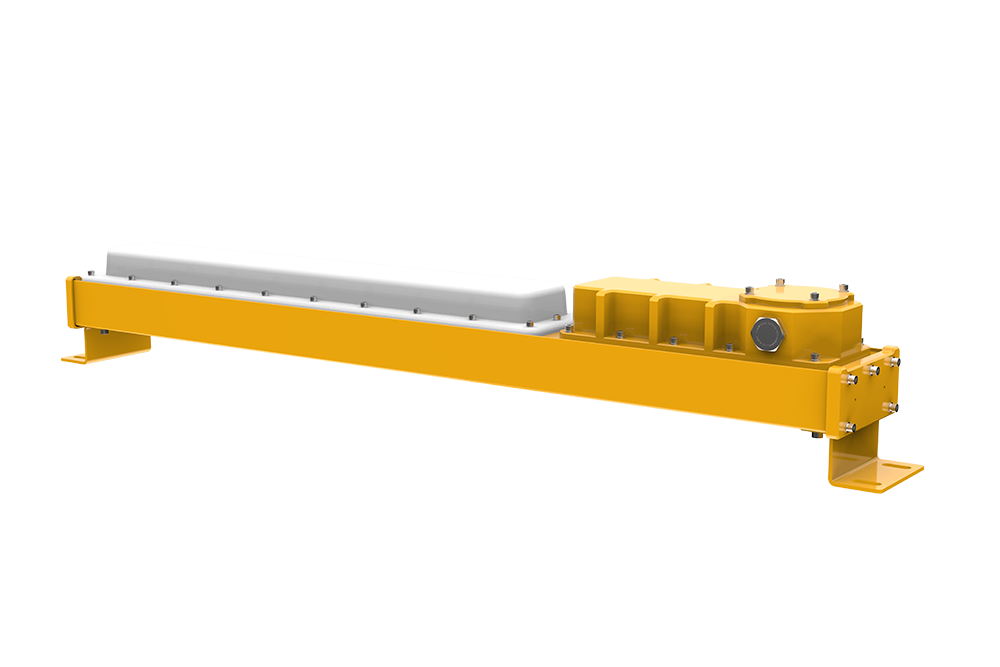
SEEKINGLED LED Linear Explosion Proof Light and Explosion Proof lighting is ATEX and IECEx certified for Zone 1, Zone 2, Zone 21 and Zone 22 hazardous locations, built for long-term industrial use.
LED Linear Explosion Proof Lights and EX Proof lights for Zone 1, Zone 2, Zone 21 and Zone 22 hazardous areas. ATEX & IECEx certified explosion proof LED linear lighting with emergency function, adjustable power and IP67 protection by SEEKINGLED.
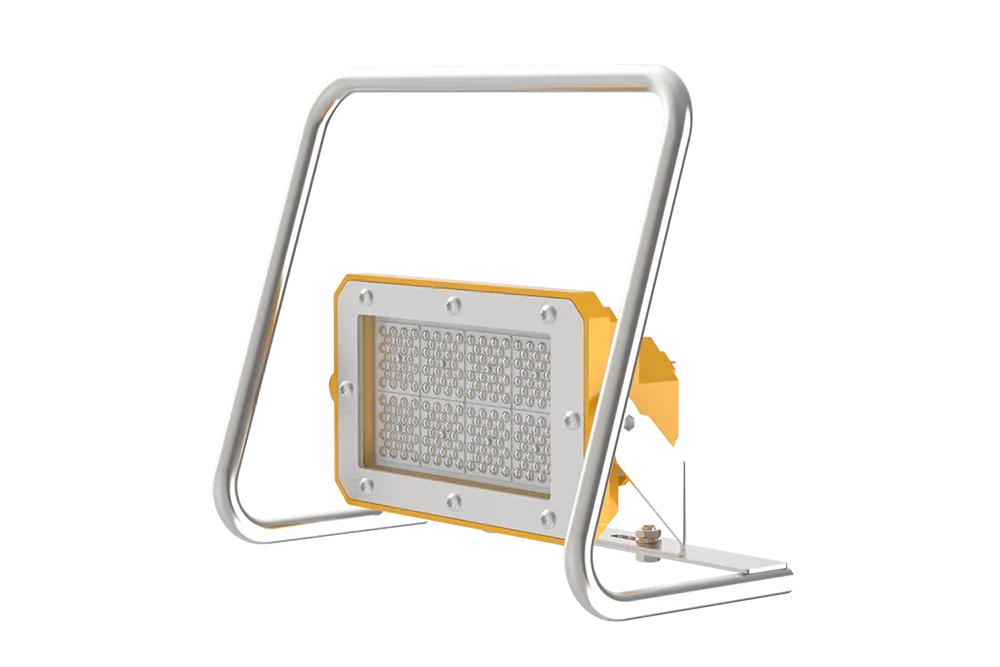
SEEKINGLED LED Explosion Proof Flood Lights are ATEX certified for Zone 2 and Zone 22 hazardous areas, offering high efficiency, adjustable power and integrated junction box.
SEEKINGLED LED Explosion Proof Flood Lights are flameproof ATEX and IECEx certified for Zone 1 and Zone 2 hazardous areas, offering high power, adjustable output and long service life.
SEEKINGLED LED Gas Station Canopy Lights are ATEX certified for Zone 2 and Zone 22 hazardous areas, featuring adjustable power and built-in explosion-proof junction box.
ATEX: Ex II 2G Ex db IIB T6/T5 GbEx II 2D Ex tb IIIC T80°C/ T95°C Db IECEx Ex db IIB T6 Gb;Ex tb IIIC T80°C Db Feature: ● For Zone 1,2 and Zone 21,22● Flameproof type, the strongest● 100W can replace 250W HID,energy saving● Power:60W,80W,10…
ATEX: II 3G Ex nR ⅡC T5/T6 GcII 3D Ex tc ⅢC T80℃/T95℃Dc ATEX Certificate NO: TÜV CY 26 ATEX 0207611 X Feature: ● For Zone 2 and Zone 22● 150W can replace 250W HID lamps,Energy saving● Power:50W,75W,100W,150W,200W Application: Oil and gas, m…
LED explosion proof high bay lights are designed for Zone 1, Zone 2, Zone 21 and Zone 22 hazardous areas. This page introduces the HB21 Series from SEEKING, including certifications, power options and real application considerations.
LED Linear Explosion Proof Lights from SEEKINGLED. LU Series Flame Proof lights ATEX-certified explosion proof LED linear lighting for Zone 2 gas and Zone 22 dust areas, IP69K, IK10, long lifetime and flexible power options.
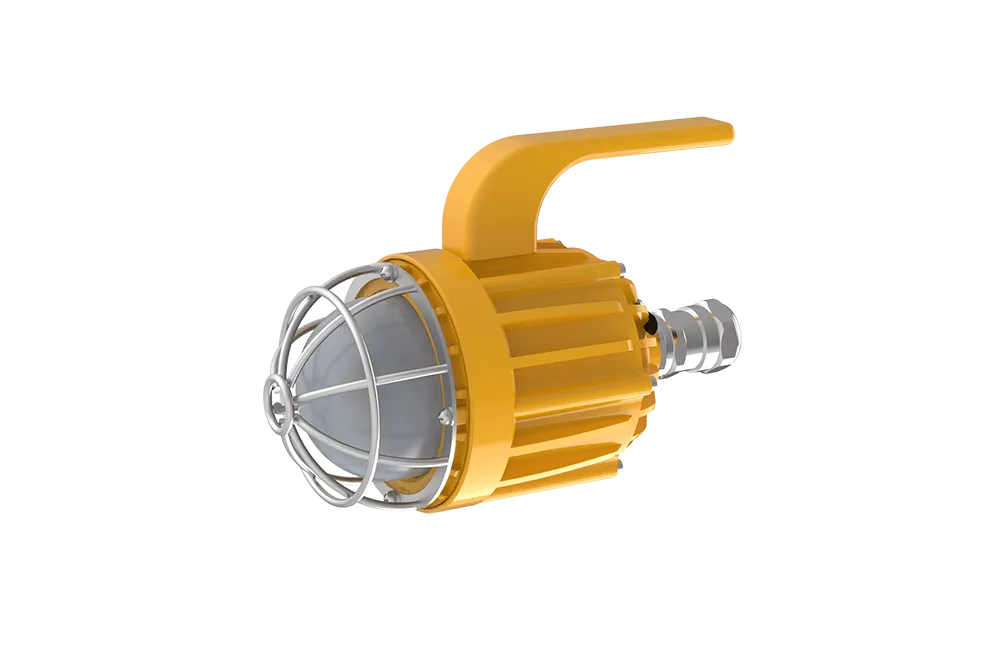
Certified explosion proof work lights for Zone 1 & 21 hazardous areas. Portable, ATEX & IECEx approved, built for oil, gas and chemical plants by SEEKINGLED.
ATEX: II 3G Ex nR ⅡC T6 GcII 3D Ex tc ⅢC T80℃ Dc ATEX Certificate NO: TÜV CY 26 ATEX 0207611 X Feature: ● For Zone 2 and Zone 22● Accepts battery-powered supply● indestructible● Power:AC input:50W,75W,100WDC input:15W,25W,35W Application: O…
ATEX: Ex II 2G Ex db IIB T6 GbEx II 2D Ex tb IIIC T80°C Db IECEx Ex db IIB T6 Gb;Ex tb IIIC T80°C Db Feature: ● For Zone 1,2 and Zone 21,22● Flameproof type, the strongest Application: Oil and gas, marine, Chemical, pharmaceutical, semicondu…
ATEX: Ex II 2G Ex db IIB T6 GbEx II 2D Ex tb IIIC T80°C Db IECEx Ex db IIB T6 Gb;Ex tb IIIC T80°C Db Feature: ● For Zone 1,2 and Zone 21,22● Flameproof type, the strongest Application: Oil and gas, marine, Chemical, pharmaceutical, semicondu…
ATEX: Ex II 2G Ex d e IIB T6 Gb ATEX: Ex d e IIB T6 Gb; Feature: ● For Zone 1,2● 9W can replace 18W fluorescent lamps,50% Energy saving Application: Oil and gas, marine, Chemical, pharmaceutical, semiconductor,mining,military industry, pain…
loading…
This is the last post!
What is an ATEX LED flood light? Learn how ATEX-certified explosion-proof LED flood lights work in hazardous zones, oil plants, and chemical facilities with SEEKINGLED.
View details
Are flickering LED lights dangerous in real environments? Learn causes, health risks, and how SEEKINGLED lighting systems reduce flicker for safer performance.
View details
Learn how to wire LED linear high bay lights step by step, including power, grounding, and control wiring. Field-based guidance from SEEKINGLED.
View details
led floodlights 100w deliver high efficiency, stable brightness, and cost-effective outdoor lighting—ideal for yards, warehouses, and security use.
View details