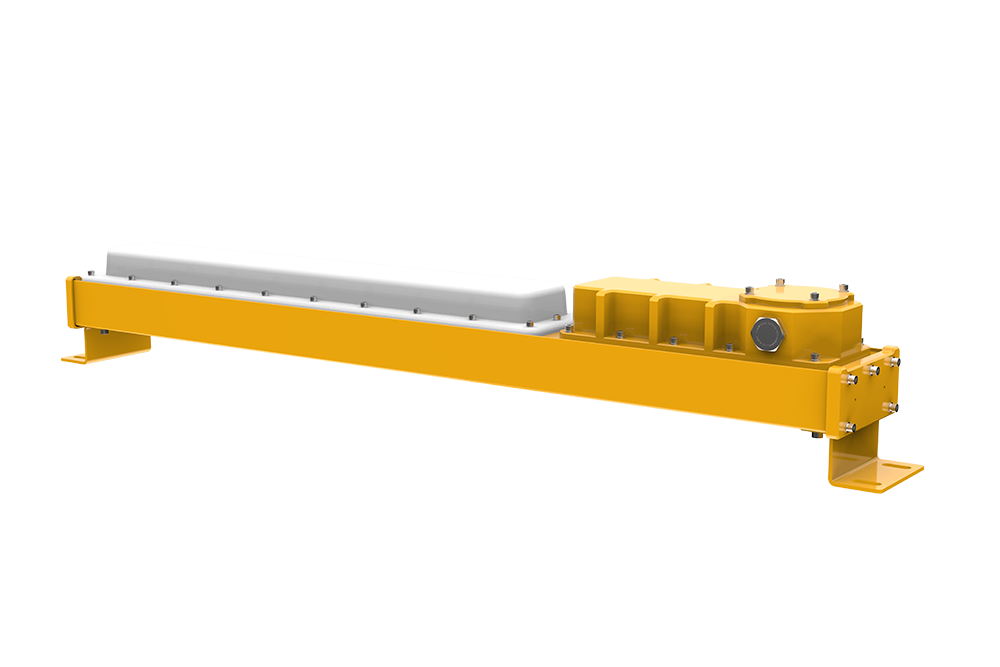
Some industrial rooms never use floodlights.
Instead, the ceiling is lined with long narrow luminaires running in parallel rows. You see this layout in coating lines, processing corridors, equipment rooms and sometimes even in storage tunnels.
Linear lighting simply spreads light more evenly.
But when those spaces fall inside a hazardous classification area, the fixture itself becomes a safety component rather than just a lighting device. That is where Explosion-Proof LED Linear Lights come in.
A short moment from a real installation
A few years ago I visited a coating workshop during a lighting upgrade project. The building was not particularly large, maybe five meters to the ceiling. However the entire space was classified due to solvent vapors produced during the coating process.
Rows of old fluorescent fixtures were still installed along the ceiling beams.
The maintenance supervisor pointed at them and said something that stuck with me:
“Those lights work fine until they don’t. And when they fail, we cannot replace them with anything ordinary.”
Hazardous areas change the rules of lighting.
Why hazardous zones require special luminaires
In locations where flammable gases or combustible dust may appear, even small electrical sparks can be dangerous.
International safety standards address this risk. The IEC 60079 series, published by the International Electrotechnical Commission, defines how electrical equipment must be designed for explosive atmospheres.
Industrial areas are divided into several zone categories:
Zone 1 – explosive gas atmosphere expected during normal operation
Zone 2 – explosive atmosphere unlikely but possible
Zone 21 – combustible dust present in normal operation
Zone 22 – dust present occasionally
Lighting fixtures installed in these zones must prevent ignition sources from reaching the surrounding environment.
This requirement leads to specialized products such as Explosion-Proof LED Linear Lights.
Why linear fixtures are common in hazardous facilities
Large high-bay luminaires are often used in warehouses or production halls. Linear fixtures serve a different type of space.
Corridors between process units.
Equipment rooms with pipe racks overhead.
Paint booths where lighting must be evenly distributed along walls.
These environments typically have mounting heights around 3 to 5 meters. At that height, uniform light distribution becomes more important than raw lumen output.
Linear fixtures achieve this naturally because the light source extends along the length of the luminaire rather than concentrating at one point.
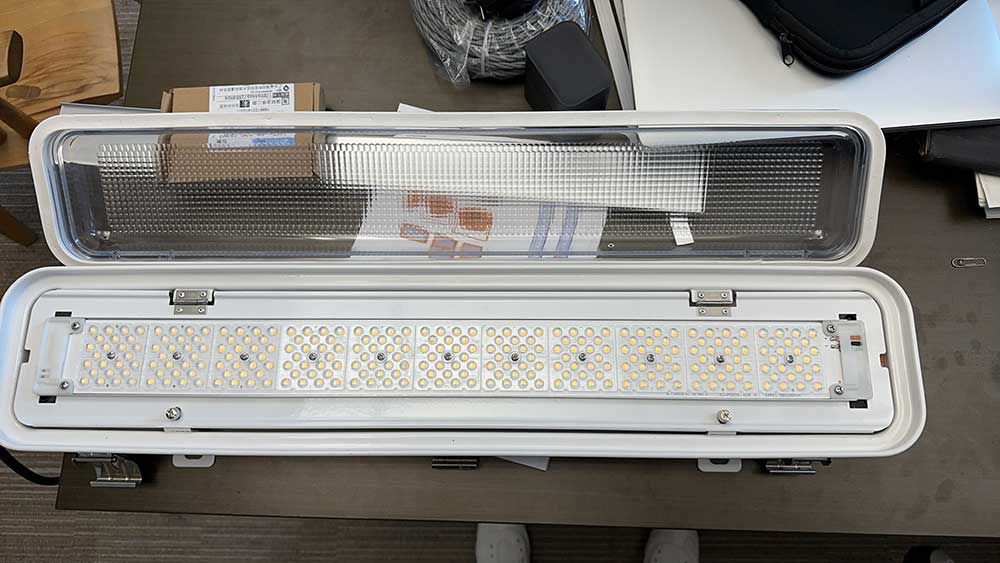
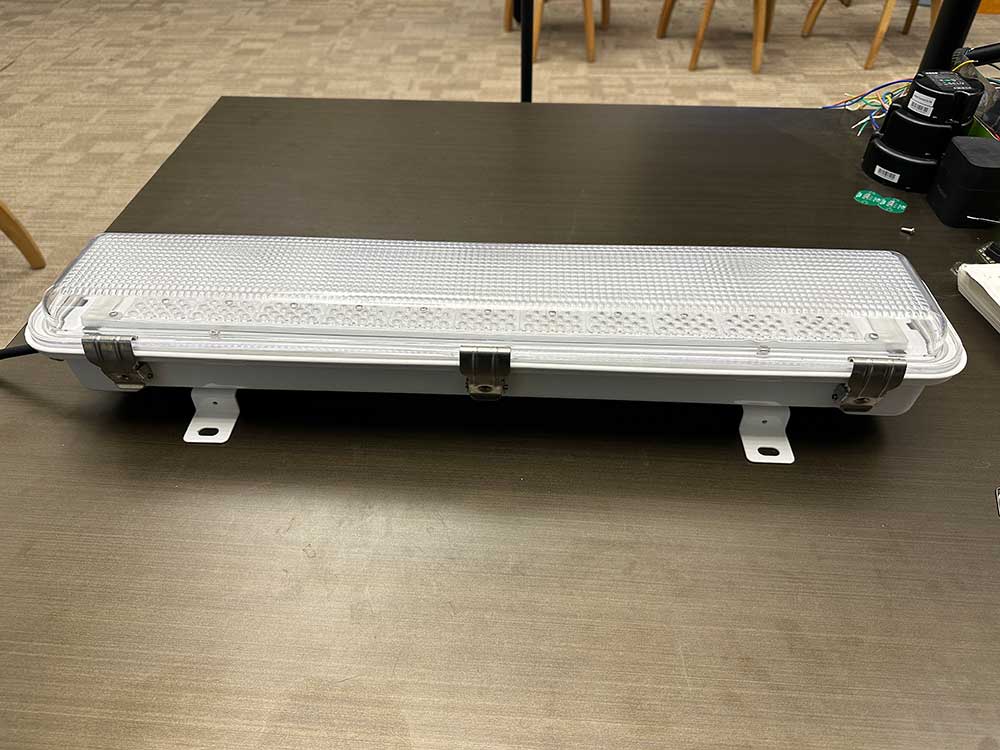
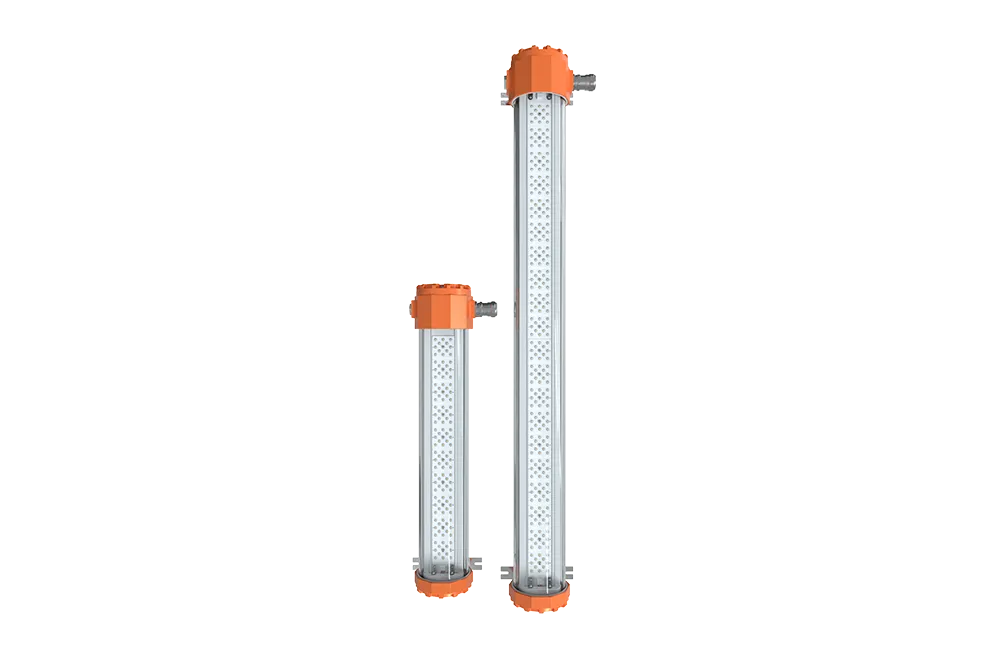
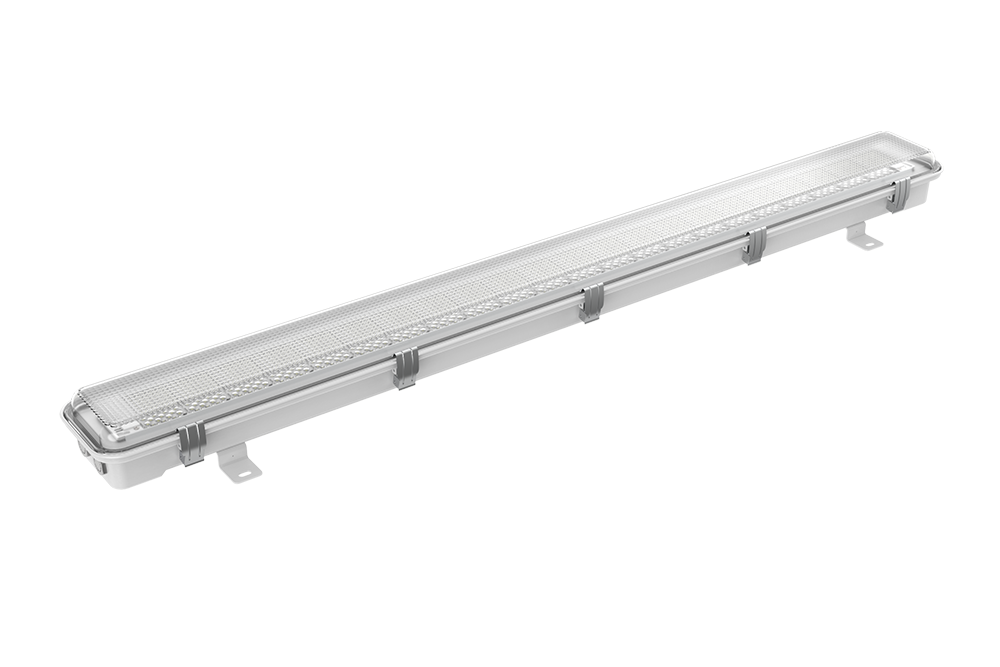
The Explosion-Proof LED Linear Lights developed by SEEKINGLED are designed specifically for these moderate mounting heights.
Power ratings range from 20 W up to 60 W, which is usually sufficient to produce consistent illumination without excessive glare.
The engineering challenge behind the enclosure
From the outside, a linear luminaire may appear simple.
Inside the housing, things are more complicated.
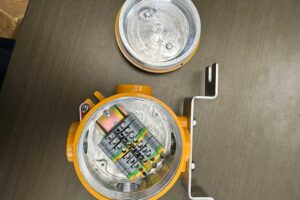
Explosion-protected equipment must maintain sealed flame paths, temperature limits, and mechanical strength. When the enclosure stretches over a long body, maintaining those requirements becomes more demanding.
Cable entries must remain sealed.
Thermal management must control surface temperature.
The enclosure must withstand internal pressure in case ignition occurs.
Many modern hazardous-area fixtures therefore combine several protection concepts such as Ex d, Ex e, or Ex m.
Composite protection improves reliability in demanding industrial environments.
Efficiency is still important
Even in hazardous installations, energy consumption remains a practical concern.
Industrial lighting systems often run continuously, sometimes 24 hours a day. When hundreds of fixtures operate simultaneously, efficiency quickly becomes noticeable on the electricity bill.
The U.S. Department of Energy reports that LED lighting can reduce electricity use by up to 75 percent compared with traditional lighting technologies in many industrial applications.
This is one reason why most modern Explosion-Proof LED Linear Lights rely entirely on LED light sources.
Lower energy consumption is useful, but the reduced maintenance is often even more valuable.
Maintenance realities in hazardous locations
Replacing lighting equipment in classified zones is rarely quick.
Before a technician even opens a fixture, several steps may be required: safety permits, atmospheric testing, sometimes temporary shutdown of nearby processes.
Because of this, operators prefer lighting systems that can run for long periods without attention.
LED systems help in this respect. Long operating lifetimes—often approaching 100,000 hours—mean fewer interventions in hazardous areas.
Less maintenance activity. Fewer safety procedures.
For facility managers, that alone is a strong argument for upgrading lighting infrastructure.
Where these luminaires are commonly used
Certain industries rely heavily on linear hazardous lighting:
paint and coating facilities
semiconductor manufacturing rooms
pharmaceutical processing areas
distilleries and wine cellars
chemical storage zones
Each of these environments has its own operational challenges. Some require easy cleaning. Others demand corrosion resistance or dust protection.
Lighting equipment must adapt accordingly.
Engineering approach at SEEKINGLED
At SEEKINGLED, product development does not rely solely on laboratory testing.
Engineers often collect feedback directly from installers and maintenance teams working in real facilities. Those conversations reveal details that rarely appear in technical specifications.
For example:
How easily can a technician mount the fixture while wearing gloves?
Is the cable entry accessible when installed near a wall?
Can dust be wiped away quickly during routine cleaning?
Small design decisions like these shape the final product.
Over time, they determine whether lighting systems remain reliable inside demanding environments.
And that reliability is precisely what operators expect from Explosion-Proof LED Linear Lights.
Explosion-Proof LED Linear Lights recommended
SEEKINGLED LED Linear Explosion Proof Light and Explosion Proof lighting is ATEX and IECEx certified for Zone 1, Zone 2, Zone 21 and Zone 22 hazardous locations, built for long-term industrial use.
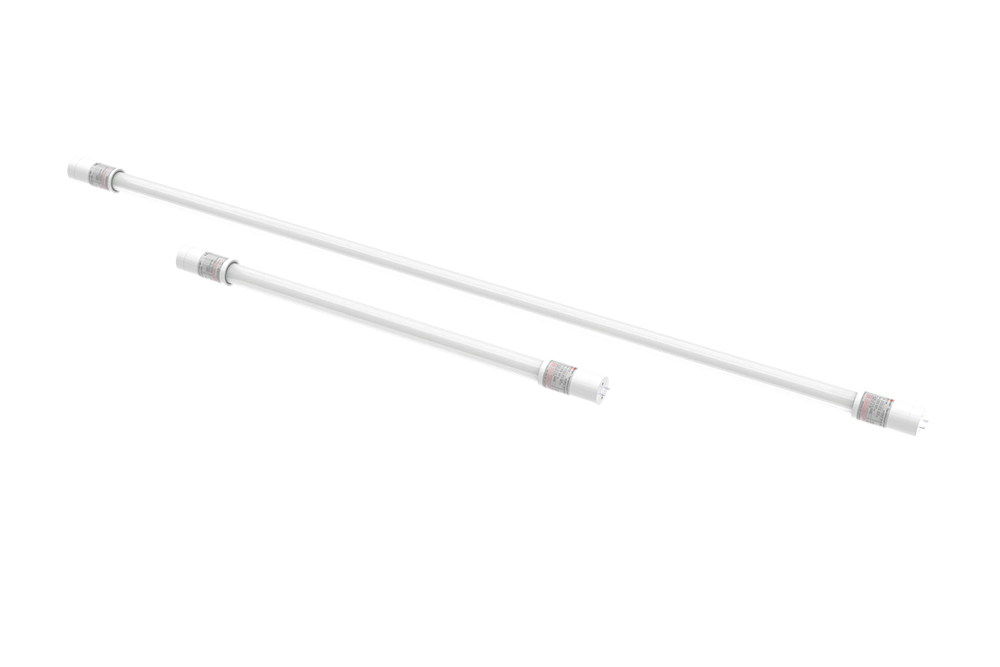
LED Linear Explosion Proof Lights and EX Proof lights for Zone 1, Zone 2, Zone 21 and Zone 22 hazardous areas. ATEX & IECEx certified explosion proof LED linear lighting with emergency function, adjustable power and IP67 protection by SEEKINGLED.
SEEKINGLED LED Explosion Proof Flood Lights are ATEX certified for Zone 2 and Zone 22 hazardous areas, offering high efficiency, adjustable power and integrated junction box.
SEEKINGLED LED Explosion Proof Flood Lights are flameproof ATEX and IECEx certified for Zone 1 and Zone 2 hazardous areas, offering high power, adjustable output and long service life.
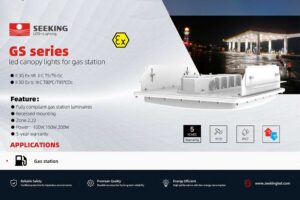
SEEKINGLED LED Gas Station Canopy Lights are ATEX certified for Zone 2 and Zone 22 hazardous areas, featuring adjustable power and built-in explosion-proof junction box.
ATEX: Ex II 2G Ex db IIB T6/T5 GbEx II 2D Ex tb IIIC T80°C/ T95°C Db IECEx Ex db IIB T6 Gb;Ex tb IIIC T80°C Db Feature: ● For Zone 1,2 and Zone 21,22● Flameproof type, the strongest● 100W can replace 250W HID,energy saving● Power:60W,80W,10…
ATEX: II 3G Ex nR ⅡC T5/T6 GcII 3D Ex tc ⅢC T80℃/T95℃Dc ATEX Certificate NO: TÜV CY 26 ATEX 0207611 X Feature: ● For Zone 2 and Zone 22● 150W can replace 250W HID lamps,Energy saving● Power:50W,75W,100W,150W,200W Application: Oil and gas, m…
LED explosion proof high bay lights are designed for Zone 1, Zone 2, Zone 21 and Zone 22 hazardous areas. This page introduces the HB21 Series from SEEKING, including certifications, power options and real application considerations.
LED Linear Explosion Proof Lights from SEEKINGLED. LU Series Flame Proof lights ATEX-certified explosion proof LED linear lighting for Zone 2 gas and Zone 22 dust areas, IP69K, IK10, long lifetime and flexible power options.
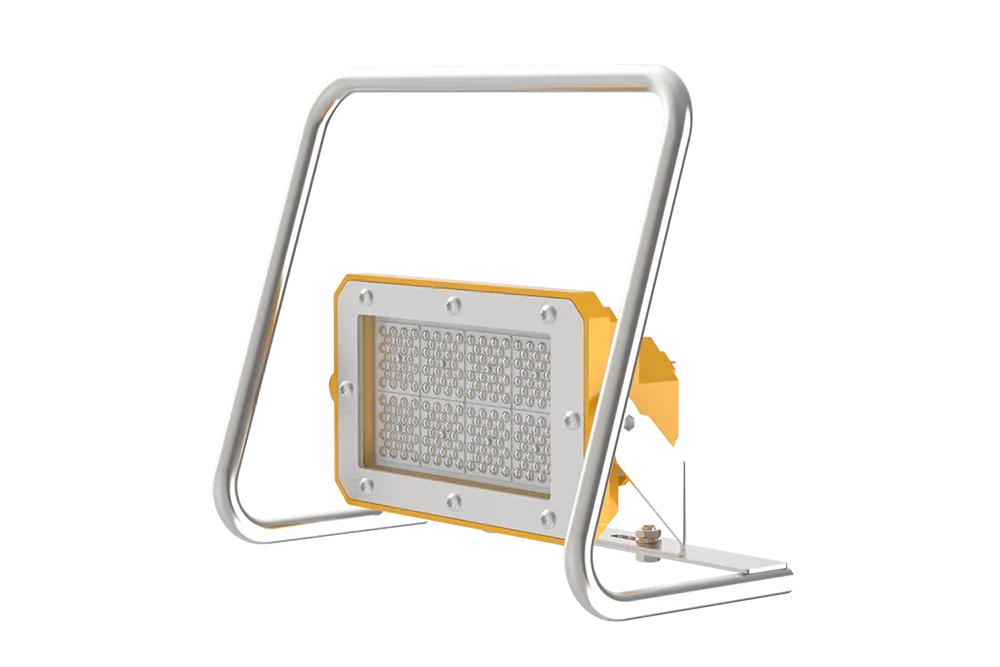
Certified explosion proof work lights for Zone 1 & 21 hazardous areas. Portable, ATEX & IECEx approved, built for oil, gas and chemical plants by SEEKINGLED.
ATEX: II 3G Ex nR ⅡC T6 GcII 3D Ex tc ⅢC T80℃ Dc ATEX Certificate NO: TÜV CY 26 ATEX 0207611 X Feature: ● For Zone 2 and Zone 22● Accepts battery-powered supply● indestructible● Power:AC input:50W,75W,100WDC input:15W,25W,35W Application: O…
ATEX: Ex II 2G Ex db IIB T6 GbEx II 2D Ex tb IIIC T80°C Db IECEx Ex db IIB T6 Gb;Ex tb IIIC T80°C Db Feature: ● For Zone 1,2 and Zone 21,22● Flameproof type, the strongest Application: Oil and gas, marine, Chemical, pharmaceutical, semicondu…
ATEX: Ex II 2G Ex db IIB T6 GbEx II 2D Ex tb IIIC T80°C Db IECEx Ex db IIB T6 Gb;Ex tb IIIC T80°C Db Feature: ● For Zone 1,2 and Zone 21,22● Flameproof type, the strongest Application: Oil and gas, marine, Chemical, pharmaceutical, semicondu…
ATEX: Ex II 2G Ex d e IIB T6 Gb ATEX: Ex d e IIB T6 Gb; Feature: ● For Zone 1,2● 9W can replace 18W fluorescent lamps,50% Energy saving Application: Oil and gas, marine, Chemical, pharmaceutical, semiconductor,mining,military industry, pain…
loading…
This is the last post!
 Seeking LED