 Seeking LED
Ex Proof Lighting Fixtures for Demanding Industrial Environments
157Ex proof lighting fixtures engineered for oil, gas and chemical sites. Certified, durable and project-ready. Discover SEEKINGLED solutions today.
View detailsSearch the whole station
Flood lights are called “flood lights” because they are designed to flood a relatively large area or surface with directed light. Unlike a narrow spotlight, a floodlight uses a wider beam and an adjustable aiming position to spread illumination across buildings, yards, parking areas, sports spaces, and other outdoor surfaces.
The word flood describes what the light does rather than what the fixture looks like.
A floodlight projects light outward so that illumination spreads across a comparatively broad target area. The Illuminating Engineering Society (IES) defines a floodlight as a projector designed to illuminate a scene or object significantly brighter than its surroundings. IES also notes that floodlights can have field angles from about 10° to more than 100°, covering a very wide range of beam distributions.
That range explains why the term can sometimes be confusing.
A 10° distribution is relatively narrow. A floodlight with a much wider distribution can cover a substantial wall or outdoor area from a single mounting point. Both can still fall under the floodlight category because the important feature is the controlled projection of light toward a target.
In practical lighting work, the word “flood” is therefore about coverage and projection, not simply brightness.
The easiest way to understand the name is to compare a floodlight with a spotlight.
| Feature | Flood Light | Spotlight |
|---|---|---|
| Main purpose | Cover a larger target area | Concentrate light on a smaller target |
| Beam distribution | Generally wider | Generally narrower |
| Typical use | Facades, yards, parking areas, sports spaces | Signs, artwork, architectural details |
| Aiming | Usually adjustable | Usually highly directional |
| Light pattern | Broad coverage | Concentrated beam |
The distinction is not absolute. Modern LED optical systems can produce many intermediate distributions.
IES defines beam angle as the angle between directions where intensity reaches 50% of maximum intensity.
That technical definition matters when selecting an LED floodlight. Two fixtures with identical wattage can produce very different coverage if their optical systems are different.
This is one reason experienced lighting designers do not choose a floodlight by wattage alone.
The original idea behind floodlighting is especially useful when the target is too large or irregular for a concentrated beam.
Typical applications include:
ANSI/IES RP-8 describes floodlighting as using aimable luminaires to direct a beam toward architectural elements and similar structures. It also notes that floodlighting can project light over a long distance onto a specific surface or illuminate irregular shapes.
That description gets closer to the real meaning of “flood” than simply saying a floodlight is “very bright.”
A fixture can have high lumen output but still illuminate a relatively small area if its optical distribution is narrow. Conversely, a lower-output fixture with a wider distribution may spread light across a much larger surface.
From a manufacturer and application perspective, this is one of the first distinctions we make when reviewing a floodlight specification: how the light leaves the fixture matters as much as how much light the fixture produces.
Beam distribution determines how the light spreads after leaving the fixture.
For example:
The IES definition of field angle uses the point where intensity falls to 10% of maximum, while beam angle commonly refers to the 50% intensity points.
That difference is important when reading a manufacturer’s photometric information. “Wide beam” is not a precise engineering specification by itself.
For commercial projects, an IES photometric file provides much more useful information. IES explains that these files represent a luminaire’s light-distribution characteristics and can be used by lighting software to model where the light actually goes.
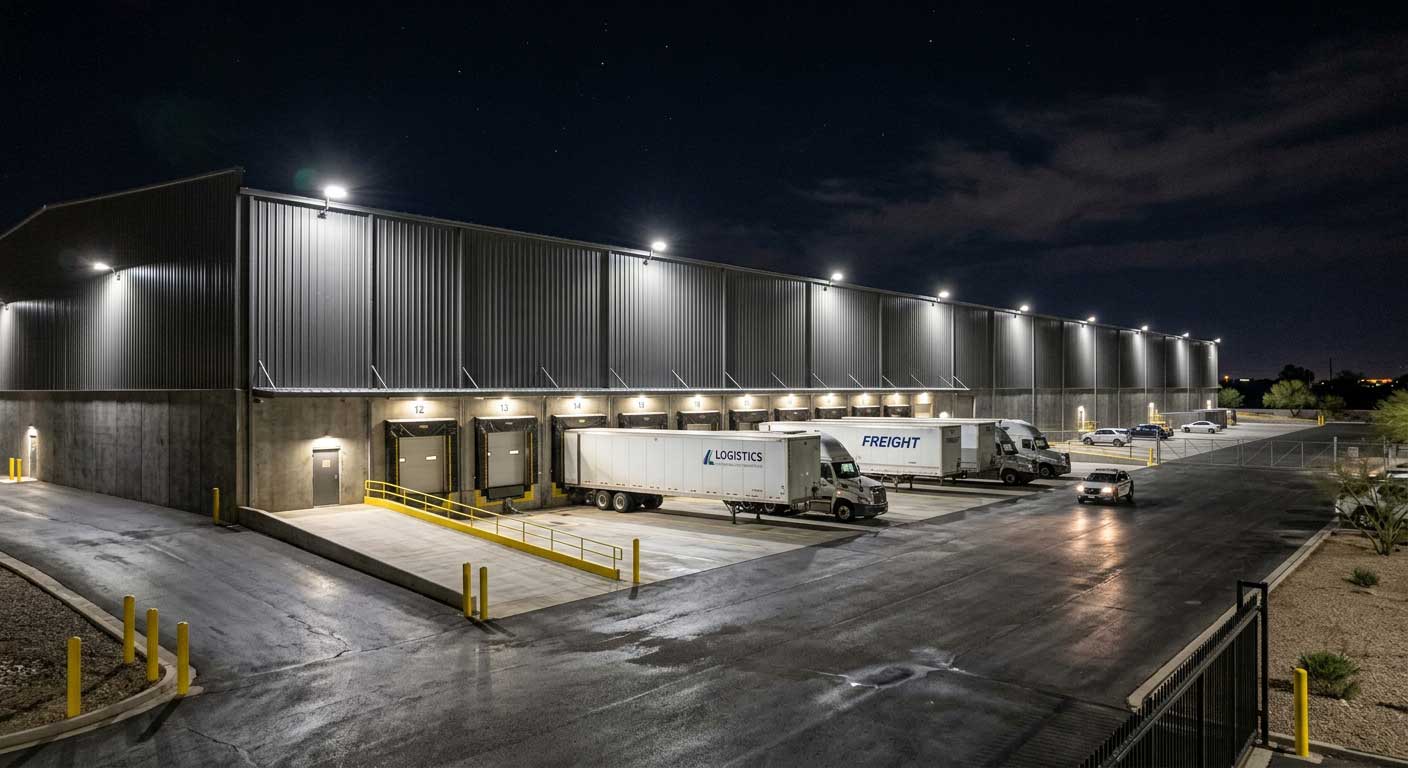
Floodlights are particularly useful outdoors because large exterior surfaces often have no nearby ceiling or conventional luminaire position.
A single adjustable fixture mounted on a building, pole, or structural support can project light across an area some distance away.
ANSI/IES RP-8 specifically notes that floodlights may be mounted on poles or other suitable structures. It also recommends appropriate shields or louvers where necessary to reduce spill light, glare, and uplight.
This is where the name becomes practical.
Imagine a warehouse wall 20 meters away from the mounting position. A small, concentrated beam would create a bright patch and leave much of the wall dark. A properly selected floodlight can spread its output across the required surface.
The fixture is effectively flooding the target with controlled illumination.
No.
This is an important misconception.
The word “floodlight” does not mean that every fixture must have an extremely wide beam. IES recognizes floodlights across a field-angle range from approximately 10° to over 100°.
Modern LED floodlights may therefore be available with multiple optical distributions.
For example, a manufacturer may offer:
| Optical Distribution | Typical Design Intent |
|---|---|
| 15° | Long-distance or concentrated target |
| 30° | Medium-distance area or facade |
| 60° | Broader outdoor coverage |
| 90° | Wide-area illumination |
| Very wide distribution | Large surfaces and open areas |
The actual suitability depends on the luminaire’s photometric data, mounting height, target dimensions, required illumination, and uniformity.
SEEKINGLED‘s FLD Series, for example, is offered with 15°, 30°, 60°, 90°, and P50 optical options, demonstrating why “floodlight” is not synonymous with one fixed beam width.
A floodlight is not simply installed and pointed in a general direction.
Its aiming position determines where the strongest part of the beam lands.
ANSI/IES RP-8 explains that correct aiming directs the most intense portion of the beam accurately toward the intended point. It also warns that aiming too far across an area can create wasted light and glare, while aiming too close can create hotspots and poor illumination farther away.
This is particularly noticeable with high-output LED fixtures.
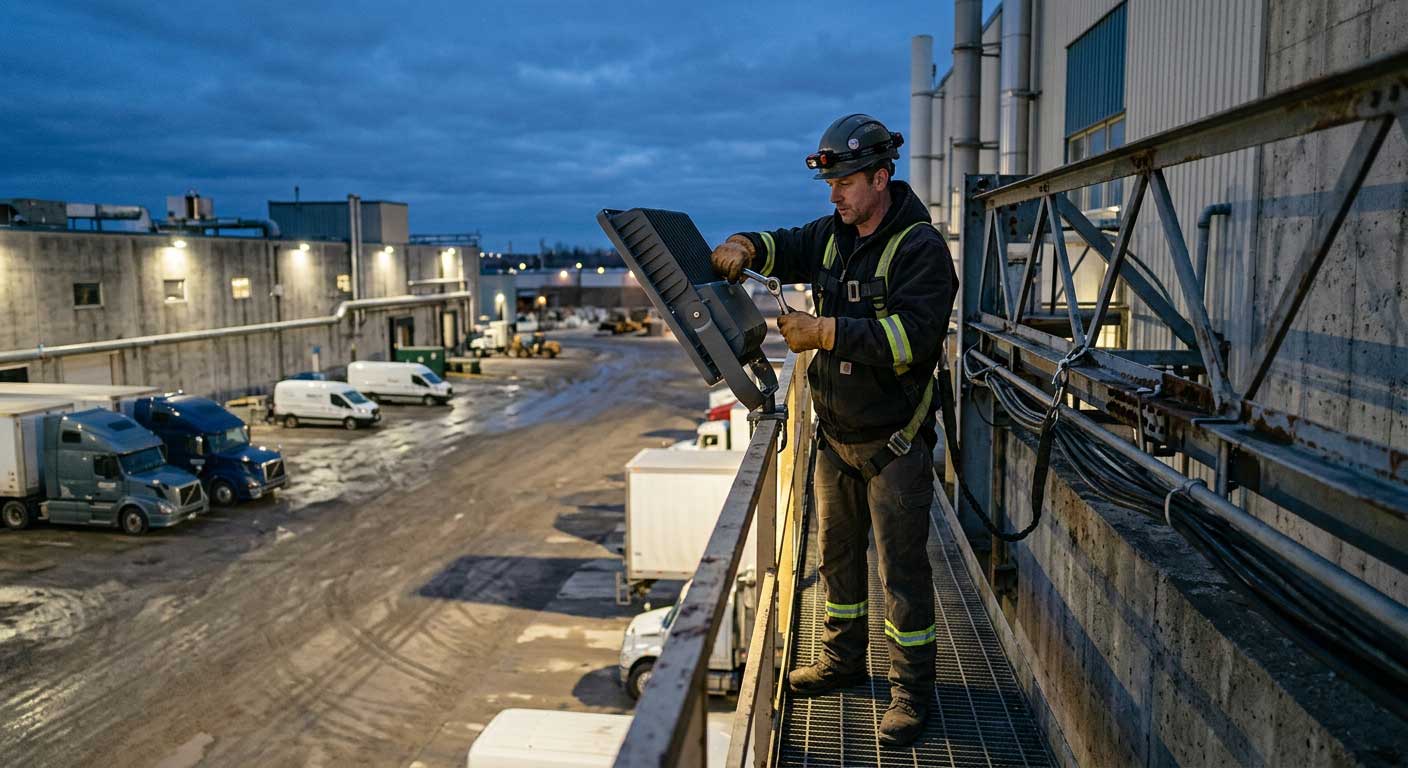
At an installation site, the difference can be only a few degrees. Yet that small adjustment may move a bright hotspot from the center of a loading area onto a building wall—or toward a driver’s line of sight.
That is why final aiming should be checked from the actual viewing area after installation.
Yes.
The technology has changed dramatically, but the lighting function remains recognizable.
Older floodlights used technologies such as incandescent, halogen, metal halide, or high-pressure sodium sources. Modern commercial floodlights commonly use LED light sources and sophisticated lenses or reflectors to control distribution.
DOE’s exterior-lighting purchasing guidance currently specifies a minimum luminaire efficacy rating of 118 lm/W for floodlight luminaires in the covered federal purchasing category. DOE defines LER as the ratio of light output to electrical power input.
That number should not be treated as a universal performance requirement for every commercial product, but it shows how far modern exterior lighting has moved toward measurable optical and electrical efficiency.
The word stayed the same because the job stayed the same.
They are called flood lights because they are designed to spread or “flood” a target area with controlled illumination. The term refers to the way light is projected across a surface rather than concentrated into a small spot.
A floodlight generally provides broader illumination, while a spotlight concentrates light into a narrower beam. However, modern optical systems overlap, so beam distribution should be checked from actual photometric data.
No. IES notes that floodlight field angles can range from about 10° to more than 100°.
Brightness depends on several factors, including optical output, luminaire efficacy, beam distribution, and aiming. A narrow optical distribution can make a fixture appear especially intense at a particular point.
They are commonly used for building facades, parking areas, warehouses, industrial yards, loading zones, sports spaces, security areas, monuments, and other large or irregular outdoor targets.
They can be used in some high-mast applications, but IES advises against using conventional floodlighting for ordinary roadway lighting because it can produce more glare than dedicated roadway luminaires.
Not necessarily. Wattage indicates electrical power consumption, not the complete shape or quality of the light distribution. Beam angle, optics, lumen output, mounting height, and aiming all affect coverage.
The reason why are flood lights called flood lights is surprisingly literal: they are designed to flood a target with controlled illumination instead of concentrating all of the light into one small spot. The term has survived from earlier lighting technologies because the fundamental application has not changed.
For modern LED floodlights, the more useful question is not simply how bright the fixture is. It is where the light goes. Beam distribution, photometric data, mounting position, and aiming determine whether that “flood” of light becomes useful illumination—or unwanted glare and spill.
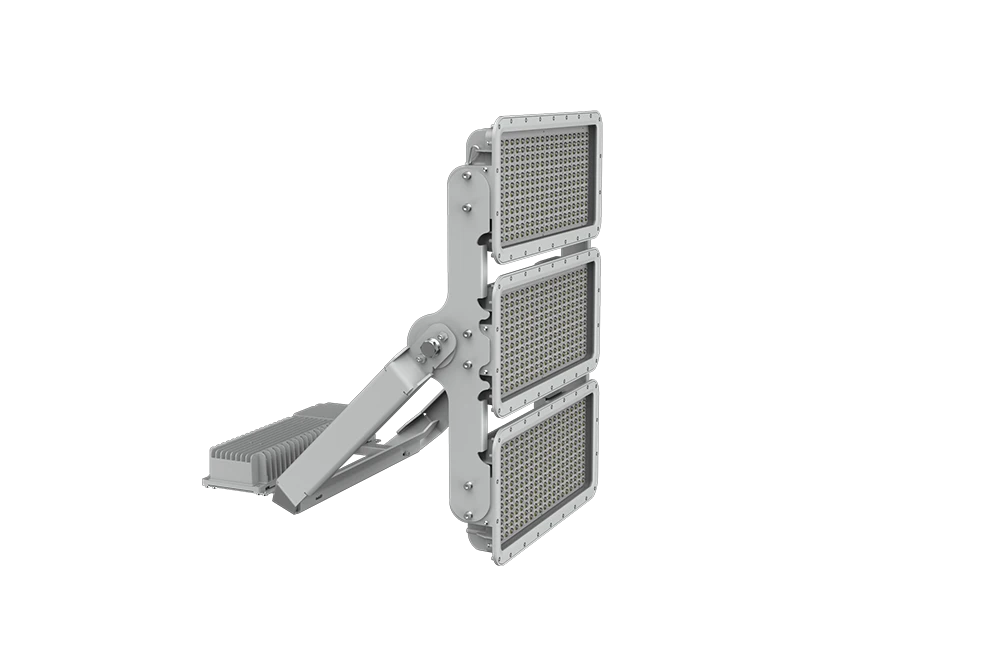
Sports Stadium LED Lighting by SEEKINGLED delivers high mast illumination, precise beam control, and EN 12193 compliant performance for professional venues.
View details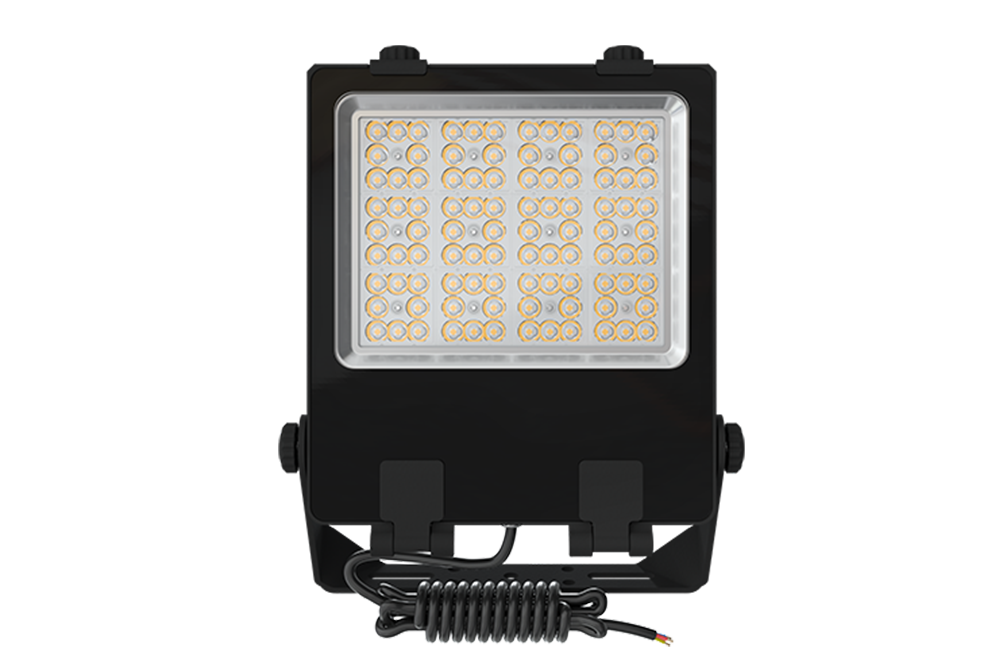
SEEKING FLX Series LED flood light outdoor for sports courts and open-area projects with 170lm/W efficiency, IP66 protection and multiple beam distributions. Designed for long-life commercial and public outdoor use.
View details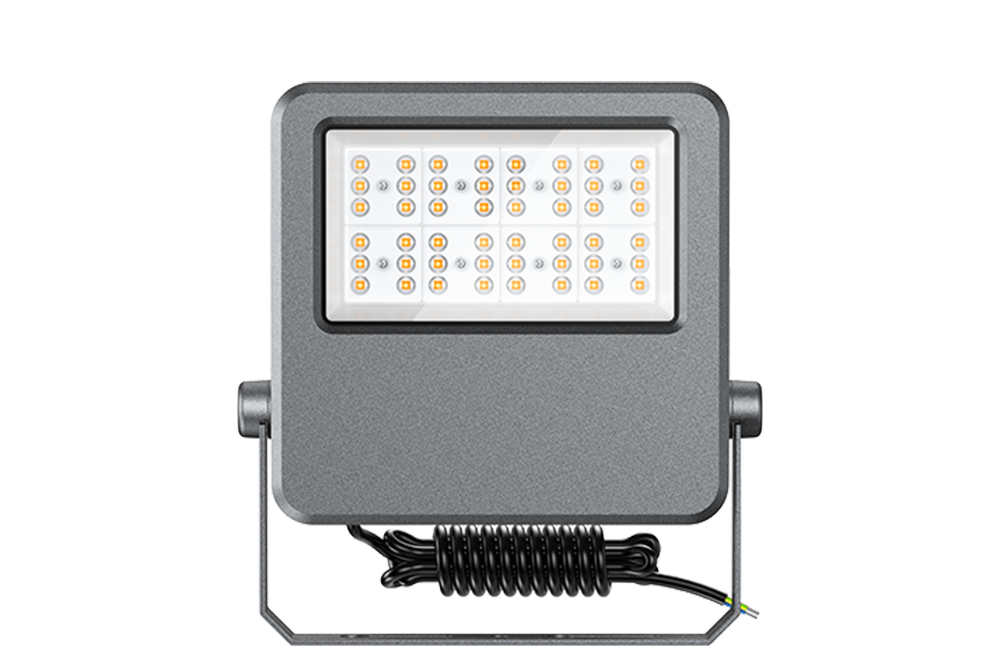
SEEKING FLE Series LED outdoor flood lights for sports grounds and open areas with multiple beam angles, IP66 protection and up to 170lm/W. Designed for long-life outdoor installations with professional driver options.
View details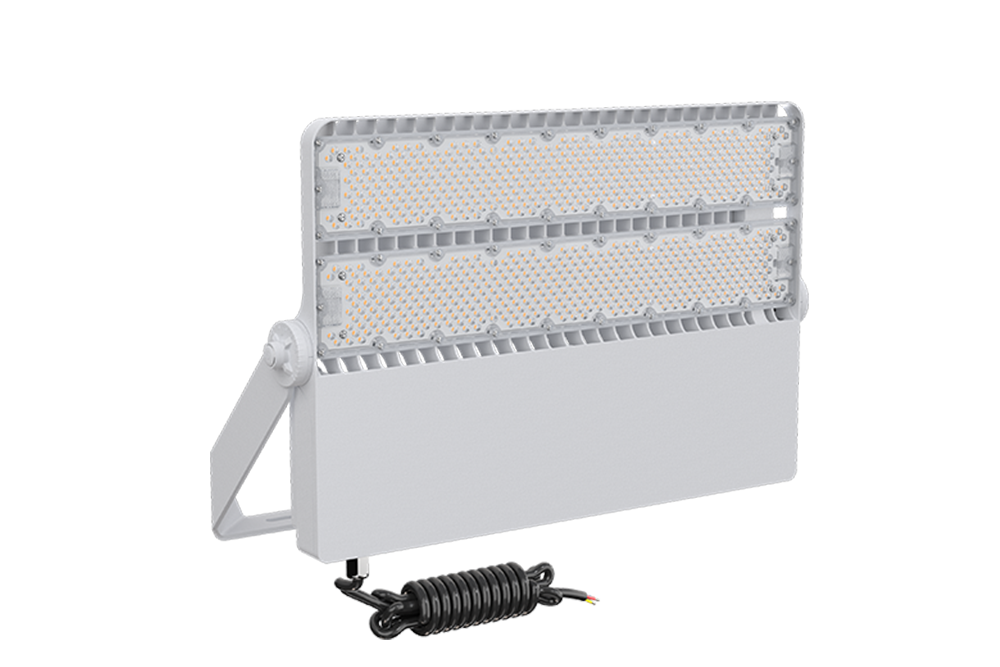
SEEKING FLD Series outdoor LED flood lights and high power led flood light deliver up to 960W with precision beam angles for sports fields, stadiums and large outdoor areas. IK08 & IP66 protection, 170lm/W efficiency and 100,000h lifetime.
View details
Ex proof lighting fixtures engineered for oil, gas and chemical sites. Certified, durable and project-ready. Discover SEEKINGLED solutions today.
View details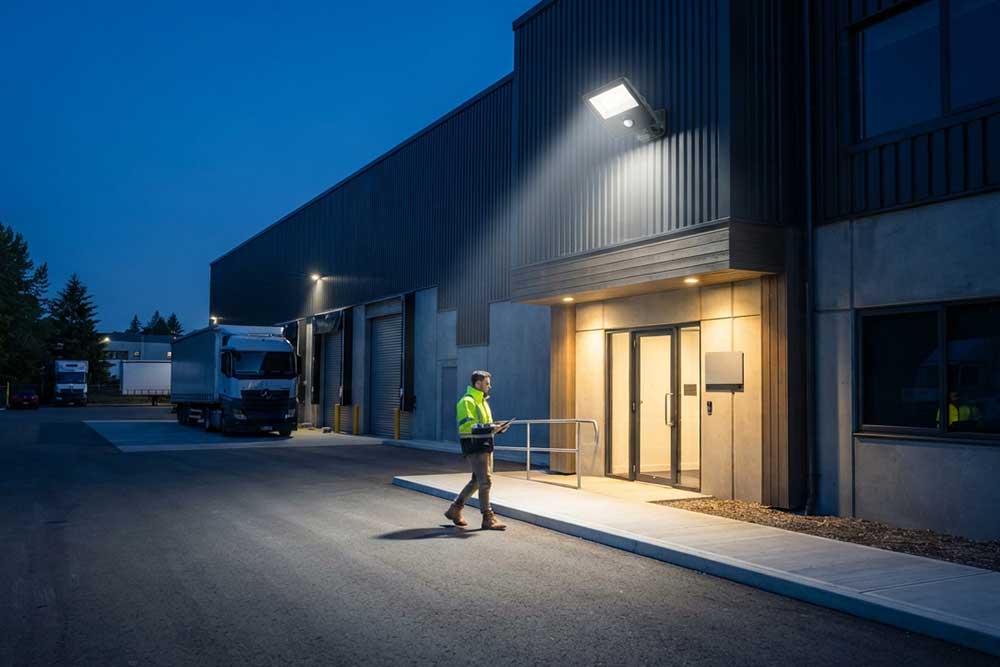
Some flood lights have motion sensors, but not all. Motion-controlled models activate when movement is detected and are useful where lighting demand is inter...
View details
what does atex stand for? Discover the meaning of ATEX, explosive atmosphere regulations, hazardous area equipment requirements, and industrial safety applications.
View details
What is LED high bay lighting? Learn how LED high bay lights work, where they are used, and how to choose the right option for industrial spaces.
View details