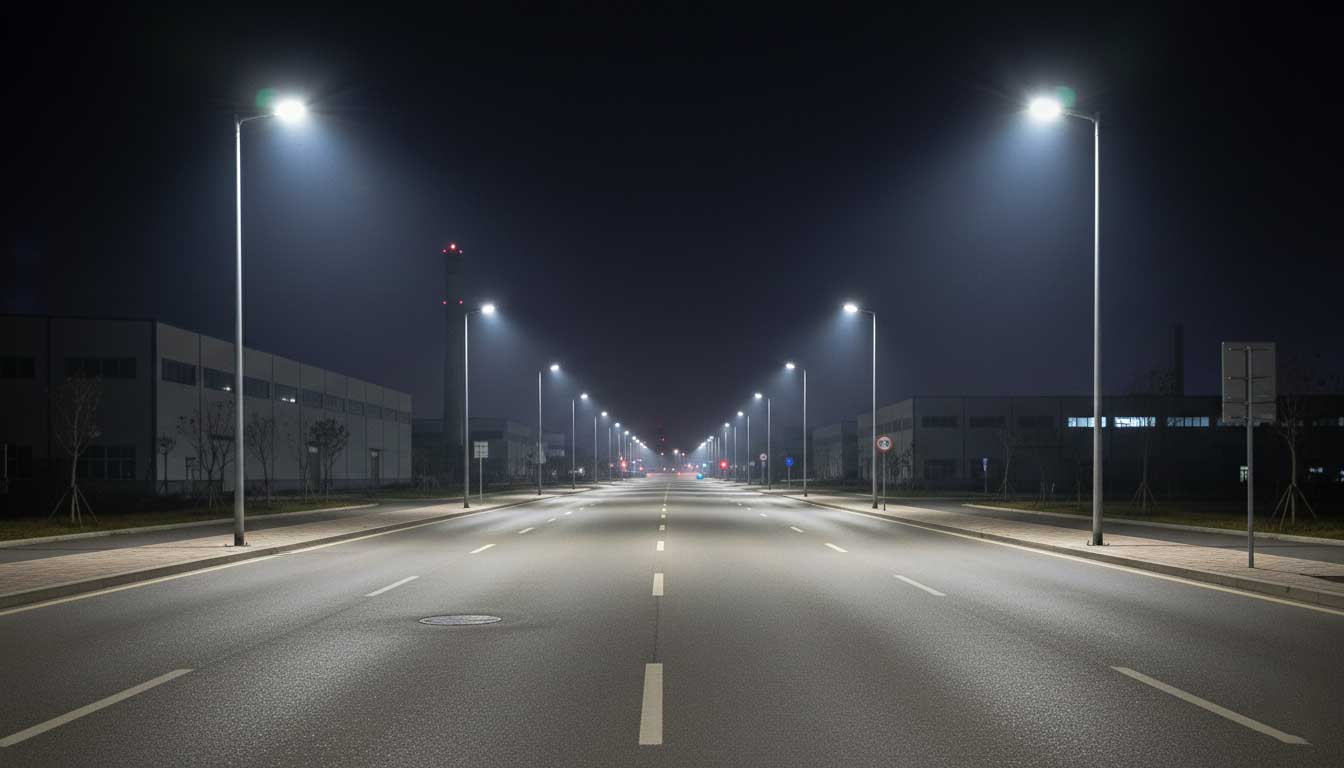
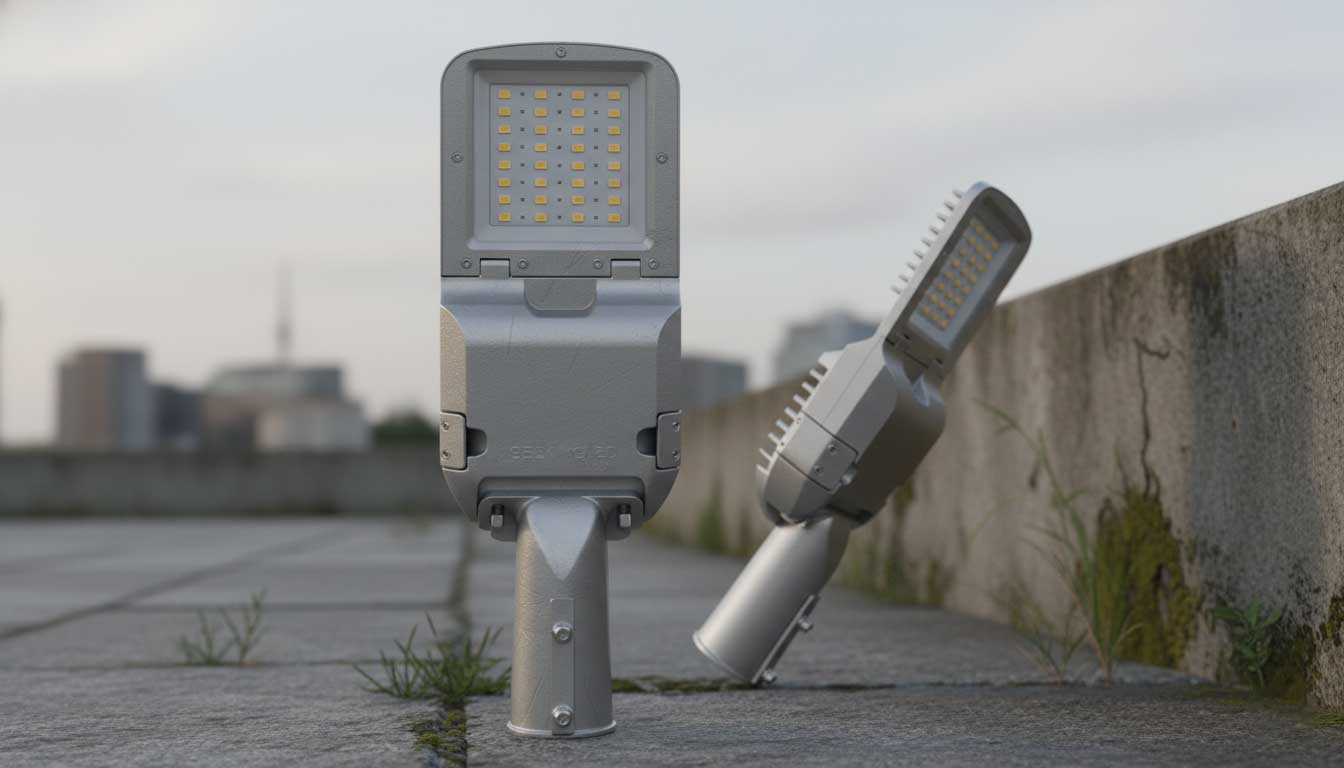
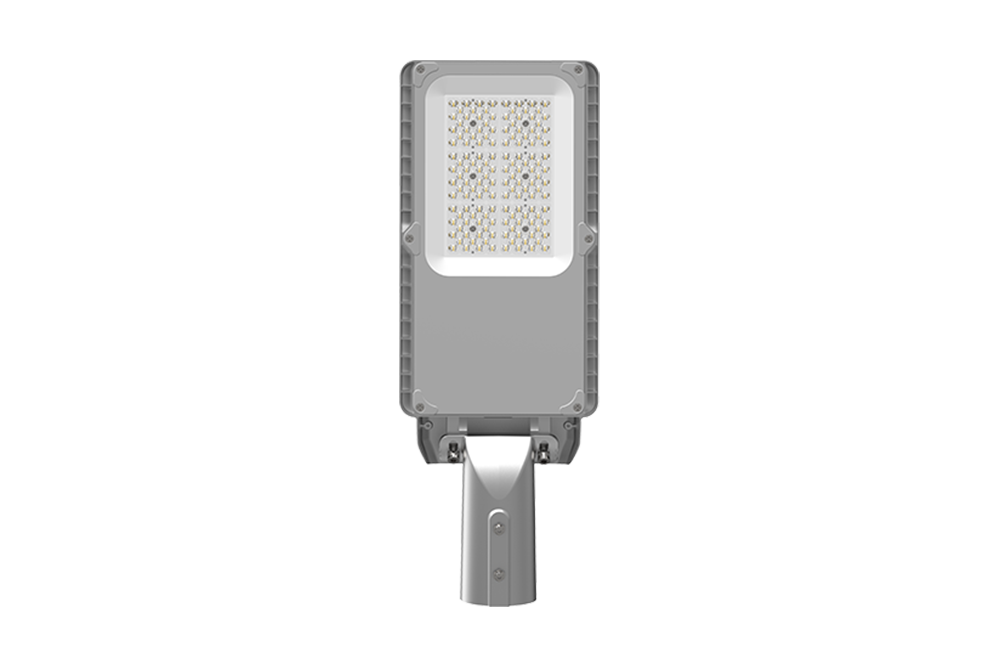
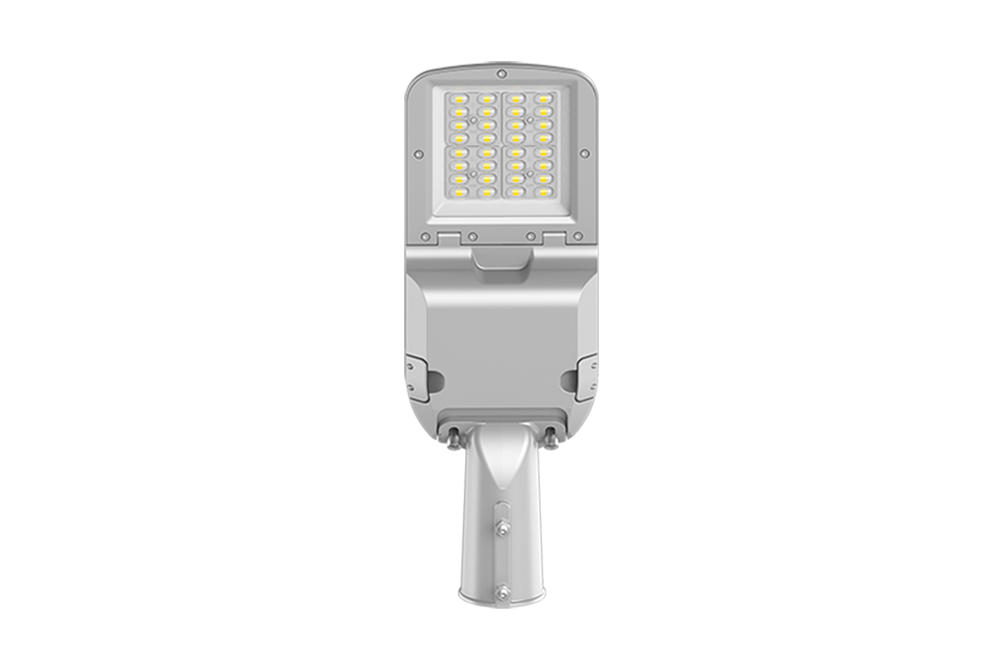
A led street light 150 watt is usually chosen when the site leaves little room for compromise. This wattage sits in the middle ground between residential lighting and heavy highway systems. It’s powerful enough to cover wide roads, yet still efficient enough to justify large-scale deployment.
I’ve worked in outdoor and roadway lighting for more than 15 years, supporting municipal road upgrades, industrial parks, and logistics corridors across Europe and North America. In those projects, 150-watt fixtures are often where design mistakes become visible. Too much glare, and drivers complain. Too little reach, and uniformity collapses.
The difference is never just wattage. It’s how the light is managed.
That’s the context in which SEEKINGLED develops its 150-watt street lighting solutions.
In real procurement documents, this category is often labeled differently — 150 watt street light, 150w led street light, or simply street light 150w depending on regional standards.
But across specifications, the engineering expectation stays the same: stable lumen output, controlled glare, and predictable performance over years of operation.
Why 150 Watt Is a Critical Range in Street Lighting
According to IES RP-8-21 (Recommended Practice for Roadway Lighting), collector roads, industrial access roads, and multi-lane urban streets require higher maintained illuminance than residential streets, but still demand strict glare control.
A properly designed 150 watt LED street light typically replaces:
250W high-pressure sodium
400W metal halide systems
while consuming far less energy and providing better visual conditions.
In practical terms, 150W works best where:
Pole heights are 8–12 meters
Road widths exceed two lanes
Spacing must remain economical
This is where LED efficiency and optical control intersect.
From field audits, I’ve seen that when a 150w street light is incorrectly spaced or poorly aimed, even a high-efficiency system fails to meet uniformity targets defined by IES standards.
In contrast, properly designed 150w led street light layouts often achieve:
Uniformity ratios below 3:1
Reduced disability glare
Better peripheral visibility for drivers
These are not marketing improvements—they directly affect driving safety.
What I Look for First in a 150W Fixture
By Daniel R., Senior Roadway Lighting Engineer (15+ years field experience)
When reviewing 150-watt fixtures, I don’t start with lumen output. I start with thermal design and optics.
At this power level, heat becomes the silent failure point. Drivers degrade faster. Seals age quicker. If the housing can’t move heat away consistently, performance drops long before LEDs reach their rated life.
This is why aluminum housing design and airflow matter more than marketing claims.
In one logistics park project in Germany, we replaced a batch of early-generation 150 watt street light units that showed visible lumen drop within two years.
Thermal imaging revealed uneven heat distribution across the housing—something not visible during installation.
After switching to improved thermal designs, output stability remained consistent beyond 18 months with no measurable degradation above 5%.
That’s the difference between specification compliance and real engineering.
Optics Decide Whether 150W Feels Right or Too Much
One mistake I still see is assuming more power automatically improves visibility. It doesn’t.
IES guidance emphasizes uniformity ratios and glare limitation. A 150-watt street light with poor optics creates bright hotspots under poles and dark gaps between them. Drivers notice this immediately.
Well-designed LED optics spread light forward along the lane, not downward. In retrofit projects I’ve supervised, switching to better optics at the same wattage often reduced complaints—even without increasing brightness.
This is where SEEKINGLED focuses its design effort.
This becomes even more critical when highway light 150 watt fixtures are incorrectly used in urban roads.
Highway optics are designed for long throw distances—not dense spacing. Misapplication leads to:
excessive glare
uneven pavement luminance
driver fatigue
Matching optics to application matters more than increasing wattage.
Energy Efficiency That Survives Real Operating Hours
Street lights typically operate 4,000–4,500 hours per year. According to the U.S. Department of Energy, LED roadway lighting systems can reduce energy consumption by 50–65% compared to legacy HPS systems when properly specified and maintained.
For a 150-watt LED street light replacing a 400-watt metal halide system, annual savings can exceed 1,000 kWh per pole. Across an industrial park or city district, that difference becomes a budget decision, not a technical one.
Equally important, LED systems based on LM-80 and TM-21 lumen maintenance data provide predictable depreciation. Fixtures rated L80B20 >100,000 hours at 25°C don’t promise perfection—they offer planning certainty.
In large-scale municipal upgrades, switching to 150w led street light systems has shown:
Parameter
Before (HPS)
After (LED 150W)
Power Consumption
400W
150W
Annual Energy Use
~1800 kWh
~700 kWh
Maintenance Cycle
12–18 months
5–8 years
Source: U.S. DOE Outdoor Lighting Studies
Built for Power Grids That Are Not Perfect
At higher wattages, electrical stress becomes more visible. Voltage spikes, especially in industrial zones or developing regions, are common.
These features don’t improve light output, but they dramatically reduce failure rates. In long-term projects, that’s where real savings appear.
In coastal installations, corrosion also plays a role. A poorly protected 150 watt street light can show housing degradation within two rainy seasons.
SEEKINGLED addresses this with:
anti-corrosion coatings
sealed driver compartments
tested outdoor durability
These are details rarely listed in brochures—but visible after two years on-site.
Where a 150 Watt LED Street Light Performs Best
Based on years of deployment data, this wattage performs best in:
Urban arterial roads
Industrial and logistics parks
Port and freight access routes
Large parking areas
Campus and commercial zones
It’s not designed for highways, and it shouldn’t be forced into that role.
For projects requiring flexibility, combining 150w street light units with lower wattage fixtures allows:
better zoning
reduced energy waste
improved visual hierarchy
Lighting design is rarely one-size-fits-all.
FAQ – LED Street Light 150 Watt Selection Guide
What is the typical lumen output of a 150 watt street light?
A modern LED Street Light 150 Watt typically delivers 30,000–42,000 lumens depending on efficiency and optical design.
Is a 150W LED street light suitable for highways?
Not usually. A highway light 150 watt may lack the reach required for high-speed roads. Higher wattages or specialized optics are preferred.
How long does a 150W LED street light last?
High-quality fixtures reach L80 >100,000 hours, but real lifespan depends on thermal design, driver quality, and installation conditions.
What is the difference between 150w led street light and older systems?
Compared to HPS or metal halide, a 150w led street light offers:
lower energy use
better color rendering
instant start
reduced maintenance
Final Thoughts From the Field
A led street light 150 watt is not about excess. It’s about balance—between coverage, efficiency, and durability.
SEEKINGLED approaches this wattage with controlled optics, stable thermal design, and realistic lifetime expectations. After years of seeing which fixtures survive and which quietly fail, that approach remains the most reliable.
When roads stay evenly lit and nobody complains, the lighting is doing its job.
And in street lighting, that silence is success.
And that’s where a properly designed LED Street Light 150 Watt proves its value—not in specifications, but in years of unnoticed, uninterrupted operation.
Because in roadway lighting, no complaints is the real performance metric.
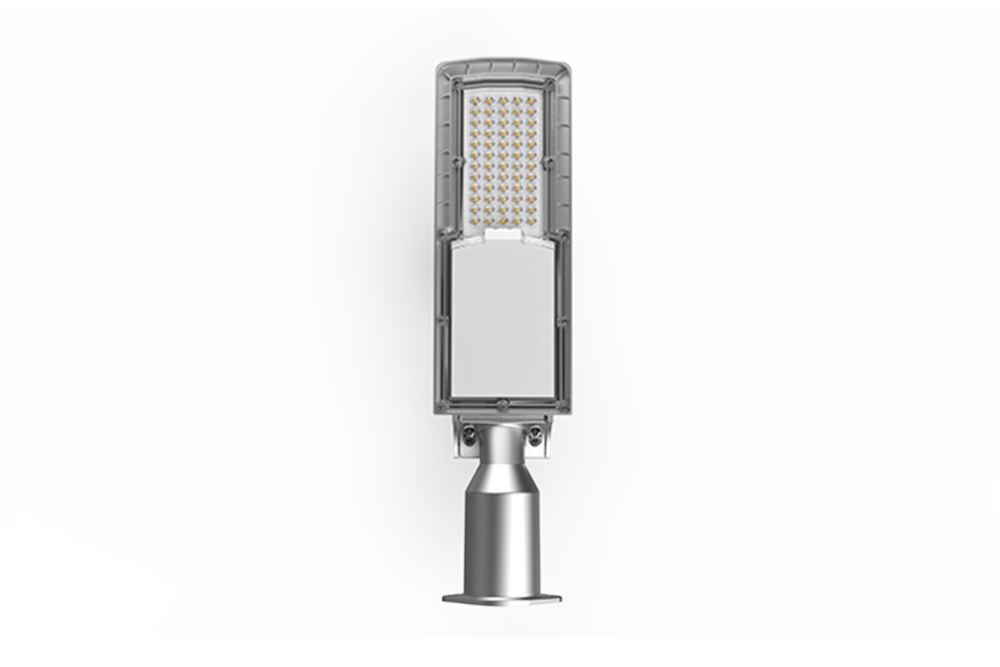
SEEKING STL-Series LED street lights deliver stable performance, 170 lm/W efficiency and 10KV surge protection. Ideal for city streets, parking lots, public roads and outdoor area lighting projects. Durable IP66 & IK08 design for long-term reliability.
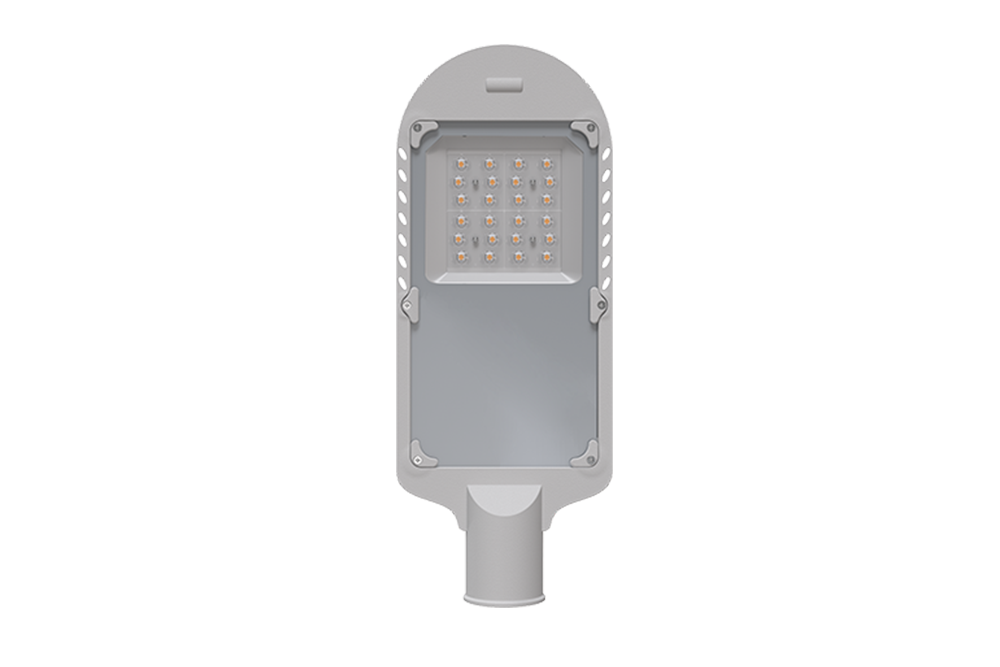
The SEEKING STC Series LED light street light delivers up to 170lm/W efficiency with MOSO drivers, IP66 protection, and a ±15° adjustable arm—ideal for roads, residential areas, and public lighting upgrades.
SEEKING STB Series LED street lighting delivers up to 160 lm/W, 10kV surge protection, IP66 waterproofing, and durable IK08 impact resistance. Ideal for streets, parking lots, and large outdoor areas needing long-lasting, energy-saving LED roadway lighting.
The SEEKING STA Series LED street light delivers strong efficiency, IP66 protection, 10kV surge resistance and multiple beam patterns for roads, parking lots and urban areas. High lumen output, easy installation and reliable performance for long-term outdoor lighting.
A practical look at how LED linear trunking lighting systems are used in shopping malls and warehouses, focusing on installation, optics, and real project needs.
High Bay LED Lights 200W deliver stable output, energy savings, and long lifespan. Discover how to choose reliable industrial lighting that performs in real environments.
Hazardous location led lighting improves safety, efficiency, and compliance in oil, gas, mining, and chemical facilities. Explore certified LED solutions from SEEKINGLED.
 Seeking LED