 Seeking LED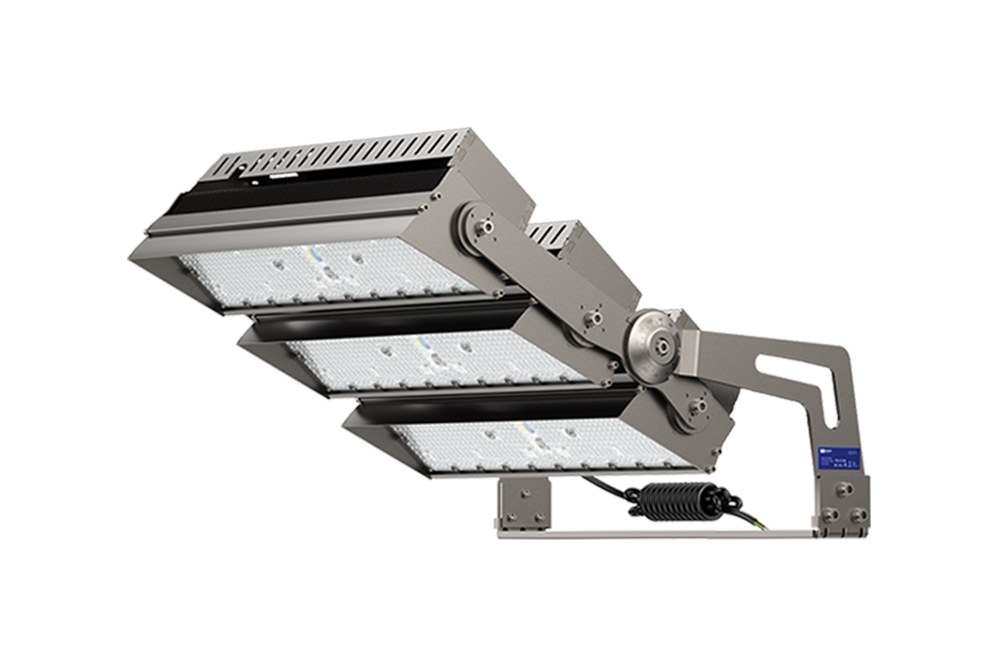
How many lumens for flood light?
0How many lumens for flood light? Find the right lumen output for outdoor security, commercial areas, and industrial lighting with expert tips from SEEKINGLED.
View detailsSearch the whole station
This football field project in the United States was a typical metal halide replacement case. The existing system used 1000W MH lamps, installed on four poles around the field. Each pole was about 60 feet high, carrying 10 fixtures, which meant 40 lamps in total.
From an engineering point of view, the system was already outdated. Light decay was obvious, warm-up time was long, and the power consumption was far beyond what the client wanted to keep paying for. Maintenance was also becoming a problem, since replacing lamps at that height is neither fast nor cheap.
Our task was not simply to “make it brighter”, but to replace the system without changing the pole structure, keep installation risk under control, and still deliver a clear improvement on the field.
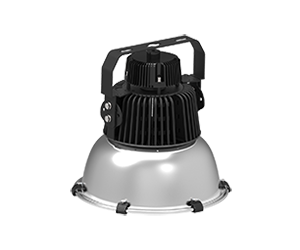

At the beginning, higher wattage LED fixtures were discussed. On paper, using fewer lamps looks attractive. But once we checked the details, the disadvantages became clear.
Some 480W-class fixtures were heavier than 15 kg per unit, which would increase the load on poles that were not designed for that weight. Efficiency was also lower than expected, and the cost per fixture was nearly double. From an engineering perspective, that option did not make sense.
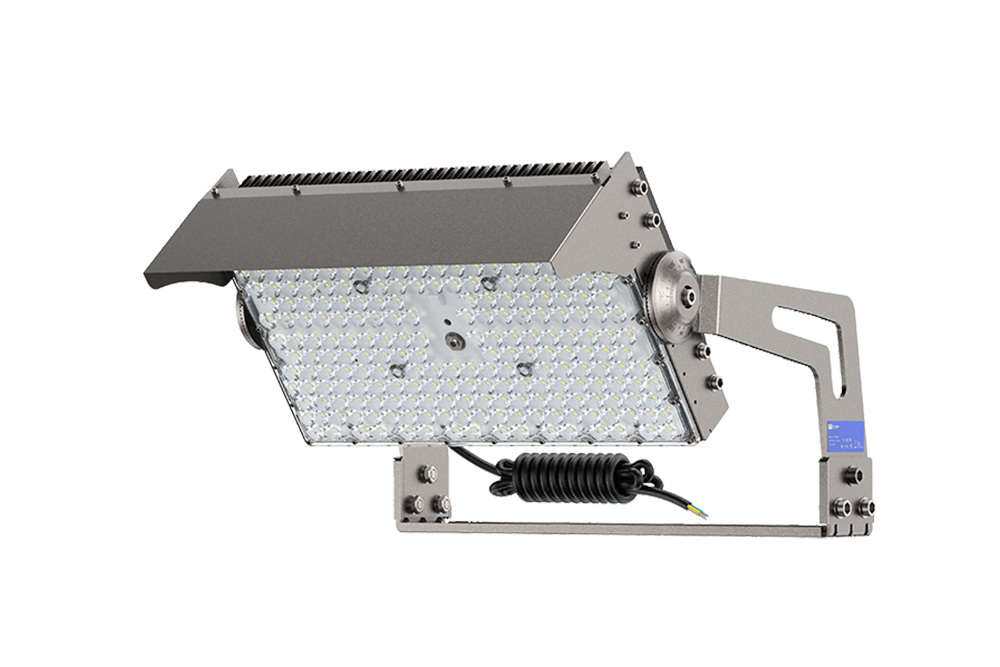
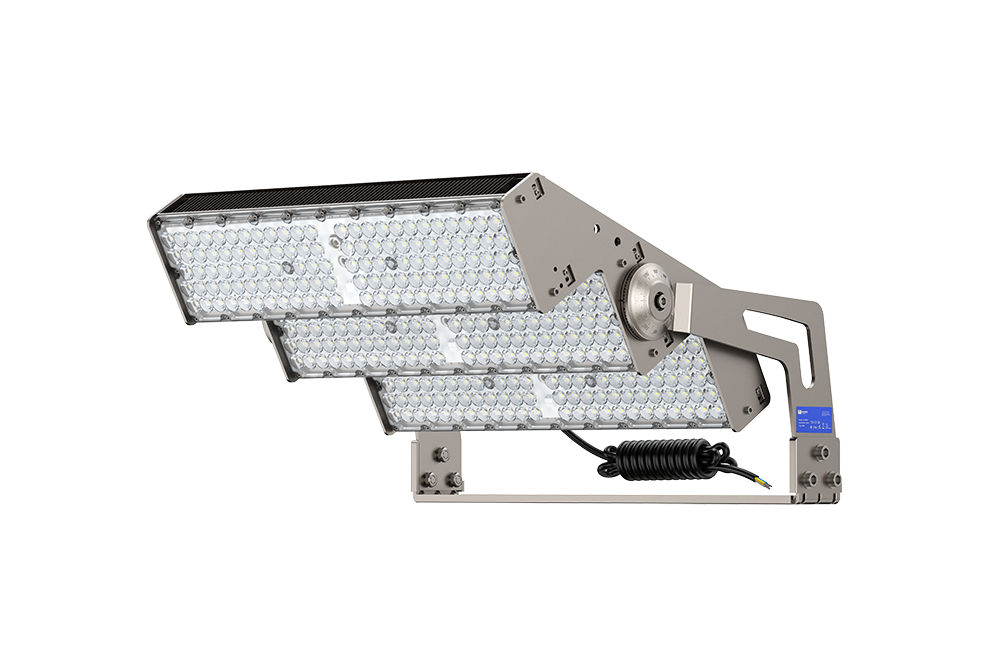
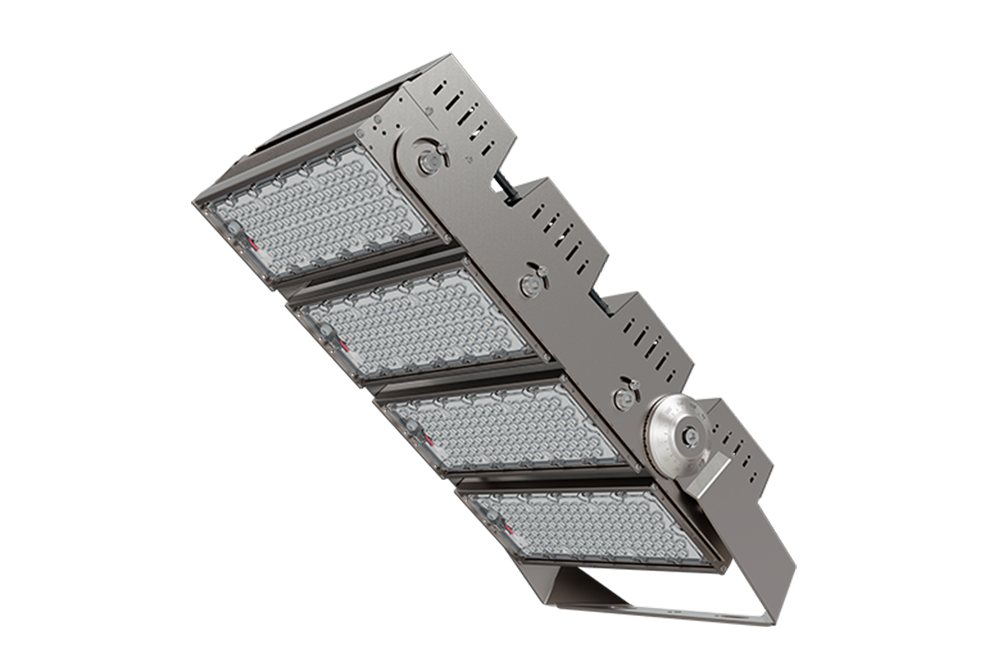
Instead, we chose the XJ-HBS240W High Bay from the HBS series. It offers higher light efficiency, a lighter housing, and better flexibility when arranging the beam distribution. The final layout used 48 fixtures, with 12 units installed on each pole.
This approach allowed us to fine-tune the aiming angles and avoid over-lighting certain zones while keeping the sidelines bright enough.
After installation and adjustment, on-site measurements showed an average illumination of 125 foot-candles, roughly 1300 lux at ground level. Compared with the original MH system, the improvement was immediately visible.
Light distribution across the field became more even, especially in the corner and sideline areas. There was no delay when switching the lights on, and the color consistency was much better than before. For players and referees, the field simply felt clearer.
From an operational side, the reduction in power consumption and maintenance frequency was just as important as the brightness itself.
The client was satisfied with the result, particularly with the balance between performance and cost. The lighting level exceeded the previous setup by a large margin, while the overall system load stayed within safe limits.
For this type of sports stadium LED lighting project, the SEEKINGLED XJ-HBS240W proved to be a practical solution rather than an overdesigned one.
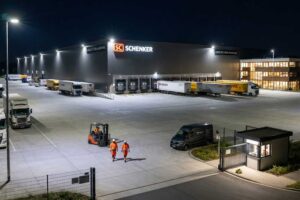
How many lumens for flood light? Find the right lumen output for outdoor security, commercial areas, and industrial lighting with expert tips from SEEKINGLED.
View details
Can you use indoor LED flood lights outdoor safely? Learn the real risks, weather limits, and when it works. Practical advice from SEEKINGLED lighting experts.
View details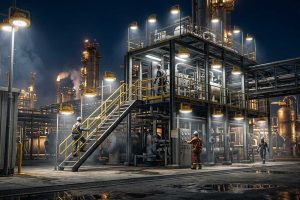
LED explosion-proof lights for hazardous industries. Certified, energy-efficient, and durable lighting solutions by SEEKINGLED for safe operations.
View details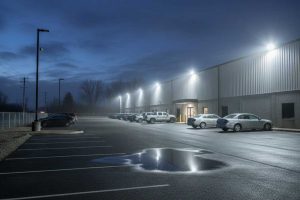
What Are the Best LED Flood Lights? Discover how to choose best commercial LED flood lights for outdoor use with stable performance, durability, and real-world reliability.
View details