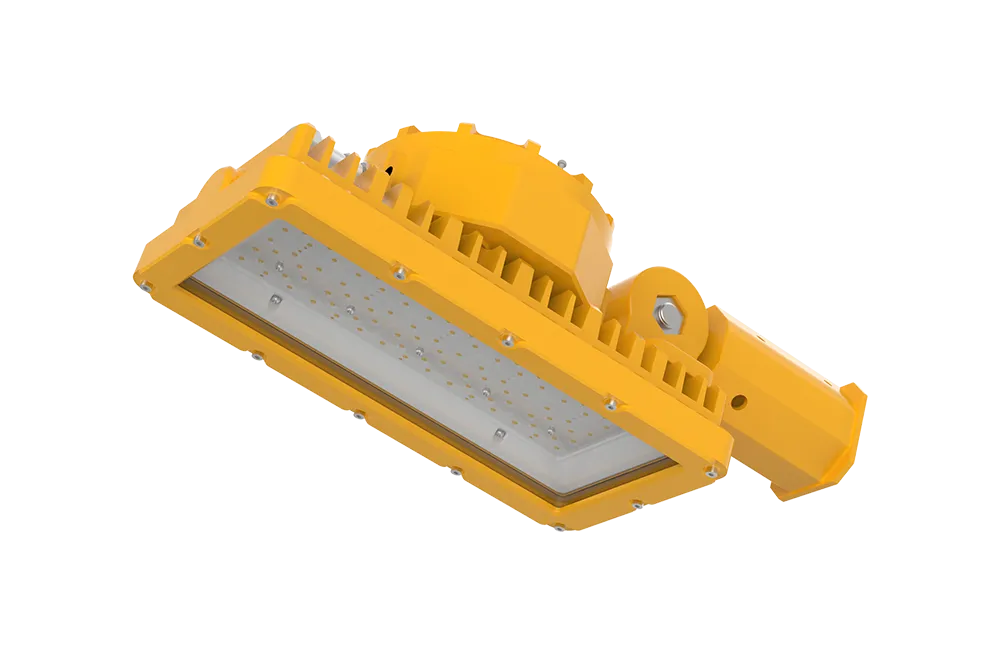
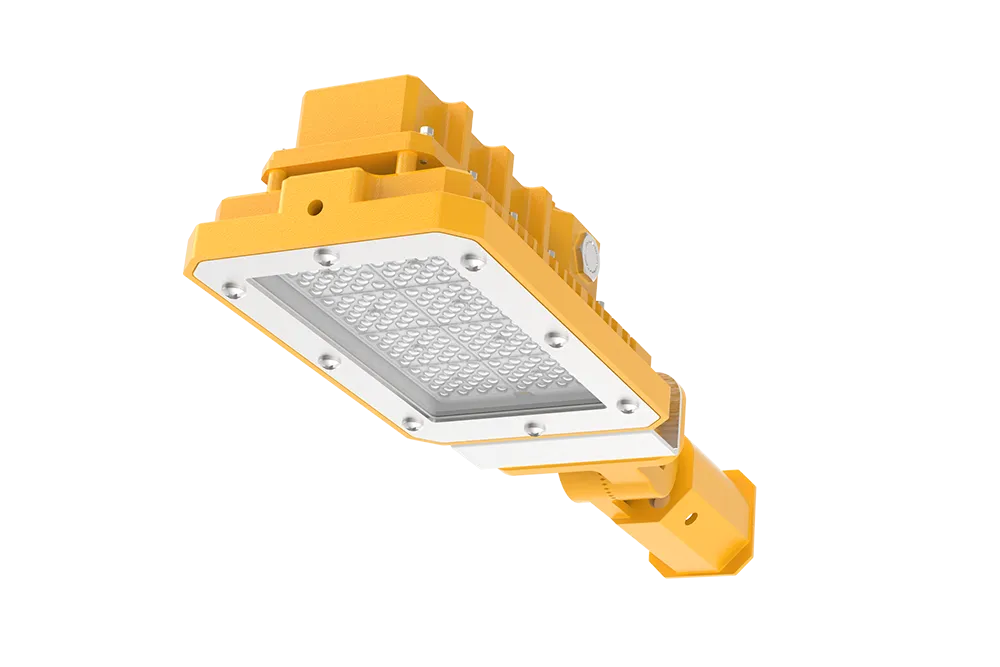
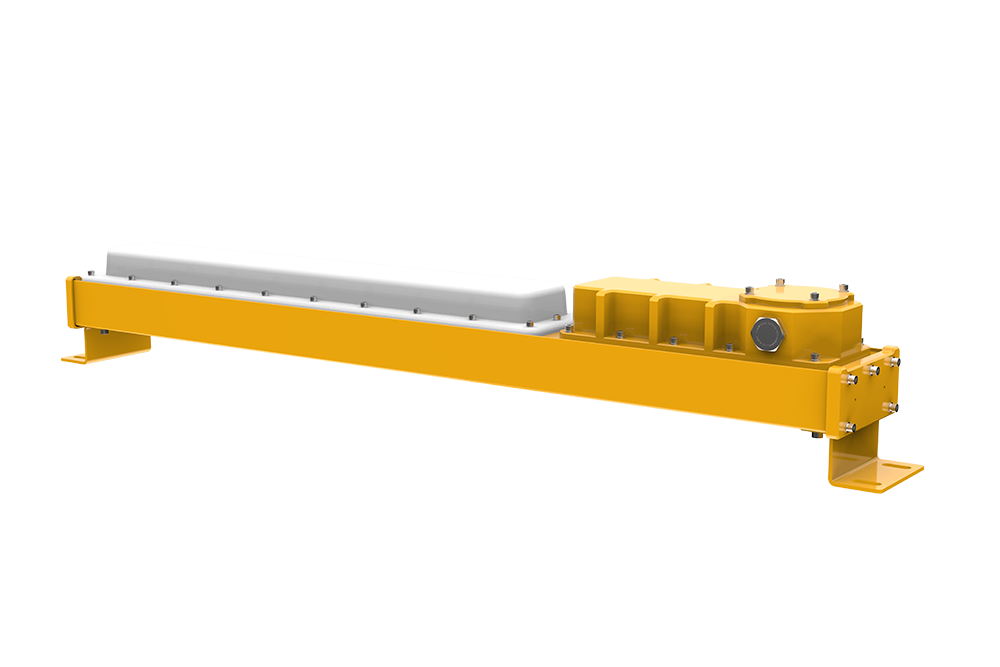
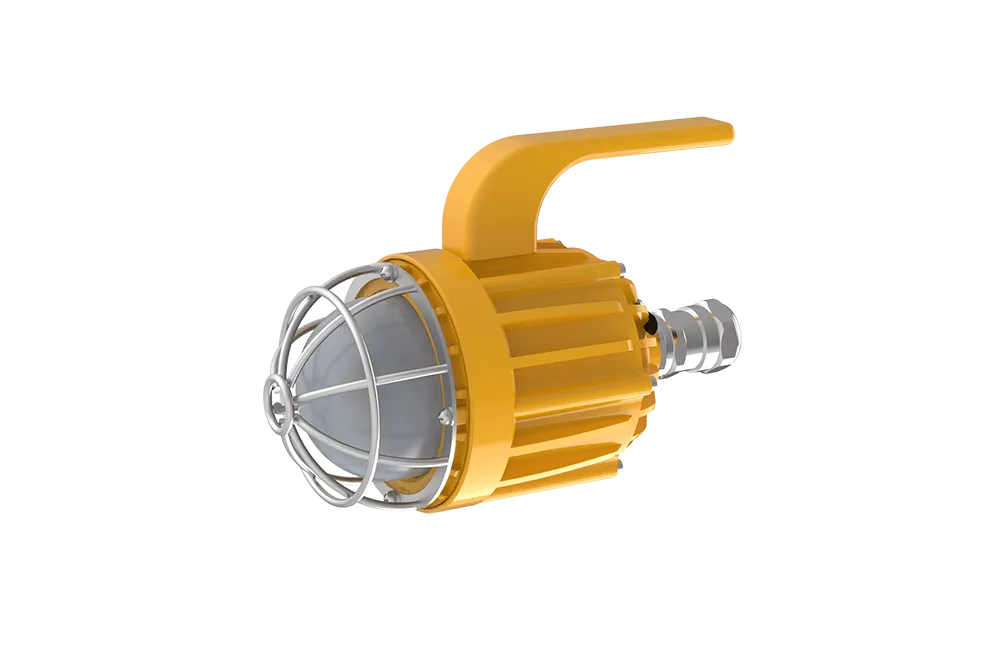
Vintage explosion proof lighting originally emerged to protect workers in hazardous industrial environments where flammable gases, vapors, and combustible dust could ignite from ordinary electrical equipment. Today, these rugged fixtures remain valued both for their engineering heritage and distinctive industrial appearance.
A few years ago, while visiting an aging petrochemical facility scheduled for modernization, I noticed something unusual hanging beneath a weathered steel platform.
It wasn’t the newest LED floodlight.
It wasn’t a smart lighting system connected to a control network.
Instead, it was a cast-aluminum explosion proof fixture that had likely survived three plant managers, two ownership changes, countless storms, and perhaps forty years of operation.
The housing was scratched.
The paint had faded.
Yet the flame path remained intact.
The fixture still worked.
That moment explained why vintage explosion proof lighting continues to attract engineers, restoration specialists, architects, and industrial designers alike.
These fixtures represent a period when industrial equipment was built with a mindset that often prioritized longevity above everything else.
What Is Vintage Explosion Proof Lighting?
Vintage explosion proof lighting refers to hazardous-location luminaires manufactured during earlier industrial eras, generally between the 1940s and early 1990s, before LED technology became dominant.
Most vintage explosion proof lighting fixtures were installed in:
Oil refineries
Chemical processing plants
Offshore platforms
Shipyards
Grain facilities
Paint manufacturing plants
Mining operations
Unlike decorative industrial-style lighting sold today, authentic vintage explosion proof lighting was engineered to satisfy real safety requirements.
These fixtures were not created for aesthetics.
Their appearance was simply the result of engineering constraints.
Heavy housings.
Massive threaded joints.
Thick glass globes.
Cast metal guards.
Everything had a purpose.
Why Explosion Proof Lighting Became Necessary
Industrial history contains countless examples where ignition sources triggered devastating fires and explosions.
Electrical equipment often became a contributing factor.
According to the U.S. Occupational Safety and Health Administration (OSHA), hazardous locations are areas where fire or explosion hazards may exist due to flammable gases, vapors, dusts, or fibers.
A single modern hazardous-area LED fixture can often replace older technologies while reducing power demand significantly.
For facilities operating hundreds of luminaires, the savings become substantial.
Common Types of Vintage Explosion Proof Lighting
Globe-and-Cage Fixtures
Perhaps the most recognizable style.
Features:
Wire guard
Glass globe
Cast housing
Threaded mounting
These fixtures are frequently reproduced today.
Bulkhead Fixtures
Often found on:
Ships
Offshore platforms
Marine terminals
Characteristics include:
Compact profile
Thick housing
High durability
Pendant-Mounted Fixtures
Common in processing plants.
Advantages included:
Flexible mounting
Broad light distribution
Easier maintenance access
Many remain visible in older industrial facilities.
Should Vintage Explosion Proof Lighting Still Be Used in Hazardous Areas?
This question deserves a careful answer.
In many jurisdictions, older equipment may remain in service if:
Properly maintained
Undamaged
Code compliant
Approved by facility requirements
However, restored vintage fixtures used for decorative purposes should never automatically be assumed suitable for hazardous locations.
Certification status matters.
Inspection matters.
Documentation matters.
Appearance alone means nothing.
Vintage Explosion Proof Lighting in Modern Industrial Retro Projects
By this point, most buyers realize something interesting: vintage explosion proof lighting is rarely purchased purely for aesthetics.
The real demand comes from environments where people want industrial heritage, mechanical authenticity, and architectural character—but still need durable lighting capable of surviving harsh conditions.
I encountered this during a renovation project near Houston.
The client originally wanted decorative “industrial-style” pendants sourced from a furniture supplier. They looked convincing in the catalog. Cast cages. Brass finish. Thick glass.
Three months later, corrosion appeared on several fittings because the building sat less than five miles from the Gulf Coast.
The replacement solution wasn’t decorative lighting.
It was a modified explosion-proof fixture inspired by historical marine and refinery luminaires.
The result looked older.
And performed significantly better.
That experience changed how I evaluate vintage explosion proof lighting.
Why Original Vintage Explosion Proof Fixtures Became Popular Again
Many people assume vintage explosion proof lighting is a recent design trend.
It isn’t.
The resurgence comes from industrial architecture itself.
Old factories, shipyards, steel mills, power stations, railway depots, and petrochemical plants are being converted into:
Breweries
Restaurants
Industrial lofts
Museums
Creative offices
Maritime-themed hotels
Heritage industrial parks
Architects often want fixtures that preserve historical identity.
The challenge is that authentic vintage fixtures were designed decades ago.
Many contain:
Incandescent lamps
Mercury vapor lamps
Aging seals
Corroded housings
Obsolete electrical systems
Modern projects therefore seek products that preserve historical appearance while incorporating:
LED technology
Improved thermal management
Corrosion resistance
Current electrical safety standards
Industries Driving Demand
Industry
Reason for Using Vintage Explosion Proof Lighting
Heritage Refineries
Historical authenticity
Maritime Museums
Original dockside appearance
Breweries
Industrial atmosphere
Luxury Restaurants
Mechanical vintage aesthetic
Coastal Resorts
Marine-industrial design
Energy Visitor Centers
Historic equipment replication
Vintage Explosion Proof Lighting vs Decorative Industrial Lighting
This distinction matters more than many buyers realize.
A decorative industrial fixture may look similar from ten feet away.
Close inspection tells a different story.
Decorative Industrial Fixture
Typically includes:
Thin stamped steel
Lightweight cage
Standard glass
Indoor-only design
Limited corrosion resistance
Vintage Explosion Proof Lighting
Typically features:
Thick cast aluminum housing
Tempered glass globe
Mechanical fastening systems
Heavy-duty mounting brackets
Industrial-grade sealing
The weight difference alone is often surprising.
A decorative pendant may weigh 2–3 kg.
A genuine explosion-proof-style luminaire can exceed 10–15 kg depending on size.
Materials That Define Authentic Vintage Explosion Proof Lighting
The appearance of vintage industrial lighting is largely determined by materials.
Many inexpensive replicas fail because they ignore this.
Cast Aluminum
Historically common in:
Refineries
Shipyards
Offshore facilities
Heavy manufacturing plants
Advantages:
Corrosion resistance
Mechanical strength
Relatively low weight
Brass Components
Older marine fixtures frequently incorporated brass because of its resistance to saltwater exposure.
Many restoration architects still prefer brass accents today.
Modern LED versions often retain the same visual profile.
Coastal Environments and Vintage Explosion Proof Lighting
One of the most overlooked considerations is corrosion.
According to the U.S. Federal Highway Administration, salt-laden coastal environments dramatically accelerate corrosion rates compared with inland locations.
In practice, coastal deterioration often appears first around:
Mounting bolts
Cable entries
Bracket joints
Not the luminaire body itself.
Experienced engineers know this.
Architectural designers sometimes do not.
LED Technology Changed Vintage Explosion Proof Lighting
Twenty years ago, maintaining historical appearance often meant accepting poor efficiency.
Today that tradeoff largely disappears.
Traditional Lamp Challenges
Older fixtures commonly used:
Incandescent lamps
Metal halide lamps
Mercury vapor lamps
Problems included:
High maintenance
Shorter service life
Frequent relamping
Increased energy costs
Modern LED Benefits
The U.S. Department of Energy reports that LED technology can significantly reduce lighting energy consumption while providing substantially longer operational life.
Is vintage explosion proof lighting actually explosion proof?
Not necessarily.
Many products are only styled to resemble historical explosion-proof fixtures. Always verify certification before use in hazardous locations.
Can vintage explosion proof lighting use LED technology?
Yes. Most modern products integrate LED modules while maintaining historical industrial appearance.
Is brass better than aluminum?
Not universally.
Brass offers visual appeal and corrosion resistance. Aluminum generally provides lower weight and lower cost.
Can these fixtures be used outdoors?
Yes, if designed with appropriate IP ratings and corrosion protection.
Why are authentic vintage-style fixtures heavier?
Because they typically use cast metal housings, thicker glass, and industrial-grade mounting components.
Final Thoughts
Vintage explosion proof lighting survives because it does something most modern decorative fixtures cannot. It tells a story.
The thick cast housings, protective cages, and mechanical detailing originated in real industrial environments—not design studios.
Today, the most successful projects combine that visual heritage with modern LED efficiency, corrosion resistance, and long-term reliability. For architects, engineers, and facility owners seekingled authentic industrial character, vintage explosion proof lighting remains one of the few categories where history and performance genuinely meet.
SEEKINGLED LED Linear Explosion Proof Light and Explosion Proof lighting is ATEX and IECEx certified for Zone 1, Zone 2, Zone 21 and Zone 22 hazardous locations, built for long-term industrial use.
LED Linear Explosion Proof Lights and EX Proof lights for Zone 1, Zone 2, Zone 21 and Zone 22 hazardous areas. ATEX & IECEx certified explosion proof LED linear lighting with emergency function, adjustable power and IP67 protection by SEEKINGLED.
SEEKINGLED LED Explosion Proof Flood Lights are ATEX certified for Zone 2 and Zone 22 hazardous areas, offering high efficiency, adjustable power and integrated junction box.
SEEKINGLED LED Explosion Proof Flood Lights are flameproof ATEX and IECEx certified for Zone 1 and Zone 2 hazardous areas, offering high power, adjustable output and long service life.
SEEKINGLED LED Gas Station Canopy Lights are ATEX certified for Zone 2 and Zone 22 hazardous areas, featuring adjustable power and built-in explosion-proof junction box.
ATEX: Ex II 2G Ex db IIB T6/T5 GbEx II 2D Ex tb IIIC T80°C/ T95°C Db IECEx Ex db IIB T6 Gb;Ex tb IIIC T80°C Db Feature: ● For Zone 1,2 and Zone 21,22● Flameproof type, the strongest● 100W can replace 250W HID,energy saving● Power:60W,80W,100W Application: Oil and gas, marine, Chemical, pharmaceutical, semiconductor,mining,military industr…
ATEX: II 3G Ex nR ⅡC T5/T6 GcII 3D Ex tc ⅢC T80℃/T95℃Dc ATEX Certificate NO: TÜV CY 26 ATEX 0207611 X Feature: ● For Zone 2 and Zone 22● 150W can replace 250W HID lamps,Energy saving● Power:50W,75W,100W,150W,200W Application: Oil and gas, marine, Chemical, pharmaceutical, semiconductor,mining,military industry, paint booth,power plant ETC…
LED explosion proof high bay lights are designed for Zone 1, Zone 2, Zone 21 and Zone 22 hazardous areas. This page introduces the HB21 Series from SEEKING, including certifications, power options and real application considerations.
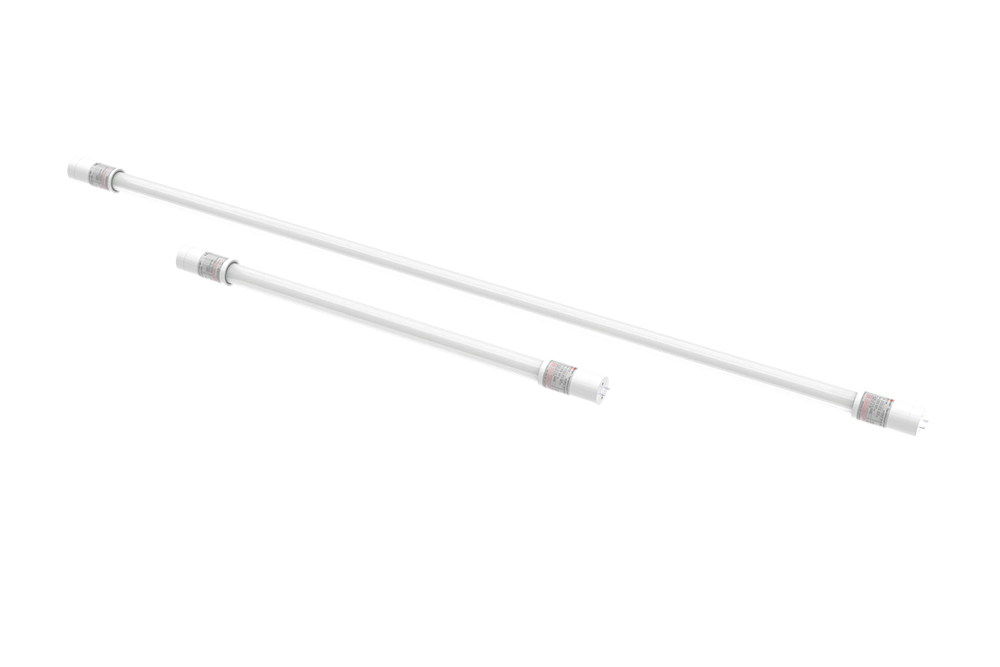
LED Linear Explosion Proof Lights from SEEKINGLED. LU Series Flame Proof lights ATEX-certified explosion proof LED linear lighting for Zone 2 gas and Zone 22 dust areas, IP69K, IK10, long lifetime and flexible power options.
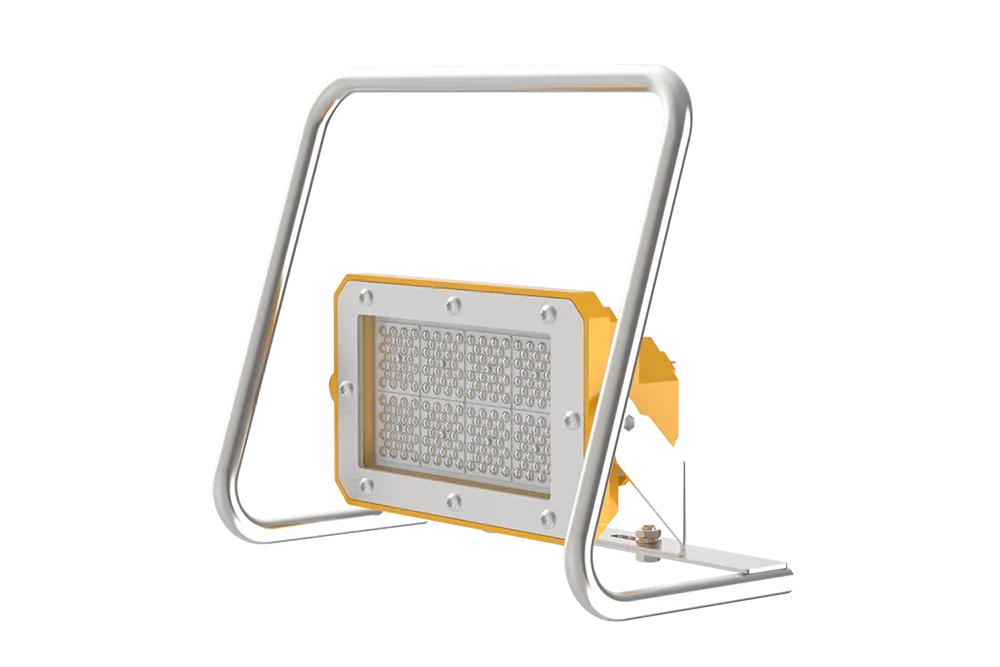
Certified explosion proof work lights for Zone 1 & 21 hazardous areas. Portable, ATEX & IECEx approved, built for oil, gas and chemical plants by SEEKINGLED.
ATEX: II 3G Ex nR ⅡC T6 GcII 3D Ex tc ⅢC T80℃ Dc ATEX Certificate NO: TÜV CY 26 ATEX 0207611 X Feature: ● For Zone 2 and Zone 22● Accepts battery-powered supply● indestructible● Power:AC input:50W,75W,100WDC input:15W,25W,35W Application: Oil and gas, marine, Chemical, pharmaceutical, semiconductor,mining,military industry, paint booth,po…
ATEX: Ex II 2G Ex db IIB T6 GbEx II 2D Ex tb IIIC T80°C Db IECEx Ex db IIB T6 Gb;Ex tb IIIC T80°C Db Feature: ● For Zone 1,2 and Zone 21,22● Flameproof type, the strongest Application: Oil and gas, marine, Chemical, pharmaceutical, semiconductor,mining,military industry, paint booth,power plant ETC hazardous area. Technical Specifications:…
ATEX: Ex II 2G Ex db IIB T6 GbEx II 2D Ex tb IIIC T80°C Db IECEx Ex db IIB T6 Gb;Ex tb IIIC T80°C Db Feature: ● For Zone 1,2 and Zone 21,22● Flameproof type, the strongest Application: Oil and gas, marine, Chemical, pharmaceutical, semiconductor,mining,military industry, paint booth,power plant ETC hazardous area. Technical Specifications:…
ATEX: Ex II 2G Ex d e IIB T6 Gb ATEX: Ex d e IIB T6 Gb; Feature: ● For Zone 1,2● 9W can replace 18W fluorescent lamps,50% Energy saving Application: Oil and gas, marine, Chemical, pharmaceutical, semiconductor,mining,military industry, paint booth,power plant ETC hazardous area. Technical Specifications: Standards:60079-0, 60079-1, 60079…
Where to find high-performance led flood lights for sports fields? Discover reliable suppliers, lighting standards, and real project insights with SEEKINGLED stadium lighting.
Learn what is a high bay light fixture, how it works, where it is used, and how to choose the right industrial lighting solution from SEEKINGLED experts.
How bright is 10W LED flood light in everyday use? This answer looks at real lumen output, coverage, and where a 10W LED flood light actually works, based on practical lighting experience from SEEKINGLED.
 Seeking LED