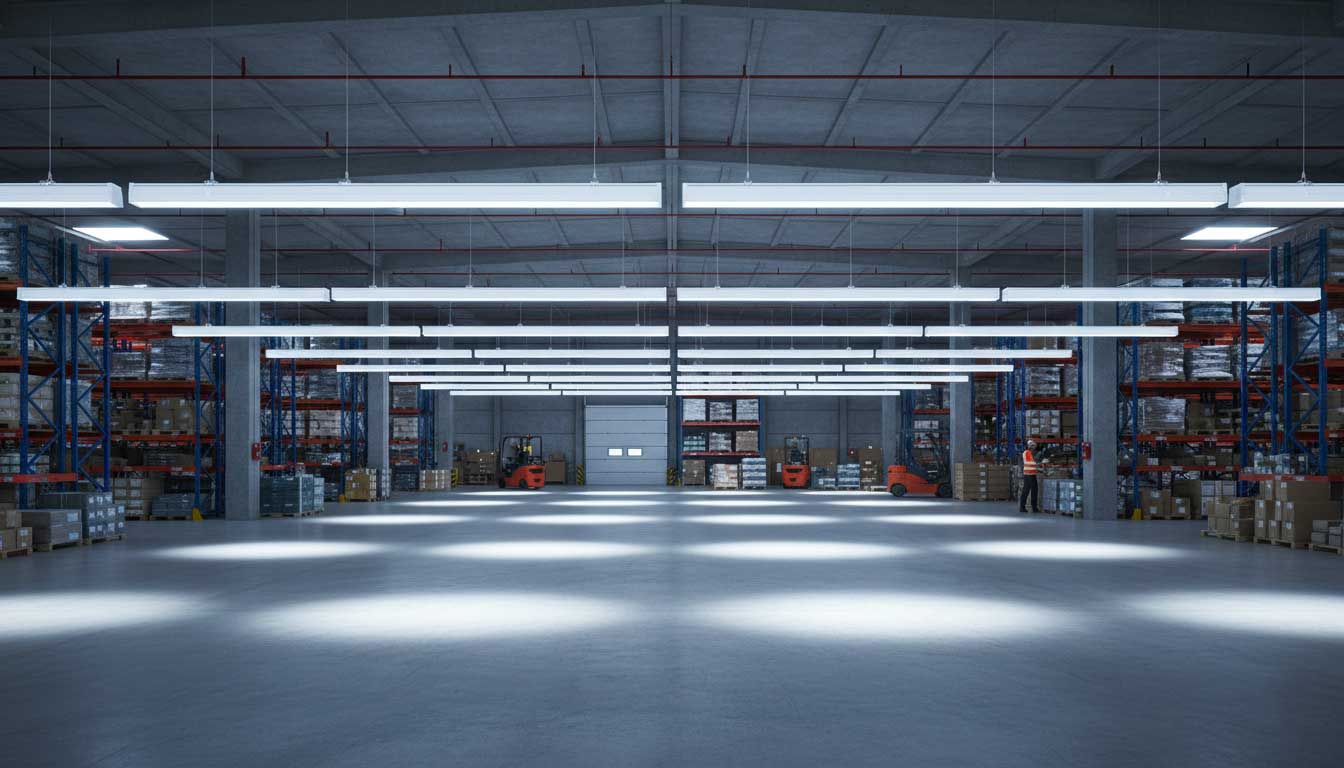
Consistent optics help maintain even cut lines along long linear installations.
This is a question we hear quite often, especially from project managers and installers who have already worked with LED lighting but noticed very different visual results from one site to another.
So, what does the cut line look like on LED lights in real life? In a properly designed fixture, the cut line looks calm. It is there, but it doesn’t jump out at you. Light ends where it is supposed to end, without harsh glare or random spill creeping onto walls, shelves, or into people’s eyes.
If you stand under the light and look across the floor or work surface, you’ll usually see a clear lighting zone. Outside that zone, brightness drops naturally instead of breaking suddenly or leaving bright tails behind.
With linear lighting, everything is continuous. One fixture connects to the next, sometimes over tens of meters. Because of that, any optical weakness becomes very obvious.
If the cut line is poorly controlled, you’ll see uneven brightness between modules. Some sections look sharper, others blur out. In warehouses or offices, this often shows up as glare when you walk through the space or when you look up from certain angles.
A good linear system avoids this. The beam shape stays consistent from start to end, and the cut line follows the selected optic instead of changing randomly along the run.
What a Clean Cut Line Looks Like on Site
In real installations, a clean cut line doesn’t look dramatic. That’s actually the point.
In logistics centers or supermarkets using linear systems like the SEEKINGLED HLS Series, the light stays focused on the aisle, desk, or working area. You don’t see strong light bleeding onto upper walls or bouncing back into your eyes.
When different beam angles are used—60°, 90°, or wider—the edge changes, but it stays predictable. Narrow beams have a more defined edge. Wider beams soften the transition, but still stop where the lighting plan expects them to stop.
Cut Line and Glare Are Closely Connected
Many people assume glare is only about brightness. In practice, it’s often about where the light goes.
When the cut line is messy, light escapes at shallow angles. That’s when people complain that LED lights feel uncomfortable, even if the lumen level is not especially high.
A controlled cut line keeps light directed downward and forward, not sideways into the field of view. This is why professional linear lighting systems spend so much effort on optical design, not just efficiency numbers.
Is Cut Line Control Only Important for Outdoor Lighting?
Not really. While the term “cut line” is common in street lighting, indoor projects depend on it just as much.
Open offices, production lines, corridors, and retail spaces all benefit from controlled beam edges. Clean light lines make ceilings look neater, reduce visual fatigue, and help spaces feel more organized without adding extra fixtures.
A Practical Way to Think About It
If you’re wondering what does the cut line look like on LED lights, the simplest answer is this: you shouldn’t have to think about it once the lights are installed.
When the optics are right, light feels natural. It does its job quietly, without glare, distractions, or uneven patches along the ceiling or floor.
That’s the goal behind linear lighting systems like the SEEKINGLED HLS Series—not just high output, but light that behaves properly in real spaces.
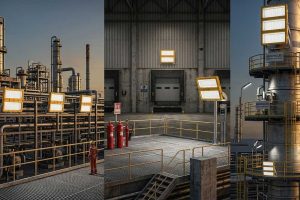
In hazardous areas such as oil & gas, chemical plants, coal mines and pharmaceuticals, explosion-proof lights are critical safety equipment. Many people find the prices high at first glance. Here is a clear look at current market ranges and th...
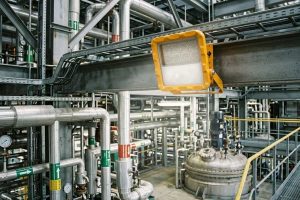
Explosion proof LED light fixtures for Zone 2 & 22 hazardous areas. ATEX & IECEx certified, high efficiency, durable industrial safety lighting by SEEKINGLED.
Seeking showcased its latest LED Linear Lighting Solutions at the Hong Kong International Outdoor and Tech Light Expo 2024, featuring the HLS Series LED Linear Trunking System and HLD Series Linear High Bay for industrial and commercial projects.
 Seeking LED