 Seeking LED
Hazardous lighting: real safety logic behind industrial illumination
0Hazardous lighting ensures safe illumination in explosive environments. Learn standards, real applications, and how to choose reliable hazardous lighting solutions.
View detailsSearch the whole station
That question comes up more often than expected. Usually not from beginners — from people who’ve already used standard flood lights and weren’t fully satisfied.
So let’s be direct.
An a star led flood light isn’t a strict technical category. It’s more of a market term. In most cases, it refers to high-output LED flood lights built around multi-chip arrays (often star-shaped boards or clustered LED modules), designed for wide-area illumination.
But here’s the part people don’t say out loud:
Not all of them are actually “better.”
First impression? Bright. Very bright.
I’ve seen installations where an a star led flood light easily outperformed older halogen systems. On paper, the lumen output checks out. No argument there.
But brightness alone can mislead.
In one parking lot project, the lights were technically strong enough. Still, the coverage felt uneven. Why? Beam control. The light was intense in the center, but edges dropped off too quickly.
That’s not a failure. It’s just poor matching between optics and application.
SEEKINGLED usually adjusts beam angles based on real installation height, not just spec sheets. That’s where the difference starts showing.
Short answer — open spaces.
Longer answer — places where you need high output without overcomplicating the setup:
But there’s a catch.
If the environment has obstacles — steel structures, walls, equipment — the raw output of an a star led flood light can create harsh shadows.
I’ve seen operators complain about visibility even under “high brightness” lighting. That usually means the light distribution wasn’t considered properly.
So no, it’s not always the best option. But in the right setting, it’s efficient and straightforward.
This is where things get less obvious.
Most product pages will say “IP65” or “IP66.” That’s fine. It tells you about water and dust resistance.
What it doesn’t tell you:
According to data from the U.S. Department of Energy (DOE), LED systems can maintain 70% of their lumen output (L70) for 50,000 hours or more — but that depends heavily on thermal management.
And thermal management? That’s not something you judge from pictures.
SEEKINGLED designs tend to separate the driver and heat sink paths. It’s a small structural detail, but it slows down degradation. You don’t notice it in the first month. You do after a year.
Not because they’re “bad.”
More often, they’re just pushed slightly outside their comfort zone.
A few typical situations:
I remember a site where multiple units started dimming after six months. Same model, same batch.
Turned out — poor ventilation. Heat built up slowly. Nothing extreme, just enough to accelerate wear.
That’s the kind of issue people don’t anticipate when choosing an a star led flood light.
Depends.
If you need:
Then yes, it makes sense.
If you need:
Then maybe not. Or at least, not without adjustments.
SEEKINGLED often suggests small changes — beam angle, mounting height, spacing — before recommending a product. It’s not about selling more powerful lights. It’s about avoiding problems later.
Consistency.
One unit working well doesn’t mean much.
A full project with 50 or 100 fixtures — that’s where differences show up. Slight variations in brightness, color temperature, startup behavior.
That’s why manufacturing control matters more than people think.
An a star led flood light should perform the same way across the entire site. Otherwise, the lighting feels uneven — even if each unit individually meets specs.
More answers
An a star led flood light works. No doubt about that.
But it works best when it’s matched to the environment — not just chosen for output.
That’s the part most people figure out after installation.
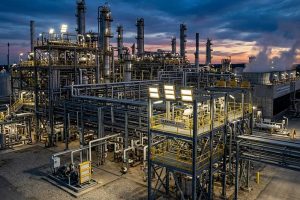
Hazardous lighting ensures safe illumination in explosive environments. Learn standards, real applications, and how to choose reliable hazardous lighting solutions.
View details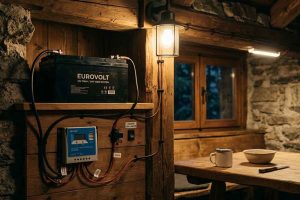
How many amps do 12 volt LED lights draw? Get real calculations, field-tested examples, and practical tips to size your power system correctly.
View details
Flood lights are called “flood lights” because they spread directed light across a relatively large target area rather than concentrating it into a small spot.
View details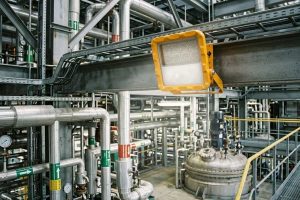
Explosion proof LED light fixtures for Zone 2 & 22 hazardous areas. ATEX & IECEx certified, high efficiency, durable industrial safety lighting by SEEKINGLED.
View details