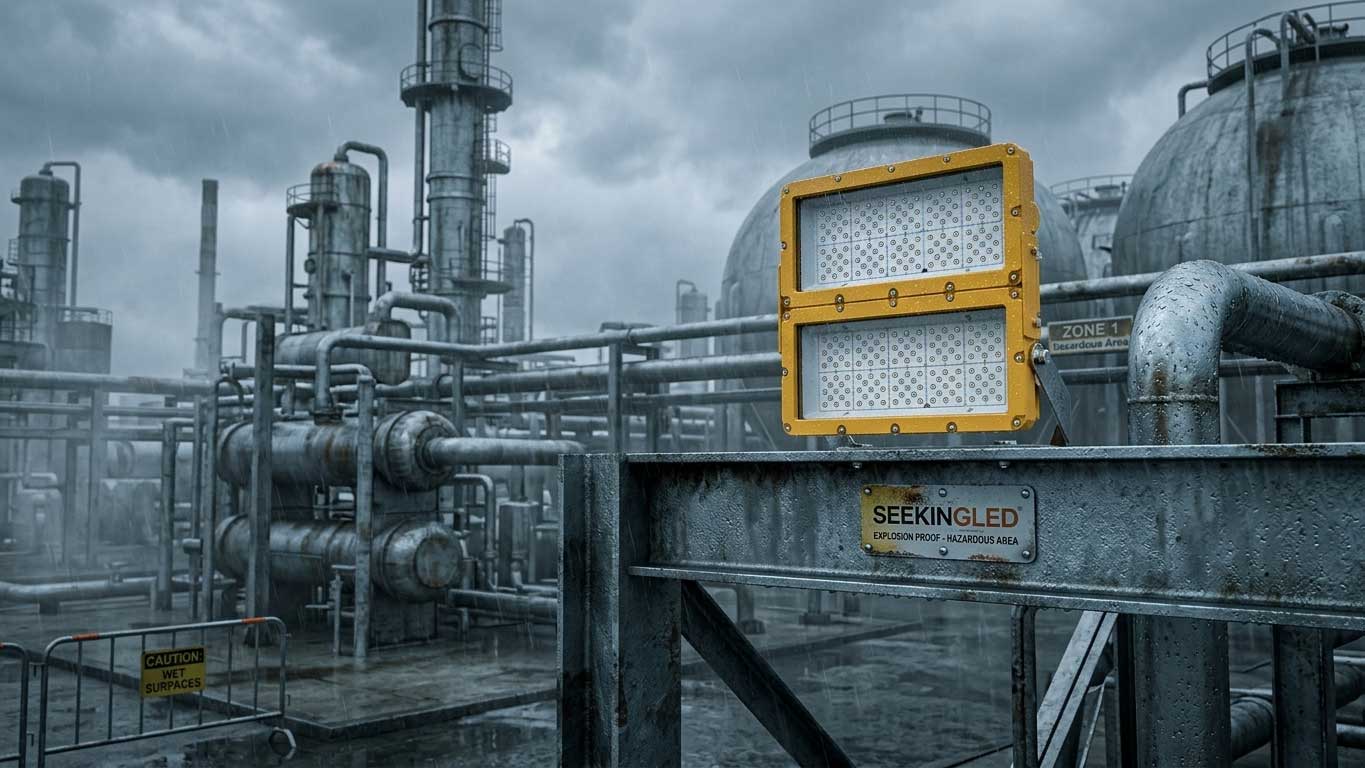
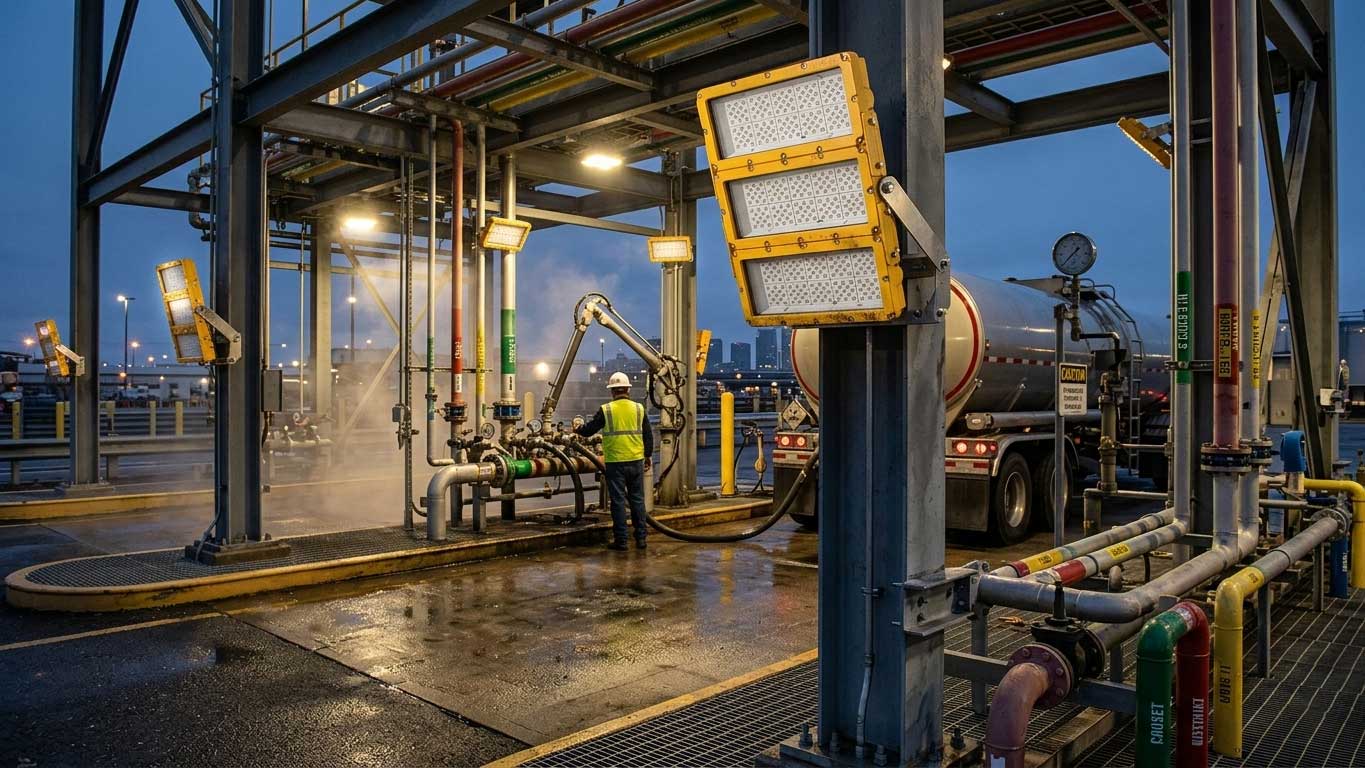
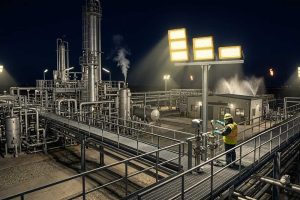
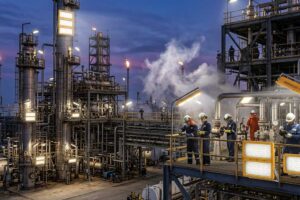
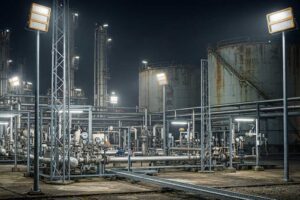
Yes. Explosion proof LED lights are specifically engineered for outdoor hazardous locations where rain, salt spray, humidity, dust, combustible gases, or chemical vapors are present. Properly certified fixtures with IP66 or IP67 protection and corrosion-resistant housings can operate safely for years in refineries, offshore platforms, chemical plants, grain terminals, and exposed industrial yards.
I learned this the hard way during a coastal terminal retrofit in Southeast Asia. The first-generation fixtures looked solid on paper, but after fourteen months near the loading dock, ordinary industrial floodlights had already developed internal condensation and rust around the cable entry. The certified explosion proof LED units beside them kept running through monsoon season without flicker. That contrast changed how I evaluate outdoor hazardous lighting forever.
Why outdoor hazardous areas require explosion proof LED lighting
Outdoor environments are often more dangerous than indoor hazardous zones. Wind shifts gas concentrations. Rainwater enters weak enclosures. Temperature swings create condensation. Salt air attacks metal surfaces continuously.
A standard outdoor LED fixture may survive weather. That does not mean it can safely contain an ignition source.
According to the U.S. Occupational Safety and Health Administration (OSHA), hazardous locations containing flammable gases, vapors, or combustible dust require specifically approved equipment classifications under NEC hazardous location standards. Source: https://www.osha.gov/hazardous-locations
The difference matters. In oil and gas facilities, a failed seal or overheated driver is not merely a maintenance issue. It becomes a plant safety issue.
What makes explosion proof LED lights suitable for outdoor use
IP66 and IP67 sealing protection
Outdoor hazardous fixtures usually carry IP66 or IP67 ingress protection ratings.
IP Rating
Protection Level
Outdoor Suitability
IP65
Water jets
Basic outdoor use
IP66
Heavy water exposure
Industrial outdoor areas
IP67
Temporary immersion resistance
Offshore and marine zones
In real installations, IP66 is generally the minimum I trust for exposed refinery pipe racks.
I once inspected fixtures mounted near a marine fuel unloading station where wind-driven saltwater hit the luminaires almost daily. The fixtures that survived longest all shared three things:
Thick silicone gasket compression
Marine-grade powder coating
Stainless steel external fasteners
Cheap housings failed first at the cable gland.
Corrosion-resistant housing materials
Outdoor hazardous sites are brutal on lighting.
The better explosion proof LED fixtures use:
Die-cast aluminum housings
Anti-corrosion epoxy coatings
Tempered glass lenses
Stainless steel brackets
Sealed cable glands
The National Association of Corrosion Engineers (NACE) estimates corrosion costs industries worldwide over $2.5 trillion annually. Outdoor industrial lighting suffers heavily in corrosive zones. Source: https://www.nace.org/resources/general-resources/corrosion-basics
This is why marine-grade finishes matter more outdoors than lumen output alone.
Common outdoor industries using explosion proof LED lights
Outdoor explosion proof lighting is widely installed in:
Industry
Outdoor Hazard
Oil & Gas
Flammable vapor release
Chemical Plants
Corrosive atmospheres
Offshore Platforms
Saltwater and explosive gases
Grain Processing
Combustible dust
Mining Sites
Dust and vibration
Wastewater Plants
Methane exposure
Fuel Depots
Vapor ignition risk
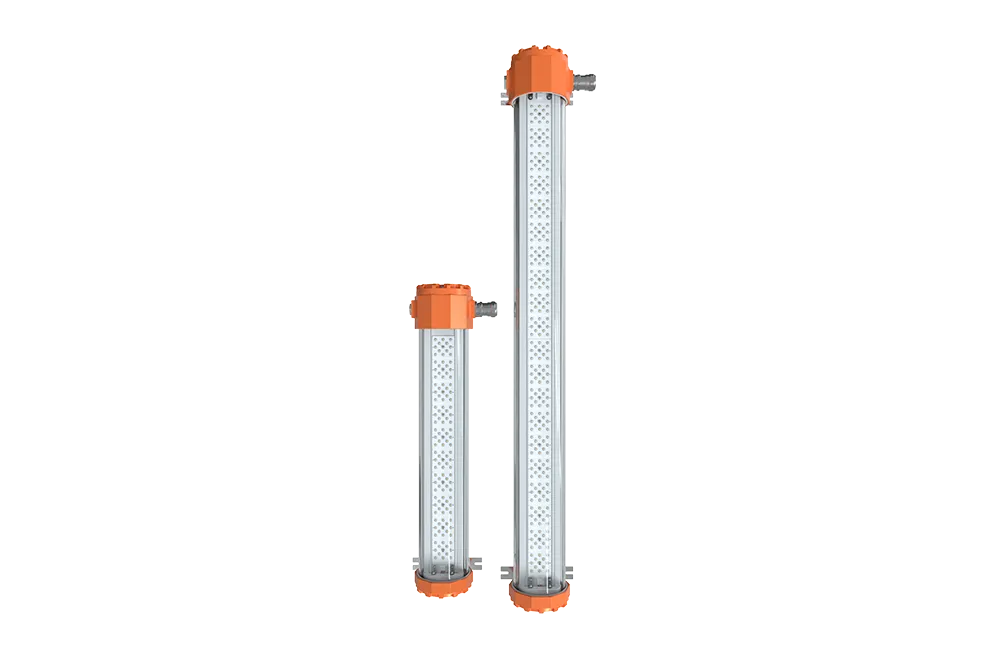
I have personally seen linear hazardous fixtures mounted under offshore helidecks where wind speeds exceeded 40 knots. In those environments, vibration resistance becomes just as important as waterproofing.
That detail rarely appears in catalog brochures.、
Are all outdoor LED lights explosion proof?
No. This confusion causes expensive mistakes.
A weatherproof light is not automatically explosion proof.
Likewise, an explosion proof fixture without outdoor sealing may fail prematurely outside.
Proper outdoor hazardous fixtures require both:
Hazardous location certification
Environmental ingress protection
Look for certifications such as:
ATEX
IECEx
Class I Division 1
Class I Division 2
UL844
Without these approvals, the fixture should not be installed in hazardous outdoor zones.
According to the National Fire Protection Association (NFPA 70 NEC), hazardous location equipment must match the classified environment. Source: https://www.nfpa.org
How long do outdoor explosion proof LED lights last?
A high-quality explosion proof LED fixture typically lasts between 50,000 and 100,000 operating hours outdoors, depending on thermal management and environmental severity.
That number sounds abstract until you calculate it.
Operating Hours Per Day
Estimated Lifespan
10 hours/day
13–27 years
24 hours/day
5–11 years
But outdoor heat changes everything.
In Gulf Coast installations, I have measured enclosure surface temperatures above 60°C during summer afternoons. Poor thermal design destroys drivers long before LEDs fail.
The best outdoor fixtures separate:
LED chamber
Driver compartment
Heat dissipation fins
That structural detail dramatically improves outdoor survival rates.
Steel structures exposed to direct sun can raise enclosure temperatures significantly.
I once found fixtures mounted directly above steam piping in a refinery expansion project. The ambient temperature rating was already near its limit before process heat even started.
That installation lasted less than a year.
Ignoring cable gland quality
The weakest point outdoors is usually not the housing.
It is the cable entry.
Cheap glands allow:
Water intrusion
Condensation
Corrosion
Seal degradation
Most outdoor fixture failures begin there.
Choosing lumen output over certification quality
A brighter fixture with poor certification is a liability.
Reliable outdoor hazardous lighting is built around:
Thermal stability
Seal integrity
Certification accuracy
Corrosion protection
Not just wattage.
FAQ:Can explosion proof LED lights be used outdoors?
Can explosion proof LED lights operate in rain?
Yes. Properly rated IP66 or IP67 explosion proof fixtures are designed for heavy rain, wet weather, and outdoor washdown environments.
Are outdoor explosion proof lights corrosion resistant?
Most certified industrial models use anti-corrosion coatings, stainless steel hardware, and sealed aluminum housings specifically for outdoor industrial use.
Can explosion proof LED lights survive cold climates?
Yes. Many hazardous area LED fixtures operate between -40°C and +60°C depending on certification and driver design.
Are explosion proof lights suitable for marine environments?
Yes, especially fixtures designed for offshore platforms, ports, and coastal chemical facilities where salt spray resistance is critical.
Final Thoughts
Can explosion proof LED lights be used outdoors? Absolutely — and in many hazardous industries, they must be.
The real question is not whether the fixture can survive rain. The real question is whether it can survive years of vibration, humidity, corrosion, temperature swings, chemical exposure, and hazardous gases without becoming an ignition source itself.
That distinction separates true industrial lighting from ordinary outdoor LEDs.
After years around offshore terminals, refinery expansions, and chemical processing plants, I have learned one thing: outdoor hazardous lighting failures rarely happen dramatically. Most begin quietly — a weak seal, trapped moisture, a corroded gland, an overheated driver.
The best explosion proof fixtures prevent those failures long before operators ever notice them.
SEEKINGLED LED Linear Explosion Proof Light and Explosion Proof lighting is ATEX and IECEx certified for Zone 1, Zone 2, Zone 21 and Zone 22 hazardous locations, built for long-term industrial use.
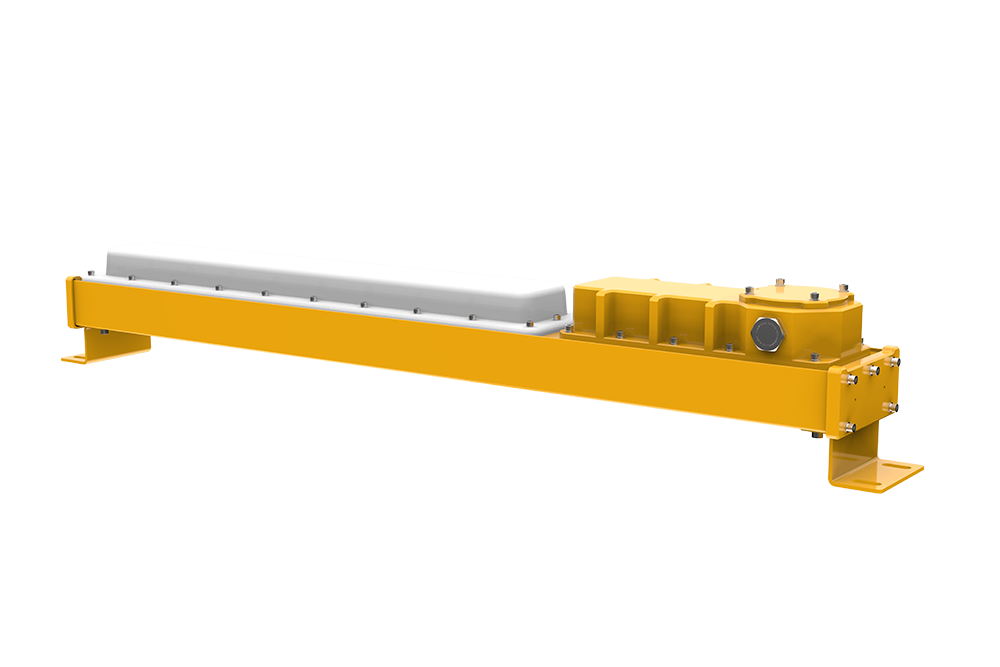
LED Linear Explosion Proof Lights and EX Proof lights for Zone 1, Zone 2, Zone 21 and Zone 22 hazardous areas. ATEX & IECEx certified explosion proof LED linear lighting with emergency function, adjustable power and IP67 protection by SEEKINGLED.
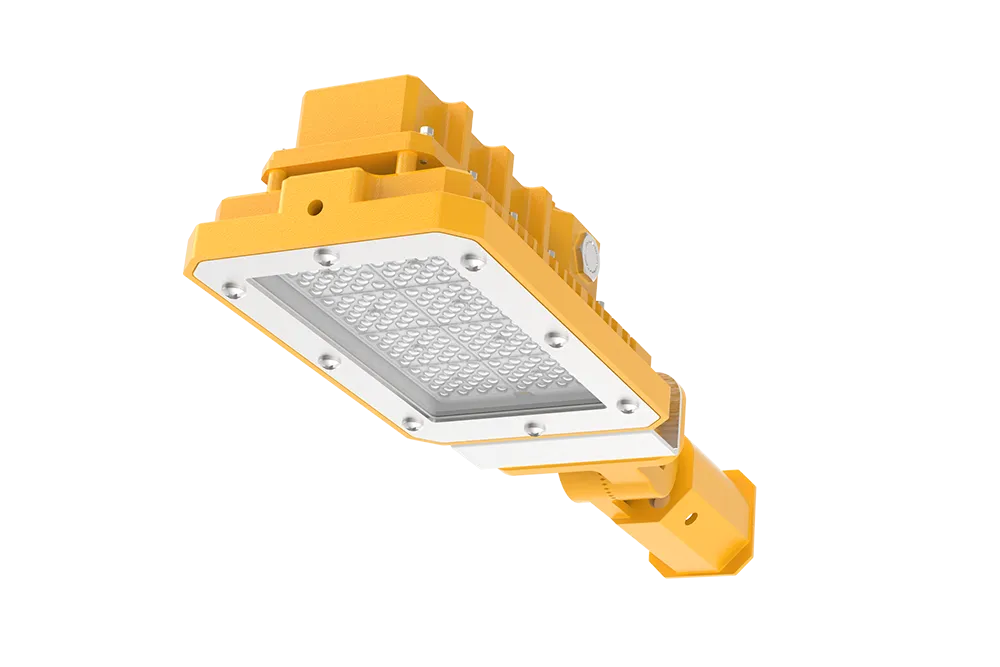
SEEKINGLED LED Explosion Proof Flood Lights are ATEX certified for Zone 2 and Zone 22 hazardous areas, offering high efficiency, adjustable power and integrated junction box.
SEEKINGLED LED Explosion Proof Flood Lights are flameproof ATEX and IECEx certified for Zone 1 and Zone 2 hazardous areas, offering high power, adjustable output and long service life.
SEEKINGLED LED Gas Station Canopy Lights are ATEX certified for Zone 2 and Zone 22 hazardous areas, featuring adjustable power and built-in explosion-proof junction box.
ATEX: Ex II 2G Ex db IIB T6/T5 GbEx II 2D Ex tb IIIC T80°C/ T95°C Db IECEx Ex db IIB T6 Gb;Ex tb IIIC T80°C Db Feature: ● For Zone 1,2 and Zone 21,22● Flameproof type, the strongest● 100W can replace 250W HID,energy saving● Power:60W,80W,100W Application: Oil and gas, marine, Chemical, pharmaceutical, semiconductor,mining,military industr…
ATEX: II 3G Ex nR ⅡC T5/T6 GcII 3D Ex tc ⅢC T80℃/T95℃Dc ATEX Certificate NO: TÜV CY 26 ATEX 0207611 X Feature: ● For Zone 2 and Zone 22● 150W can replace 250W HID lamps,Energy saving● Power:50W,75W,100W,150W,200W Application: Oil and gas, marine, Chemical, pharmaceutical, semiconductor,mining,military industry, paint booth,power plant ETC…
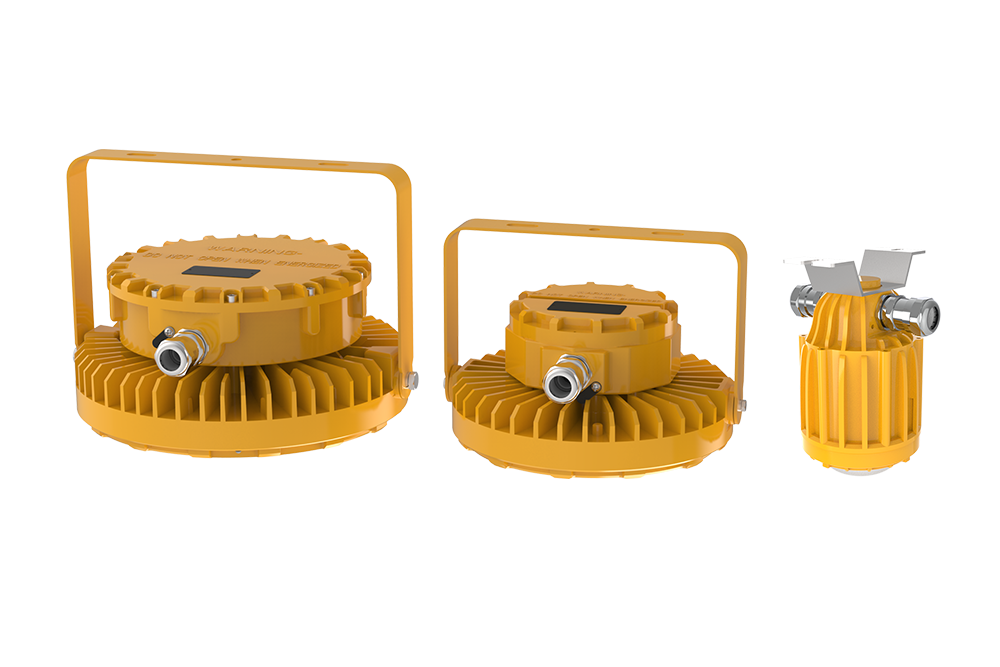
LED explosion proof high bay lights are designed for Zone 1, Zone 2, Zone 21 and Zone 22 hazardous areas. This page introduces the HB21 Series from SEEKING, including certifications, power options and real application considerations.
LED Linear Explosion Proof Lights from SEEKINGLED. LU Series Flame Proof lights ATEX-certified explosion proof LED linear lighting for Zone 2 gas and Zone 22 dust areas, IP69K, IK10, long lifetime and flexible power options.
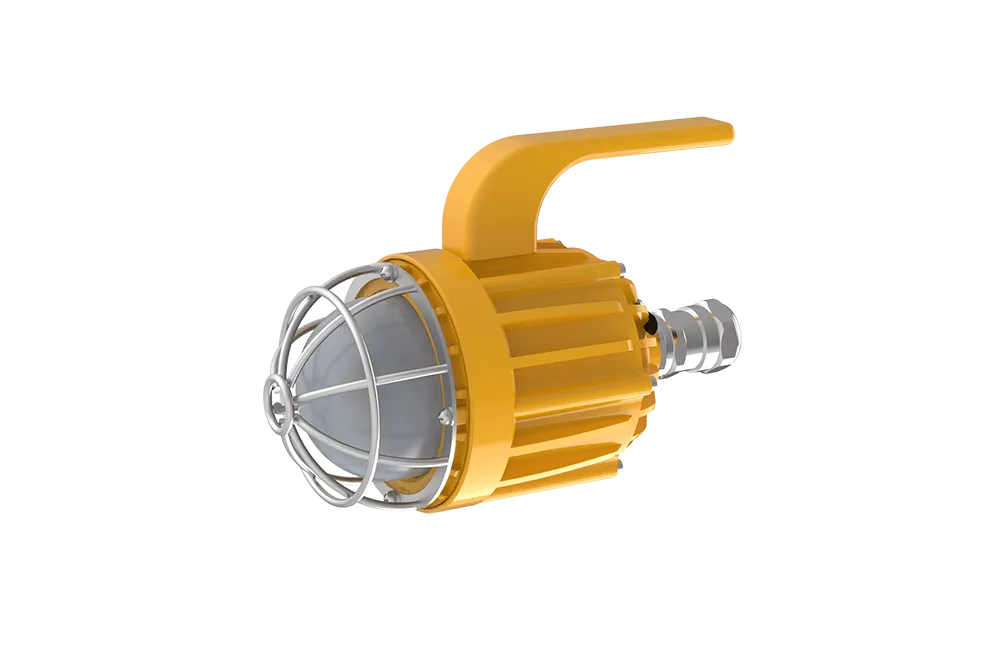
Certified explosion proof work lights for Zone 1 & 21 hazardous areas. Portable, ATEX & IECEx approved, built for oil, gas and chemical plants by SEEKINGLED.
ATEX: II 3G Ex nR ⅡC T6 GcII 3D Ex tc ⅢC T80℃ Dc ATEX Certificate NO: TÜV CY 26 ATEX 0207611 X Feature: ● For Zone 2 and Zone 22● Accepts battery-powered supply● indestructible● Power:AC input:50W,75W,100WDC input:15W,25W,35W Application: Oil and gas, marine, Chemical, pharmaceutical, semiconductor,mining,military industry, paint booth,po…
ATEX: Ex II 2G Ex db IIB T6 GbEx II 2D Ex tb IIIC T80°C Db IECEx Ex db IIB T6 Gb;Ex tb IIIC T80°C Db Feature: ● For Zone 1,2 and Zone 21,22● Flameproof type, the strongest Application: Oil and gas, marine, Chemical, pharmaceutical, semiconductor,mining,military industry, paint booth,power plant ETC hazardous area. Technical Specifications:…
ATEX: Ex II 2G Ex db IIB T6 GbEx II 2D Ex tb IIIC T80°C Db IECEx Ex db IIB T6 Gb;Ex tb IIIC T80°C Db Feature: ● For Zone 1,2 and Zone 21,22● Flameproof type, the strongest Application: Oil and gas, marine, Chemical, pharmaceutical, semiconductor,mining,military industry, paint booth,power plant ETC hazardous area. Technical Specifications:…
ATEX: Ex II 2G Ex d e IIB T6 Gb ATEX: Ex d e IIB T6 Gb; Feature: ● For Zone 1,2● 9W can replace 18W fluorescent lamps,50% Energy saving Application: Oil and gas, marine, Chemical, pharmaceutical, semiconductor,mining,military industry, paint booth,power plant ETC hazardous area. Technical Specifications: Standards:60079-0, 60079-1, 60079…
Discover how flame proof lights ensure safety in hazardous areas. Learn standards, real data, and expert insights to choose reliable flame proof lighting solutions.
What is hazardous area flood light? A field-based engineering guide explaining explosion-proof flood lighting used in oil, gas, and dust hazardous zones with real standards.
Indoor LED floodlights deliver focused, energy-efficient lighting for homes and commercial spaces. Learn real-world usage, setup tips, and expert insights with SEEKINGLED.
 Seeking LED