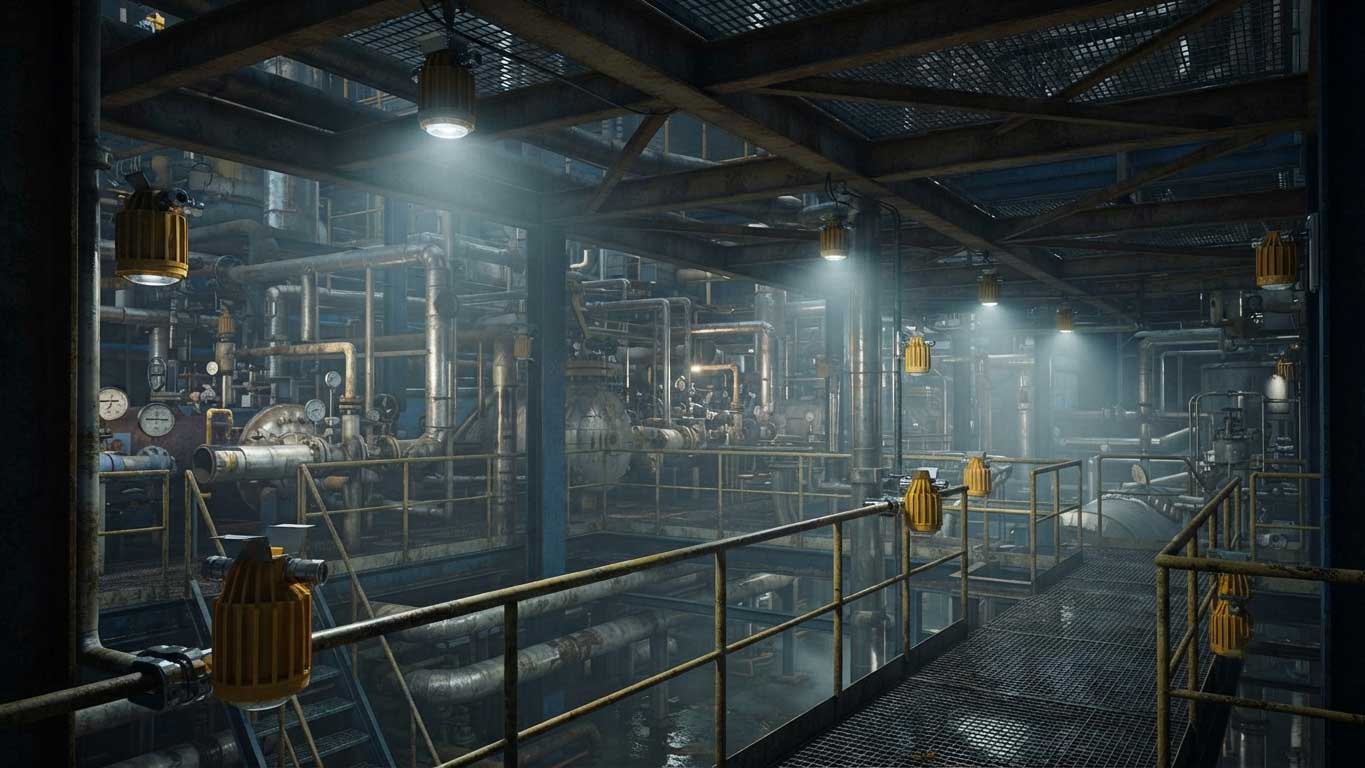
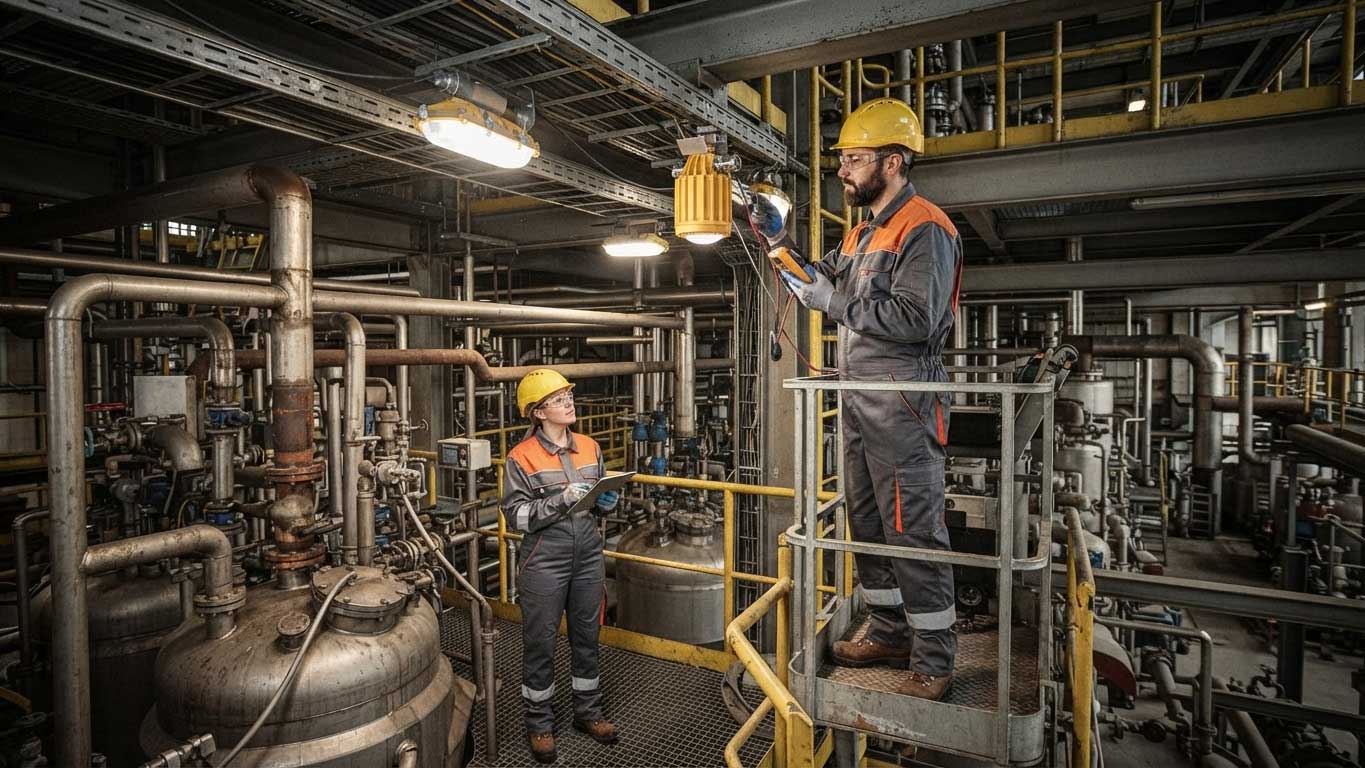
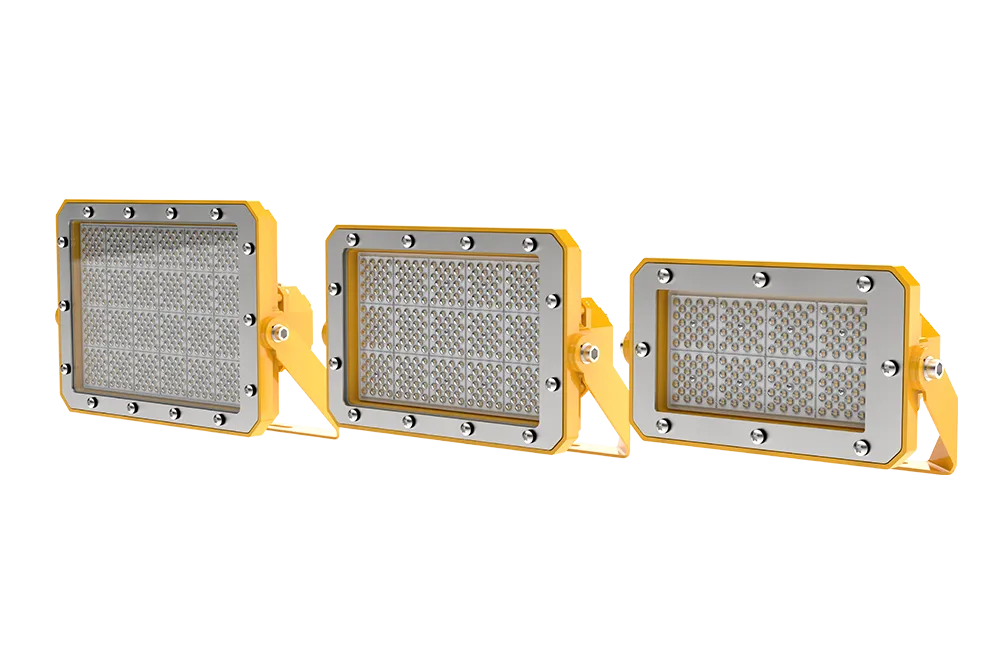
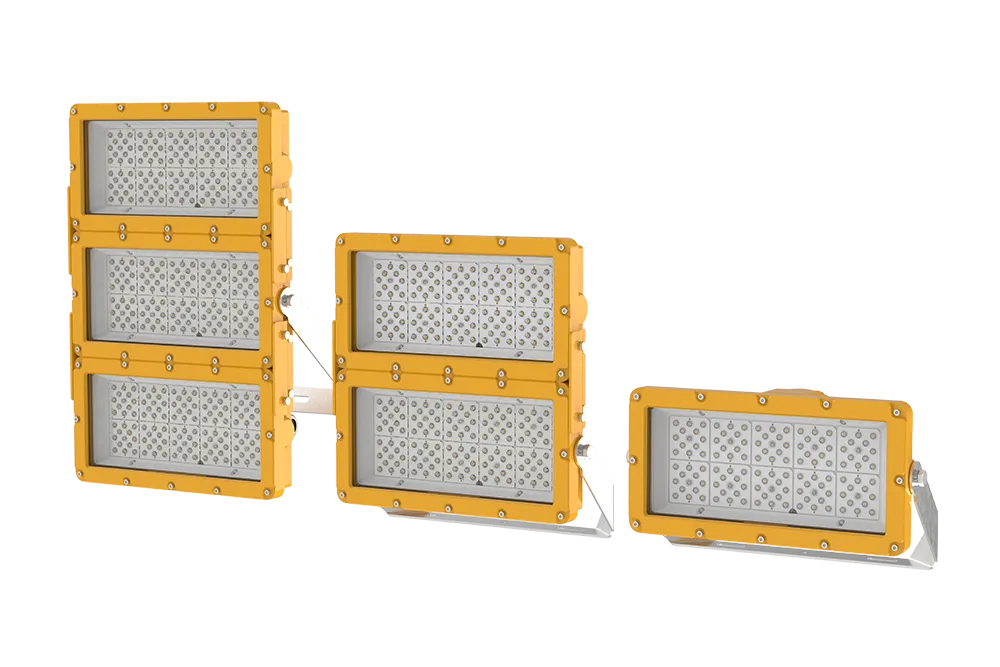
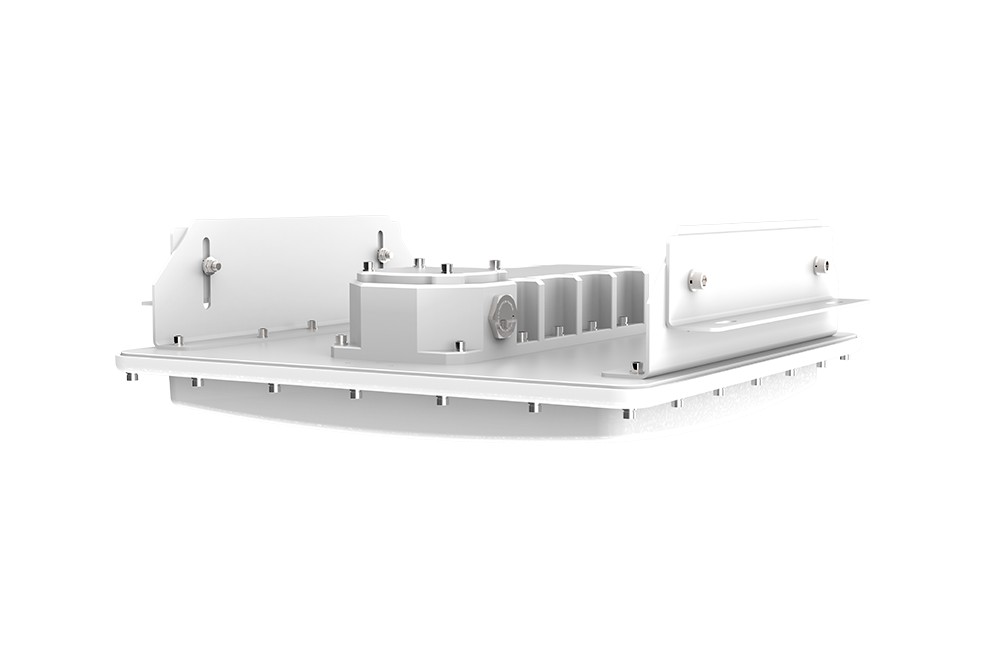
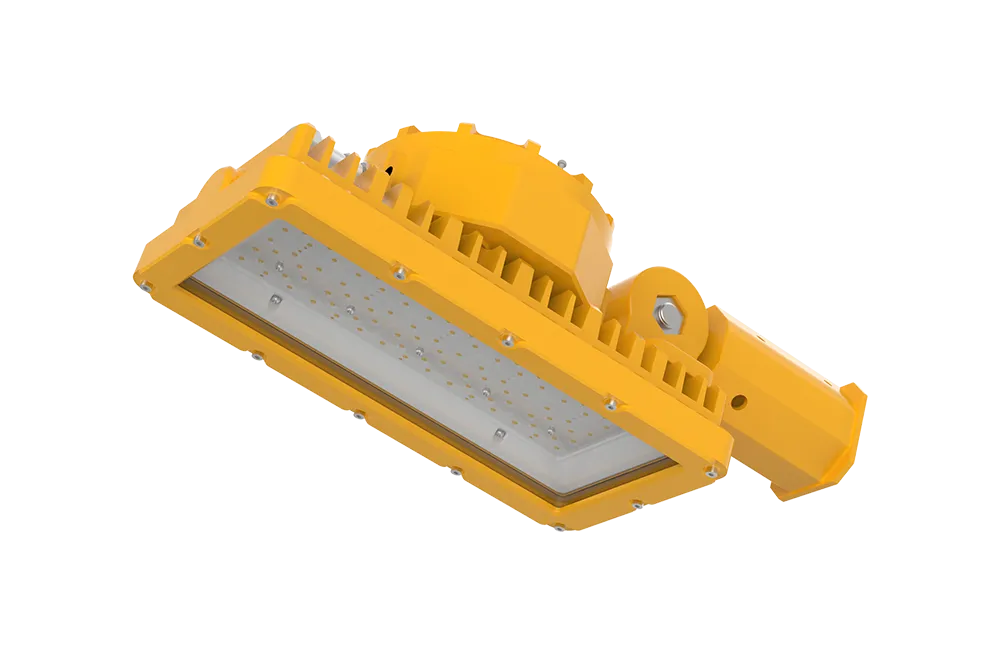
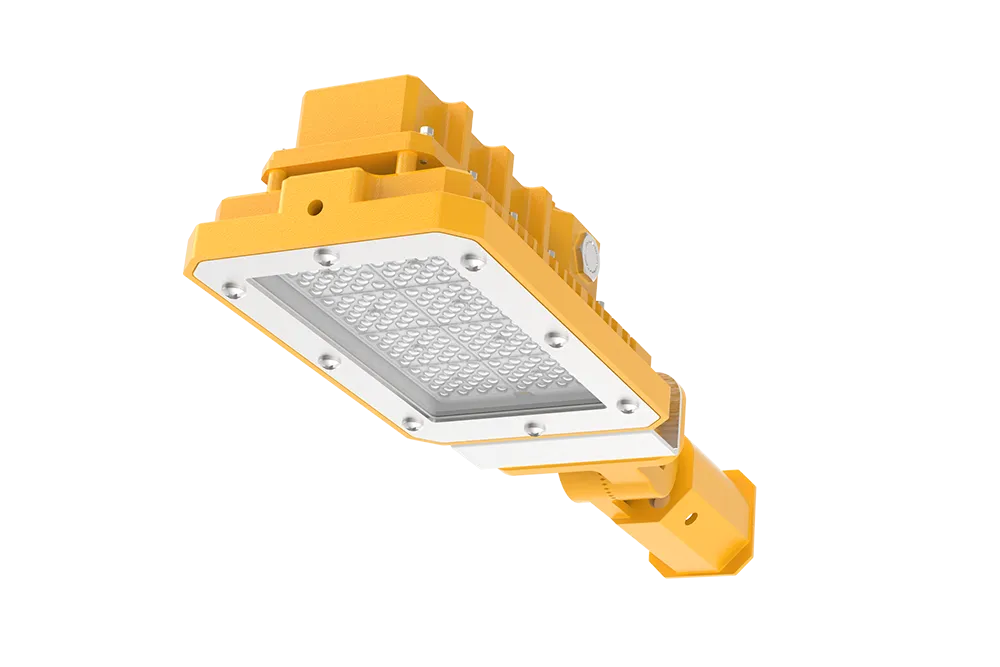
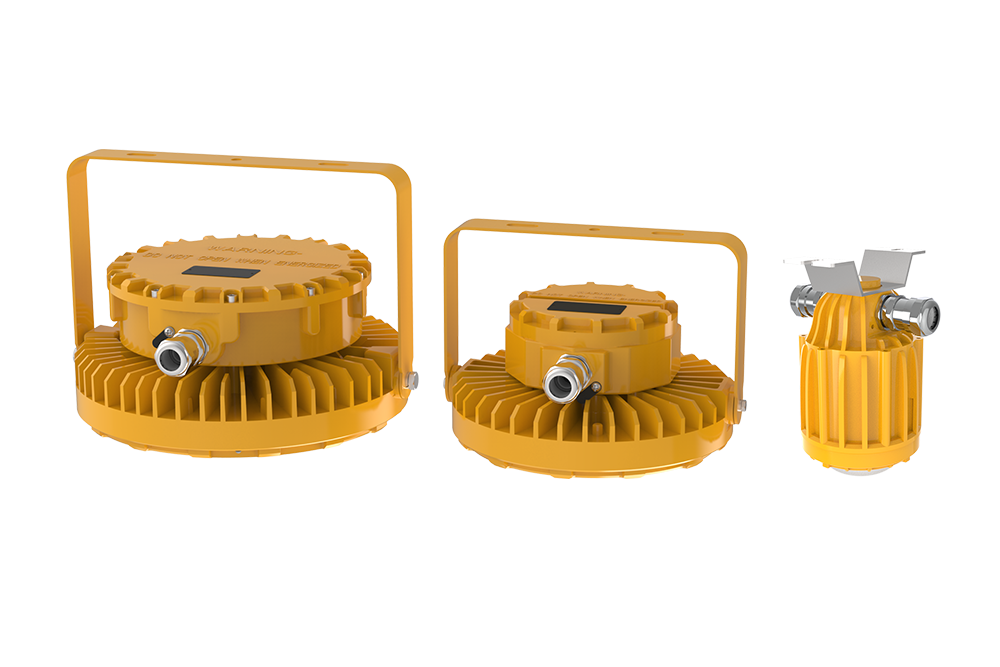
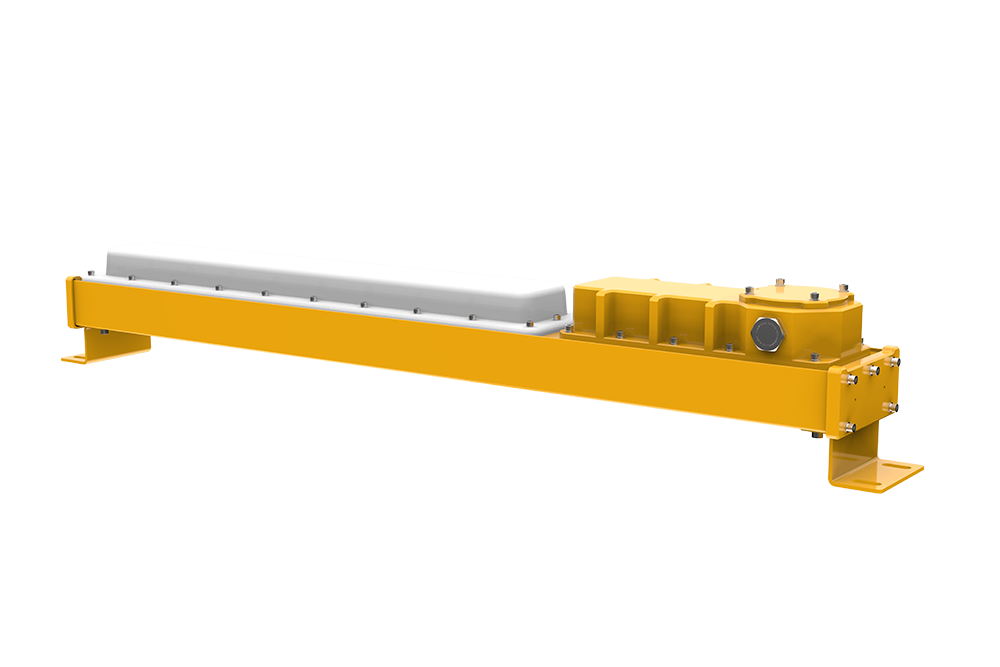
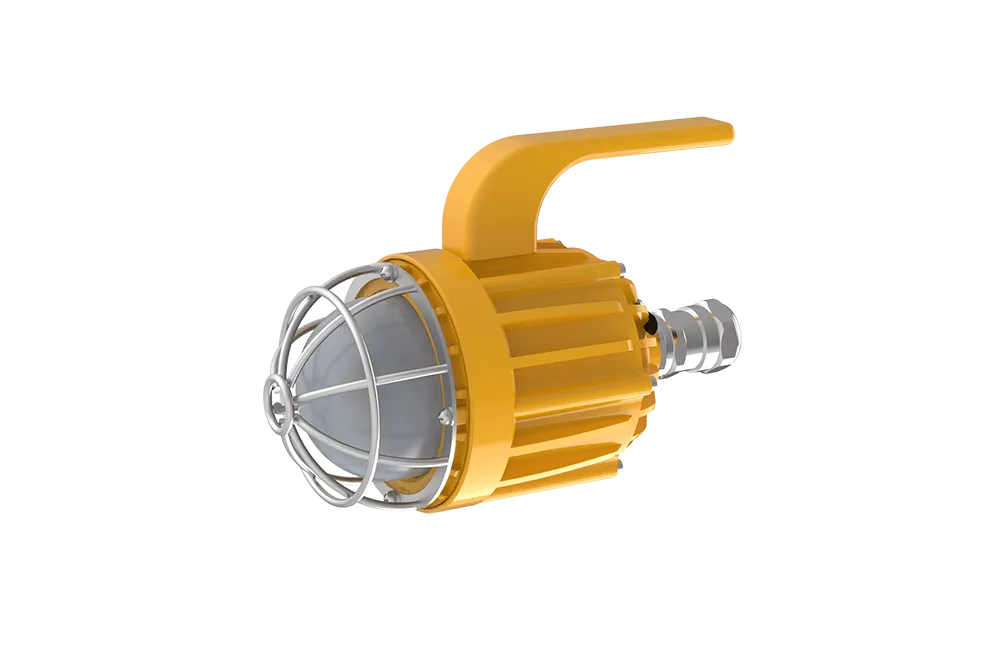
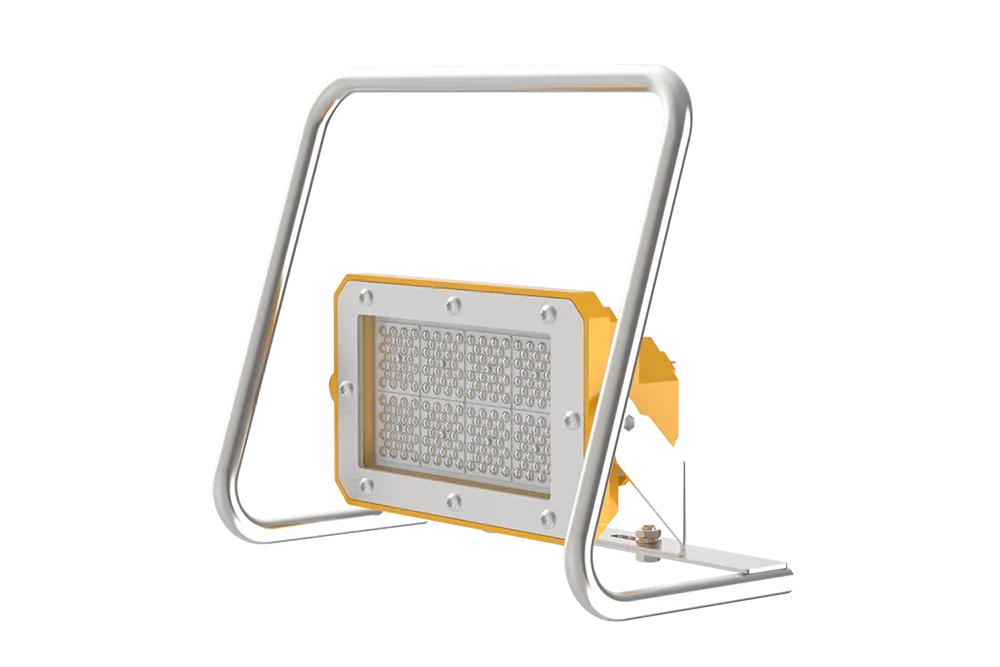
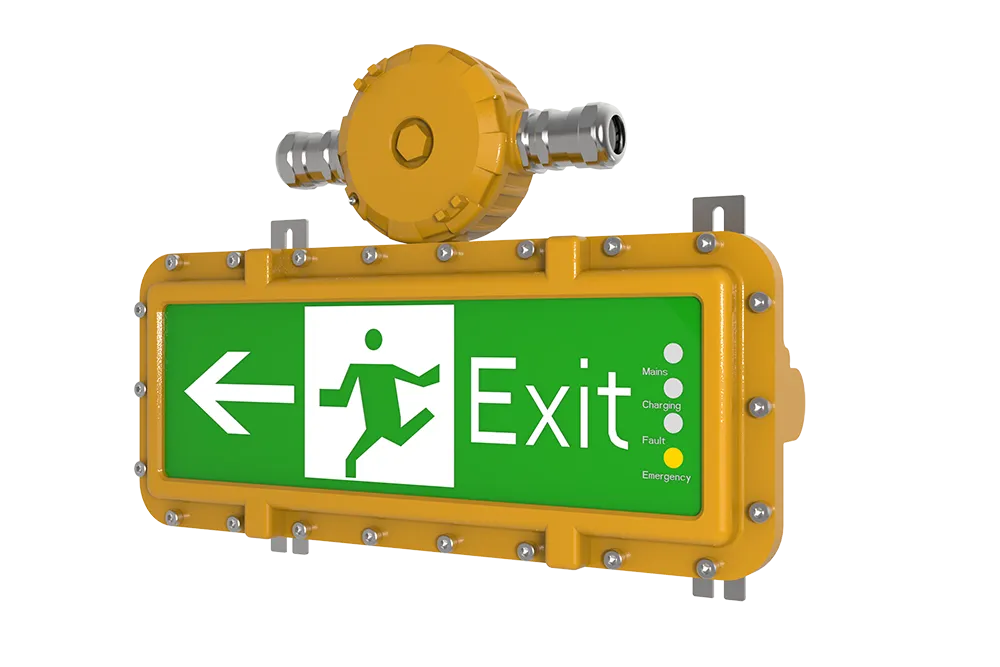
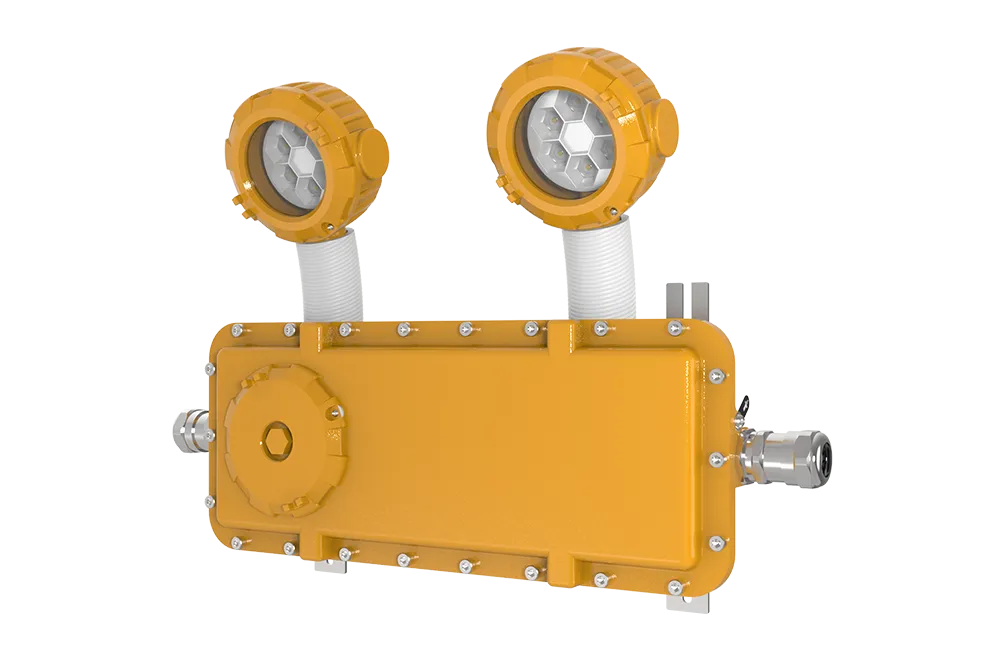
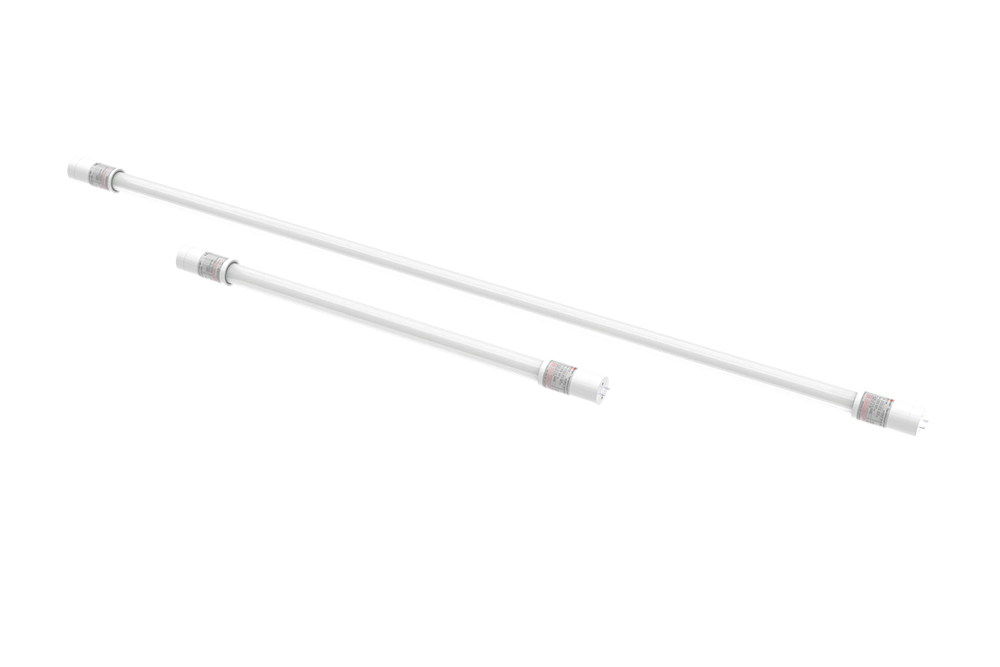
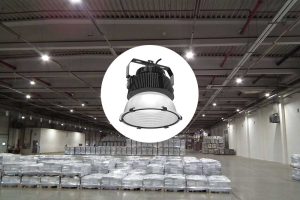
What is hazardous area bay lighting refers to explosion-protected high-mounted lighting used in industrial spaces where flammable gas, vapor, or dust may exist, designed so that electrical faults cannot trigger ignition.
In real plants, nobody describes it in textbook language. Maintenance teams usually just say: “if it’s not certified, it doesn’t go near Zone 1.” That sentence alone explains the entire industry mindset.
How it is actually used on site (not just theory)
In oil terminals and chemical blending workshops, lighting is not treated as a comfort factor. It is part of the safety boundary.
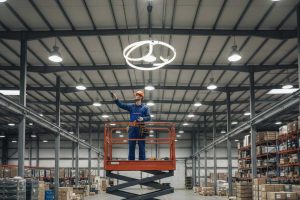
A typical hazardous bay light sits high—often 8 to 15 meters above ground. You don’t really notice it until something goes wrong: a seal aging, a cable gland slightly loosened, humidity creeping into junction points.
That’s why hazardous area bay lighting is built as a containment system, not just a lamp.
It must survive:
- internal arc faults
- external gas exposure
- long-term heat cycling
- corrosion from salt or chemicals
Standards that actually govern the design
There are three references engineers constantly come back to:
These are not “optional compliance documents.” In procurement meetings, I’ve seen entire lighting bids rejected just because certification paperwork was incomplete or unclear.
Engineering structure (what makes it different)
Hazardous bay lighting is not defined by brightness. It is defined by failure behavior.
Instead of asking “how bright is it,” engineers ask:
what happens if something inside fails?
So the structure is usually built around:
- Sealed flameproof housing – prevents internal ignition escape
- Thermal control path – keeps surface below ignition temperature
- Certified cable entry system – often the weakest inspection point
- Corrosion-resistant body – especially offshore or coastal plants
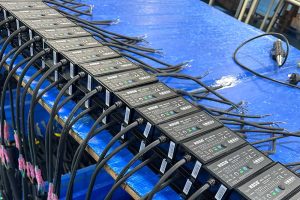
- Isolated driver design – sometimes external to reduce heat density
In practice, most real-world failures I’ve seen were not LED failures—they were sealing issues.
Where these systems are actually deployed
Hazardous area bay lighting appears in places where “normal lighting failure is not acceptable risk”:
- offshore drilling platforms
- oil storage terminals
- chemical mixing and reaction halls
- grain processing silos (dust explosion risk)
- paint and solvent production lines
- pharmaceutical batch plants
Each site has its own zoning logic (Zone 1 / 2 / 21 / 22), but the design goal stays the same: no ignition source escape under any failure condition.Visit the product page: Explosion Proof Lighting
A small but important field observation
In one coastal chemical storage site I visited, the maintenance lead pointed to a lighting row and said something that stuck:
“We don’t replace lights because they fail. We replace them because certification cycles tell us to.”
That tells you something important.
Hazardous lighting is not maintained like general infrastructure. It is maintained like safety equipment with documentation attached.
Even when LEDs still work, seals, corrosion points, and mounting integrity are reviewed on schedule.
Technical selection (what engineers really check)
When teams evaluate hazardous bay lighting, the checklist is usually short and strict:
- ATEX / IECEx certificate validity
- IP rating (IP66 or above is common)
- Zone compatibility (1, 2, 21, 22)
- Heat dissipation stability
- Material resistance (salt, acid, humidity)
Interestingly, lumen output is rarely the deciding factor. Compliance always comes first.
FAQ: What is hazardous area bay lighting
What is hazardous area bay lighting used for?
It is used in explosive industrial zones where electrical equipment must not create ignition risk.
Is LED suitable for hazardous environments?
Yes, but only when certified under ATEX or IECEx standards.
What zones require it?
Zone 1, Zone 2 for gas environments, and Zone 21/22 for dust.
How is it different from normal high bay lighting?
It is fully sealed and engineered to contain internal electrical faults.
What is the typical lifespan?
Many systems operate between 50,000 and 100,000 hours depending on environment.
Why is certification so strict?
Because a single ignition event in these zones can escalate into large-scale industrial accidents.
Conclusion
Hazardous area bay lighting is not defined by the product itself, but by the environment it protects.
In the field, it behaves less like lighting and more like safety infrastructure—something that quietly enforces boundaries in places where failure is not an option.
Once you’ve stood under a refinery ceiling or inside a dust-classified grain facility, the idea becomes simple: this is not about illumination. It is about control.
hazardous area bay lighting

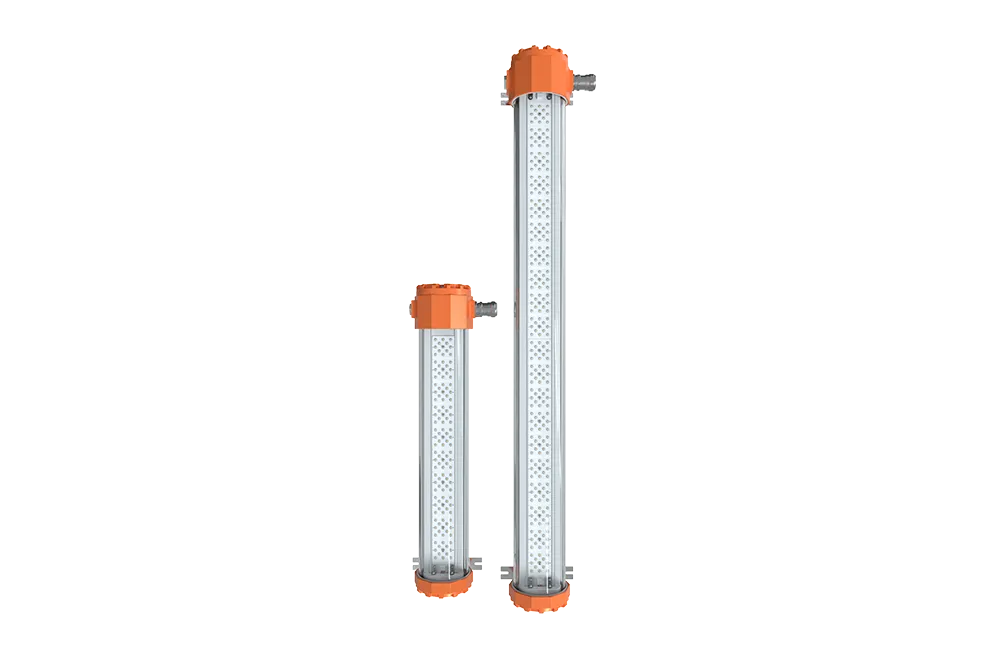
SEEKINGLED LED Linear Explosion Proof Light and Explosion Proof lighting is ATEX and IECEx certified for Zone 1, Zone 2, Zone 21 and Zone 22 hazardous locations, built for long-term industrial use.
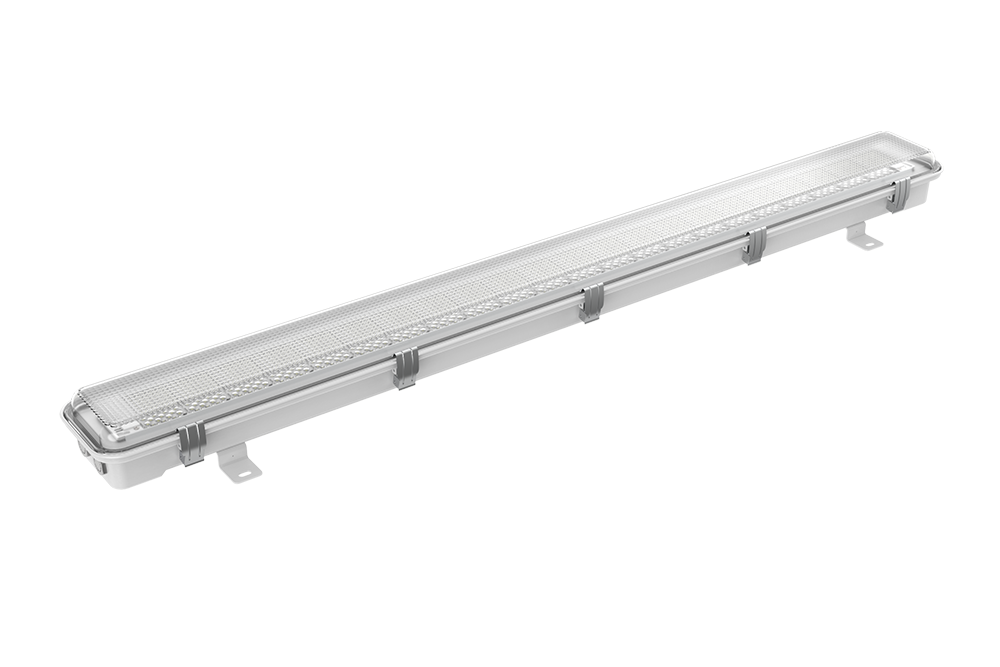
View detailsLED Linear Explosion Proof Lights and EX Proof lights for Zone 1, Zone 2, Zone 21 and Zone 22 hazardous areas. ATEX & IECEx certified explosion proof LED linear lighting with emergency function, adjustable power and IP67 protection by SEEKINGLED.
View detailsSEEKINGLED LED Explosion Proof Flood Lights are ATEX certified for Zone 2 and Zone 22 hazardous areas, offering high efficiency, adjustable power and integrated junction box.
View detailsSEEKINGLED LED Explosion Proof Flood Lights are flameproof ATEX and IECEx certified for Zone 1 and Zone 2 hazardous areas, offering high power, adjustable output and long service life.
View detailsSEEKINGLED LED Gas Station Canopy Lights are ATEX certified for Zone 2 and Zone 22 hazardous areas, featuring adjustable power and built-in explosion-proof junction box.
View detailsATEX: Ex II 2G Ex db IIB T6/T5 GbEx II 2D Ex tb IIIC T80°C/ T95°C Db IECEx Ex db IIB T6 Gb;Ex tb IIIC T80°C Db Feature: ● For Zone 1,2 and Zone 21,22● Flameproof type, the strongest● 100W can replace 250W HID,energy saving● Power:60W,80W,100W Application: Oil and gas, marine, Chemical, pharmaceutical, semiconductor,mining,military industr…
View detailsATEX: II 3G Ex nR ⅡC T5/T6 GcII 3D Ex tc ⅢC T80℃/T95℃Dc ATEX Certificate NO: TÜV CY 26 ATEX 0207611 X Feature: ● For Zone 2 and Zone 22● 150W can replace 250W HID lamps,Energy saving● Power:50W,75W,100W,150W,200W Application: Oil and gas, marine, Chemical, pharmaceutical, semiconductor,mining,military industry, paint booth,power plant ETC…
View detailsLED explosion proof high bay lights are designed for Zone 1, Zone 2, Zone 21 and Zone 22 hazardous areas. This page introduces the HB21 Series from SEEKING, including certifications, power options and real application considerations.
View detailsLED Linear Explosion Proof Lights from SEEKINGLED. LU Series Flame Proof lights ATEX-certified explosion proof LED linear lighting for Zone 2 gas and Zone 22 dust areas, IP69K, IK10, long lifetime and flexible power options.
View detailsCertified explosion proof work lights for Zone 1 & 21 hazardous areas. Portable, ATEX & IECEx approved, built for oil, gas and chemical plants by SEEKINGLED.
View detailsATEX: II 3G Ex nR ⅡC T6 GcII 3D Ex tc ⅢC T80℃ Dc ATEX Certificate NO: TÜV CY 26 ATEX 0207611 X Feature: ● For Zone 2 and Zone 22● Accepts battery-powered supply● indestructible● Power:AC input:50W,75W,100WDC input:15W,25W,35W Application: Oil and gas, marine, Chemical, pharmaceutical, semiconductor,mining,military industry, paint booth,po…
View detailsATEX: Ex II 2G Ex db IIB T6 GbEx II 2D Ex tb IIIC T80°C Db IECEx Ex db IIB T6 Gb;Ex tb IIIC T80°C Db Feature: ● For Zone 1,2 and Zone 21,22● Flameproof type, the strongest Application: Oil and gas, marine, Chemical, pharmaceutical, semiconductor,mining,military industry, paint booth,power plant ETC hazardous area. Technical Specifications:…
View detailsATEX: Ex II 2G Ex db IIB T6 GbEx II 2D Ex tb IIIC T80°C Db IECEx Ex db IIB T6 Gb;Ex tb IIIC T80°C Db Feature: ● For Zone 1,2 and Zone 21,22● Flameproof type, the strongest Application: Oil and gas, marine, Chemical, pharmaceutical, semiconductor,mining,military industry, paint booth,power plant ETC hazardous area. Technical Specifications:…
View detailsATEX: Ex II 2G Ex d e IIB T6 Gb ATEX: Ex d e IIB T6 Gb; Feature: ● For Zone 1,2● 9W can replace 18W fluorescent lamps,50% Energy saving Application: Oil and gas, marine, Chemical, pharmaceutical, semiconductor,mining,military industry, paint booth,power plant ETC hazardous area. Technical Specifications: Standards:60079-0, 60079-1, 60079…
View details  Seeking LED