 Seeking LED
explosion proof lighting led – Straight Answers for Hazardous Areas
133Choose reliable explosion proof lighting led from SEEKINGLED. Certified hazardous area fixtures built for oil, gas, and chemical facilities.
View detailsSearch the whole station
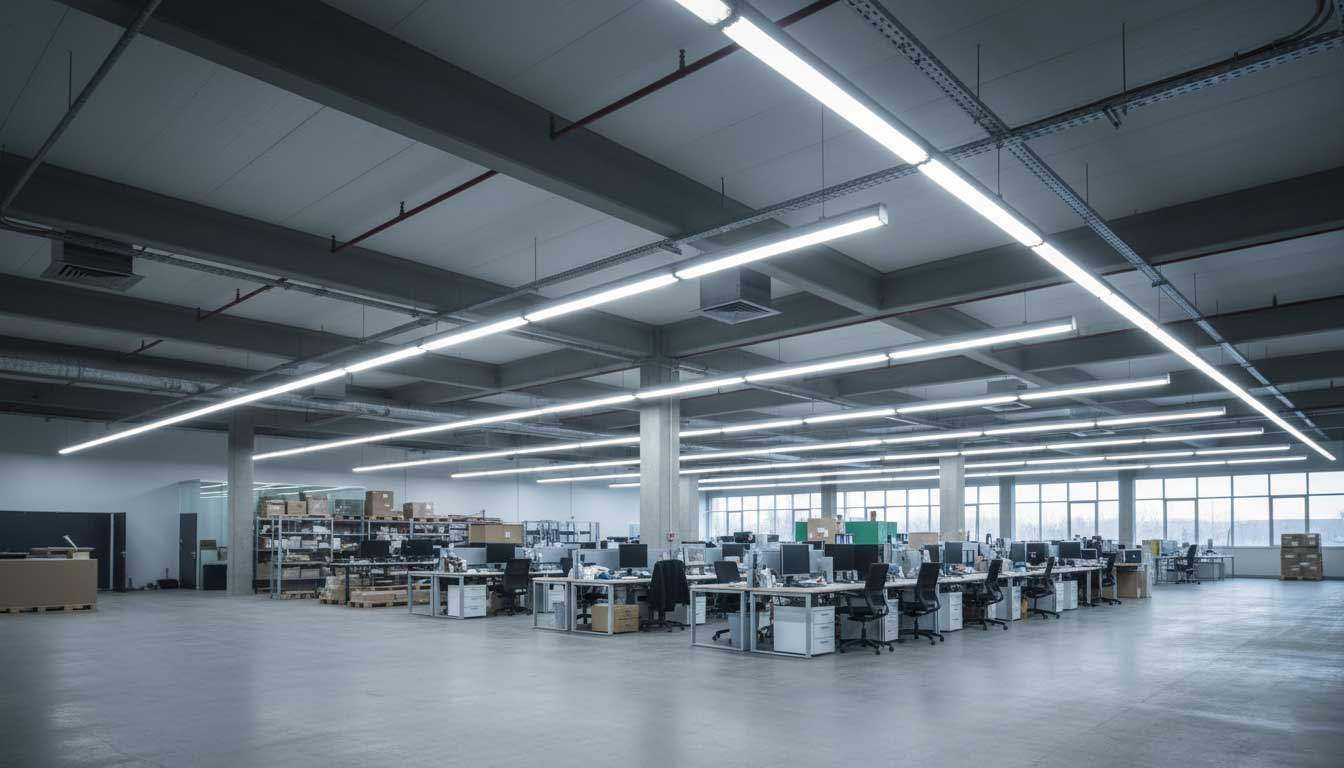
What is LED linear lighting is a question that usually comes up when a project moves beyond basic fixtures and starts focusing on layout, efficiency, and long-term operation.
In simple terms, LED linear lighting refers to lighting systems built around continuous lines of light, rather than individual lamps. Instead of installing one fixture after another, linear lighting connects modules together to form clean, uninterrupted rows across ceilings or structural beams.
This approach has become common in warehouses, offices, supermarkets, and industrial buildings where uniform light coverage matters more than decorative effects.
Traditional lighting treats every fixture as a separate unit. Each one needs its own mounting point, wiring, and alignment. That works fine for small rooms, but in larger spaces it quickly becomes time-consuming and messy.
LED linear lighting systems are designed differently. Power supply, mounting structure, and light modules are integrated into one system. Once the trunking is installed, light modules simply connect into place.
In systems like the SEEKINGLED HLS Series, this integration reduces installation steps and keeps ceilings visually clean. Electricians don’t need extra cable trays or bridging parts, which saves both time and labor.
One of the main reasons LED linear lighting is widely used is consistency.
In warehouses and logistics centers, forklifts move constantly and shadows can become safety issues. Linear LED lighting provides even brightness along aisles without dark gaps. In offices, it avoids the harsh contrast created by spot-style fixtures. In retail spaces, products look clearer and shelves are evenly illuminated.
Efficiency is another factor. Modern linear LED systems can reach up to 180 lm/W, which helps reduce power consumption without sacrificing brightness. Over time, this can make a noticeable difference in operating costs, especially in buildings that run lights for long hours every day.
Not really. While the clean, modern look is a benefit, most projects choose linear lighting for practical reasons.
Modular designs allow different beam angles, power levels, and control options to be combined on site. If a space layout changes later, the system can often be adjusted instead of replaced.
With reliable drivers like TRIDONIC, linear LED lighting also delivers stable performance and long service life, reducing the need for frequent maintenance.
LED linear lighting is especially suitable for:
In these environments, lighting needs to work quietly in the background—bright enough, even enough, and dependable over time.
So, what is LED linear lighting in real-world use?
It’s a system-based lighting solution designed to simplify installation, improve light uniformity, and lower long-term operating costs. Instead of focusing on individual fixtures, it focuses on how light behaves across an entire space.
That’s why solutions like the SEEKINGLED HLS Series are often chosen for projects where efficiency, speed, and flexibility matter more than decorative detail.
Choose reliable explosion proof lighting led from SEEKINGLED. Certified hazardous area fixtures built for oil, gas, and chemical facilities.
View details
How Bright Is a 10W LED Floodlight in real use? Learn lumen output, coverage, 10W LED equivalent, and where 10W flood lights work best. Practical guide by SEEKINGLED.
View details
Explosion-Proof Light solutions for hazardous areas. Learn how explosion proof lighting differs from ordinary industrial lights for safer operations.
View details
Choose flood lights by matching lumen output, beam angle, mounting height, environment, color temperature, controls, and efficiency to the actual application.
View details