Are LED Explosion Proof Linear Lights Energy Efficient?
Yes. LED explosion proof linear lights are significantly more energy efficient than traditional hazardous-area fluorescent or HID fixtures. In most industrial applications, they reduce energy consumption by 50–70%, generate less heat, and last far longer in harsh environments such as oil refineries, chemical plants, offshore platforms, and grain processing facilities.
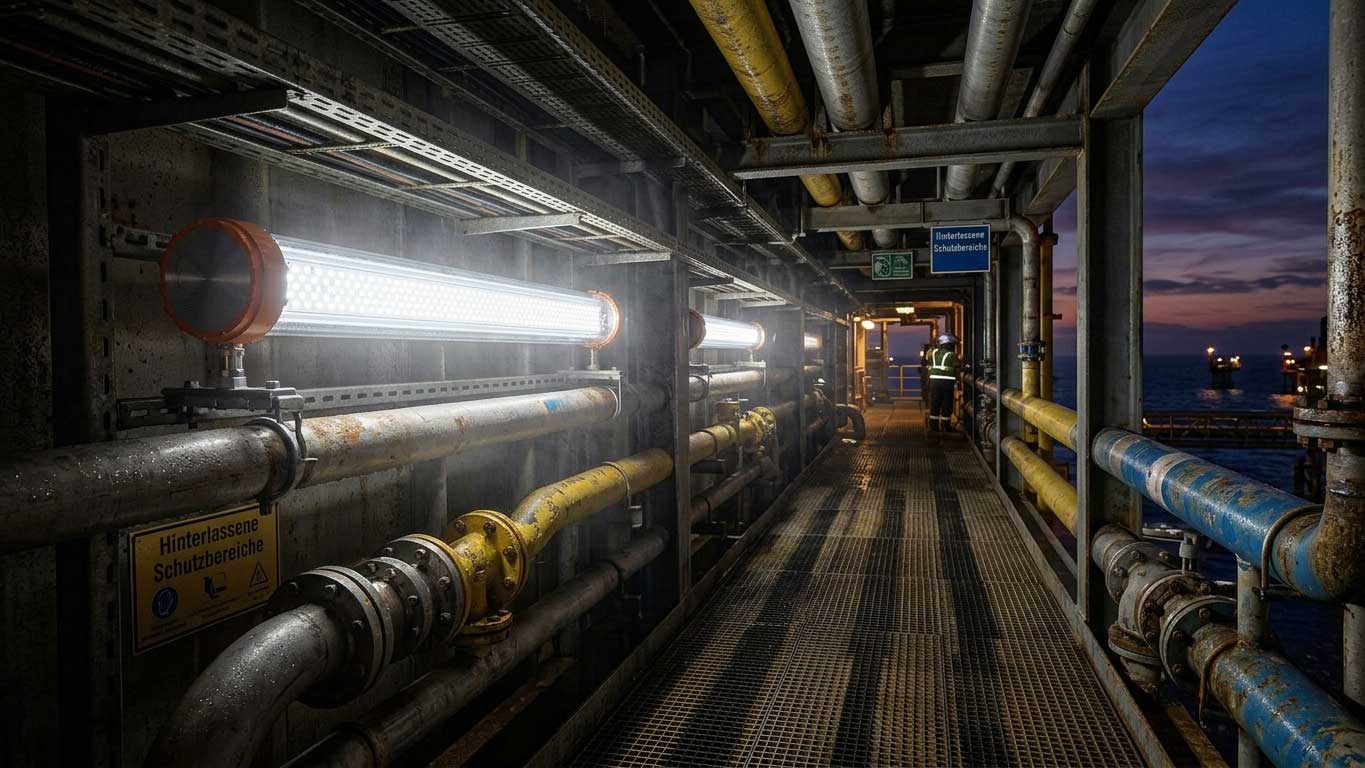
I learned this firsthand during a retrofit project at a coastal fuel storage terminal in Southeast Asia. The old T8 hazardous fluorescent fixtures constantly failed from vibration and moisture intrusion. After switching to LED explosion proof linear lights, the site’s lighting-related maintenance calls dropped dramatically within the first year, while power usage noticeably decreased during overnight operations.
Industrial buyers often focus only on ATEX certification. But in reality, energy efficiency is one of the biggest long-term financial advantages of LED hazardous-area lighting.
Why LED Explosion Proof Linear Lights Use Less Energy
Traditional hazardous-area fixtures waste substantial energy as heat. Older HID lamps and fluorescent systems consume more watts while delivering fewer usable lumens.
Modern LED explosion proof linear lights operate differently.
Higher Luminous Efficiency
Most industrial-grade LED hazardous fixtures now achieve:
Lighting Type
Typical Efficacy
Metal Halide
65–90 lm/W
T8 Fluorescent
70–100 lm/W
Industrial LED Explosion Proof Linear Light
130–170 lm/W
According to the U.S. Department of Energy, LEDs can use at least 75% less energy than incandescent lighting and last up to 25 times longer. Source: https://www.energy.gov/energysaver/led-lighting
That difference becomes massive in facilities operating 24/7.
At one petrochemical loading station I visited, lighting circuits ran continuously — day and night — because shutdowns were operationally impossible. The switch to LED hazardous fixtures reduced annual electricity consumption enough that the lighting upgrade paid for itself faster than expected.
Real Energy Savings in Hazardous Locations
Hazardous industrial sites rarely use only a few fixtures. A refinery corridor may contain hundreds of linear lights operating continuously.
That changes the economics quickly.
Example of Industrial Power Savings
Here’s a simplified comparison from a warehouse retrofit scenario:
Fixture Type
Wattage Per Fixture
Quantity
Annual Energy Use
Fluorescent Hazardous Fixture
128W
120
~134,000 kWh
LED Explosion Proof Linear Light
60W
120
~63,000 kWh
Estimated annual reduction: over 70,000 kWh.
Using average industrial electricity rates, that can translate into thousands of dollars saved every year.
Heat Reduction Matters More Than Most Buyers Expect
One thing many engineers overlook: heat itself becomes a problem in hazardous zones.
Traditional lamps run hot. Extremely hot.
That creates three separate issues:
Higher ambient temperatures
Increased HVAC load
Greater thermal stress on fixture components
LED explosion proof linear lights produce much less radiant heat.
That matters in enclosed processing areas where ventilation is limited.
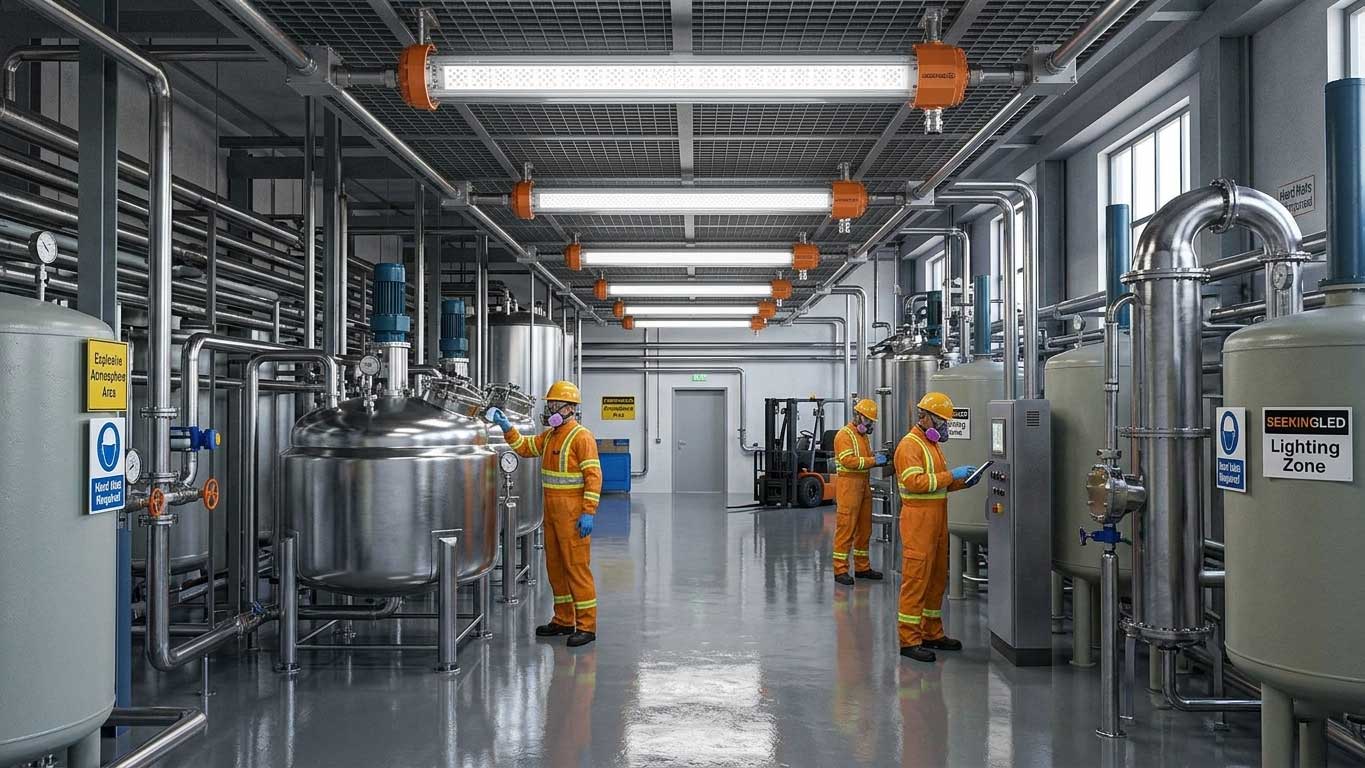
I once inspected an indoor solvent mixing room where old HID fixtures pushed ambient ceiling temperatures noticeably higher during summer production. Workers complained constantly. After LEDs were installed, operators reported the area felt cooler almost immediately during extended shifts.
LED Fixtures Last Longer in Hazardous Environments
Reduced Maintenance Equals Hidden Energy Savings
Maintenance itself consumes money and energy.
Every replacement cycle means:
Lift equipment
Shutdown coordination
Technician labor
Spare inventory
Safety permits
In hazardous locations, maintenance becomes even more expensive because certified procedures are required.
Most high-quality LED explosion proof linear lights are rated:
50,000–100,000 operating hours
L70 lumen maintenance
IP66 or IP67 protection
Vibration resistance
According to the Illuminating Engineering Society (IES), L70 means the fixture still produces 70% of its initial light output at the rated lifespan. Source: https://www.ies.org/
In practical terms, that can mean 10+ years of operation in many industrial applications.
LEDs Improve Lighting Quality in Hazardous Areas
Energy efficiency is not only about power consumption.
Better optical performance means fewer fixtures may be required.
Improved Light Distribution
Modern LED explosion proof linear lights provide:
Better beam control
Reduced glare
More uniform illumination
Instant-on operation
Higher color rendering
That improves safety in hazardous workplaces.
Poor visibility contributes to industrial accidents, especially during inspections, valve operations, or maintenance activities.
The Occupational Safety and Health Administration (OSHA) emphasizes proper workplace illumination for worker safety in industrial environments. Source: https://www.osha.gov/
In older hazardous facilities, I still see fluorescent fixtures flickering during cold starts. LEDs eliminate that issue completely.
Are LED Explosion Proof Linear Lights More Expensive?
Initially, yes.
But the total operating cost is usually lower.
Long-Term Cost Comparison
Factor
Traditional Hazardous Lighting
LED Explosion Proof Linear Light
Energy Use
High
Low
Heat Output
High
Low
Maintenance Frequency
Frequent
Minimal
Startup Time
Delayed
Instant
Lifespan
Shorter
Longer
Total Ownership Cost
Higher
Lower
This is why many industrial operators now standardize LED hazardous lighting during upgrades.
I’ve seen low-quality imports fail surprisingly fast because of poor thermal management.
Problems That Reduce Efficiency
Cheap drivers with unstable output
Weak heat dissipation design
Poor gasket sealing
Incorrect hazardous classification
Inferior LEDs with rapid lumen decay
A fixture may claim high efficiency on paper but perform poorly after continuous operation in high-temperature environments.
That’s why thermal engineering matters just as much as certification.
FAQ:Are LED Explosion Proof Linear Lights Energy Efficient?
How much energy can LED explosion proof linear lights save?
Most industrial users report energy savings between 50% and 70% compared with fluorescent or HID hazardous fixtures.
Do LED hazardous lights produce less heat?
Yes. LEDs convert more electricity into usable light instead of waste heat, reducing thermal buildup in hazardous environments.
Are LED explosion proof linear lights suitable for 24/7 operation?
Yes. High-quality industrial fixtures are specifically designed for continuous-duty environments including refineries, offshore platforms, and processing plants.
Do ATEX LED lights require less maintenance?
Absolutely. Their long lifespan greatly reduces lamp replacement frequency and maintenance downtime.
Can LED explosion proof fixtures handle outdoor conditions?
Most industrial-grade models are rated IP66 or IP67, making them suitable for rain, dust, corrosion, and harsh weather exposure.
Final Thoughts
So, are LED explosion proof linear lights energy efficient?
Without question, yes.
In real industrial environments, the difference is visible not only on power bills, but also in maintenance schedules, worker comfort, fixture reliability, and operational uptime. The facilities still relying on outdated fluorescent hazardous lighting are usually spending more money than they realize — especially in continuous-operation environments.
At SEEKINGLED, we’ve seen customers focus first on compliance certifications. But months later, many tell us the most noticeable change was actually lower maintenance pressure and more stable lighting performance across the site.
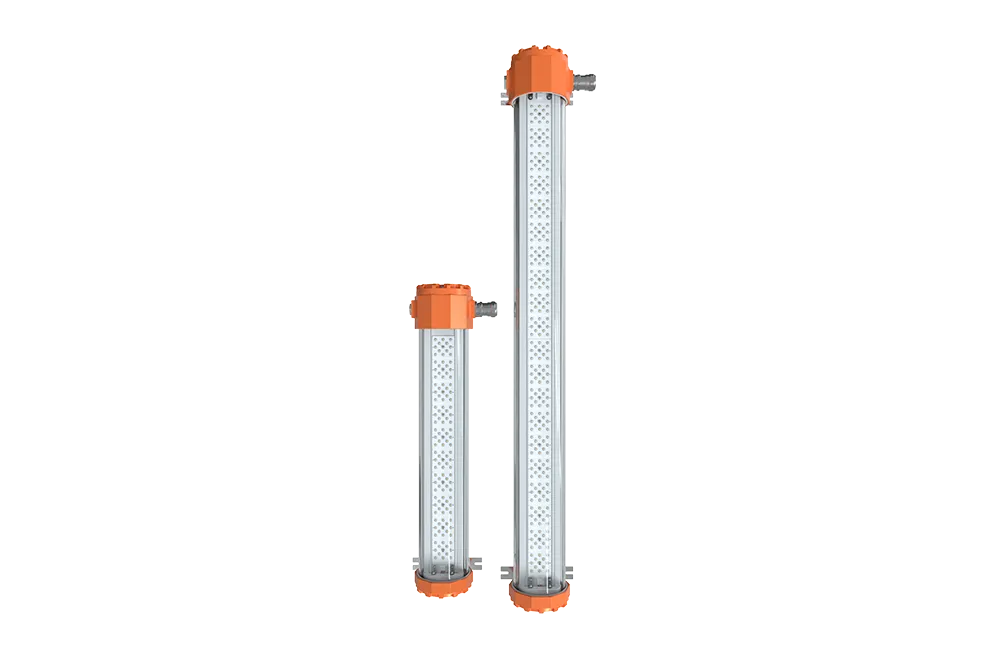
SEEKINGLED LED Linear Explosion Proof Light and Explosion Proof lighting is ATEX and IECEx certified for Zone 1, Zone 2, Zone 21 and Zone 22 hazardous locations, built for long-term industrial use.
LED Linear Explosion Proof Lights and EX Proof lights for Zone 1, Zone 2, Zone 21 and Zone 22 hazardous areas. ATEX & IECEx certified explosion proof LED linear lighting with emergency function, adjustable power and IP67 protection by SEEKINGLED.
SEEKINGLED LED Explosion Proof Flood Lights are ATEX certified for Zone 2 and Zone 22 hazardous areas, offering high efficiency, adjustable power and integrated junction box.
SEEKINGLED LED Explosion Proof Flood Lights are flameproof ATEX and IECEx certified for Zone 1 and Zone 2 hazardous areas, offering high power, adjustable output and long service life.
SEEKINGLED LED Gas Station Canopy Lights are ATEX certified for Zone 2 and Zone 22 hazardous areas, featuring adjustable power and built-in explosion-proof junction box.
ATEX: Ex II 2G Ex db IIB T6/T5 GbEx II 2D Ex tb IIIC T80°C/ T95°C Db IECEx Ex db IIB T6 Gb;Ex tb IIIC T80°C Db Feature: ● For Zone 1,2 and Zone 21,22● Flameproof type, the strongest● 100W can replace 250W HID,energy saving● Power:60W,80W,100W Application: Oil and gas, marine, Chemical, pharmaceutical, semiconductor,mining,military industr…
ATEX: II 3G Ex nR ⅡC T5/T6 GcII 3D Ex tc ⅢC T80℃/T95℃Dc ATEX Certificate NO: TÜV CY 26 ATEX 0207611 X Feature: ● For Zone 2 and Zone 22● 150W can replace 250W HID lamps,Energy saving● Power:50W,75W,100W,150W,200W Application: Oil and gas, marine, Chemical, pharmaceutical, semiconductor,mining,military industry, paint booth,power plant ETC…
LED explosion proof high bay lights are designed for Zone 1, Zone 2, Zone 21 and Zone 22 hazardous areas. This page introduces the HB21 Series from SEEKING, including certifications, power options and real application considerations.
LED Linear Explosion Proof Lights from SEEKINGLED. LU Series Flame Proof lights ATEX-certified explosion proof LED linear lighting for Zone 2 gas and Zone 22 dust areas, IP69K, IK10, long lifetime and flexible power options.
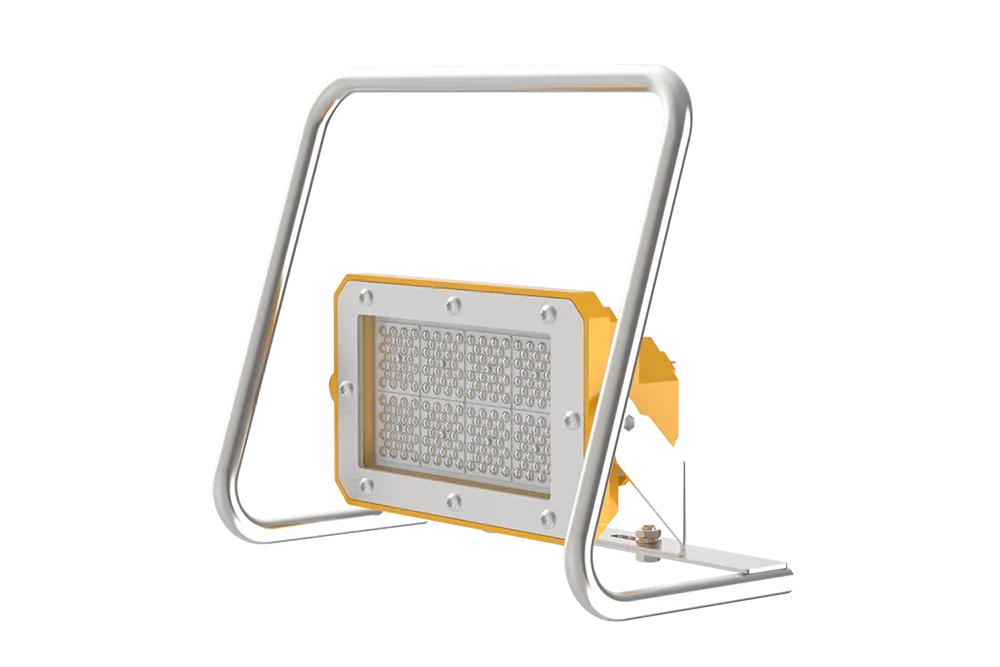
Certified explosion proof work lights for Zone 1 & 21 hazardous areas. Portable, ATEX & IECEx approved, built for oil, gas and chemical plants by SEEKINGLED.
ATEX: II 3G Ex nR ⅡC T6 GcII 3D Ex tc ⅢC T80℃ Dc ATEX Certificate NO: TÜV CY 26 ATEX 0207611 X Feature: ● For Zone 2 and Zone 22● Accepts battery-powered supply● indestructible● Power:AC input:50W,75W,100WDC input:15W,25W,35W Application: Oil and gas, marine, Chemical, pharmaceutical, semiconductor,mining,military industry, paint booth,po…
ATEX: Ex II 2G Ex db IIB T6 GbEx II 2D Ex tb IIIC T80°C Db IECEx Ex db IIB T6 Gb;Ex tb IIIC T80°C Db Feature: ● For Zone 1,2 and Zone 21,22● Flameproof type, the strongest Application: Oil and gas, marine, Chemical, pharmaceutical, semiconductor,mining,military industry, paint booth,power plant ETC hazardous area. Technical Specifications:…
ATEX: Ex II 2G Ex db IIB T6 GbEx II 2D Ex tb IIIC T80°C Db IECEx Ex db IIB T6 Gb;Ex tb IIIC T80°C Db Feature: ● For Zone 1,2 and Zone 21,22● Flameproof type, the strongest Application: Oil and gas, marine, Chemical, pharmaceutical, semiconductor,mining,military industry, paint booth,power plant ETC hazardous area. Technical Specifications:…
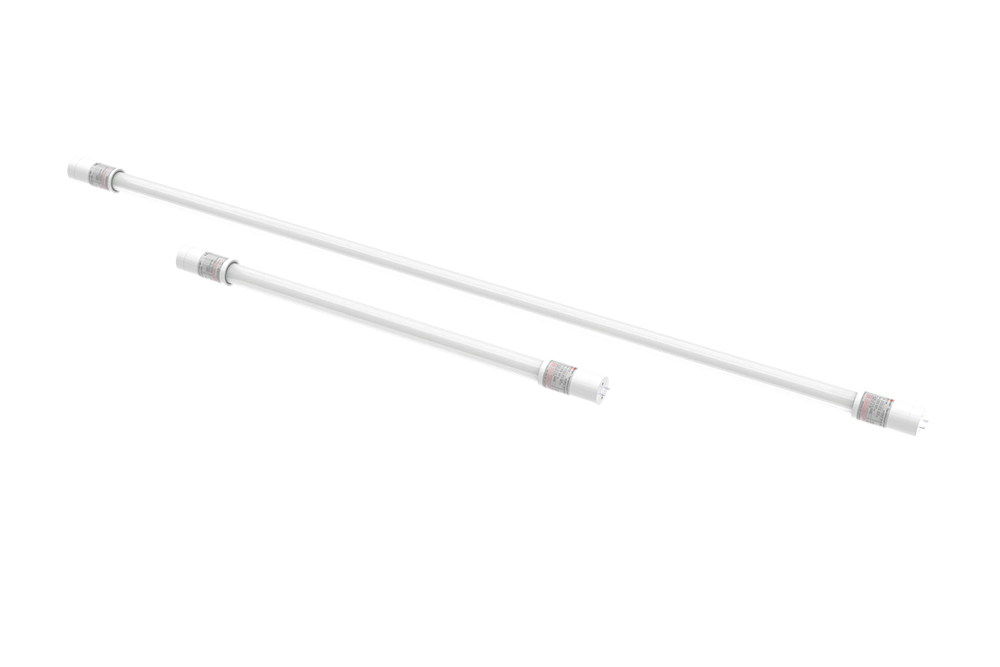
ATEX: Ex II 2G Ex d e IIB T6 Gb ATEX: Ex d e IIB T6 Gb; Feature: ● For Zone 1,2● 9W can replace 18W fluorescent lamps,50% Energy saving Application: Oil and gas, marine, Chemical, pharmaceutical, semiconductor,mining,military industry, paint booth,power plant ETC hazardous area. Technical Specifications: Standards:60079-0, 60079-1, 60079…
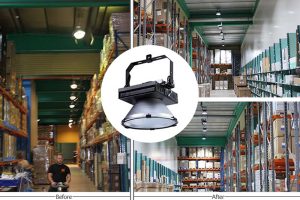
LED High Bay Replacement for Warehouse Lighting was required in a Russian warehouse with low lux levels from metal halide lamps. This record documents a one-to-one replacement using XJ-HBL150W and Dialux calculation.
LED high bay light UFO designed for large indoor spaces requiring low glare, high efficiency and long-term reliability. SEEKINGLED HB13(GLK) Series delivers up to 170 lm/W, UGR
What are the best LED outdoor flood lights for yards, driveways, or commercial spaces? Discover brightness, durability, and beam angle tips from SEEKINGLED experts.
 Seeking LED