What Are the Main Certification Standards for Explosion Proof Lights?
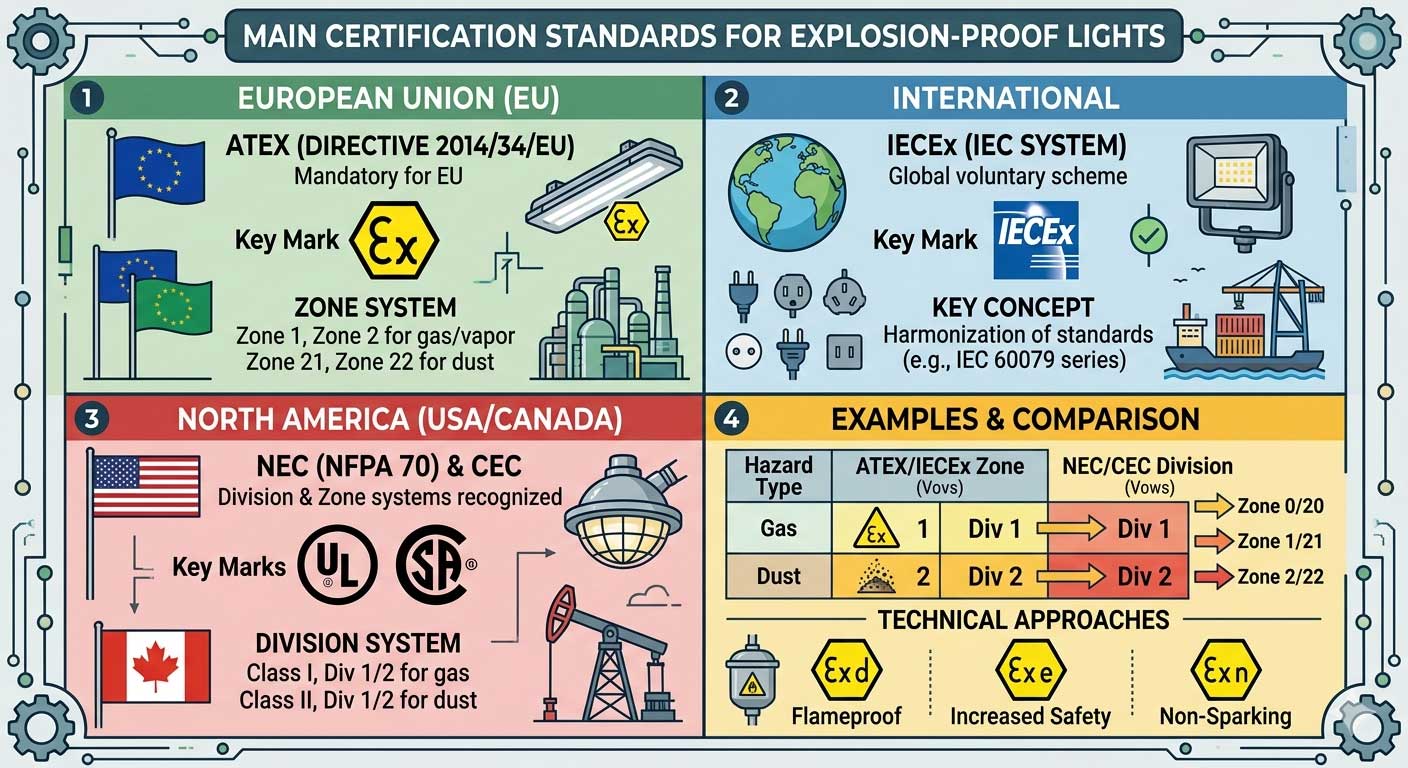
ATEX
IECEx
UL844
NEC Class/Division
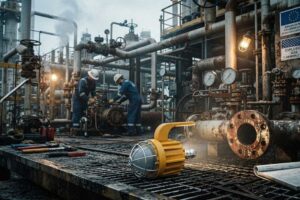
In high-risk places like oil refineries, chemical plants, mines, and pharmaceutical factories, explosion proof lights must have the right certifications to be used safely. Here’s a simple breakdown of the most important ones.
- ATEX Certification (Mainly for Europe)
ATEX is the European Union’s standard for equipment used in explosive atmospheres. It uses a Zone system (Zone 0, 1, 2 for gases; Zone 20, 21, 22 for dust).
If you’re selling or installing lights in Europe, ATEX is usually required.
- IECEx Certification (International Standard)
IECEx is the global version recognized in many countries. It also uses the Zone system and is very similar to ATEX.
Big advantage: One certificate works across many countries, making it great for international projects. Many good lights carry both ATEX and IECEx.
- UL844 Certification (North America)
UL844 is the key standard for hazardous location lighting in the United States and Canada. It follows the NEC (National Electrical Code) rules.
- NEC Class/Division System (North America)
This is how North America classifies hazardous areas:
Class I (flammable gases & vapors)
Class II (combustible dust)
Class III (fibers)
Division 1 (hazard is always present) or Division 2 (hazard appears only in abnormal situations)
When buying for the US or Canada, you need to match the exact Class, Division, and Group.
Quick Buying Tips
For Europe → Choose ATEX or ATEX + IECEx
For North America → UL844 is a must
For global projects → Look for lights with multiple certifications
Also check IP66/IP67 waterproof rating and temperature class (T1–T6)
Bottom Line:
The right certification ensures safety and legal compliance. Always match the certification to your country and the level of risk in the area. Choosing properly certified lights helps avoid accidents and costly compliance problems.
 Seeking LED