Abstract
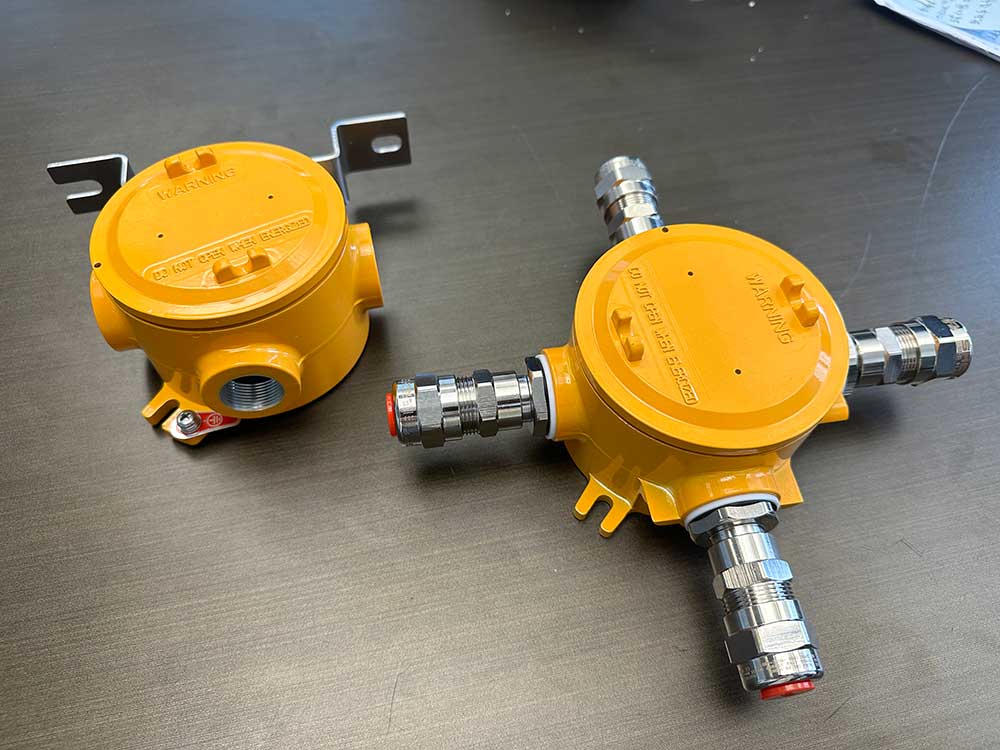
A Hazardous Area Junction Box rarely looks impressive. It is usually a small enclosure bolted somewhere along a steel structure, sometimes half hidden behind cable trays or pipes. Yet anyone who has spent time around petrochemical installations understands something quickly: electrical safety in explosive environments often depends on these quiet components.
Lighting systems, sensors, pumps, alarms — they all need connection points. And in hazardous atmospheres, that connection cannot simply be a plastic box from a standard industrial catalog.
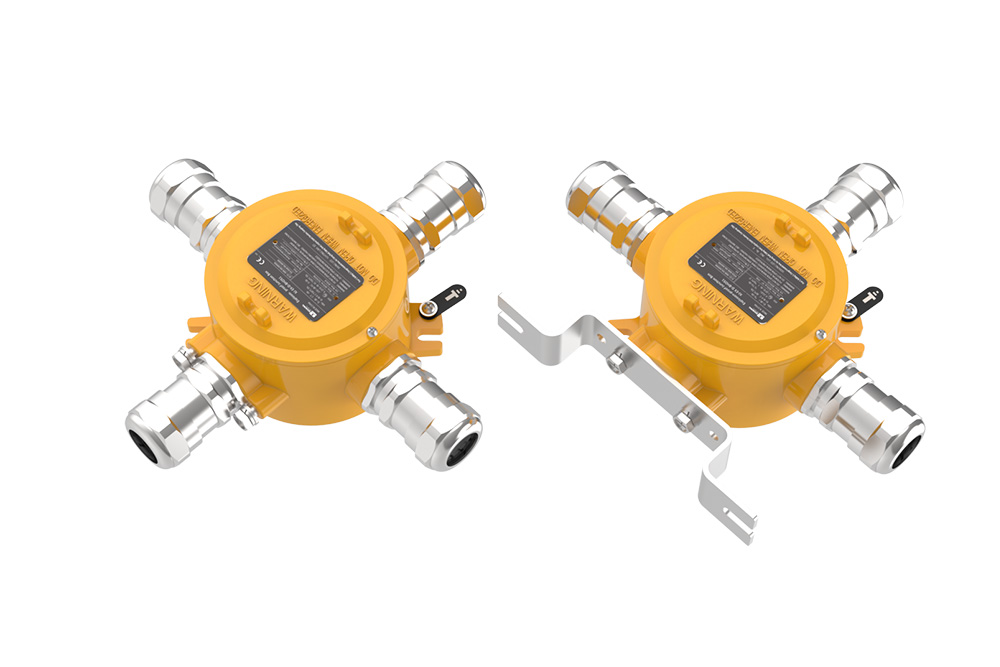
The SEEKINGLED Hazardous Area Junction Box was built around the Ex d flameproof principle defined in IEC 60079-1. But more importantly, it was designed after seeing how technicians actually work in refineries, terminals, and processing plants.
And those conditions are rarely ideal.
The Small Component Everyone Forgets
During hazardous-area lighting projects, engineers usually focus on the obvious equipment.
Explosion proof luminaires.
Control cabinets.
Emergency systems.
But once installation begins, attention shifts very quickly. Wiring infrastructure starts to dominate the schedule.
Cable routes stretch across buildings.
Conduit connections multiply.
And suddenly junction boxes appear everywhere.
A single refinery unit might contain hundreds.
That’s where problems start if the enclosure design is not thought through.
Loose terminals.
Improper cable entry sealing.
Overtightened screws damaging threads.
None of these failures look dramatic at first. Yet in explosive atmospheres, even small electrical faults can become ignition sources.
Why Ex d Flameproof Design Still Matters
Some people assume modern LEDs and low-power equipment reduce explosion risk.
Not really.
Electrical faults still happen. Loose connections, insulation damage, unexpected sparks — they are not theoretical problems. Maintenance teams encounter them regularly.
That is exactly why the Ex d flameproof principle exists.
According to IEC 60079-1, a flameproof enclosure must survive an internal explosion and prevent flame transmission to the surrounding atmosphere. The enclosure absorbs pressure, and the flame path cools escaping gases before they exit the housing.
Certification laboratories actually test this in controlled conditions.
Gas mixtures are ignited inside the enclosure. Sensors measure pressure waves and flame propagation.
If the enclosure leaks flame — the design fails immediately.
Organizations such as CSA Group, TÜV Rheinland, and Baseefa perform these certification tests for ATEX and IECEx equipment used in oil, gas, and chemical industries.
That process is not easy to pass.
Installation Reality Is Less Clean Than Drawings
Drawings always look perfect.
Field installations rarely do.
Technicians work on elevated platforms. Sometimes at night. Sometimes with gloves on. Sometimes with limited space between structures.
Traditional junction boxes often require multiple screws and small wiring terminals. Under those conditions, mistakes are easy to make.
A connection that looks tight might actually be loose.
SEEKINGLED approached this issue from a practical direction: simplify the wiring process itself. The Hazardous Area Junction Box integrates a fast-connection structure designed to reduce installation steps and limit incorrect operation.
That detail sounds small until you watch dozens of junction boxes being wired during a plant upgrade.
Speed improves.
Errors drop.
Technicians notice immediately.
Environmental Conditions Add Another Layer
Explosion protection is only part of the challenge.
Industrial environments are rough on equipment.
Dust settles everywhere.
Water spray hits exposed installations.
Temperature fluctuates constantly.
Over time, weak enclosures begin to show problems — corrosion, loose seals, cracked entries.
A properly built Hazardous Area Junction Box needs more than certification markings. It must simply survive years of operation.
That is why heavy metal housings and properly designed cable entries are still preferred in demanding environments such as:
- oil refineries
- gas compression stations
- chemical processing units
- offshore platforms
Durability often becomes the deciding factor five years after installation.
Not the spec sheet.
Author Background
This article reflects practical experience from hazardous-area lighting and electrical infrastructure projects over the past decade, including refinery upgrades, terminal installations, and marine platform inspections. Work includes reviewing IECEx documentation, coordinating installation teams, and evaluating equipment performance in real operating environments.
Closing Observation
The Hazardous Area Junction Box is not the most expensive device on a project. Often it is barely noticed during planning stages.
Yet when installation begins — when cables are pulled and circuits are closed — that small enclosure suddenly becomes essential.
Good design disappears into the background.
Bad design slows everything down.
The SEEKINGLED Hazardous Area Junction Box was developed with that simple reality in mind: flameproof safety according to IEC standards, and wiring that technicians can trust in actual hazardous environments.
Hazardous Area Junction Box recommended
Explosion-proof Junction Box for safe wiring in Zone 1 areas. Fast, tool-free installation, ATEX & IECEx certified. Trusted performance from SEEKINGLED.
loading…
This is the last post!
 Seeking LED