 Seeking LED
Explosion-Proof Lighting for Hazardous Industrial Environments
0Explosion-proof lighting engineered for hazardous industrial zones. Learn certifications, safety principles, ATEX standards, and LED performance insights.
View detailsSearch the whole station
Short answer? Longer than most people expect.
But not as simple as the number printed on the box.
You’ll often see figures like 25,000 hours, 50,000 hours, even 100,000 hours for industrial-grade fixtures. Those numbers are not wrong—but they’re also not the whole story.
Because LED lights don’t usually “burn out” the way old bulbs did.
They fade.
When someone asks how long do LED light bulbs last, what they’re usually referring to is L70 lifespan.
That means the point where the light output drops to 70% of its original brightness.
Not dead. Just… noticeably dimmer.
In controlled lab conditions, high-quality LEDs can indeed reach 50,000 hours or more. According to data published by the U.S. Department of Energy, well-designed LED systems significantly outlast traditional incandescent or halogen sources.
But field conditions are never controlled.
That’s where things get interesting.
In one warehouse retrofit project, we replaced older metal halide fixtures with LED high bays. On paper, the LEDs were rated for 50,000 hours.
Three years later, most of them were still running perfectly.
Except a few.
And those few told the real story.
They were installed near the ceiling corners where heat accumulated. Airflow was poor. Dust buildup was heavy. Those fixtures didn’t fail completely—but they dimmed faster than the rest.
Same product. Same rating. Different environment.
That’s why the question how long do LED light bulbs last doesn’t have a single fixed answer.
You can’t ignore these. They matter more than the rated hours.
LEDs don’t like heat.
Not dramatic heat. Just constant, trapped warmth.
Poor thermal design shortens lifespan fast. This is why higher-end products—like those from SEEKINGLED—focus heavily on heat dissipation.
It’s not marketing. It’s survival.
Most LED failures are not caused by the LED chips.
They come from the driver.
Cheap drivers degrade early, especially under voltage fluctuations or continuous operation. Once the driver fails, the whole light goes dark—even if the LEDs themselves are still fine.
Running lights 24/7 is very different from using them a few hours a day.
A “50,000-hour” LED used continuously reaches that limit in under 6 years.
Used 8 hours a day, it stretches well beyond a decade.
Same rating. Completely different timeline.
Industrial environments are not gentle.
Dust blocks heat sinks.
Moisture affects internal components.
Vibration loosens connections over time.
This is exactly why industrial-grade fixtures—especially explosion-proof or hazardous-area lights—are built differently.
Let’s not overcomplicate it.
That gap is not small.
It’s the reason most industrial and commercial facilities have already switched to LED.
Here’s the honest answer:
But only if the system is designed properly.
And installed properly.
And not abused by the environment.
If an LED fails after 1–2 years, it’s usually not because “LEDs don’t last.”
It’s because something else went wrong.
Most often:
That’s the part many buyers overlook.
Nothing complicated here. Just practical decisions:
Simple things. But they make a difference.
In industrial applications—especially hazardous areas—the margin for failure is smaller.
Lighting isn’t just about visibility. It affects safety, maintenance cycles, and operational cost.
That’s why SEEKINGLED designs LED lighting systems with long-term performance in mind, not just initial brightness.
Better thermal control.
Stable drivers.
Durable housings.
Because in real conditions, that’s what determines how long LED lighting actually lasts.
More answers
So, how long do LED light bulbs last?
Long enough to make replacement cycles almost irrelevant—if you choose the right product.
Short enough to become a problem—if you don’t.
That’s the difference.

Explosion-proof lighting engineered for hazardous industrial zones. Learn certifications, safety principles, ATEX standards, and LED performance insights.
View details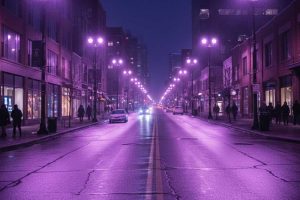
Why do LED street lights turn purple over time? This Q&A explains the real reasons behind purple street lights, how phosphor failure happens, and what cities usually do next.
View details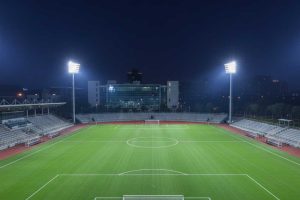
Upgrade your pitch with field lights soccer solutions. High visibility, uniform lighting, and reliable LED systems designed by SEEKINGLED.
View details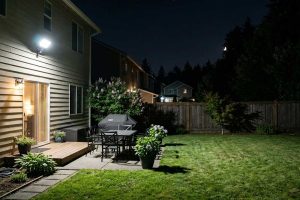
Upgrade your space with a 100w led floodlight. Learn how to choose brightness, beam angle, and waterproof rating for outdoor and commercial use.
View details