 Seeking LED
What Is LED Street Light?
262What is LED street light? Learn what an LED street light really is, how it works, where it is used, and why cities are replacing traditional street lighting with LED systems.
View detailsSearch the whole station
Portable explosion proof lighting is designed to provide safe, temporary illumination in hazardous locations where flammable gases, vapors, dust, or fibers may be present. Unlike standard portable work lights, these fixtures are engineered and certified to prevent ignition sources from triggering explosions while maintaining reliable visibility in demanding industrial environments.
This article was reviewed by the SEEKINGLED hazardous-area engineering team, whose members have participated in explosion-proof lighting projects across oil terminals, offshore platforms, chemical processing facilities, marine environments, and heavy industrial plants for more than a decade.
I still remember standing beside a temporary maintenance area inside a petrochemical facility during a turnaround shutdown. Permanent lighting had been disconnected. Welders, inspectors, and instrumentation technicians all depended on portable lighting. The challenge was obvious: visibility was essential, but a single unsuitable electrical device could introduce an ignition risk.
That experience reinforced a simple reality.
Portable lighting in hazardous locations is not merely about brightness.
It is fundamentally about risk control.
Portable explosion proof lighting refers to mobile lighting equipment specifically certified for use in hazardous environments where explosive atmospheres may occur.
These products commonly include:
Unlike ordinary work lights, explosion-proof models are designed so that any internal spark, arc, or elevated temperature remains incapable of igniting surrounding hazardous substances.
Permanent lighting works well under normal operating conditions.
Maintenance work is different.
Shutdowns happen.
Equipment is isolated.
Structures are inspected.
Pipelines are opened.
Storage tanks are entered.
Workers suddenly need illumination in places where fixed lighting cannot reach.
According to the U.S. Bureau of Labor Statistics, maintenance personnel consistently face elevated injury risks when visibility is inadequate during industrial operations.
Source:
U.S. Bureau of Labor Statistics (BLS)
https://www.bls.gov
In hazardous environments, poor lighting creates two simultaneous problems:
Portable explosion proof lighting solves both.
Portable lights are heavily used during:
The International Association of Oil & Gas Producers (IOGP) reports that maintenance and intervention activities remain among the highest-risk operational periods because normal process configurations are often altered.
Source:
International Association of Oil & Gas Producers
https://www.iogp.org
Technicians frequently require temporary illumination for:
These tasks often occur inside classified hazardous zones.
Offshore installations present additional challenges:
Portable explosion proof lighting used offshore typically requires enhanced corrosion resistance beyond standard industrial specifications.
Mining environments may contain:
Portable certified lighting allows maintenance crews to work safely in areas where permanent infrastructure is limited.
Many buyers focus on lumen output first.
Experienced engineers usually ask a different question.
“What certification does it carry?”
That question matters more.
Typical characteristics:
| Feature | Standard Work Light |
|---|---|
| Temporary Use | Yes |
| LED Source | Yes |
| Hazardous Area Approved | No |
| Ignition Protection | No |
| Explosion Certification | No |
Typical characteristics:
| Feature | Explosion Proof Version |
|---|---|
| Hazardous Location Use | Yes |
| Certified Enclosure | Yes |
| Temperature Control | Yes |
| Impact Resistance | Yes |
| Explosion Protection | Yes |
The visual difference may appear small.
The engineering difference is enormous.
Certification is the first filter when selecting portable explosion proof lighting.
Everything else comes afterward.
Used throughout Europe.
ATEX equipment is evaluated according to:
Directive 2014/34/EU
Official Source:
European Commission
https://single-market-economy.ec.europa.eu
ATEX classifications define:
IECEx provides international recognition for equipment used in explosive atmospheres.
Official Source:
IECEx System
https://www.iecex.com
IECEx certification has become increasingly important for:
Many multinational operators now specify IECEx as a baseline requirement.
In North America, hazardous location lighting often follows UL844 requirements.
Official Source:
Underwriters Laboratories
https://www.ul.com
UL844 products are commonly deployed in:
Ten years ago, many temporary hazardous-area lights relied on older lamp technologies.
Today, LED dominates.
For good reason.
The U.S. Department of Energy reports that LEDs can use significantly less energy while delivering substantially longer operating life than traditional lighting technologies.
Source:
U.S. Department of Energy
https://www.energy.gov
Modern portable explosion proof lighting offers:
For maintenance crews working twelve-hour shifts, battery efficiency often matters more than peak brightness.
Most portable hazardous-area lights now use:
Runtime often becomes a deciding factor during shutdown projects.
A technician carrying a light that lasts 14 hours gains something valuable:
Predictability.
This question appears constantly in project discussions.
The answer depends entirely on the task.
| Application | Recommended Lux Level |
|---|---|
| General Walkways | 50-100 lux |
| Equipment Inspection | 200-300 lux |
| Mechanical Maintenance | 300-500 lux |
| Detailed Instrument Work | 500-1000 lux |
Source:
Illuminating Engineering Society (IES)
https://www.ies.org
The mistake many facilities make is assuming higher lumen output automatically improves safety.
Sometimes it does.
Sometimes excessive brightness creates glare, shadows, and visual fatigue.
Proper light distribution often matters more than raw output.
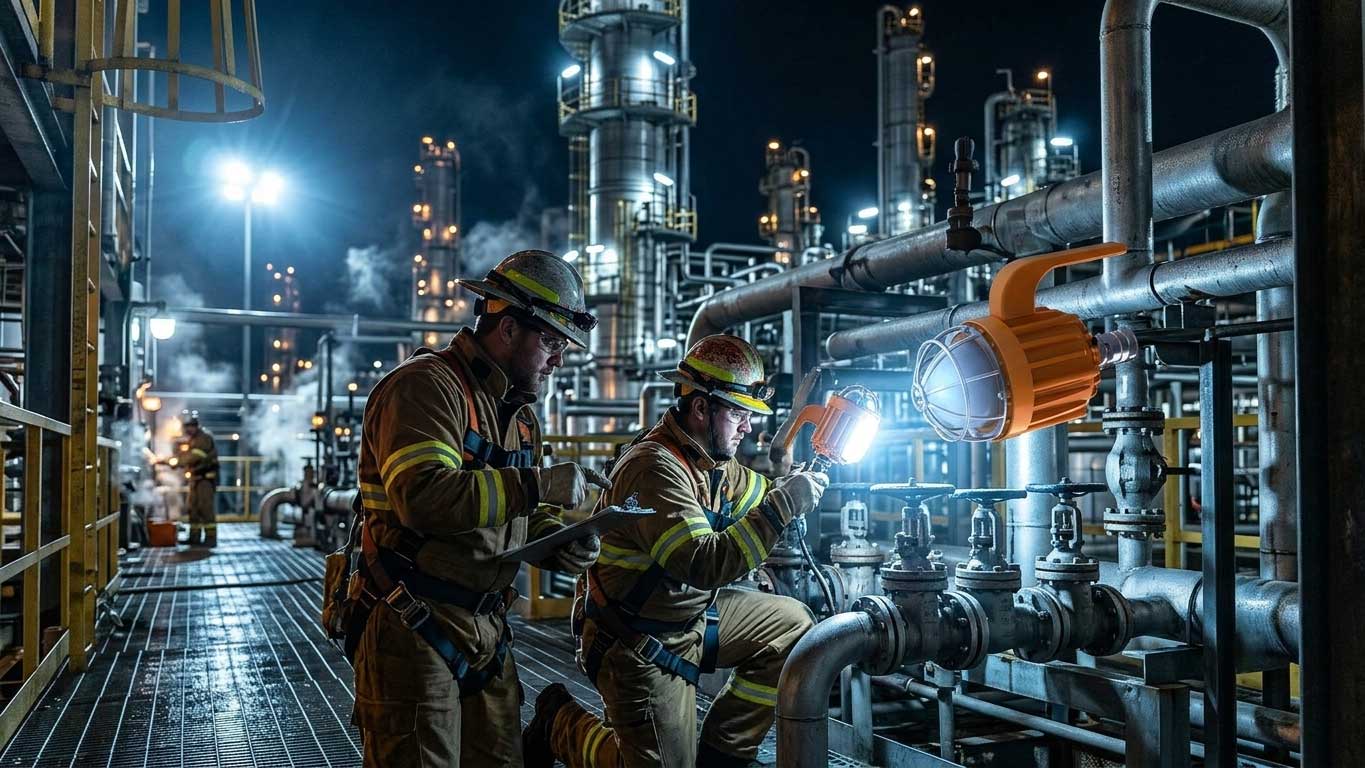
One observation I’ve made after years around hazardous-area projects is that buyers often focus exclusively on certifications.
Certifications are critical.
But they are not the entire story.
The most successful projects evaluate:
A certified light that constantly requires charging becomes a productivity problem.
A powerful light that cannot survive offshore corrosion becomes an expensive mistake.
The best portable explosion proof lighting balances safety, usability, and long-term operational reliability.
By the time buyers reach the quotation stage, most have already verified certifications.
That is usually the easy part.
The harder question is whether the lighting will actually perform in the field.
I have seen certified products fail operationally because nobody considered how they would be used. One offshore contractor selected a portable hazardous-area floodlight with excellent documentation. On paper, it looked perfect.
The problem?
The unit weighed nearly 18 kilograms.
Technicians had to carry it up multiple stair towers every shift.
Within weeks, workers stopped using it whenever possible.
Continuing Part 2 and completing the full article:
When evaluating portable explosion proof lighting, field engineers usually focus on a few practical parameters that directly affect daily work.
A light rated for “8 hours” under laboratory conditions may only deliver 6–7 hours in cold offshore wind conditions.
In real shutdown environments, crews often work 10–12 hour cycles, so underrating battery capacity is a common failure point.
Anything above ~10–12 kg quickly becomes operationally inefficient in mobile maintenance.
A technician may carry tools, harness, gas detectors, and radios already. Lighting becomes an additional burden unless designed correctly.
Field experience shows that uniform beam distribution often matters more than peak lumens.
Hotspots create glare on stainless steel surfaces, while uneven light can hide small leaks or cracks.
Offshore and chemical plants introduce:
A housing that performs well in indoor plants may degrade rapidly in marine environments.
Offshore platforms are where portable explosion proof lighting is tested the hardest.
There is no “easy access” if something fails.
Everything must work the first time.
According to the International Maritime Organization (IMO), offshore maintenance activities involve elevated operational risk due to confined spaces and environmental exposure.
Source:
International Maritime Organization (IMO)
https://www.imo.org
On offshore platforms, portable lighting is typically used for:
In these scenarios, lighting is not just a visibility tool — it is a safety system.
A weak or unstable light can delay operations, which in offshore logistics can cost tens of thousands of dollars per hour in downtime depending on the facility scale.
After years of observing procurement patterns, a few mistakes repeat consistently.
A product may be IECEx or ATEX certified, but still unsuitable for real field use if ergonomics are ignored.
Some facilities deploy portable lights but forget:
The result is predictable — half-charged equipment during peak operations.
Even explosion-proof equipment requires inspection:
Neglect here reduces both safety and lifespan.
Earlier generations used nickel-based systems with memory effect and reduced cycle life.
Modern systems are different.
Today’s portable explosion proof lighting typically uses lithium-ion cells with:
The U.S. Department of Energy notes that lithium-ion technologies have significantly improved energy storage efficiency in portable systems over the last decade.
Source:
https://www.energy.gov
In practical field terms, this means:
However, battery performance still drops in:
So system design still matters as much as chemistry.
In real-world maintenance environments, failure rarely begins with the LED module.
More often, the weak points are:
This is especially true in offshore or chemical environments where vibration and corrosion act continuously.
One refinery maintenance supervisor once told me something that stuck:
“The light never fails first. The interface does.”
That observation is consistent across most industrial sites.
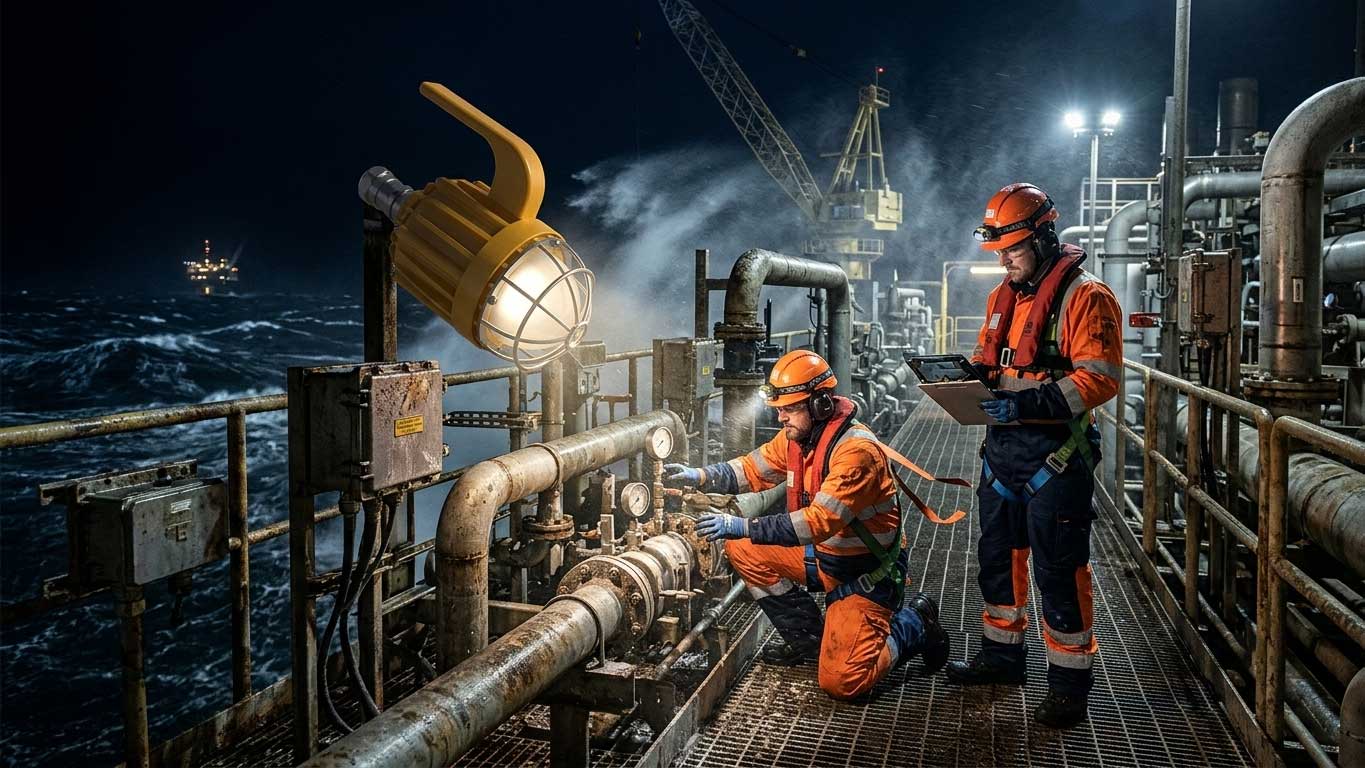
Before purchasing portable explosion proof lighting, experienced engineers usually confirm:
If even one of these fails, operational issues will appear later — usually during the worst possible moment, such as shutdown windows or emergency repair situations.
Access Product Catalog:Explosion Proof Lighting
Portable explosion proof lighting is not a “supporting tool” in hazardous environments.
It is part of the safety infrastructure that keeps maintenance operations running under controlled risk conditions.
From offshore platforms to chemical plants and refineries, the same principle applies:
Reliable lighting reduces uncertainty.
And in hazardous locations, reducing uncertainty is what keeps both people and operations safe.
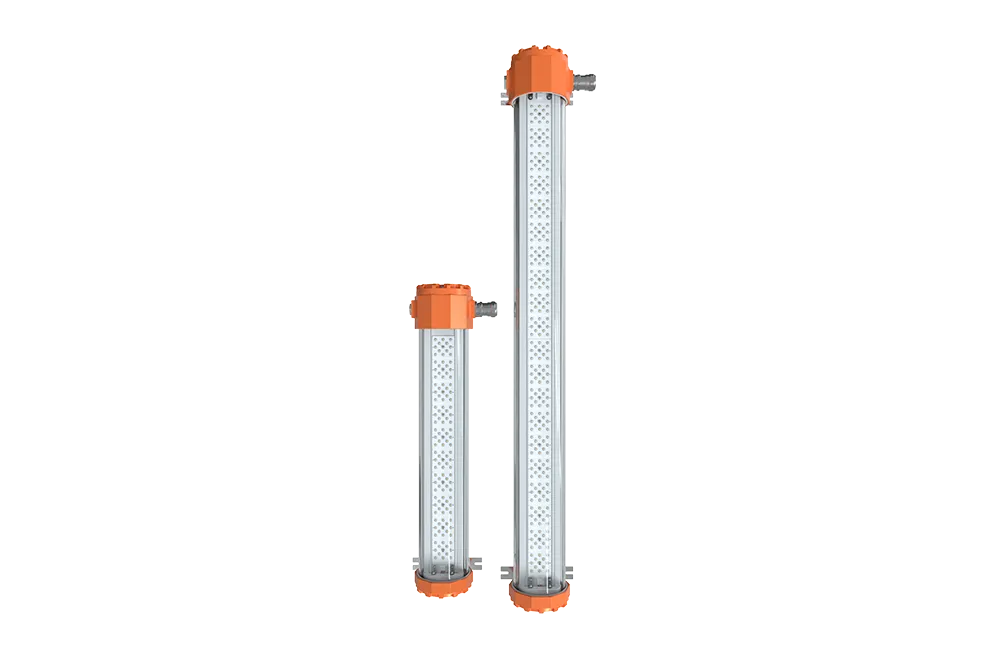
SEEKINGLED LED Linear Explosion Proof Light and Explosion Proof lighting is ATEX and IECEx certified for Zone 1, Zone 2, Zone 21 and Zone 22 hazardous locations, built for long-term industrial use.
View details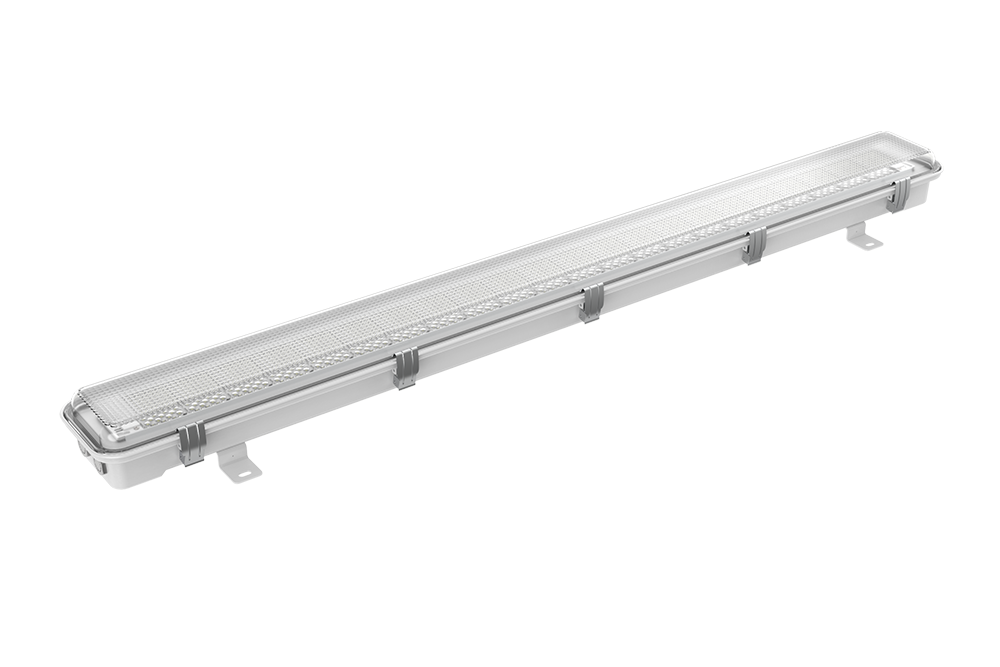
LED Linear Explosion Proof Lights and EX Proof lights for Zone 1, Zone 2, Zone 21 and Zone 22 hazardous areas. ATEX & IECEx certified explosion proof LED linear lighting with emergency function, adjustable power and IP67 protection by SEEKINGLED.
View details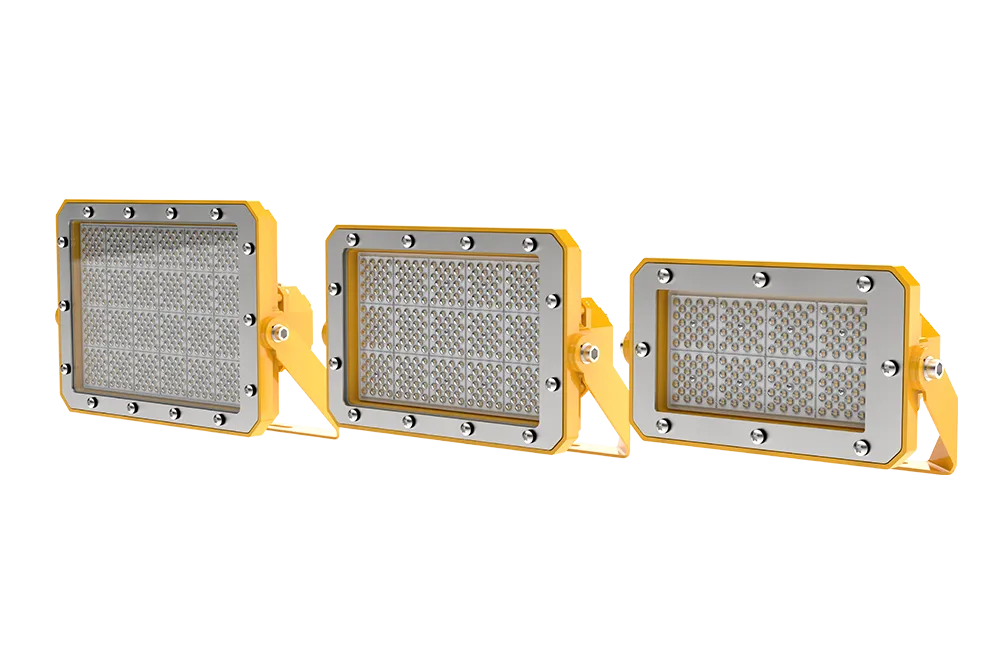
SEEKINGLED LED Explosion Proof Flood Lights are ATEX certified for Zone 2 and Zone 22 hazardous areas, offering high efficiency, adjustable power and integrated junction box.
View details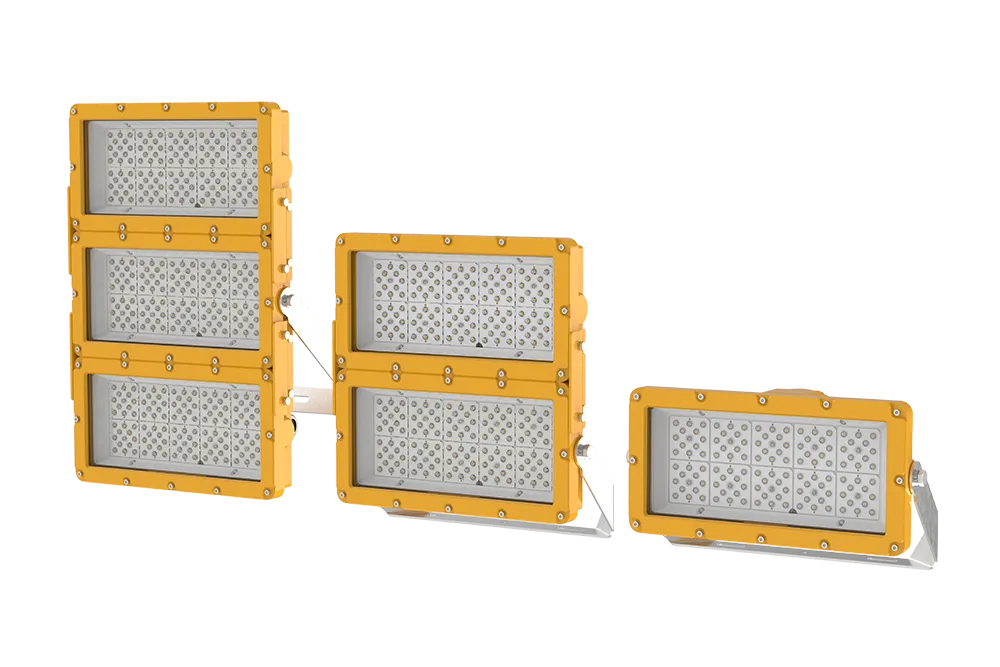
SEEKINGLED LED Explosion Proof Flood Lights are flameproof ATEX and IECEx certified for Zone 1 and Zone 2 hazardous areas, offering high power, adjustable output and long service life.
View details
SEEKINGLED LED Gas Station Canopy Lights are ATEX certified for Zone 2 and Zone 22 hazardous areas, featuring adjustable power and built-in explosion-proof junction box.
View details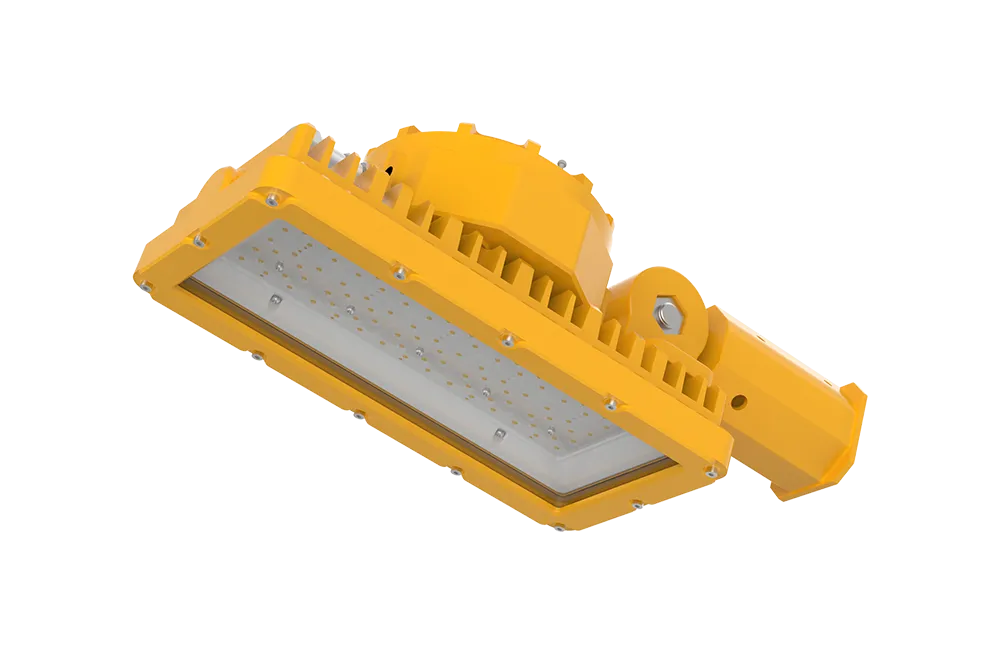
ATEX: Ex II 2G Ex db IIB T6/T5 GbEx II 2D Ex tb IIIC T80°C/ T95°C Db IECEx Ex db IIB T6 Gb;Ex tb IIIC T80°C Db Feature: ● For Zone 1,2 and Zone 21,22● Flameproof type, the strongest● 100W can replace 250W HID,energy saving● Power:60W,80W,100W Application: Oil and gas, marine, Chemical, pharmaceutical, semiconductor,mining,military industr…
View details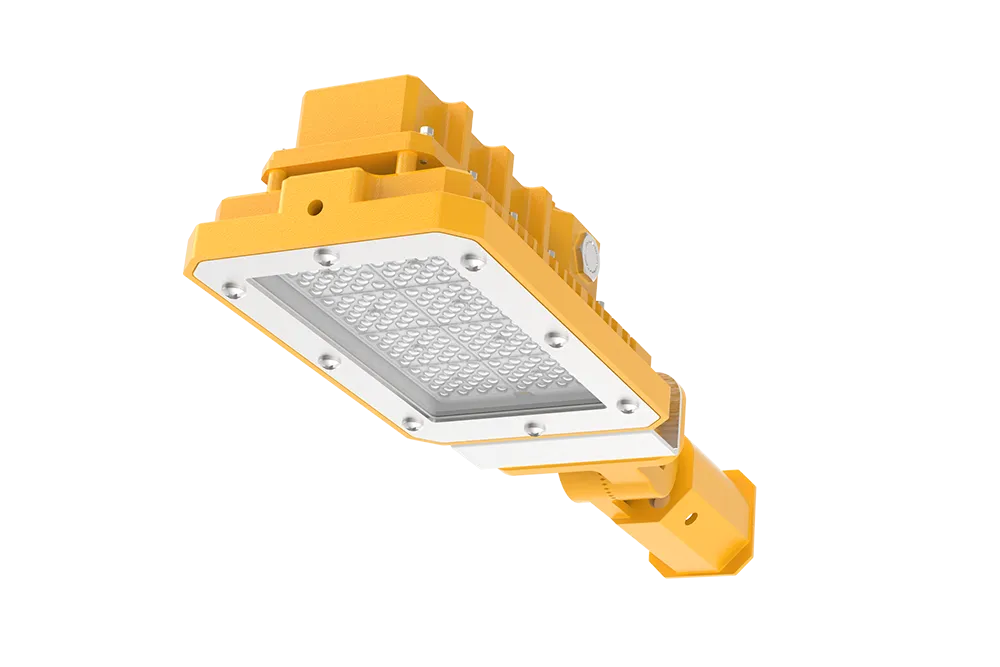
ATEX: II 3G Ex nR ⅡC T5/T6 GcII 3D Ex tc ⅢC T80℃/T95℃Dc ATEX Certificate NO: TÜV CY 26 ATEX 0207611 X Feature: ● For Zone 2 and Zone 22● 150W can replace 250W HID lamps,Energy saving● Power:50W,75W,100W,150W,200W Application: Oil and gas, marine, Chemical, pharmaceutical, semiconductor,mining,military industry, paint booth,power plant ETC…
View details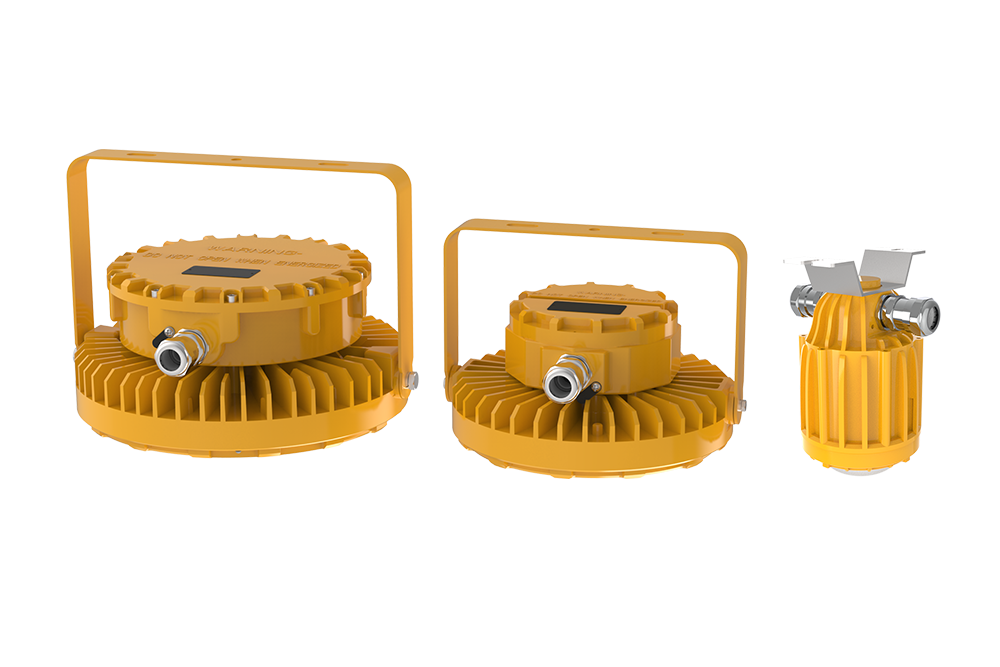
LED explosion proof high bay lights are designed for Zone 1, Zone 2, Zone 21 and Zone 22 hazardous areas. This page introduces the HB21 Series from SEEKING, including certifications, power options and real application considerations.
View details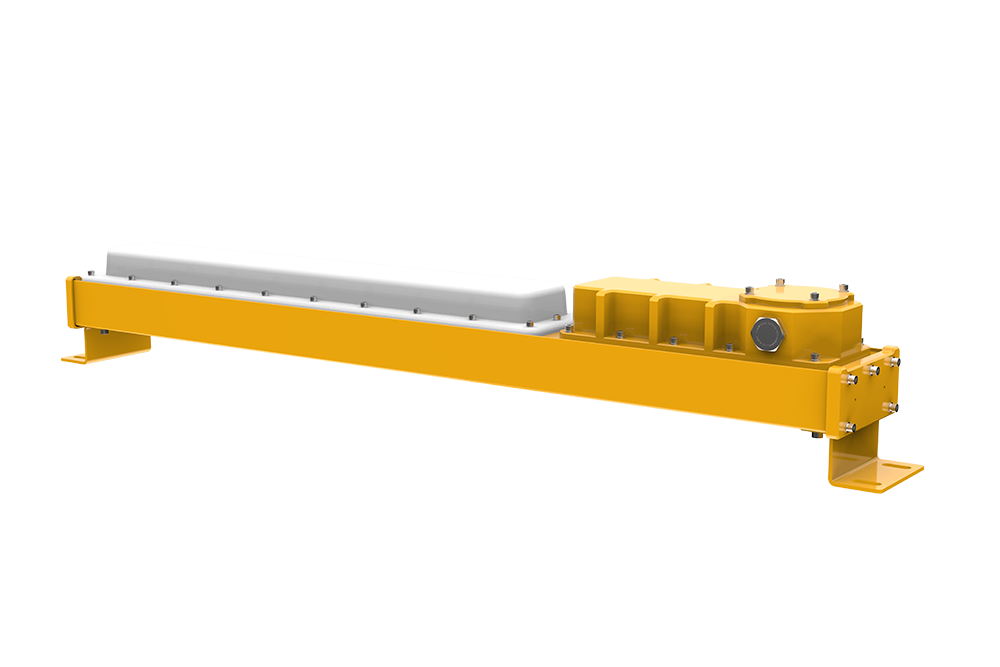
LED Linear Explosion Proof Lights from SEEKINGLED. LU Series Flame Proof lights ATEX-certified explosion proof LED linear lighting for Zone 2 gas and Zone 22 dust areas, IP69K, IK10, long lifetime and flexible power options.
View details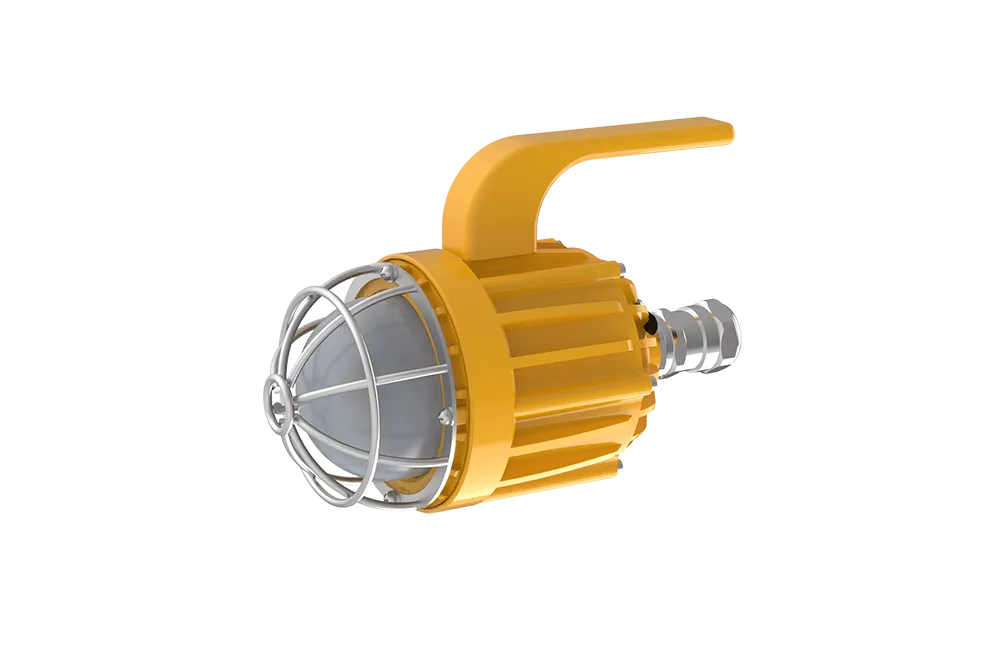
Certified explosion proof work lights for Zone 1 & 21 hazardous areas. Portable, ATEX & IECEx approved, built for oil, gas and chemical plants by SEEKINGLED.
View details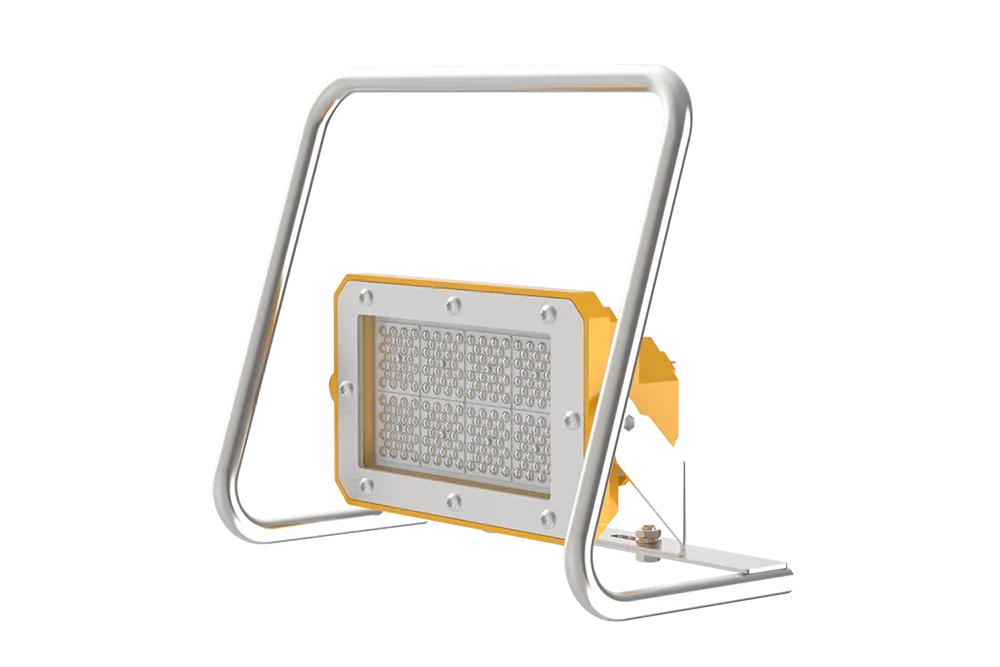
ATEX: II 3G Ex nR ⅡC T6 GcII 3D Ex tc ⅢC T80℃ Dc ATEX Certificate NO: TÜV CY 26 ATEX 0207611 X Feature: ● For Zone 2 and Zone 22● Accepts battery-powered supply● indestructible● Power:AC input:50W,75W,100WDC input:15W,25W,35W Application: Oil and gas, marine, Chemical, pharmaceutical, semiconductor,mining,military industry, paint booth,po…
View details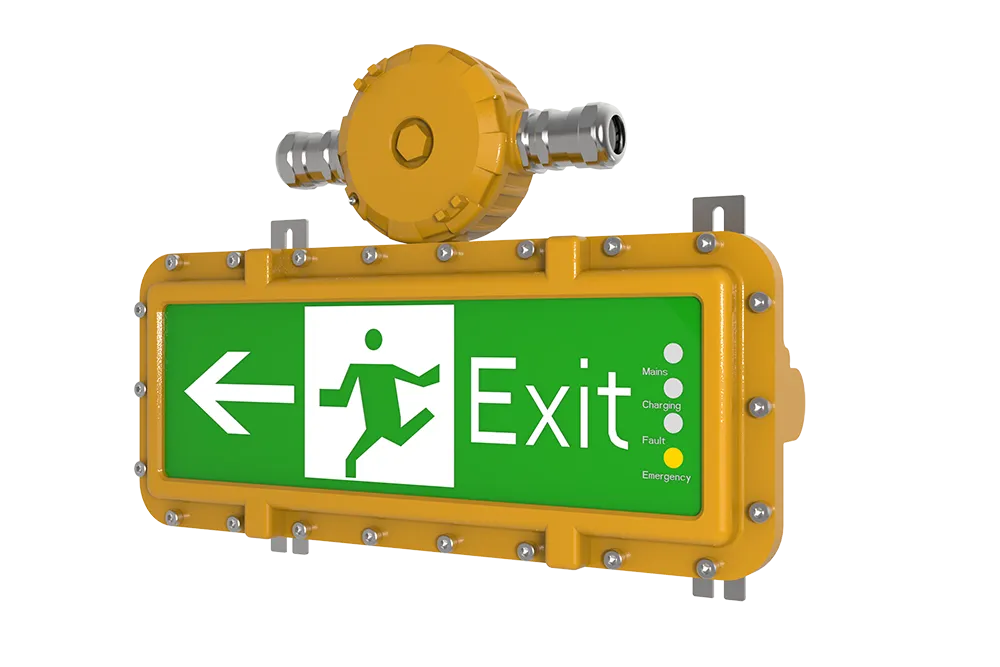
ATEX: Ex II 2G Ex db IIB T6 GbEx II 2D Ex tb IIIC T80°C Db IECEx Ex db IIB T6 Gb;Ex tb IIIC T80°C Db Feature: ● For Zone 1,2 and Zone 21,22● Flameproof type, the strongest Application: Oil and gas, marine, Chemical, pharmaceutical, semiconductor,mining,military industry, paint booth,power plant ETC hazardous area. Technical Specifications:…
View details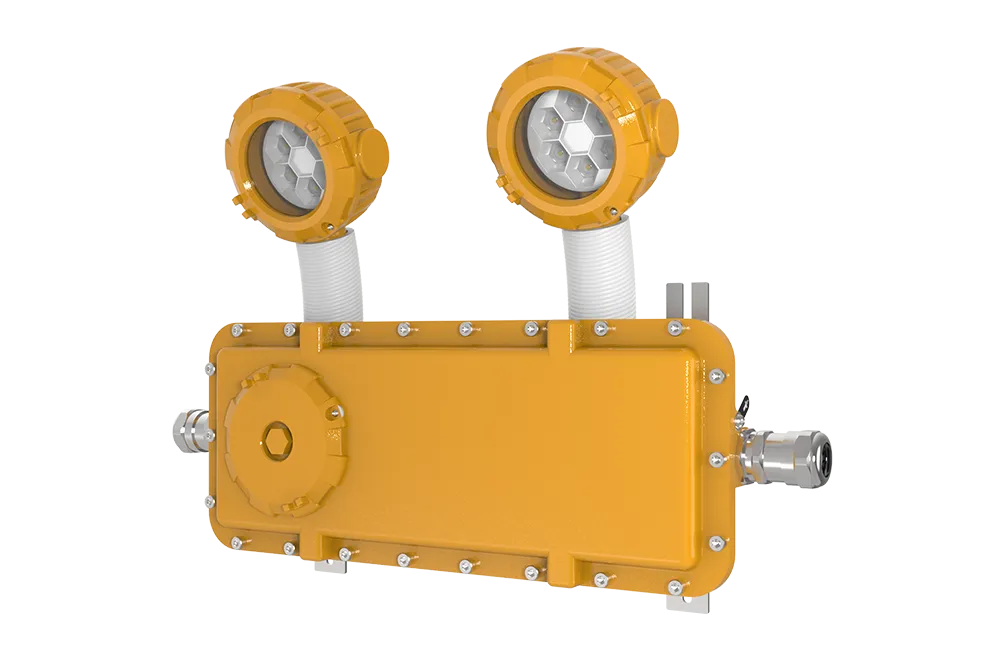
ATEX: Ex II 2G Ex db IIB T6 GbEx II 2D Ex tb IIIC T80°C Db IECEx Ex db IIB T6 Gb;Ex tb IIIC T80°C Db Feature: ● For Zone 1,2 and Zone 21,22● Flameproof type, the strongest Application: Oil and gas, marine, Chemical, pharmaceutical, semiconductor,mining,military industry, paint booth,power plant ETC hazardous area. Technical Specifications:…
View details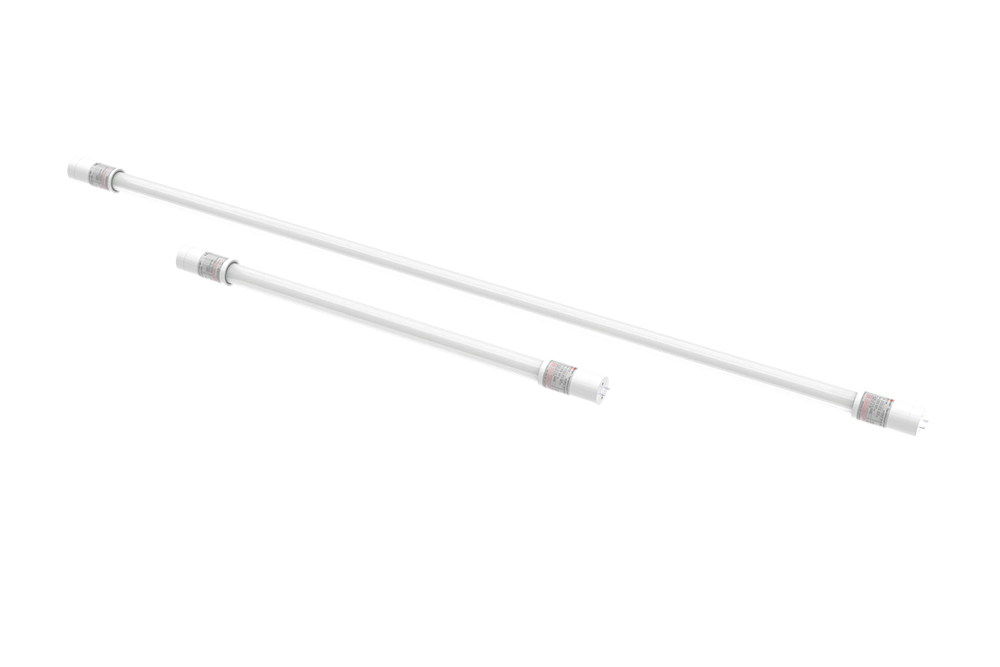
ATEX: Ex II 2G Ex d e IIB T6 Gb ATEX: Ex d e IIB T6 Gb; Feature: ● For Zone 1,2● 9W can replace 18W fluorescent lamps,50% Energy saving Application: Oil and gas, marine, Chemical, pharmaceutical, semiconductor,mining,military industry, paint booth,power plant ETC hazardous area. Technical Specifications: Standards:60079-0, 60079-1, 60079…
View details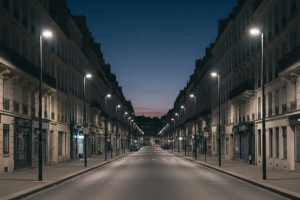
What is LED street light? Learn what an LED street light really is, how it works, where it is used, and why cities are replacing traditional street lighting with LED systems.
View details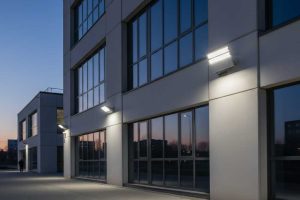
Flood light dimensions explained for outdoor and commercial LED lighting. Choose the right size, fit, and performance with SEEKINGLED solutions.
View details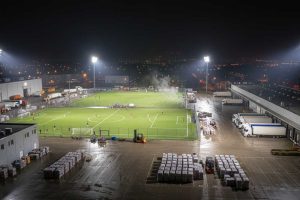
Can LED flood light be repaired in outdoor and sports lighting projects? Learn which parts can be fixed, when repair makes sense, and when replacement is the better option.
View details
How to avoid sunk cost in LED high bay lighting projects starts with design decisions, not fixtures. Learn how to stop throwing money at bad layouts.
View details