 Seeking LED
ATEX Hazardous Lighting: Complete Guide for Hazardous Areas
0Discover ATEX hazardous lighting solutions for hazardous areas. Learn ATEX zones, certifications, Ex markings, and how to select safe industrial lighting.
View detailsSearch the whole station
This question comes up early in almost every industrial lighting project:
what height should high bay LED lights be to get usable, even light without wasting power?
There isn’t a single number that works everywhere. But there are clear height ranges that consistently work in real buildings.
In most installations, high bay LED lights are mounted between:
Anything below that usually falls into low-bay territory. Anything above it needs careful optical planning, not just higher wattage.
For warehouses, mounting height depends on aisle width and racking height.
Typical ranges we see:
At SEEKINGLED, we often start by checking whether the light needs to reach the floor or mainly the aisle working plane. That decision changes beam angle more than people expect.
Factories are different. Tasks matter more than ceiling height alone.
Common setups:
If precision work is involved, lower mounting with wider distribution often works better than mounting very high and increasing wattage.
One mistake we see often is choosing power first. In reality, mounting height defines everything:
Two lights at the same wattage can behave completely differently at 7 m versus 11 m.
When people ask what height should high bay LED lights be, they’re usually trying to avoid uneven light or dark zones. Height is the first variable to fix before any calculations.
Not always.
Actual mounting height is measured from:
In warehouses with tall racks, the working plane may be several meters above ground. This often leads to over-lighting if not accounted for.
In real SEEKINGLED projects, we rarely rely on height alone. We look at spacing, optics, and how the space is actually used day to day. High bay lighting works best when height is treated as a constraint, not a target.
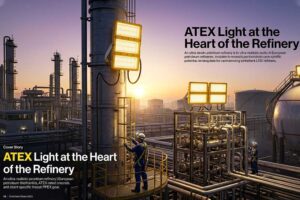
Discover ATEX hazardous lighting solutions for hazardous areas. Learn ATEX zones, certifications, Ex markings, and how to select safe industrial lighting.
View details
Amber color LED lighting reduces glare, protects night vision, and limits light pollution. See why professionals choose amber color LED solutions from SEEKINGLED.
View details
Are LED light bars street legal in Texas? This Q&A explains when LED light bars are legal, when they are not, and how Texas law is applied in real driving situations.
View details
What are the blue LED street lights for? Learn why some cities use blue street lights, whether they are intentional or a defect, and what professionals look for in real projects.
View details