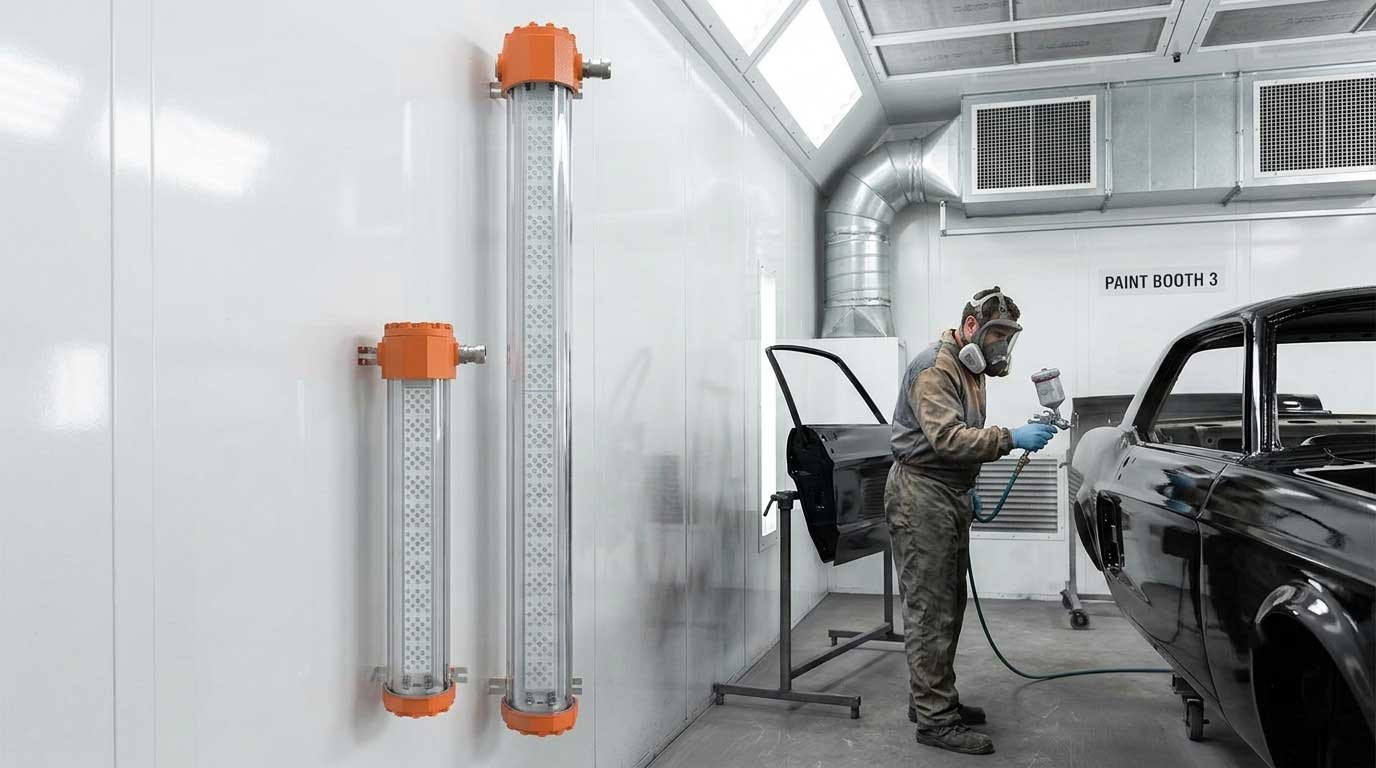
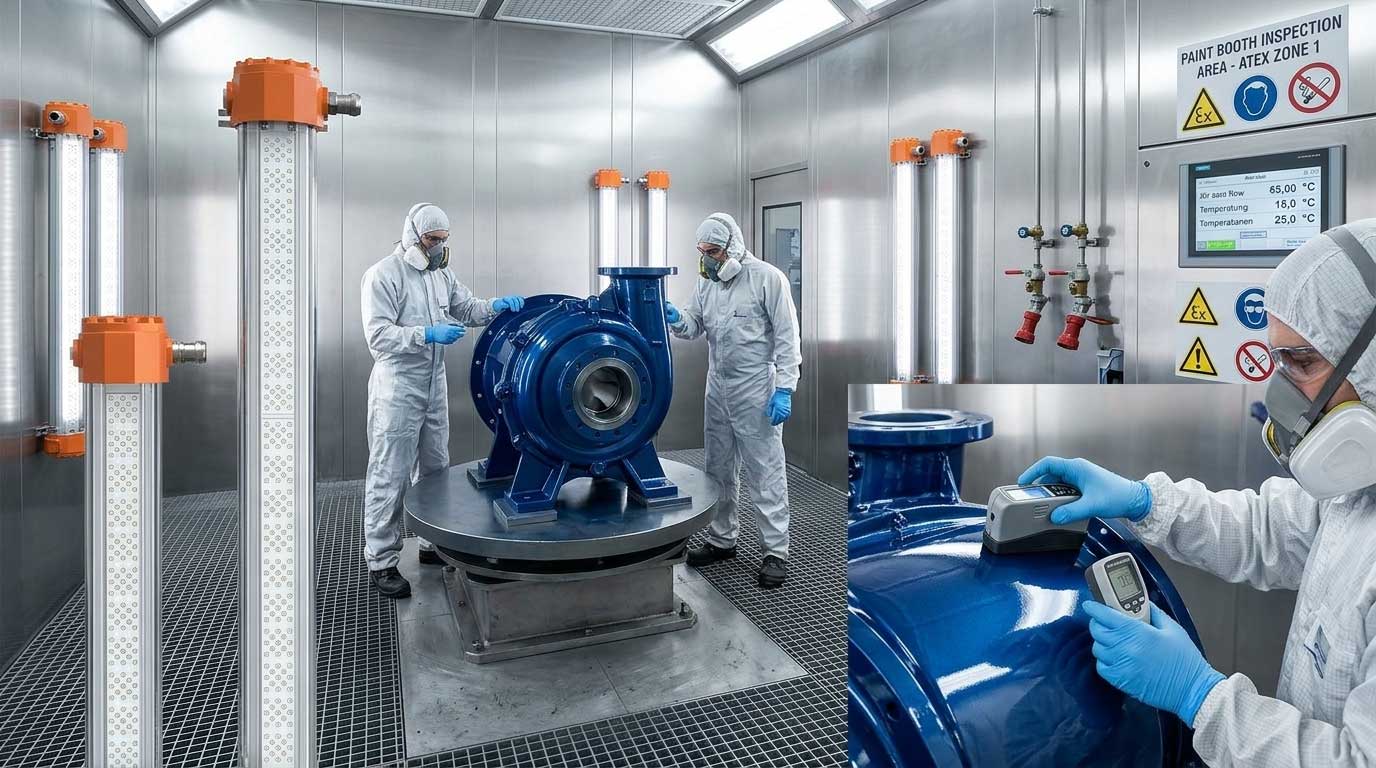
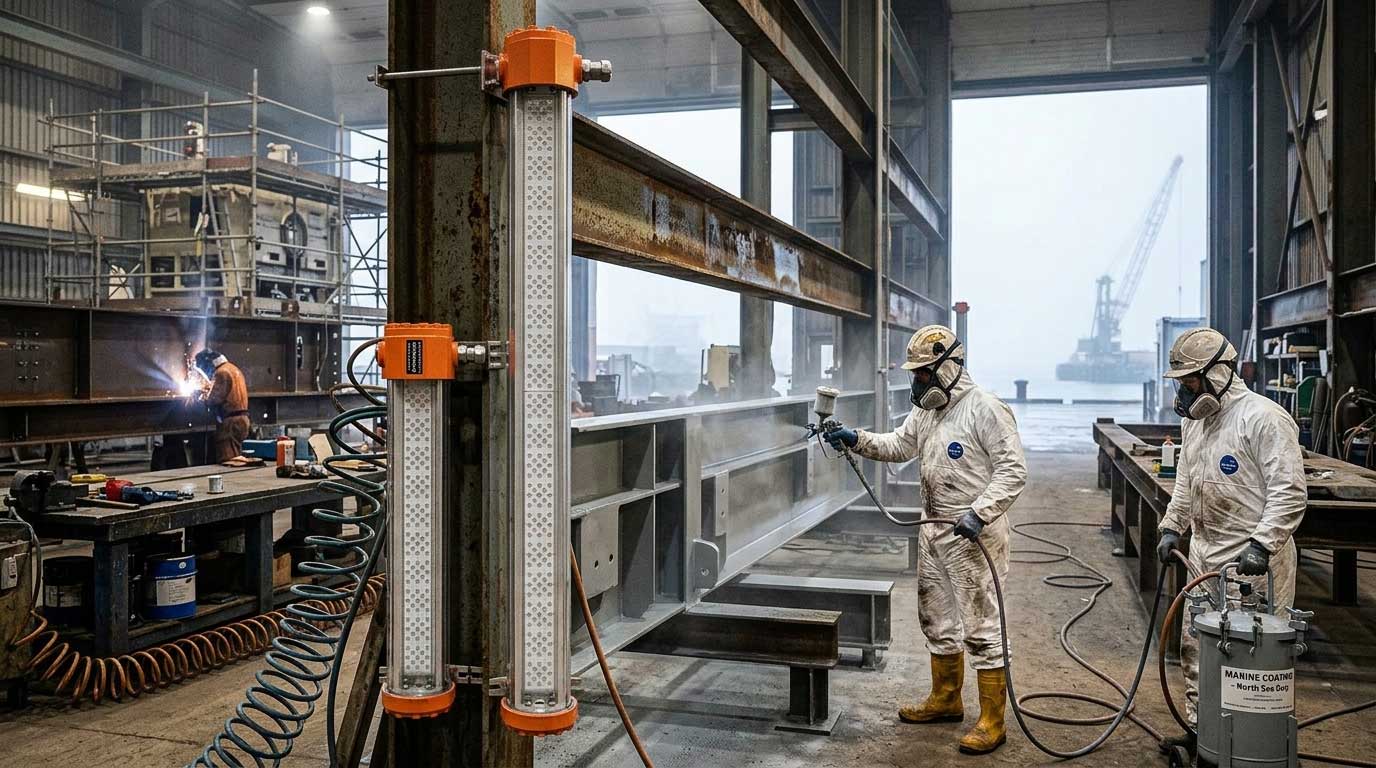
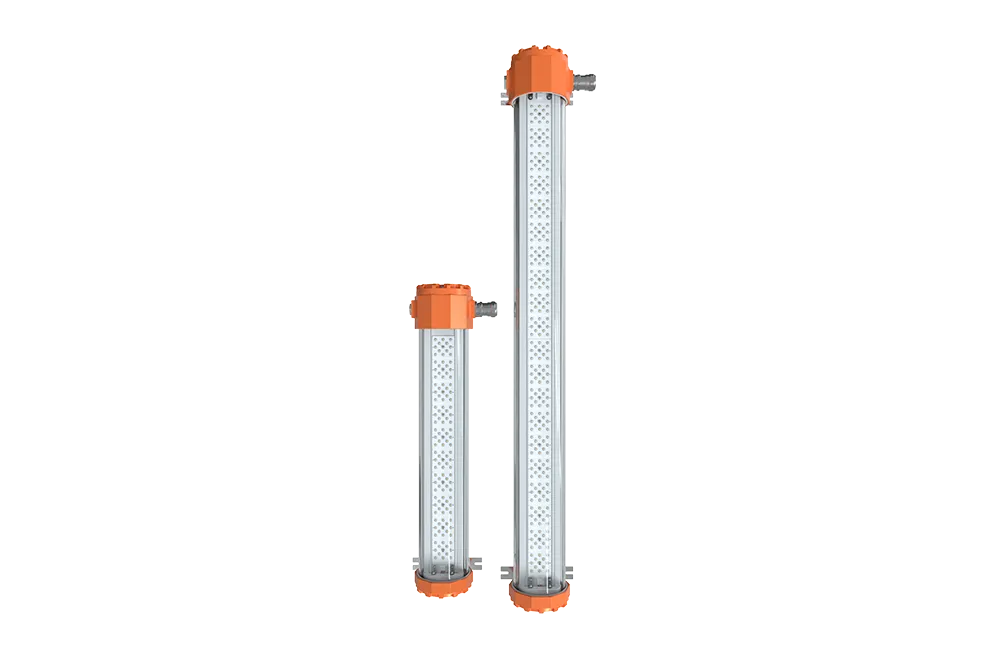
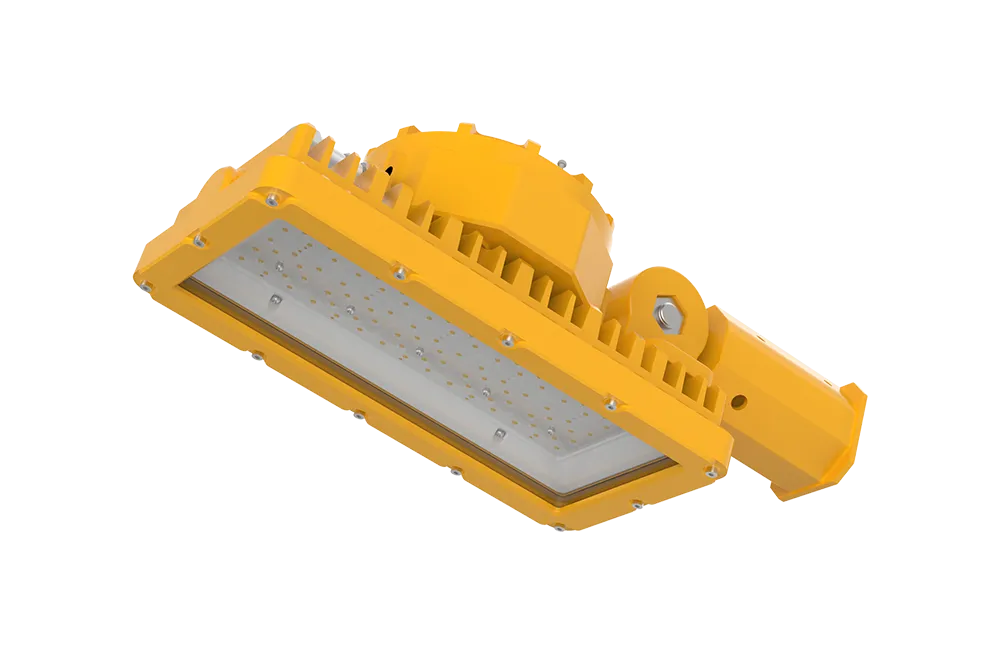
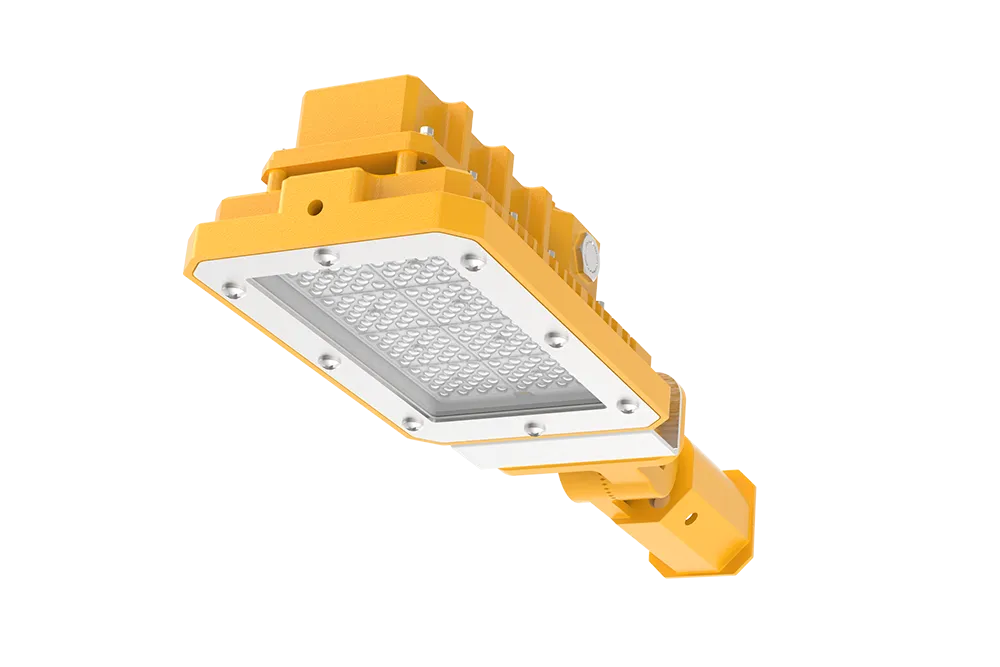
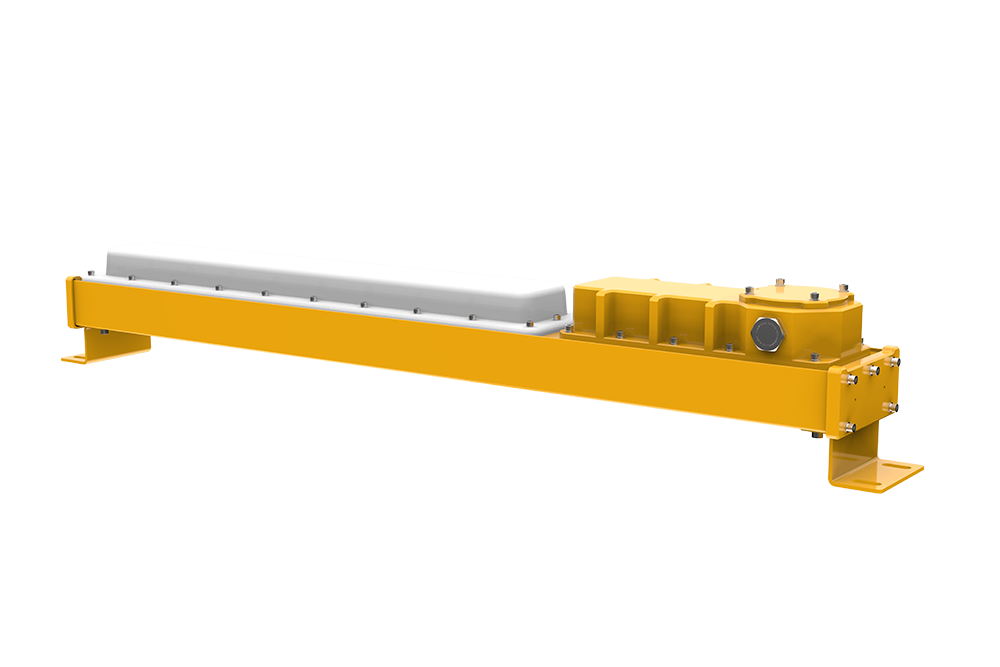
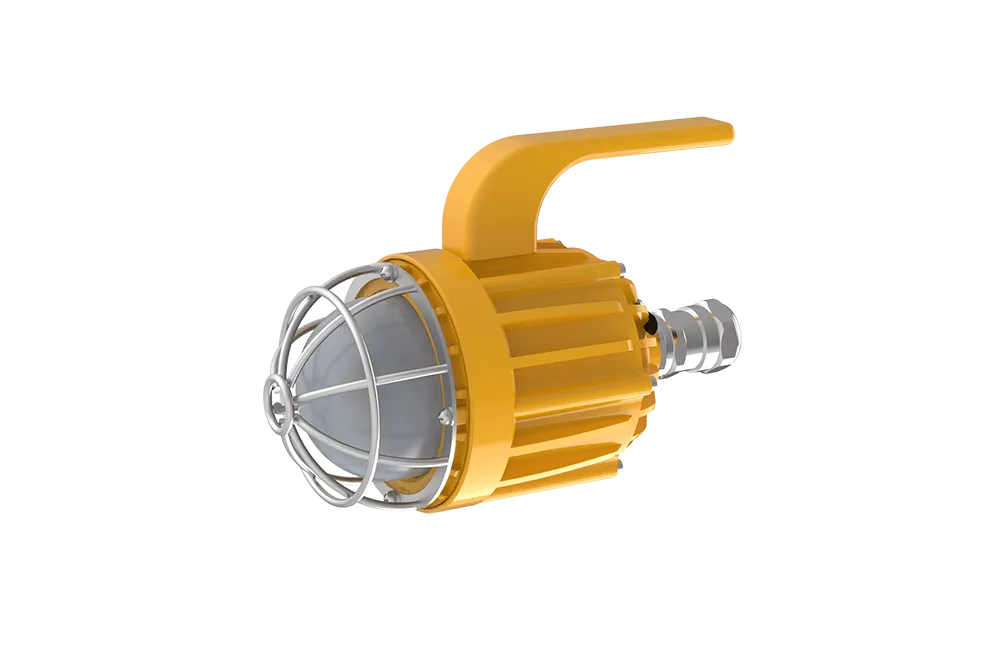
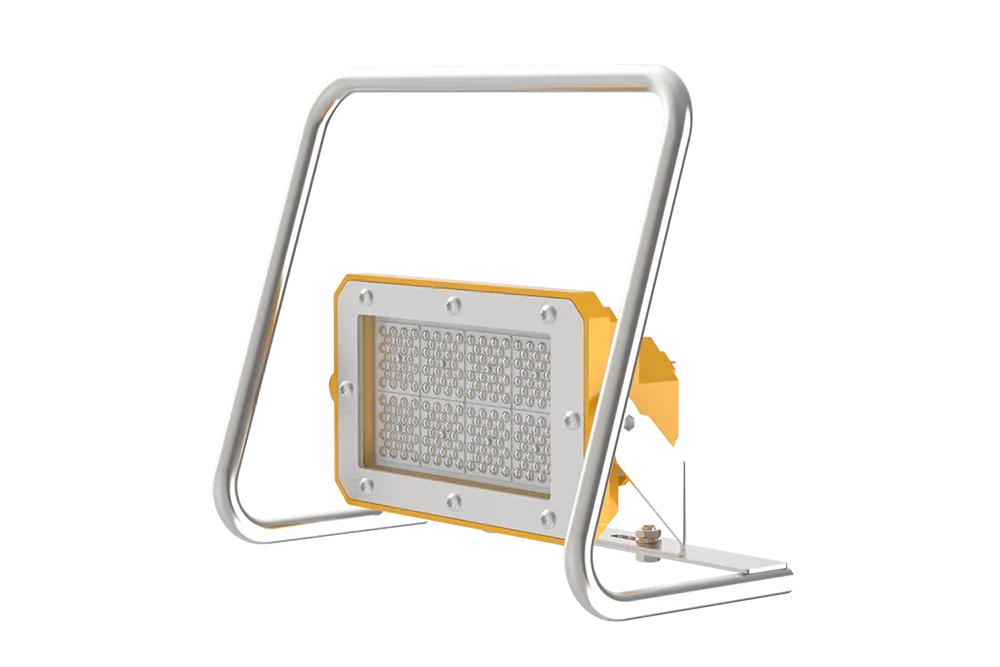
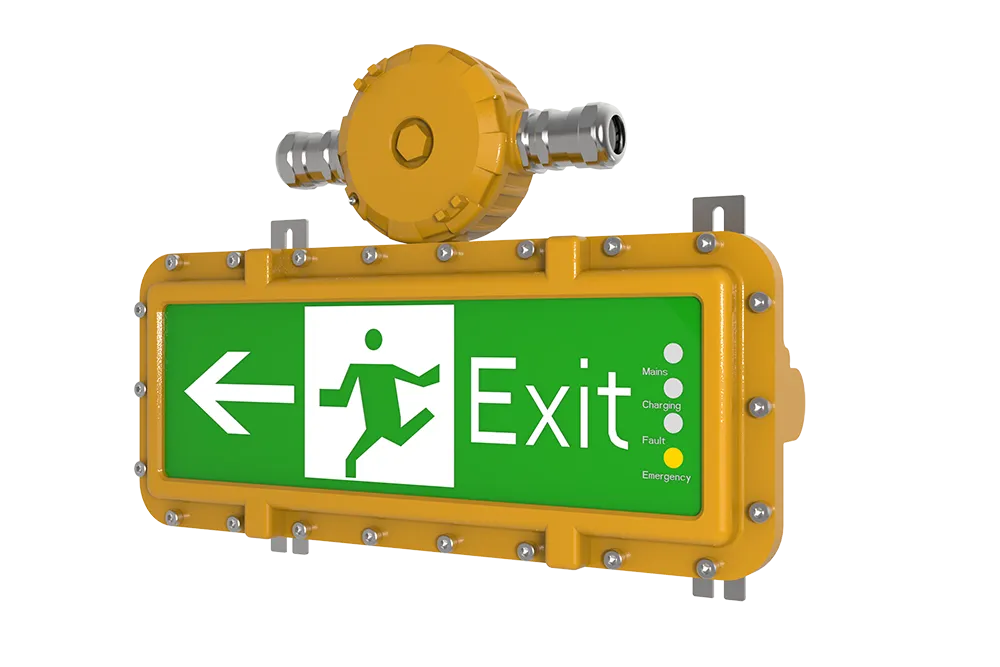
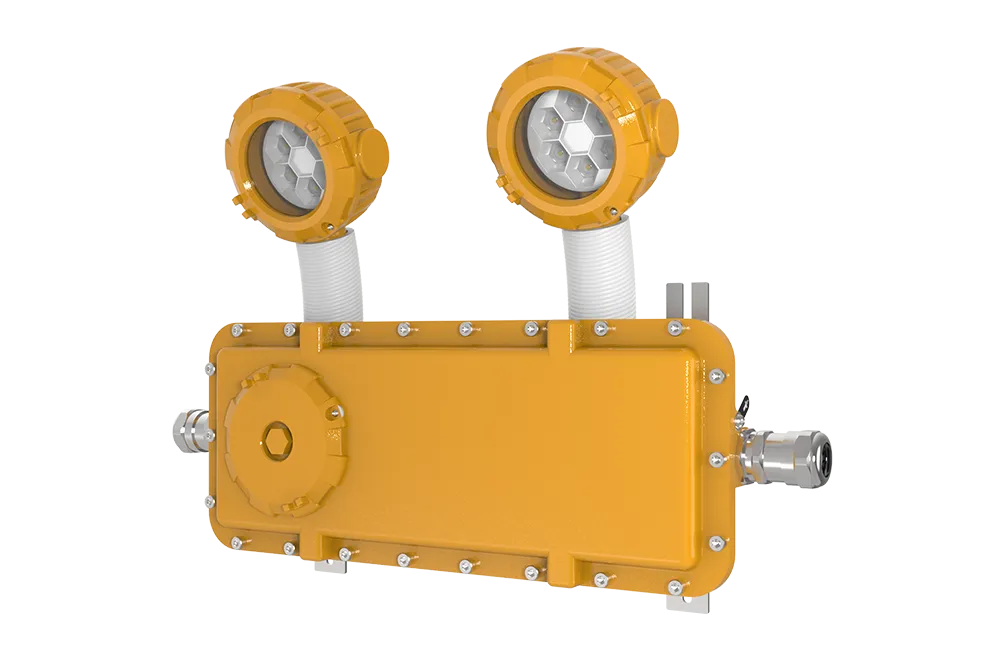
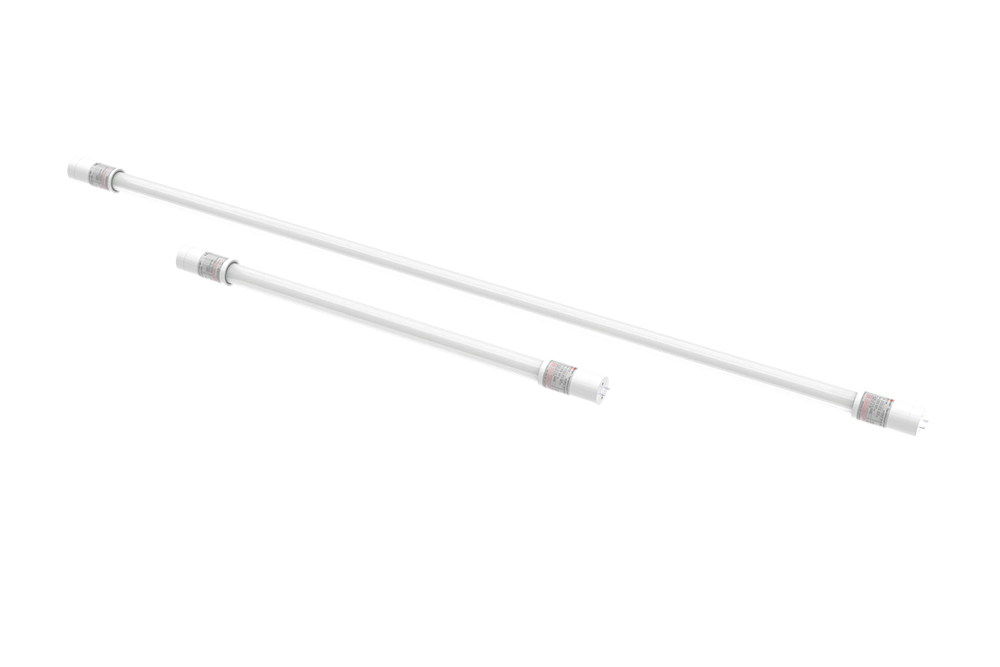
Explosion proof paint booth lighting is specifically designed to operate safely in spray booths where flammable paint vapors, solvents, and combustible atmospheres may be present. Properly certified fixtures reduce ignition risks while delivering the visibility required for high-quality coating work.
I learned this lesson years ago while visiting an industrial equipment manufacturer in Northern Europe. The production manager walked me through a freshly renovated paint facility. Everything looked modern until he pointed at a row of old fixtures removed from service.
“They worked perfectly,” he said.
“The problem wasn’t brightness.”
The problem was certification.
The fixtures had never been designed for environments where solvent vapors could accumulate.
That distinction matters more than many facility owners realize.
Paint booths are among the most misunderstood hazardous environments in manufacturing. To the untrained eye, they appear clean, organized, and relatively low-risk. Yet behind every spray gun is a cloud of atomized chemicals capable of creating explosive atmospheres under the right conditions.
That is exactly why explosion proof paint booth lighting exists.
Why Paint Booths Create Hazardous Conditions
Most people associate hazardous locations with oil rigs, refineries, and chemical plants.
Paint booths rarely make the list.
Yet many industrial paint systems involve:
Xylene
Toluene
Acetone
MEK (Methyl Ethyl Ketone)
Solvent-based coatings
Industrial primers
These substances release flammable vapors during application and curing.
According to the U.S. Occupational Safety and Health Administration (OSHA), spray finishing operations using flammable and combustible materials require special precautions because vapors may ignite when exposed to ignition sources.
Source:
OSHA Spray Finishing Using Flammable and Combustible Materials Website: https://www.osha.gov
During a facility audit several years ago, I watched maintenance technicians perform routine cleaning inside an automotive coating booth.
The booth itself looked spotless.
But once ventilation fans stopped, the odor changed immediately.
Within minutes, solvent concentration became noticeably stronger.
That experience reinforced something often overlooked:
Hazardous atmospheres are not always visible.
What Makes Explosion Proof Paint Booth Lighting Different?
Standard industrial lighting focuses on:
Brightness
Energy efficiency
Durability
Explosion proof lighting has a different mission.
Its primary purpose is preventing the fixture from becoming an ignition source.
Containing Internal Ignition Events
Explosion proof fixtures are engineered to:
Contain sparks
Isolate hot components
Control internal pressure
Prevent flame propagation
If an internal fault occurs, the enclosure prevents ignition from reaching the surrounding atmosphere.
This design principle is fundamental to hazardous location lighting worldwide.
According to the International Electrotechnical Commission (IEC), explosive atmospheres can be created by gases, vapors, mists, or combustible dusts, requiring equipment specifically designed to prevent ignition.
Common throughout Europe and many international markets.
Typical classifications include:
Zone
Risk Frequency
Zone 0
Continuous
Zone 1
Likely during operation
Zone 2
Unlikely but possible
Paint booth applications frequently involve:
Zone 1
Zone 2
depending on ventilation and process design.
IECEx Classification
Many multinational manufacturers increasingly specify IECEx-certified equipment because it simplifies compliance across global facilities.
This trend has accelerated particularly among:
Offshore operators
Shipbuilders
Oil & gas contractors
Aerospace manufacturers
Why LED Technology Has Changed Paint Booth Lighting
Twenty years ago, hazardous-location lighting relied heavily on:
Metal halide
High-pressure sodium
Fluorescent technology
Those systems worked.
But they created challenges.
Heat Generation
Traditional lamps produce substantial heat.
Heat and flammable atmospheres are never an ideal combination.
LEDs dramatically reduce surface temperatures while improving efficiency.
Energy Savings
According to the U.S. Department of Energy, modern LED systems can reduce lighting energy consumption by more than 50% compared with older technologies.
Source:
U.S. Department of Energy – Solid-State Lighting Program Website: https://www.energy.gov
For facilities operating paint booths around the clock, the savings become significant.
One production facility I visited replaced aging metal-halide hazardous fixtures with LED alternatives.
Their maintenance manager wasn’t initially interested in energy savings.
His concern was lift rental costs.
The old lamps required frequent replacement.
The new LED fixtures simply stayed in service.
That reduced downtime turned out to be the bigger financial win.
Improved Visibility
Painters rely on light quality.
Not just light quantity.
Poor visibility can hide:
Orange peel defects
Uneven coverage
Surface contamination
Color inconsistencies
High-quality explosion proof LED fixtures often provide:
CRI above 80
Uniform beam patterns
Reduced shadows
Instant start-up
Those characteristics directly influence coating quality.
How Much Light Does a Paint Booth Need?
This question appears simple.
It rarely is.
Illumination requirements depend on:
Booth dimensions
Ceiling height
Surface reflectivity
Inspection requirements
Many industrial coating operations target illumination levels between approximately 750 and 1,000 lux.
Detailed inspection stations may require even higher values.
Example Calculation
Paint Booth:
Length: 15 meters
Width: 8 meters
Area:
15 × 8 = 120 m²
Target:
1,000 lux
Required lumens:
120 × 1,000 = 120,000 lumens
If each explosion proof LED fixture produces:
20,000 lumens
Required fixtures:
120,000 ÷ 20,000 = 6 fixtures
Real-world designs should always include photometric analysis rather than simple lumen calculations.
How to Choose Explosion Proof Paint Booth Lighting
The specification sheet is usually where buyers begin.
In practice, the paint booth itself should come first.
I have seen projects where engineers selected a premium hazardous-location luminaire, only to discover later that the beam pattern created dark zones behind equipment racks and vehicle contours. The fixture met certification requirements. The lighting design did not.
That distinction matters.
Step 1 – Verify the Hazardous Area Classification
Before comparing brands, wattages, or prices, confirm:
Hazardous location classification
Applicable local regulations
Gas group requirements
Temperature class requirements
Common specifications include:
Class I Division 1
Class I Division 2
ATEX Zone 1
ATEX Zone 2
IECEx Zone 1
IECEx Zone 2
Selecting the wrong certification can create inspection issues long after installation.
Step 2 – Evaluate Light Distribution
Many buyers focus only on lumen output.
That can be misleading.
Two fixtures producing 20,000 lumens may illuminate a paint booth very differently.
Factors affecting performance include:
Beam angle
Mounting height
Booth dimensions
Reflective wall surfaces
Equipment layout
For example:
Beam Angle
Typical Use
30°
High mounting points
60°
Medium-height booths
90°
General booth illumination
120°
Wide-area coverage
In automotive refinishing booths, wider beam patterns often create more uniform visibility across body panels.
Step 3 – Examine CRI Performance
Paint quality inspection requires accurate color rendering.
A coating defect that is obvious under daylight may disappear under poor lighting.
Many industrial coating facilities target:
CRI 80+
Neutral white color temperatures
Consistent color rendering throughout the booth
According to the U.S. Department of Energy, improved color quality enhances visual task performance in industrial environments.
UL844 dominates hazardous-location lighting projects in North America.
It aligns with NEC classifications including:
Class I Division 1
Class I Division 2
Paint booth operators serving U.S. markets frequently specify UL-certified products.
Comparison Table
Standard
Primary Market
Typical Paint Booth Application
ATEX
Europe
Industrial spray booths
IECEx
Global
Offshore and multinational facilities
UL844
USA & Canada
Automotive and manufacturing plants
The best certification is not the most prestigious one.
It is the one required by your jurisdiction and end user.
Corrosion Resistance Matters More Than Most Buyers Expect
The lighting itself may survive for years.
The environment often attacks everything around it.
Paint booth conditions frequently include:
Solvent exposure
Humidity
Cleaning chemicals
Overspray accumulation
These factors accelerate corrosion.
In one marine equipment factory I visited, maintenance records showed that enclosure hardware deteriorated faster than LED modules.
The electronics remained functional.
The mounting hardware did not.
That observation changed how many engineers evaluate hazardous-location lighting.
Features Worth Prioritizing
Look for:
Marine-grade aluminum
Stainless steel fasteners
Powder-coated housings
Corrosion-resistant cable glands
UV-resistant seals
Particularly in shipbuilding and offshore coating facilities, corrosion protection directly affects service life.
According to the International Association of Oil & Gas Producers (IOGP), corrosion remains one of the leading contributors to infrastructure maintenance costs across industrial assets.
Explosion Proof Paint Booth Lighting for Offshore and Marine Applications
Offshore projects create a unique challenge.
You are not simply dealing with paint vapors.
You are also fighting:
Salt spray
Humidity
Wind-driven moisture
Corrosive atmospheres
On an offshore platform, even a well-designed fixture can fail prematurely if corrosion protection is inadequate.
This is why many offshore paint facilities specify:
IECEx certification
Marine-grade coatings
Stainless steel hardware
High-impact protection ratings
The lighting system must survive long after commissioning crews leave the platform.
Typical Offshore Coating Areas
Examples include:
Helideck maintenance zones
Structural steel coating areas
Pipe spool fabrication facilities
Equipment refurbishment workshops
In these environments, durability often becomes as important as certification.
Total Cost of Ownership: The Number Buyers Often Miss
Purchase price dominates many procurement discussions.
Operational costs tell a different story.
Example Scenario
Facility operation:
16 hours daily
365 days annually
Fixture life:
Metal Halide: frequent lamp replacements
LED Explosion Proof Fixture: significantly longer service intervals
According to DOE lighting studies, LEDs can achieve operational lifetimes exceeding 50,000 hours, with many industrial systems targeting 100,000 hours under controlled conditions.
In many facilities, maintenance costs eventually exceed initial fixture costs.
That reality explains why higher-quality explosion proof paint booth lighting often delivers lower lifecycle costs despite higher upfront investment.
Common Mistakes Buyers Make
After reviewing hundreds of lighting specifications, several patterns appear repeatedly.
Mistake #1 – Selecting by Wattage Alone
Wattage is not performance.
A 100W fixture can outperform a 150W fixture depending on:
Optics
Efficiency
Beam distribution
Mistake #2 – Ignoring Temperature Ratings
Hazardous locations require temperature class compliance.
Higher temperatures increase ignition risks.
Always verify:
T4
T5
T6
requirements where applicable.
Mistake #3 – Assuming IP66 Means Explosion Proof
This misunderstanding remains surprisingly common.
IP66 indicates ingress protection.
It does not certify hazardous-location suitability.
The two ratings serve entirely different purposes.
FAQ About Explosion Proof Paint Booth Lighting
Are paint booths always hazardous locations?
Not always. Classification depends on solvent use, ventilation systems, and local regulations. Many solvent-based spray booths require hazardous-location equipment.
Can LED lights be used inside paint booths?
Yes, provided they are properly certified for the applicable hazardous area classification.
What certification is best for paint booths?
The correct certification depends on location and regulations. ATEX, IECEx, and UL844 are all widely used.
How long do explosion proof LED fixtures last?
High-quality fixtures commonly target operational lifetimes of 50,000–100,000 hours depending on thermal management and operating conditions.
Why is high CRI important in paint booths?
High CRI improves defect detection, color matching, and overall coating inspection accuracy.
Final Thoughts
The phrase explosion proof paint booth lighting sounds straightforward until you spend time inside an active coating facility.
You notice the ventilation system working continuously. You smell solvents near the mixing area. You watch inspectors examine surfaces under bright, carefully controlled illumination. The lighting is doing more than making the room visible.
It is helping manage risk.
From automotive manufacturing and aerospace coating lines to offshore fabrication yards, properly certified hazardous-location lighting protects personnel, supports compliance, improves coating quality, and reduces long-term operating costs.
That combination is precisely why many modern industrial facilities continue investing in advanced LED hazardous-location solutions from manufacturers such as SEEKINGLED.
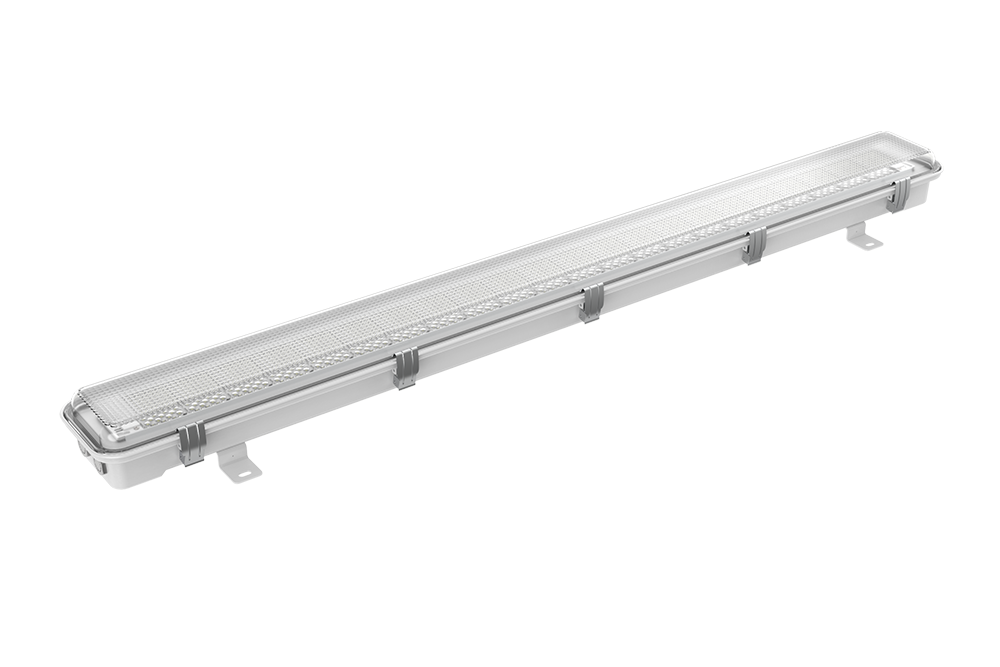
SEEKINGLED LED Linear Explosion Proof Light and Explosion Proof lighting is ATEX and IECEx certified for Zone 1, Zone 2, Zone 21 and Zone 22 hazardous locations, built for long-term industrial use.
LED Linear Explosion Proof Lights and EX Proof lights for Zone 1, Zone 2, Zone 21 and Zone 22 hazardous areas. ATEX & IECEx certified explosion proof LED linear lighting with emergency function, adjustable power and IP67 protection by SEEKINGLED.
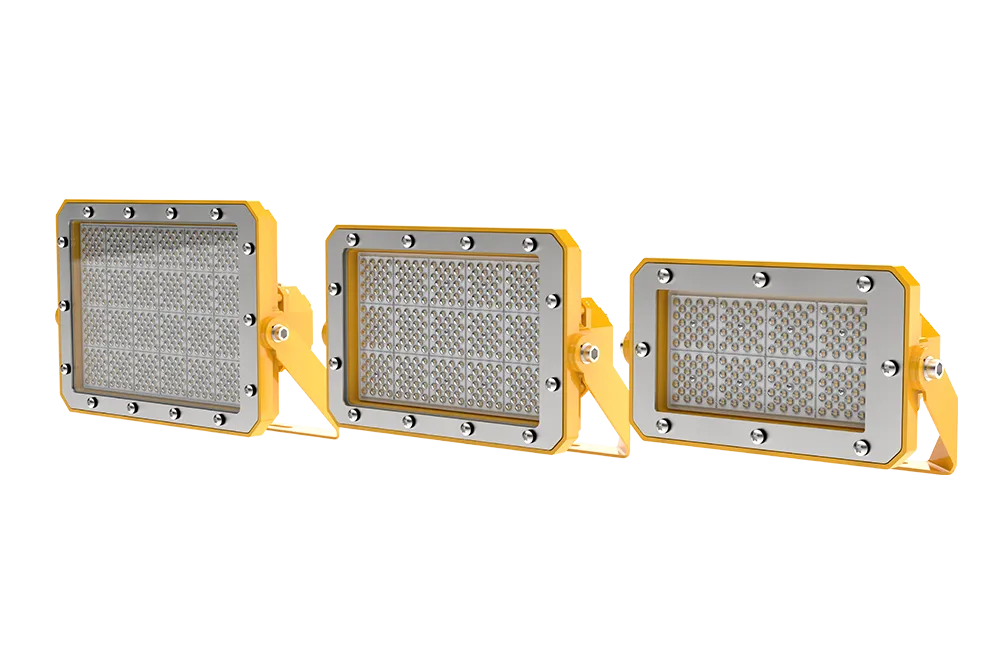
SEEKINGLED LED Explosion Proof Flood Lights are ATEX certified for Zone 2 and Zone 22 hazardous areas, offering high efficiency, adjustable power and integrated junction box.
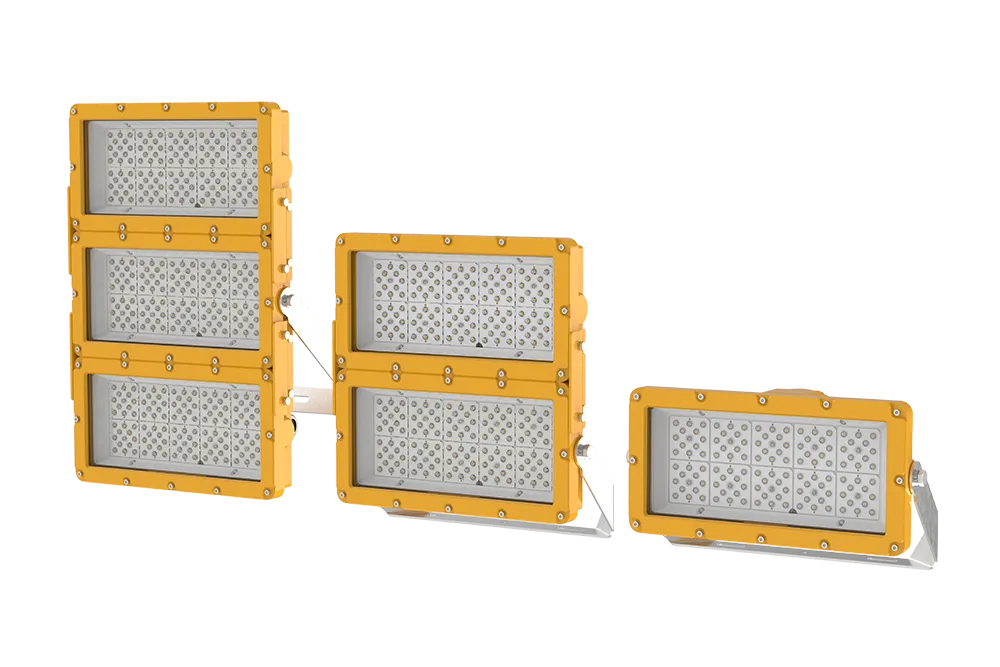
SEEKINGLED LED Explosion Proof Flood Lights are flameproof ATEX and IECEx certified for Zone 1 and Zone 2 hazardous areas, offering high power, adjustable output and long service life.
SEEKINGLED LED Gas Station Canopy Lights are ATEX certified for Zone 2 and Zone 22 hazardous areas, featuring adjustable power and built-in explosion-proof junction box.
ATEX: Ex II 2G Ex db IIB T6/T5 GbEx II 2D Ex tb IIIC T80°C/ T95°C Db IECEx Ex db IIB T6 Gb;Ex tb IIIC T80°C Db Feature: ● For Zone 1,2 and Zone 21,22● Flameproof type, the strongest● 100W can replace 250W HID,energy saving● Power:60W,80W,100W Application: Oil and gas, marine, Chemical, pharmaceutical, semiconductor,mining,military industr…
ATEX: II 3G Ex nR ⅡC T5/T6 GcII 3D Ex tc ⅢC T80℃/T95℃Dc ATEX Certificate NO: TÜV CY 26 ATEX 0207611 X Feature: ● For Zone 2 and Zone 22● 150W can replace 250W HID lamps,Energy saving● Power:50W,75W,100W,150W,200W Application: Oil and gas, marine, Chemical, pharmaceutical, semiconductor,mining,military industry, paint booth,power plant ETC…
LED explosion proof high bay lights are designed for Zone 1, Zone 2, Zone 21 and Zone 22 hazardous areas. This page introduces the HB21 Series from SEEKING, including certifications, power options and real application considerations.
LED Linear Explosion Proof Lights from SEEKINGLED. LU Series Flame Proof lights ATEX-certified explosion proof LED linear lighting for Zone 2 gas and Zone 22 dust areas, IP69K, IK10, long lifetime and flexible power options.
Certified explosion proof work lights for Zone 1 & 21 hazardous areas. Portable, ATEX & IECEx approved, built for oil, gas and chemical plants by SEEKINGLED.
ATEX: II 3G Ex nR ⅡC T6 GcII 3D Ex tc ⅢC T80℃ Dc ATEX Certificate NO: TÜV CY 26 ATEX 0207611 X Feature: ● For Zone 2 and Zone 22● Accepts battery-powered supply● indestructible● Power:AC input:50W,75W,100WDC input:15W,25W,35W Application: Oil and gas, marine, Chemical, pharmaceutical, semiconductor,mining,military industry, paint booth,po…
ATEX: Ex II 2G Ex db IIB T6 GbEx II 2D Ex tb IIIC T80°C Db IECEx Ex db IIB T6 Gb;Ex tb IIIC T80°C Db Feature: ● For Zone 1,2 and Zone 21,22● Flameproof type, the strongest Application: Oil and gas, marine, Chemical, pharmaceutical, semiconductor,mining,military industry, paint booth,power plant ETC hazardous area. Technical Specifications:…
ATEX: Ex II 2G Ex db IIB T6 GbEx II 2D Ex tb IIIC T80°C Db IECEx Ex db IIB T6 Gb;Ex tb IIIC T80°C Db Feature: ● For Zone 1,2 and Zone 21,22● Flameproof type, the strongest Application: Oil and gas, marine, Chemical, pharmaceutical, semiconductor,mining,military industry, paint booth,power plant ETC hazardous area. Technical Specifications:…
ATEX: Ex II 2G Ex d e IIB T6 Gb ATEX: Ex d e IIB T6 Gb; Feature: ● For Zone 1,2● 9W can replace 18W fluorescent lamps,50% Energy saving Application: Oil and gas, marine, Chemical, pharmaceutical, semiconductor,mining,military industry, paint booth,power plant ETC hazardous area. Technical Specifications: Standards:60079-0, 60079-1, 60079…
In 2024, a European factory adopted SEEKING XJ-HBC240W LED High Bay Light fixtures, achieving 170 lm/W, 300+ LUX average illuminance, high uniformity and motion-sensing control for extra energy savings.
what does atex stand for? Discover the meaning of ATEX, explosive atmosphere regulations, hazardous area equipment requirements, and industrial safety applications.
How to install LED flood light correctly for outdoor and industrial applications. Learn wiring, mounting height, safety tips, and common installation mistakes.
Zone 1 LED floodlight solutions deliver certified safety, reliable performance, and powerful illumination for hazardous industrial environments and explosive gas zones.
 Seeking LED