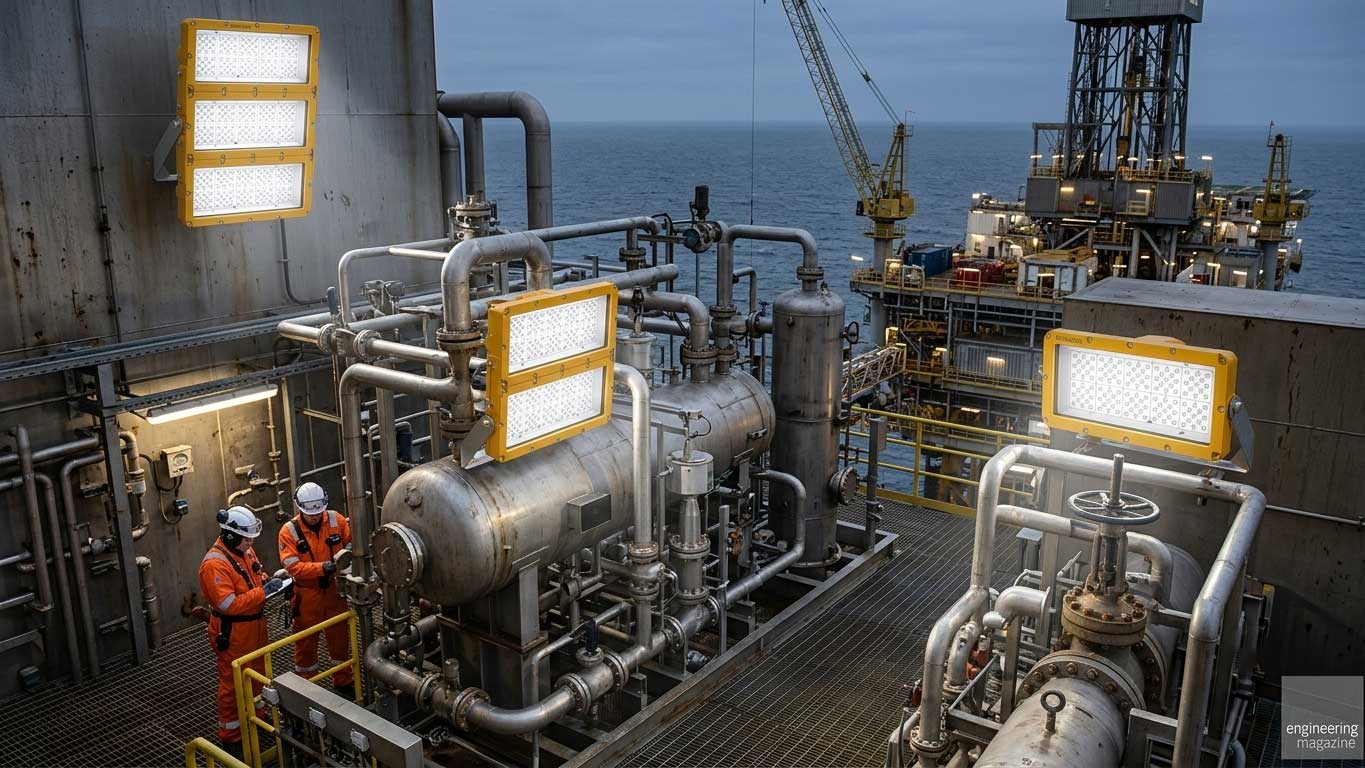
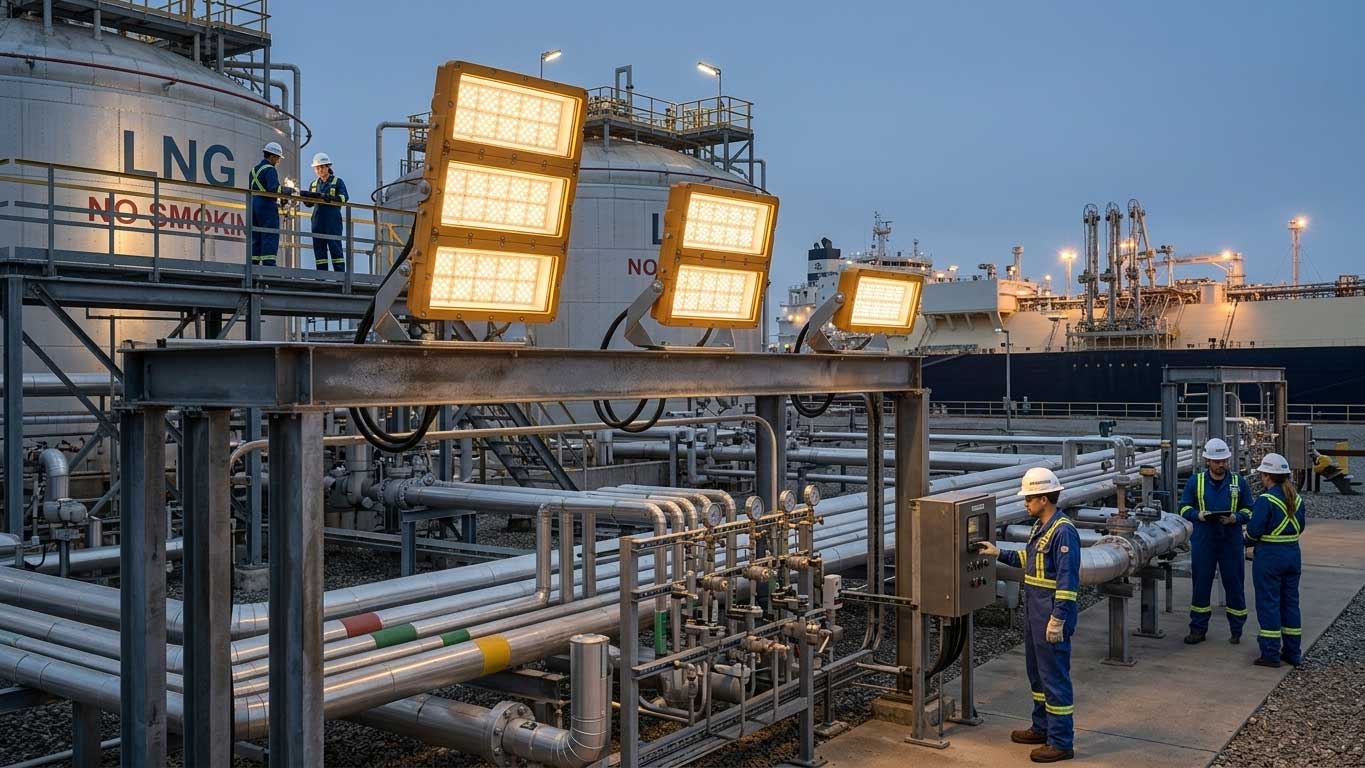
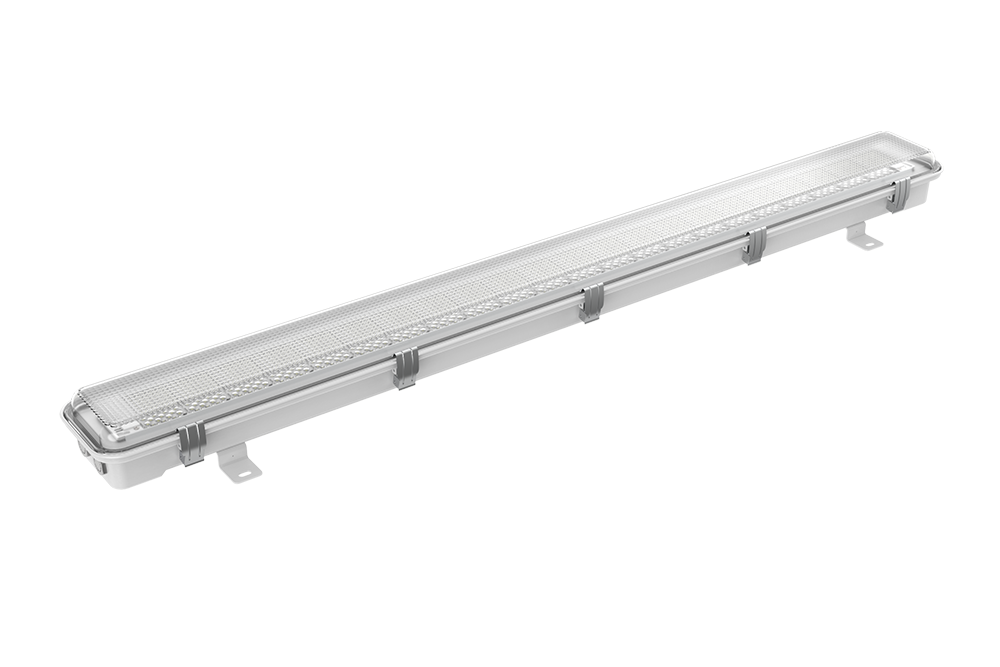
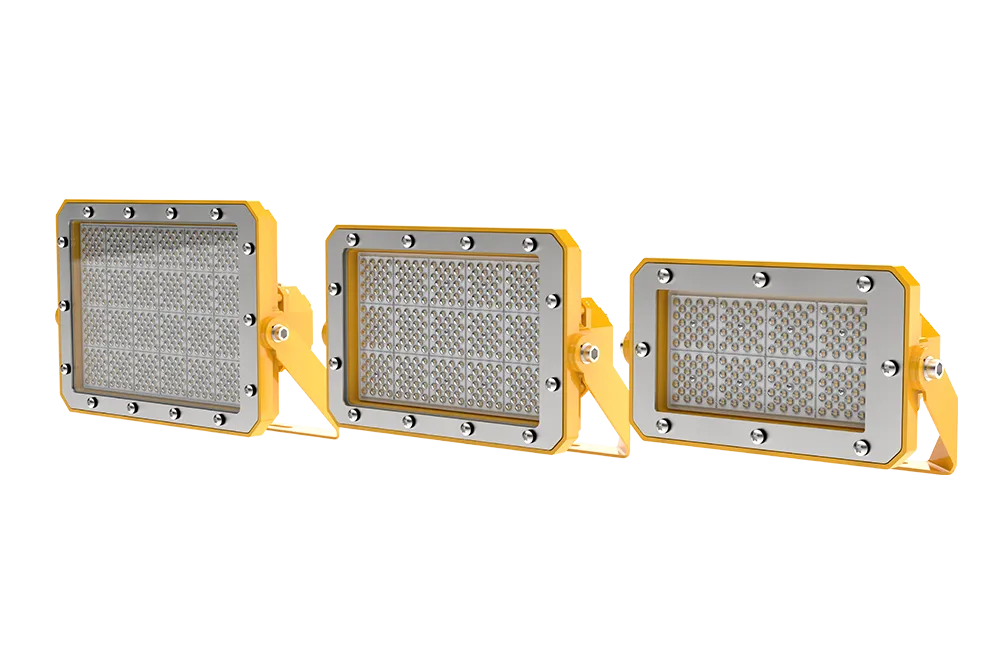
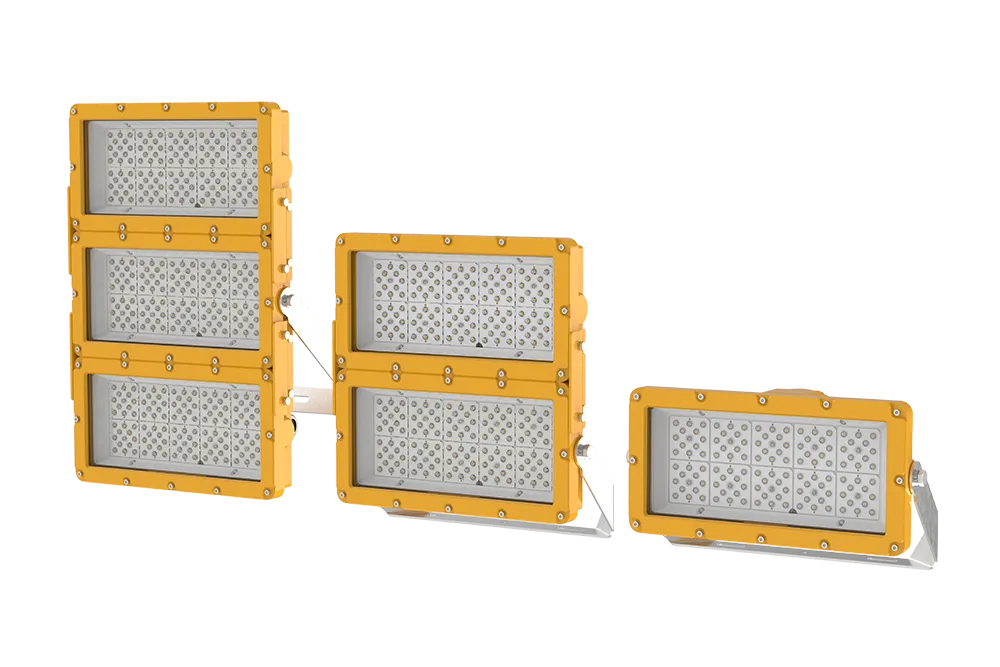
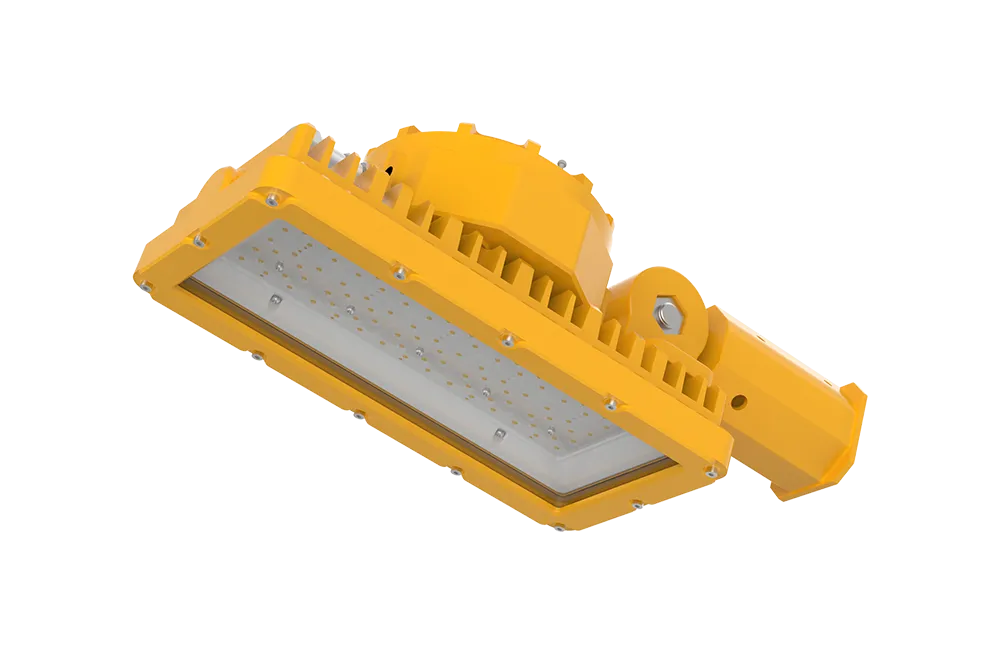
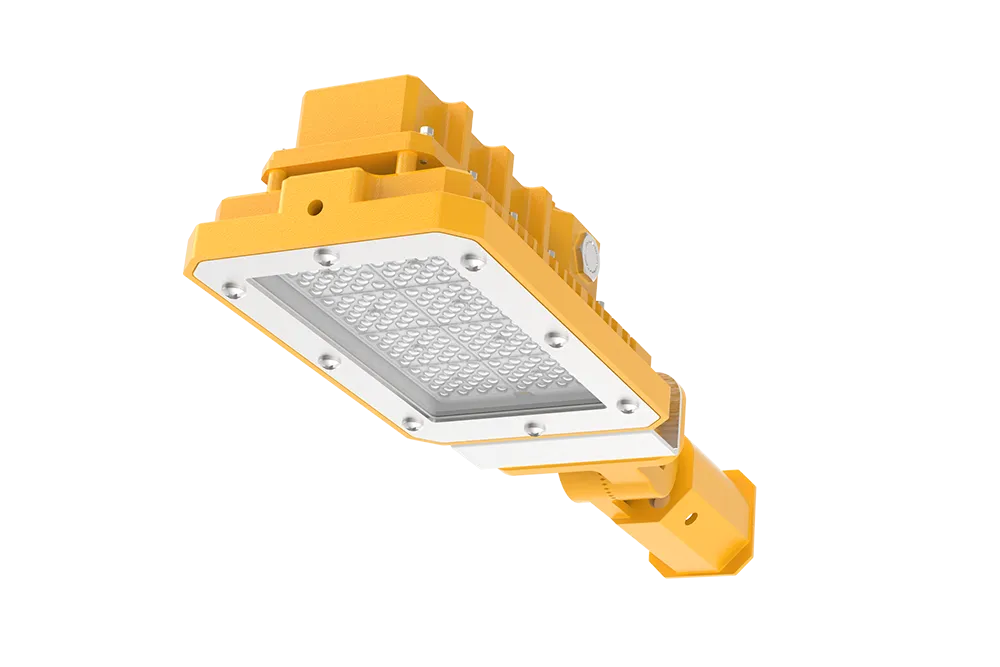
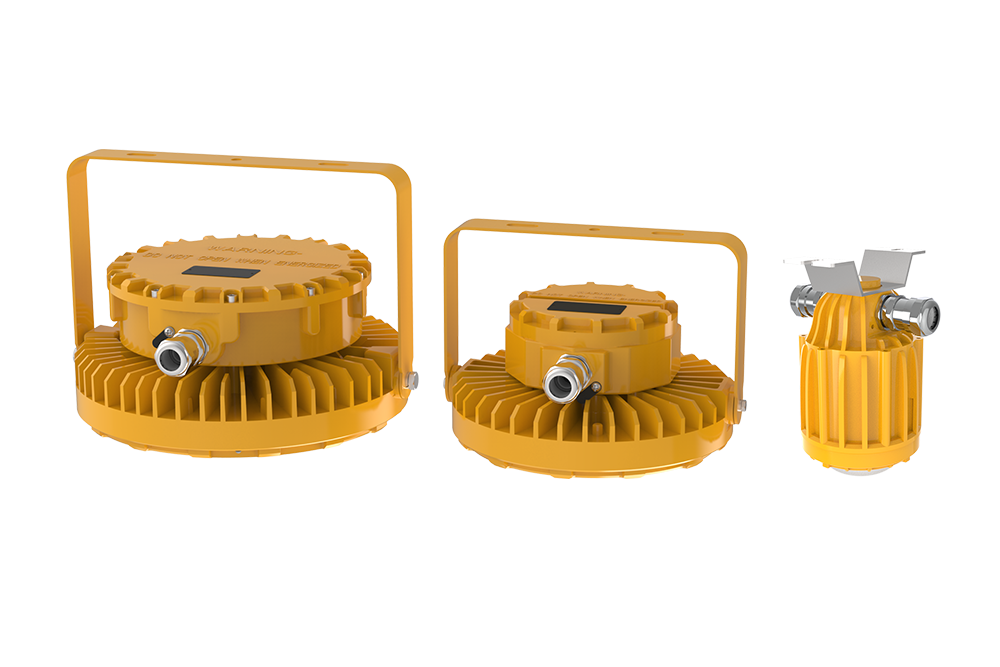
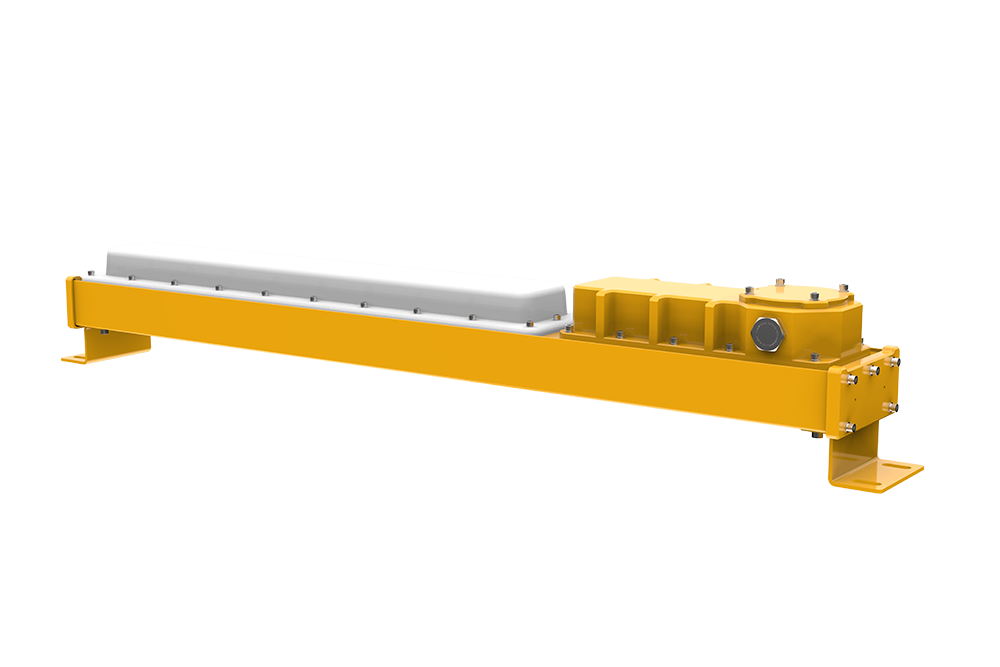
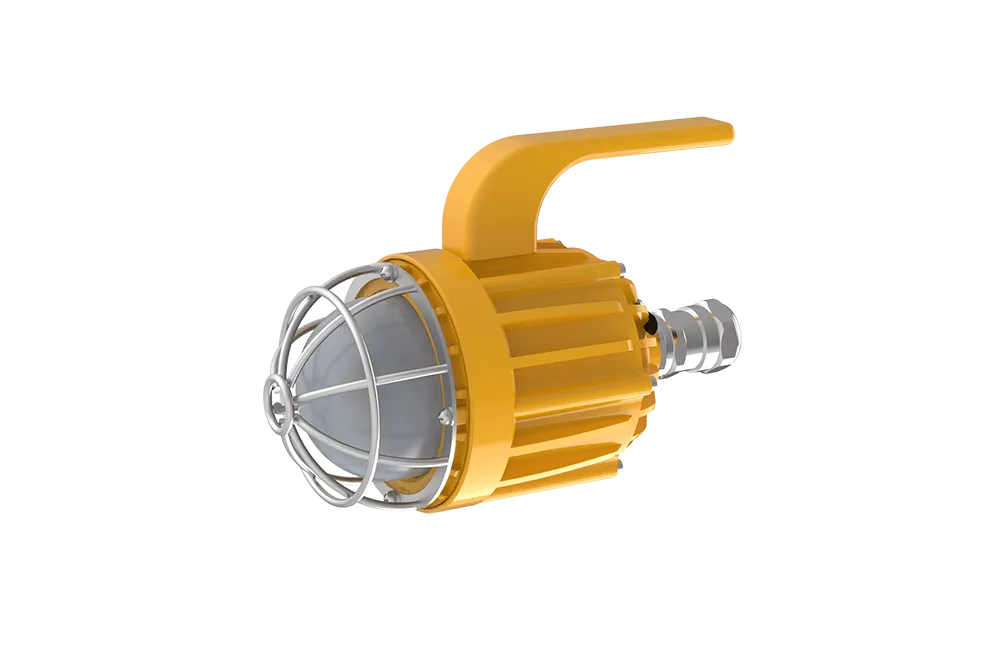
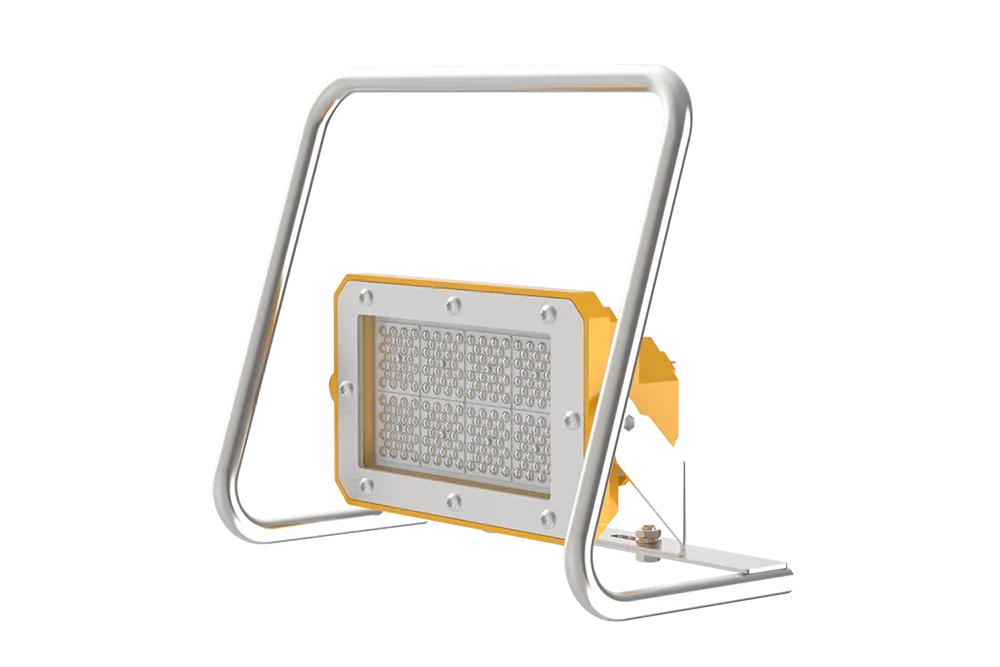
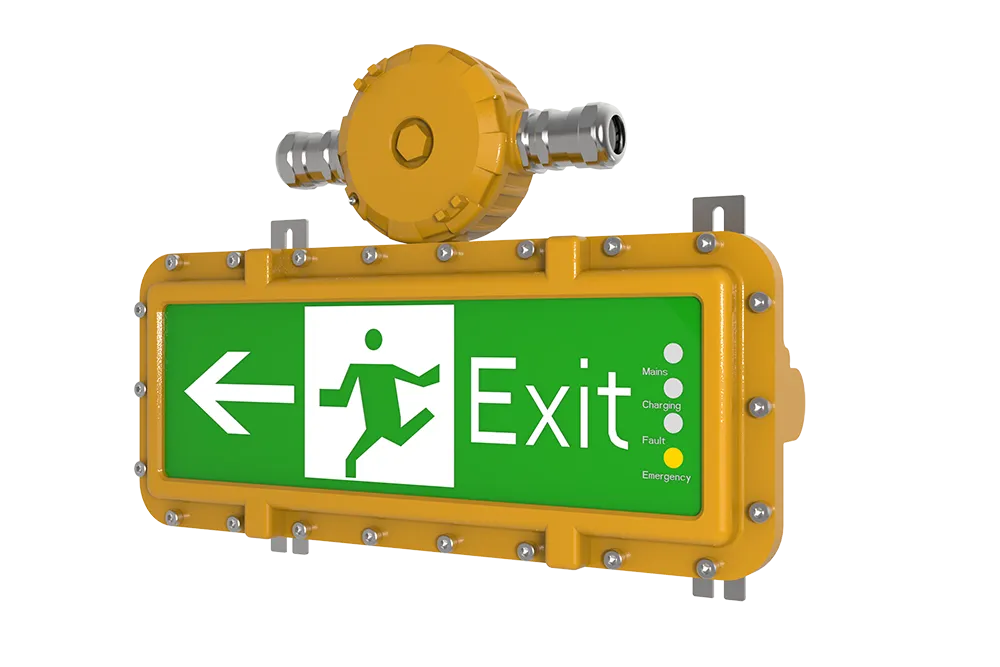
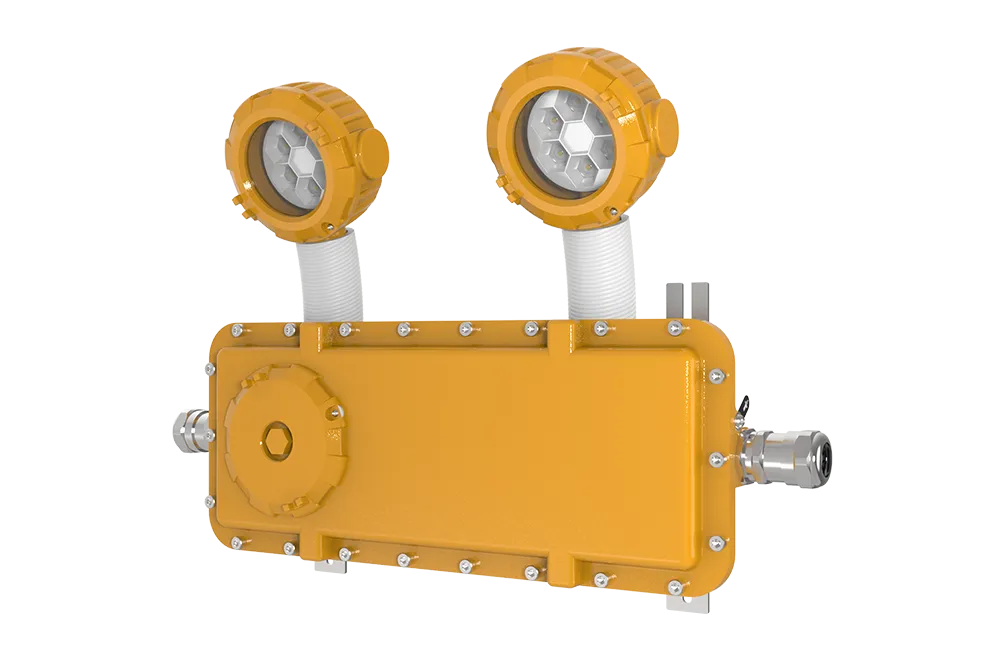
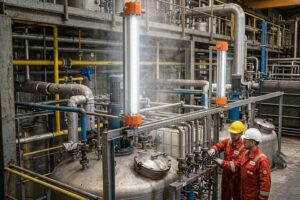
Hazardous area – zone 1 & 2 atex lighting is specifically designed for locations where explosive gas atmospheres may occur during normal or abnormal operations. Properly certified ATEX luminaires reduce ignition risks, comply with European safety regulations, and provide reliable illumination in oil, gas, chemical, marine, and industrial environments.
That sounds simple enough.
Yet after more than a decade working with industrial lighting projects, I’ve learned that hazardous-area lighting decisions rarely remain simple once a project reaches the field. A refinery engineer worries about compliance. Maintenance teams focus on reliability. Procurement departments compare pricing. Safety officers ask for certification records. The lighting fixture installed above a processing unit somehow has to satisfy all of them at the same time.
That is where understanding hazardous area – zone 1 & 2 atex lighting becomes critical—not from a catalog perspective, but from an operational one.
Why ATEX Lighting Exists
The purpose of ATEX lighting is straightforward.
Prevent equipment from becoming an ignition source.
Every industrial explosion requires three elements:
Fuel
Oxygen
Ignition source
This is commonly known as the fire triangle.
In oil refineries, LNG terminals, chemical plants, and fuel storage facilities, combustible gases cannot simply be eliminated. They are part of normal operations. Since the fuel remains present, equipment must be engineered so it cannot ignite the surrounding atmosphere.
This concept forms the foundation of the European ATEX framework.
According to the European Commission’s ATEX Directive 2014/34/EU, equipment intended for potentially explosive atmospheres must satisfy strict design, testing, and certification requirements before entering the market.
What many people do not realize is that ATEX compliance affects far more than electrical components.
It influences:
Housing construction
Cable entries
Thermal management
Sealing systems
Surface temperatures
Material selection
In hazardous locations, even a small spark or excessive surface temperature can have serious consequences.
Understanding Hazardous Area Zones
One of the most common misunderstandings involves Zone 1 and Zone 2 classifications.
People often assume the difference is minor.
It isn’t.
The distinction determines which equipment can legally and safely be installed.
What Is Zone 1?
Zone 1 refers to areas where an explosive gas atmosphere is likely to occur occasionally during normal operation.
Typical examples include:
Petroleum processing units
Offshore drilling modules
Fuel transfer systems
LNG processing equipment
Compressor stations
Solvent handling facilities
The key phrase is “during normal operation.”
This means hazardous gas releases are expected as part of regular industrial processes.
I’ve walked through hydrocarbon processing facilities where gas detection systems continuously monitored operating areas. Nobody expected a major release, but everyone understood that small releases could occur during routine production activities.
That reality is precisely why Zone 1 requirements are stringent.
What Is Zone 2?
Zone 2 locations carry a lower level of risk.
An explosive atmosphere is not expected during normal operations.
If it does occur, it exists only briefly.
Examples often include:
Areas surrounding Zone 1 equipment
Ventilation discharge locations
Pipe rack corridors
Secondary processing zones
Facility perimeter areas
The probability is lower.
The consequences, however, remain significant.
As a result, lighting equipment still requires certification appropriate for the environment.
Zone 1 vs Zone 2 Comparison
The easiest way to understand the difference is through direct comparison.
Classification
Zone 1
Zone 2
Explosive Atmosphere
Expected Occasionally
Expected Only Under Abnormal Conditions
Hazard Level
Higher
Lower
Equipment Category
Category 2G
Category 3G
Inspection Requirements
More Stringent
Less Stringent
Typical Locations
Processing Areas
Adjacent Areas
Certification Requirements
Higher Protection Levels
Moderate Protection Levels
On paper, the difference appears subtle.
In practice, selecting the wrong classification can halt an entire project during inspection.
I’ve seen newly installed lighting systems removed because procurement teams mistakenly specified Zone 2 fixtures for a Zone 1 application. The fixtures worked perfectly. The paperwork did not.
What Makes ATEX LED Lighting Different?
At first glance, ATEX-certified luminaires often resemble conventional industrial LED fixtures.
The differences are hidden beneath the housing.
Engineers focus heavily on areas that most end users never see.
These include:
Flame paths
Explosion containment structures
Cable gland integrity
Housing strength
Thermal management systems
Pressure-resistant enclosures
The objective is simple.
If an ignition occurs inside the fixture, it must not ignite the surrounding atmosphere.
Achieving this requires substantial engineering effort.
This is one reason certified hazardous-area luminaires typically cost more than standard industrial lighting products.
The additional cost comes from design validation, testing, certification, and specialized manufacturing requirements.
Understanding ATEX Markings
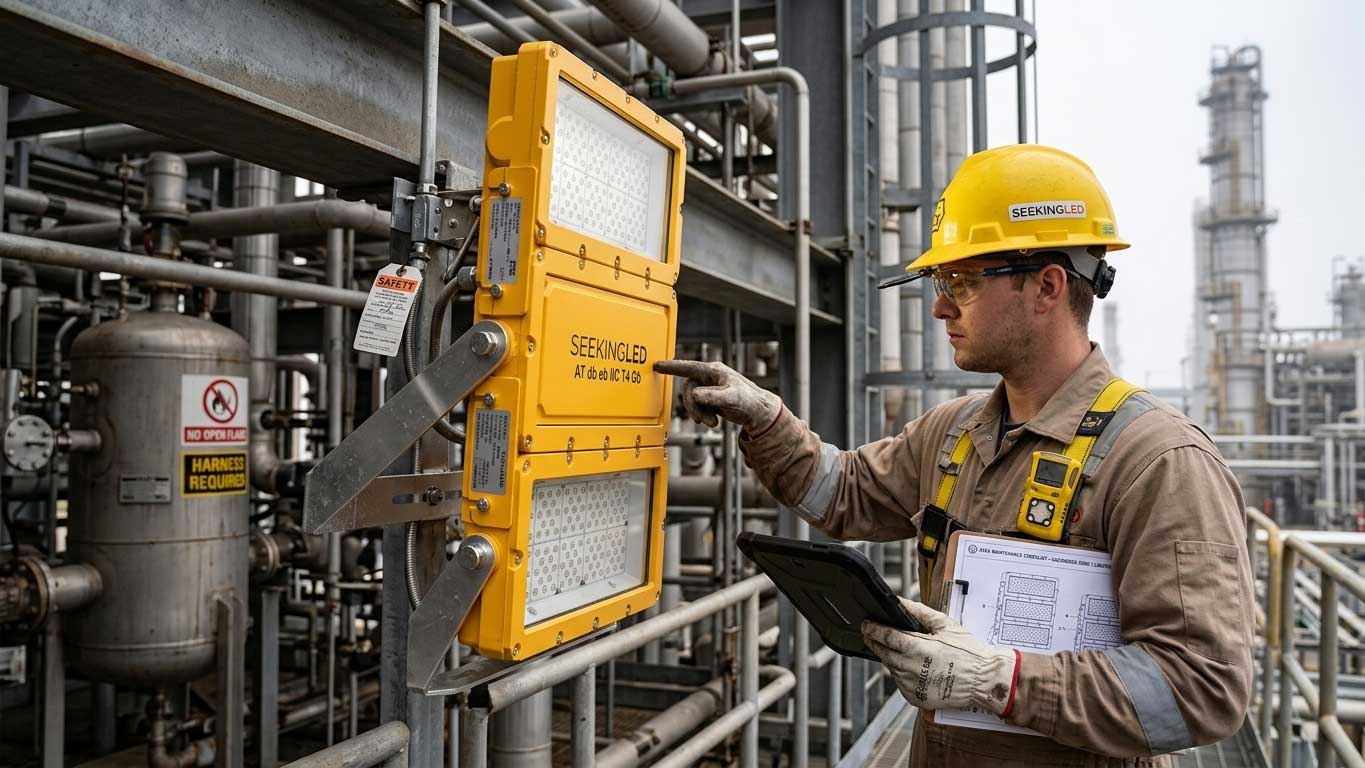
Many project specifications contain markings that appear confusing at first glance.
For example:
Ex db IIC T6 Gb
To experienced engineers, this marking immediately reveals critical information.
Marking
Meaning
Ex
Explosion Protected Equipment
db
Flameproof Protection Method
IIC
Hydrogen and Acetylene Gas Group
T6
Maximum Surface Temperature 85°C
Gb
Equipment Protection Level
Understanding these markings prevents costly specification errors.
Particularly when multiple hazardous gases are present within a facility.
For example, equipment certified for IIC environments can generally be used in IIA and IIB applications as well, providing greater flexibility for future projects.
Industries That Depend on Hazardous Area – Zone 1 & 2 ATEX Lighting
Industrial hazardous locations exist across far more sectors than many people realize.
While oil and gas often receives the most attention, ATEX-certified lighting plays a critical role in numerous industries.
Oil and Gas Facilities
The oil and gas industry remains one of the largest consumers of hazardous-area lighting worldwide.
Facilities routinely handle:
Crude oil
Natural gas
LPG
Condensates
Volatile hydrocarbons
Lighting fixtures installed in these environments face a combination of challenges:
Explosive atmospheres
Corrosive chemicals
High humidity
Vibration
Extreme temperatures
A refinery walkway may appear calm during a site visit, yet the atmosphere classification behind that location often reflects decades of engineering risk assessment.
Reliable lighting is not merely about visibility.
It is part of the facility’s overall safety strategy.
Chemical Manufacturing Plants
Chemical processing introduces a different challenge.
Corrosion.
Many facilities handling solvents, acids, and specialty chemicals expose lighting systems to conditions that can degrade ordinary fixtures surprisingly quickly.
I’ve inspected chemical plants where structural steel remained in excellent condition while improperly specified lighting systems showed obvious signs of deterioration.
The lesson is simple.
Certification alone is not enough.
Long-term durability matters just as much.
Pharmaceutical Processing Facilities
Pharmaceutical manufacturers frequently operate solvent-handling areas classified as hazardous locations.
These environments create a unique combination of requirements:
Explosion protection
Hygienic design
Easy cleaning
Long service life
Lighting equipment must satisfy all four simultaneously.
That balance often drives the selection of specialized ATEX-certified luminaires designed specifically for pharmaceutical production facilities.
The Shift Toward LED Technology in Hazardous Locations
Ten years ago, many hazardous-area projects still relied heavily on:
Metal halide fixtures
High-pressure sodium lamps
Fluorescent luminaires
Today, the industry looks very different.
According to the International Energy Agency (IEA), LED technology has become the world’s most energy-efficient mainstream lighting solution and continues to play a major role in reducing global lighting electricity consumption.
For offshore platforms requiring helicopter transport and specialized maintenance teams, avoiding even one major relamping campaign can represent substantial operational savings.
How to Select the Right Hazardous Area – Zone 1 & 2 ATEX Lighting
Selecting hazardous area lighting is rarely about finding the highest lumen output or the lowest price. The facilities that achieve the longest service life usually begin with risk assessment rather than product specifications.
Over the years, I’ve noticed a pattern. Facilities experiencing repeated lighting failures often focused on wattage first. Facilities with the fewest maintenance issues focused on environmental conditions first.
The difference is significant.
Before comparing products, ask four questions:
What hazardous zone is classified?
Which gas group is present?
What is the maximum ambient temperature?
How corrosive is the environment?
Only after those answers are clear should fixture specifications be reviewed.
Match the Fixture to the Zone Classification
A Zone 2 certified fixture cannot automatically be used in a Zone 1 environment.
This sounds obvious, yet specification mismatches still occur regularly during procurement.
Area Classification
Typical Equipment Category
Zone 0
Category 1G
Zone 1
Category 2G
Zone 2
Category 3G
For many oil and gas projects, engineers intentionally specify Zone 1-certified luminaires in some Zone 2 locations to simplify inventory management and maintenance planning.
Verify Gas Group Compatibility
Different gases present different ignition risks.
ATEX classifications divide gases into groups:
Gas Group
Examples
IIA
Propane
IIB
Ethylene
IIC
Hydrogen, Acetylene
IIC represents the most demanding category.
Many facility operators prefer IIC-certified lighting because it provides broader application flexibility.
Pay Attention to Temperature Class
Temperature classification is often overlooked until an inspector asks about it.
A fixture may be fully ATEX certified yet still unsuitable if its surface temperature exceeds ignition limits.
Temperature Class
Maximum Surface Temperature
T1
450°C
T2
300°C
T3
200°C
T4
135°C
T5
100°C
T6
85°C
In chemical processing facilities, T4 and T6 are among the most frequently specified requirements.
Corrosion Resistance Is Often More Important Than Brightness
The sales brochure usually highlights lumens.
The maintenance department usually worries about corrosion.
And maintenance is often right.
I’ve inspected offshore lighting systems where LED chips remained functional while fixture housings suffered extensive corrosion damage.
For facilities near coastlines, salt exposure becomes relentless.
For chemical plants, airborne chemicals introduce additional degradation mechanisms.
Look for:
Marine-grade powder coating
Stainless steel hardware
Corrosion-resistant aluminum housings
UV-resistant sealing materials
A fixture designed for ordinary warehouses may survive five years.
A properly engineered hazardous-area luminaire can remain operational far longer under the same conditions.
The Growing Importance of IP Ratings in Hazardous Areas
Chemical plants often combine explosive atmosphere risks with corrosive operating conditions.
The lighting system must address both.
Facilities producing solvents, coatings, industrial chemicals, and specialty compounds frequently require extensive Zone 1 and Zone 2 coverage.
Offshore Platforms
Offshore projects remain among the most demanding lighting applications.
Equipment faces:
Salt spray
Constant vibration
Humidity
Temperature fluctuations
Restricted maintenance access
These factors explain why offshore operators often prioritize durability over initial cost.
Maintenance Best Practices for ATEX Lighting
One misconception surrounding LED lighting is the idea that maintenance becomes unnecessary.
Maintenance becomes less frequent.
It does not disappear.
Recommended inspection schedule:
Inspection Item
Suggested Frequency
Visual Housing Check
Every 6 Months
Lens Cleaning
Every 6 Months
Corrosion Inspection
Annually
Mounting Hardware Check
Annually
Cable Gland Inspection
Annually
Electrical Connection Verification
Annually
Even small issues should be addressed promptly.
A damaged gasket may appear insignificant but can compromise environmental protection over time.
FAQ About Hazardous Area – Zone 1 & 2 ATEX Lighting
What is hazardous area – zone 1 & 2 atex lighting?
Hazardous area – zone 1 & 2 atex lighting refers to luminaires certified for use in environments where explosive gas atmospheres may occur. These fixtures comply with ATEX requirements and are designed to prevent ignition.
What is the difference between Zone 1 and Zone 2?
Zone 1 areas are locations where explosive gas atmospheres may occur during normal operations. Zone 2 areas are locations where explosive atmospheres are unlikely and, if they occur, exist only briefly.
Is ATEX certification mandatory in Europe?
For equipment installed in potentially explosive atmospheres within the European Union, compliance with ATEX regulations is generally required.
Can Zone 2 fixtures be installed in Zone 1 areas?
No.
Zone 2 equipment is not designed for the higher risk conditions associated with Zone 1 environments.
How long do ATEX LED lights last?
Premium industrial luminaires often provide service lives ranging from 50,000 to 100,000 operating hours, depending on environmental conditions and maintenance practices.
What gas groups are commonly encountered in hazardous locations?
The most common groups include:
IIA (Propane)
IIB (Ethylene)
IIC (Hydrogen and Acetylene)
What industries use ATEX lighting?
Common industries include:
Oil and gas
Petrochemical processing
LNG facilities
Chemical manufacturing
Marine and offshore operations
Pharmaceutical production
Are ATEX lights waterproof?
Many ATEX-certified luminaires carry IP66 or IP67 ratings, providing excellent protection against dust, rain, and industrial washdown environments.
At SEEKINGLED, hazardous-location lighting projects are not viewed simply as product deliveries.
They are safety-critical installations.
Our engineering team works with contractors, EPC firms, facility managers, and industrial operators across sectors that cannot afford lighting failures.
Whether the project involves:
Offshore platforms
LNG terminals
Petrochemical facilities
Chemical production plants
Fuel storage terminals
The goal remains the same.
Provide lighting systems that satisfy certification requirements, withstand harsh operating conditions, and continue performing years after installation.
The most successful hazardous-area projects are rarely remembered because of the lighting.
They are remembered because the lighting never became a problem.
Final Thoughts
Choosing the correct hazardous area – zone 1 & 2 atex lighting solution is ultimately about risk management rather than illumination alone. Certification, temperature classification, gas group compatibility, corrosion resistance, and long-term reliability all influence performance in real-world industrial environments.
As global industries continue investing in safer and more efficient facilities, demand for high-quality hazardous area – zone 1 & 2 atex lighting will continue growing. Facilities that prioritize proper specification today typically experience fewer maintenance interventions, smoother inspections, and more reliable operations for years to come.
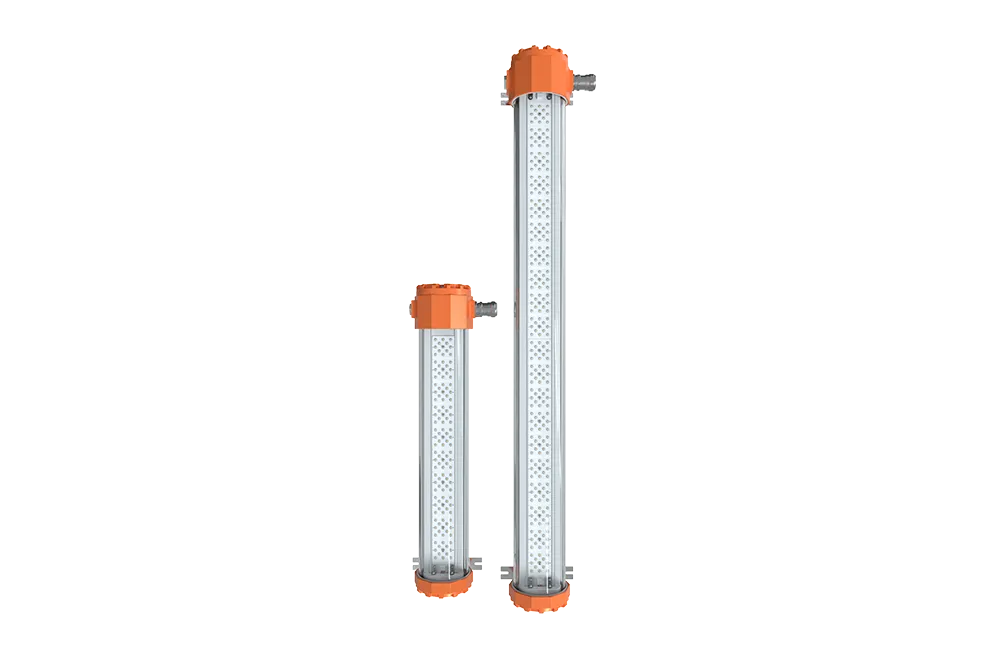
SEEKINGLED LED Linear Explosion Proof Light and Explosion Proof lighting is ATEX and IECEx certified for Zone 1, Zone 2, Zone 21 and Zone 22 hazardous locations, built for long-term industrial use.
LED Linear Explosion Proof Lights and EX Proof lights for Zone 1, Zone 2, Zone 21 and Zone 22 hazardous areas. ATEX & IECEx certified explosion proof LED linear lighting with emergency function, adjustable power and IP67 protection by SEEKINGLED.
SEEKINGLED LED Explosion Proof Flood Lights are ATEX certified for Zone 2 and Zone 22 hazardous areas, offering high efficiency, adjustable power and integrated junction box.
SEEKINGLED LED Explosion Proof Flood Lights are flameproof ATEX and IECEx certified for Zone 1 and Zone 2 hazardous areas, offering high power, adjustable output and long service life.
SEEKINGLED LED Gas Station Canopy Lights are ATEX certified for Zone 2 and Zone 22 hazardous areas, featuring adjustable power and built-in explosion-proof junction box.
ATEX: Ex II 2G Ex db IIB T6/T5 GbEx II 2D Ex tb IIIC T80°C/ T95°C Db IECEx Ex db IIB T6 Gb;Ex tb IIIC T80°C Db Feature: ● For Zone 1,2 and Zone 21,22● Flameproof type, the strongest● 100W can replace 250W HID,energy saving● Power:60W,80W,100W Application: Oil and gas, marine, Chemical, pharmaceutical, semiconductor,mining,military industr…
ATEX: II 3G Ex nR ⅡC T5/T6 GcII 3D Ex tc ⅢC T80℃/T95℃Dc ATEX Certificate NO: TÜV CY 26 ATEX 0207611 X Feature: ● For Zone 2 and Zone 22● 150W can replace 250W HID lamps,Energy saving● Power:50W,75W,100W,150W,200W Application: Oil and gas, marine, Chemical, pharmaceutical, semiconductor,mining,military industry, paint booth,power plant ETC…
LED explosion proof high bay lights are designed for Zone 1, Zone 2, Zone 21 and Zone 22 hazardous areas. This page introduces the HB21 Series from SEEKING, including certifications, power options and real application considerations.
LED Linear Explosion Proof Lights from SEEKINGLED. LU Series Flame Proof lights ATEX-certified explosion proof LED linear lighting for Zone 2 gas and Zone 22 dust areas, IP69K, IK10, long lifetime and flexible power options.
Certified explosion proof work lights for Zone 1 & 21 hazardous areas. Portable, ATEX & IECEx approved, built for oil, gas and chemical plants by SEEKINGLED.
ATEX: II 3G Ex nR ⅡC T6 GcII 3D Ex tc ⅢC T80℃ Dc ATEX Certificate NO: TÜV CY 26 ATEX 0207611 X Feature: ● For Zone 2 and Zone 22● Accepts battery-powered supply● indestructible● Power:AC input:50W,75W,100WDC input:15W,25W,35W Application: Oil and gas, marine, Chemical, pharmaceutical, semiconductor,mining,military industry, paint booth,po…
ATEX: Ex II 2G Ex db IIB T6 GbEx II 2D Ex tb IIIC T80°C Db IECEx Ex db IIB T6 Gb;Ex tb IIIC T80°C Db Feature: ● For Zone 1,2 and Zone 21,22● Flameproof type, the strongest Application: Oil and gas, marine, Chemical, pharmaceutical, semiconductor,mining,military industry, paint booth,power plant ETC hazardous area. Technical Specifications:…
ATEX: Ex II 2G Ex db IIB T6 GbEx II 2D Ex tb IIIC T80°C Db IECEx Ex db IIB T6 Gb;Ex tb IIIC T80°C Db Feature: ● For Zone 1,2 and Zone 21,22● Flameproof type, the strongest Application: Oil and gas, marine, Chemical, pharmaceutical, semiconductor,mining,military industry, paint booth,power plant ETC hazardous area. Technical Specifications:…
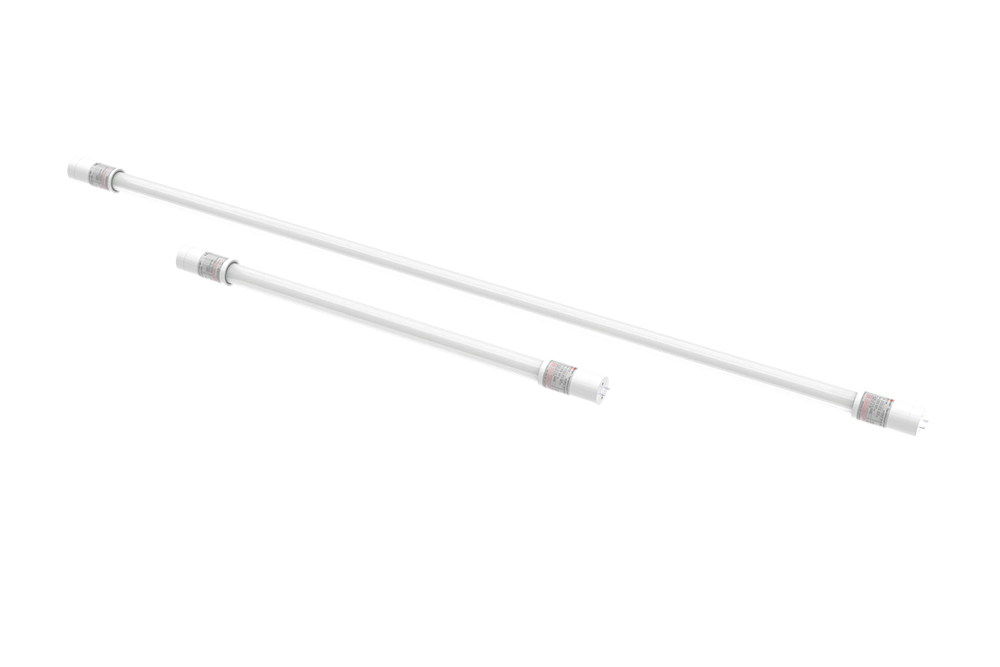
ATEX: Ex II 2G Ex d e IIB T6 Gb ATEX: Ex d e IIB T6 Gb; Feature: ● For Zone 1,2● 9W can replace 18W fluorescent lamps,50% Energy saving Application: Oil and gas, marine, Chemical, pharmaceutical, semiconductor,mining,military industry, paint booth,power plant ETC hazardous area. Technical Specifications: Standards:60079-0, 60079-1, 60079…
Why is my LED flood light not working? Learn common causes like driver failure, wiring issues or voltage problems, and how SEEKINGLED flood lights prevent them.
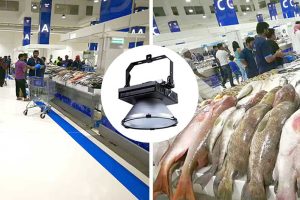
LED High Bay Lighting for Seafood Market was required in a Dubai seafood market where high floor lux was essential. This project record documents multiple Dialux calculations and on-site decision-making using XJ-HBL high bays.
What is class 1 division 1 light fixtures? Learn how explosion-proof lighting protects hazardous locations with Class I Div 1 standards, field insights, and safety requirements.
What is explosion proof Class 1 Div 1 lighting? Learn how hazardous location lighting prevents ignition in oil, gas, and chemical facilities. Expert guide by SEEKINGLED.
 Seeking LED