 Seeking LED
what is flood light?
0A flood light is an aimable, weather-resistant fixture designed to project a controlled, relatively broad beam across an indoor or outdoor area.
View detailsSearch the whole station
Linear Class 1 Div 1 lights are specifically designed for areas where flammable gases or vapors may be present during normal operations. These fixtures are built to prevent ignition, meet strict hazardous-location standards, and provide reliable illumination in oil, gas, chemical, and industrial facilities.
That is the short answer.
The reality on industrial sites is far more demanding than most specification sheets suggest.
Several years ago, during a lighting retrofit project at a petrochemical storage terminal, I watched maintenance personnel postpone fixture replacement for nearly six hours because the area classification required additional gas testing before work could begin. The lighting itself was not the challenge. The challenge was ensuring every component installed in that environment complied with hazardous-location requirements.
This is exactly where linear class 1 div 1 lights become critical.
A linear Class 1 Division 1 light is an explosion-proof or hazardous-location-rated luminaire designed for environments where combustible gases, vapors, or volatile liquids may exist under normal operating conditions.
According to the U.S. National Electrical Code (NEC), Class I locations contain flammable gases or vapors in quantities sufficient to produce explosive mixtures.
Division 1 means the hazard is expected during normal operation.
Examples include:
Unlike conventional industrial fixtures, these luminaires are engineered to contain any internal ignition source and prevent surrounding hazardous atmospheres from igniting.
Many facility managers mistakenly assume that a rugged industrial LED fixture is enough.
It isn’t.
The distinction becomes obvious when examining enclosure construction.
| Feature | Standard Industrial LED | Linear Class 1 Div 1 Lights |
|---|---|---|
| Hazardous Area Certification | No | Yes |
| Explosion Containment | No | Yes |
| Sealed Housing | Limited | Fully Sealed |
| Gas Ignition Protection | No | Yes |
| NEC Compliance | General Use | Hazardous Locations |
| Specialized Gaskets | Optional | Mandatory |
A Class 1 Division 1 fixture is designed around risk mitigation rather than simply illumination.
That design philosophy changes everything from housing thickness to cable entries.
Traditional explosion-proof lighting often relied on bulky round fixtures.
Today, many engineers prefer linear designs.
The reason is straightforward.
Long processing corridors, cable trays, maintenance walkways, and production lines require uniform illumination rather than concentrated light spots.
Linear Class 1 Div 1 lights provide:
In facilities exceeding several hundred meters of process piping, linear layouts often reduce dark zones significantly.
When evaluating hazardous location lighting, certifications matter more than marketing claims.
Engineers typically look for compliance with:
The NEC Article 500 framework defines hazardous area classifications in the United States.
This classification system determines where Class I Division 1 fixtures are mandatory.
UL844 is among the most recognized standards for hazardous-location luminaires in North America.
It evaluates:
Source: Underwriters Laboratories (UL) Official Standards Library.
Hazardous-location fixtures often require:
Especially in offshore and chemical environments.
Refineries present some of the harshest operating environments.
Hydrocarbon vapors may be present continuously around pumps, valves, and transfer systems.
Linear fixtures are frequently installed along:
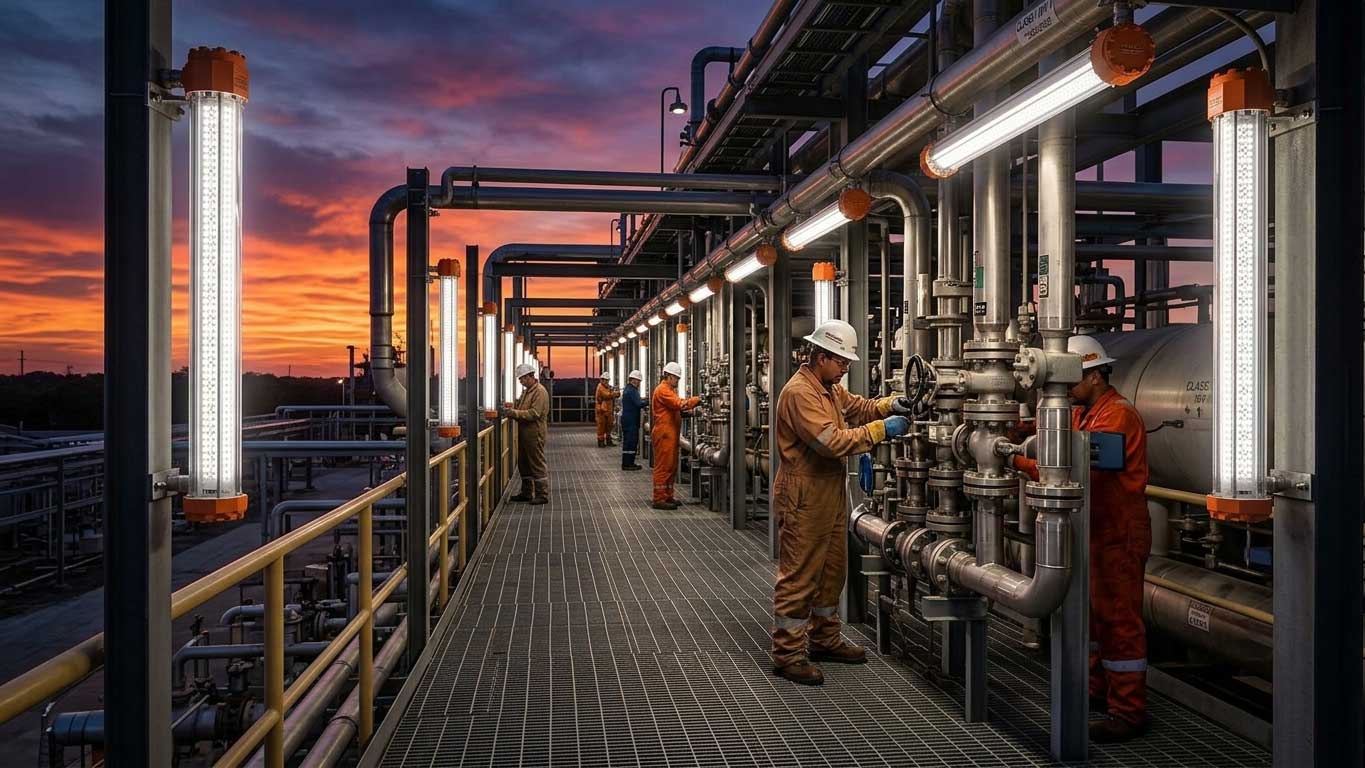
Chemical facilities often contain volatile solvents capable of forming explosive atmospheres.
Lighting systems must withstand:
Many facilities operate lighting continuously for years, making efficiency almost as important as certification.
Salt spray destroys ordinary fixtures quickly.
From my experience reviewing offshore lighting replacements, corrosion resistance often becomes the primary purchasing factor after certification.
Marine-grade coatings and stainless-steel hardware dramatically extend service life.
The energy advantage of LED technology remains significant.
According to the U.S. Department of Energy (DOE), LED lighting can reduce energy consumption by approximately 75% compared with traditional lighting technologies while offering substantially longer operating life.
Source:
U.S. Department of Energy
https://www.energy.gov
In real industrial projects, actual savings vary.
Typical retrofit observations include:
| Existing Technology | Typical Reduction |
|---|---|
| Metal Halide | 55–75% |
| High Pressure Sodium | 50–70% |
| Fluorescent T8 | 30–50% |
The larger the facility, the more noticeable the operational savings become.
For a refinery operating hundreds of fixtures continuously, annual electricity reductions can be substantial.
Not all fixtures carrying hazardous-location labels deliver equal long-term value.
Experienced engineers typically evaluate:
Preferred options include:
Look for:
Especially in maintenance-intensive environments.
IP66 or IP67 ratings are commonly specified.
These ratings help prevent:
LED lifespan depends heavily on heat control.
Poor thermal design often shortens fixture life long before LED chips themselves fail.
At SEEKINGLED, hazardous-location projects represent a significant portion of our industrial lighting work.
Our engineering team regularly reviews applications involving:
What we consistently observe is that buyers initially compare wattage and lumen output.
Months later, they start asking different questions:
Those questions ultimately determine project success.
A well-designed linear class 1 div 1 lights solution is not simply about brightness. It is about maintaining safe operations year after year in environments where equipment failure can carry significant operational and financial consequences.
One mistake I still see during project discussions is treating all hazardous locations as if they carry the same level of risk.
They do not.
The difference between Division 1 and Division 2 directly affects fixture selection, installation requirements, and inspection outcomes.
| Classification | Description | Typical Lighting Requirement |
|---|---|---|
| Class I Division 1 | Flammable gases or vapors are present during normal operations | Linear Class 1 Div 1 Lights Required |
| Class I Division 2 | Hazardous gases present only under abnormal conditions | Division 2 Rated Fixtures May Be Acceptable |
| Class II Division 1 | Combustible dust present during normal operation | Dust-Ignition-Proof Fixtures |
| Class III Division 1 | Ignitable fibers or flyings present | Specialized Hazardous Location Fixtures |
Before purchasing any fixture, always verify the area classification issued by the facility’s electrical engineer or safety consultant.
I’ve witnessed projects delayed simply because procurement teams ordered Division 2 fixtures for Division 1 locations. The fixtures were brand new. The paperwork was complete. Yet they could not legally be installed.
Although specifications vary by manufacturer, most industrial-grade fixtures fall within the following range:
| Specification | Typical Value |
|---|---|
| Power Range | 20W–120W |
| Luminous Efficacy | 130–170 lm/W |
| Input Voltage | 100–277VAC or 347–480VAC |
| Color Temperature | 3000K, 4000K, 5000K |
| CRI | Ra70–Ra80+ |
| Operating Temperature | -40°C to +60°C |
| Protection Rating | IP66/IP67 |
| Impact Rating | IK08–IK10 |
| Lifespan | 50,000–100,000 Hours |
A fixture operating above a distillation unit in Texas faces very different conditions than one mounted inside a chemical warehouse in Alberta.
That is why environmental compatibility often matters more than raw lumen output.
Purchasing departments naturally focus on cost.
Engineers focus on compliance.
Maintenance teams focus on accessibility.
The best lighting projects balance all three.
Higher wattage does not automatically mean better visibility.
Optical design often has a greater impact on actual illumination levels than power consumption.
Heat destroys LED performance faster than most people realize.
In petrochemical facilities located in the Middle East or southern United States, summer ambient temperatures can exceed 50°C (122°F).
Fixtures not designed for these conditions may experience accelerated lumen depreciation.
Chemical exposure can destroy standard powder-coated fixtures surprisingly quickly.
For coastal terminals, offshore platforms, and chemical plants, corrosion-resistant finishes should never be considered optional.
One lesson repeated across the industry:
Never assume.
Always request:
If a supplier cannot provide documentation promptly, that’s usually a warning sign.
Even the best fixture can become a safety concern if installed incorrectly.
Proper installation typically includes:
Class I Division 1 installations commonly require:
The lighting fixture itself is only one part of the protection system.
Spacing should be determined through photometric calculations rather than visual estimates.
Professional lighting layouts help avoid:
Industrial vibration can loosen improperly selected hardware over time.
Facilities with compressors, pumps, or rotating equipment should use vibration-resistant mounting systems whenever possible.
One reason facility managers increasingly adopt LED hazardous-location lighting is reduced maintenance frequency.
However, “maintenance-free” is often misunderstood.
Even premium fixtures require periodic inspection.
Recommended checks include:
| Inspection Item | Frequency |
|---|---|
| Housing Condition | Every 6 Months |
| Lens Cleanliness | Every 6 Months |
| Conduit Seals | Annually |
| Corrosion Inspection | Annually |
| Mounting Hardware | Annually |
| Electrical Connections | Annually |
In chemical processing facilities, lens contamination alone can reduce useful light output significantly over time.
I’ve seen fixtures that technically still worked but delivered noticeably reduced illumination because chemical residue had accumulated across the lens surface.
According to the U.S. Department of Energy, LEDs offer dramatically longer operating life and significantly lower energy consumption than legacy lighting technologies.
For hazardous locations, the benefits extend beyond electricity savings.
Operators also gain:
In environments where equipment access requires permits, gas monitoring, and specialized personnel, avoiding even a single maintenance intervention can produce meaningful operational savings.
When evaluating products, consider the following checklist:
✓ UL844 Listed
✓ Class I Division 1 Certified
✓ Suitable Temperature Code
✓ Approved Hazardous Location Marking
✓ IP66 or Higher
✓ Corrosion Resistant Finish
✓ Impact Resistance Rating
✓ Wide Operating Temperature Range
✓ High Luminous Efficacy
✓ Appropriate Beam Distribution
✓ Emergency Backup Options
✓ Long Design Life
✓ Engineering Support
✓ Certification Documentation
✓ Warranty Coverage
✓ Proven Industrial Experience
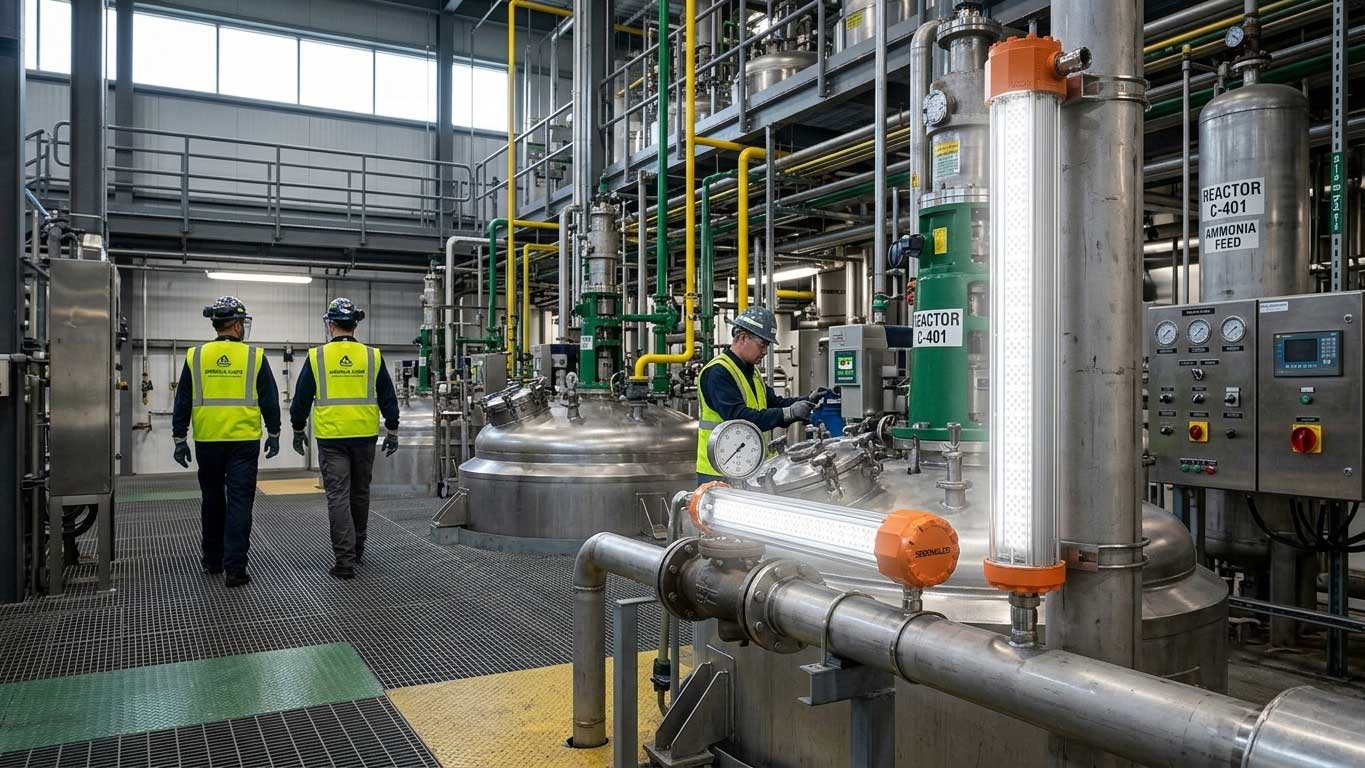
Class 1 Division 1 refers to hazardous environments where flammable gases or vapors are expected to be present during normal operating conditions. Lighting fixtures installed in these areas must be certified to prevent ignition.
No.
Standard industrial LED fixtures are not designed to contain ignition sources and generally do not meet hazardous-location requirements.
Most certified linear Class 1 Division 1 fixtures are designed as explosion-proof or equivalent hazardous-location luminaires capable of preventing ignition of surrounding atmospheres.
Common industries include:
High-quality industrial fixtures typically achieve service lives ranging from 50,000 to 100,000 hours depending on operating conditions and thermal management design.
Division 1 fixtures are designed for areas where hazardous gases are present during normal operation, while Division 2 fixtures are intended for locations where hazardous gases are present only under abnormal conditions.
Most modern fixtures feature IP66 or IP67 protection ratings, providing strong resistance against dust, rain, and washdown environments.
Visit product page:Explosion Proof Lighting
Linear class 1 div 1 lights are essential safety-critical luminaires for hazardous environments where flammable gases or vapors may be present during normal operation. The right fixture delivers more than illumination—it helps facilities meet regulatory requirements, reduce maintenance interventions, improve operational reliability, and protect personnel working in some of the world’s most demanding industrial environments.
At SEEKINGLED, we work closely with engineers, contractors, and industrial operators to develop hazardous-location lighting solutions that prioritize compliance, durability, and long-term performance. Whether the application involves a refinery process unit, offshore platform, chemical storage terminal, or gas compression facility, selecting the correct linear class 1 div 1 lights remains one of the most important decisions in maintaining a safe industrial workplace.
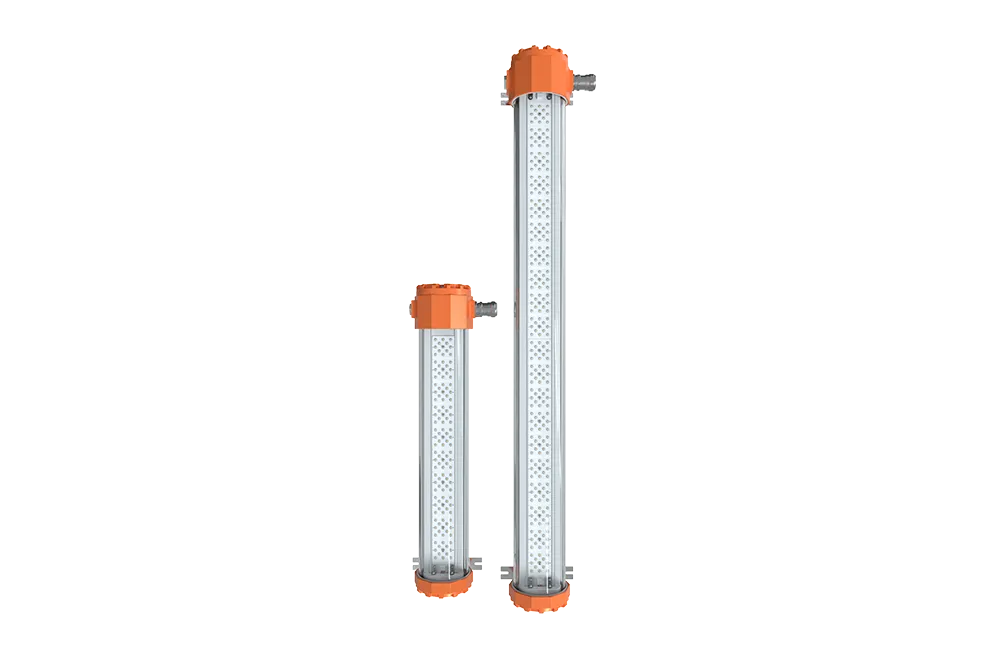
SEEKINGLED LED Linear Explosion Proof Light and Explosion Proof lighting is ATEX and IECEx certified for Zone 1, Zone 2, Zone 21 and Zone 22 hazardous locations, built for long-term industrial use.
View details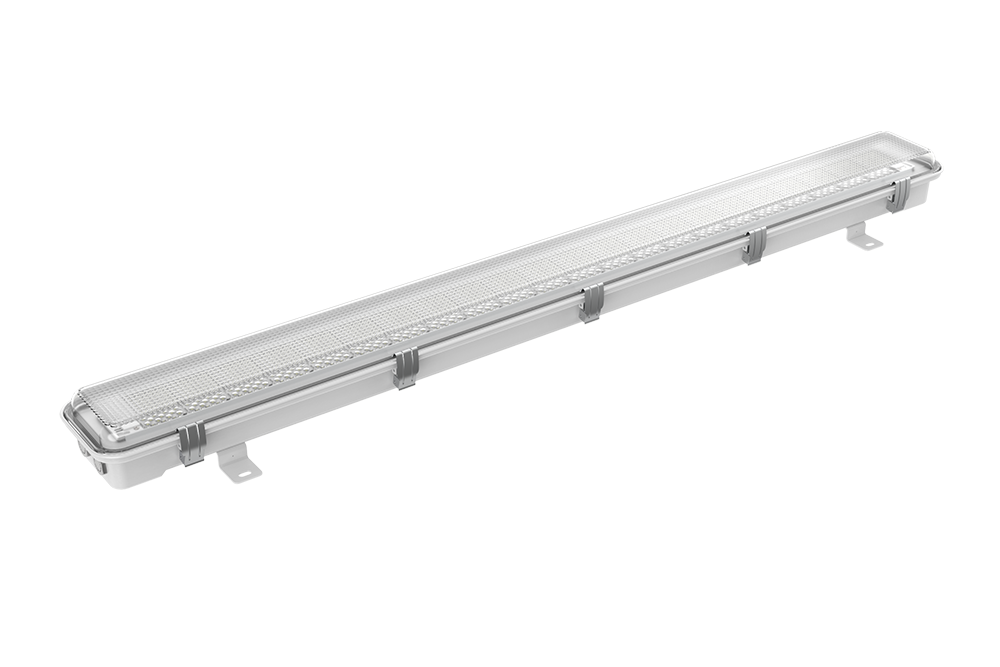
LED Linear Explosion Proof Lights and EX Proof lights for Zone 1, Zone 2, Zone 21 and Zone 22 hazardous areas. ATEX & IECEx certified explosion proof LED linear lighting with emergency function, adjustable power and IP67 protection by SEEKINGLED.
View details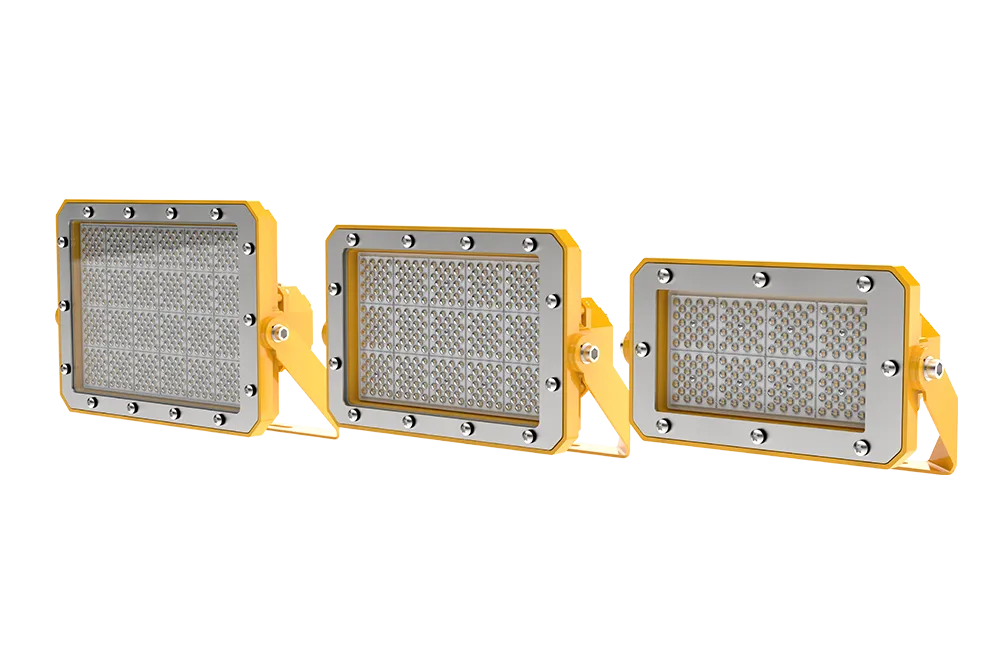
SEEKINGLED LED Explosion Proof Flood Lights are ATEX certified for Zone 2 and Zone 22 hazardous areas, offering high efficiency, adjustable power and integrated junction box.
View details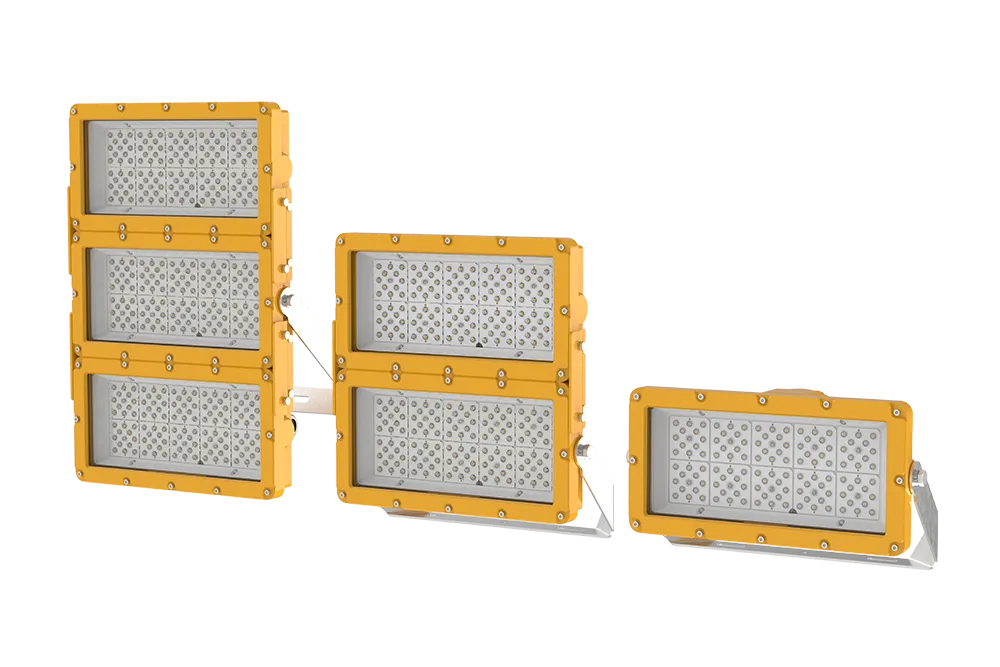
SEEKINGLED LED Explosion Proof Flood Lights are flameproof ATEX and IECEx certified for Zone 1 and Zone 2 hazardous areas, offering high power, adjustable output and long service life.
View details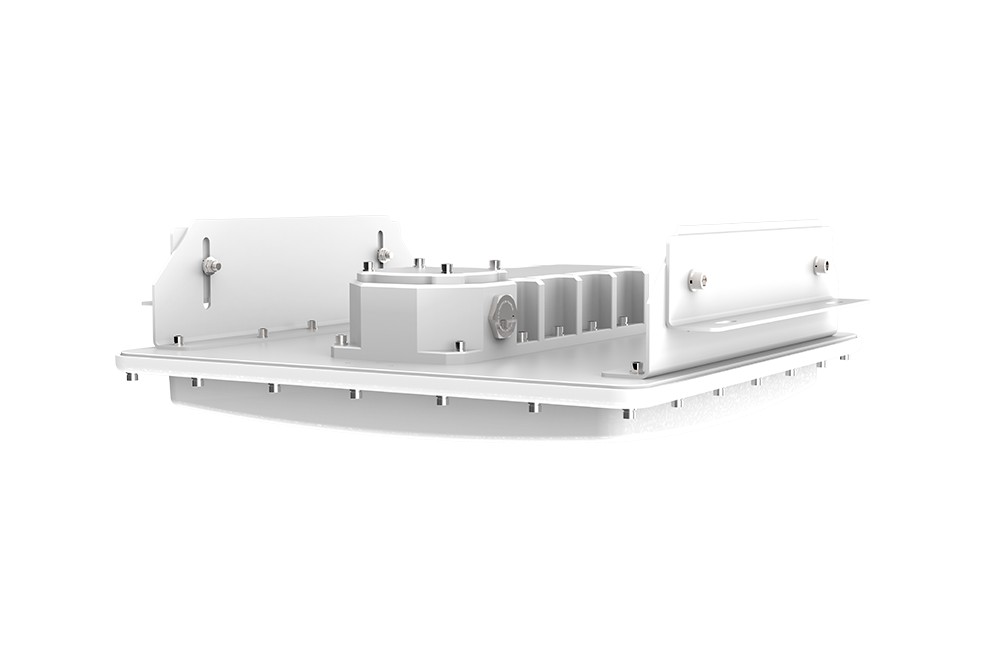
SEEKINGLED LED Gas Station Canopy Lights are ATEX certified for Zone 2 and Zone 22 hazardous areas, featuring adjustable power and built-in explosion-proof junction box.
View details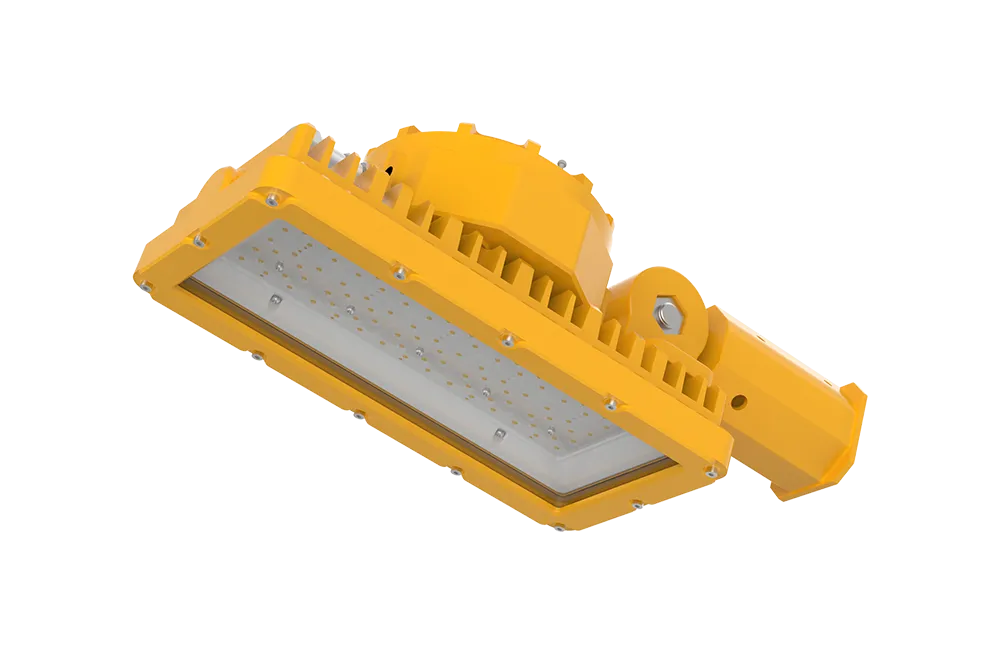
ATEX: Ex II 2G Ex db IIB T6/T5 GbEx II 2D Ex tb IIIC T80°C/ T95°C Db IECEx Ex db IIB T6 Gb;Ex tb IIIC T80°C Db Feature: ● For Zone 1,2 and Zone 21,22● Flameproof type, the strongest● 100W can replace 250W HID,energy saving● Power:60W,80W,100W Application: Oil and gas, marine, Chemical, pharmaceutical, semiconductor,mining,military industr…
View details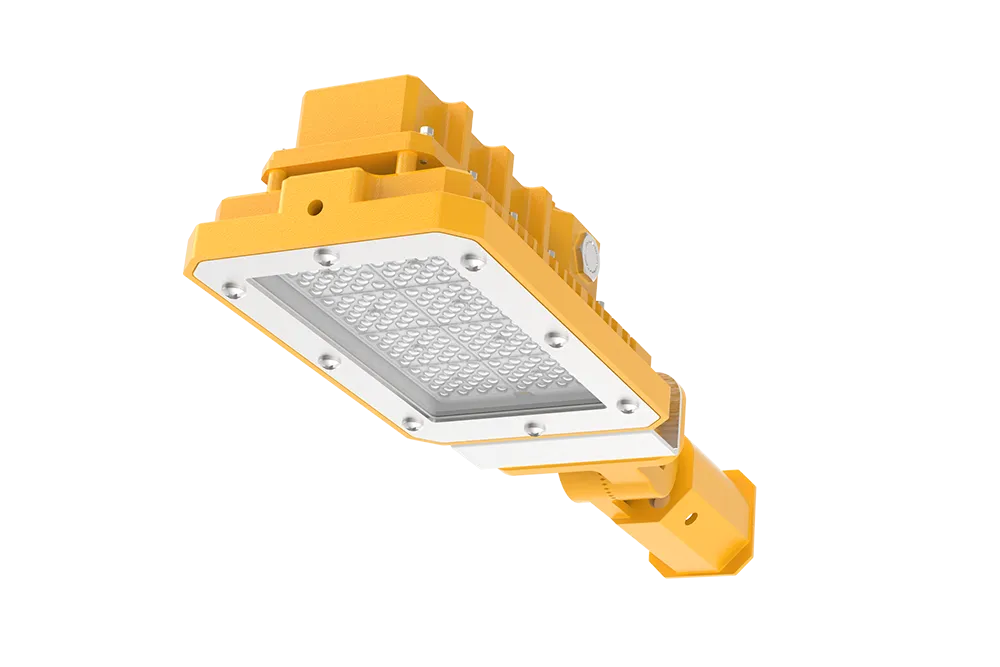
ATEX: II 3G Ex nR ⅡC T5/T6 GcII 3D Ex tc ⅢC T80℃/T95℃Dc ATEX Certificate NO: TÜV CY 26 ATEX 0207611 X Feature: ● For Zone 2 and Zone 22● 150W can replace 250W HID lamps,Energy saving● Power:50W,75W,100W,150W,200W Application: Oil and gas, marine, Chemical, pharmaceutical, semiconductor,mining,military industry, paint booth,power plant ETC…
View details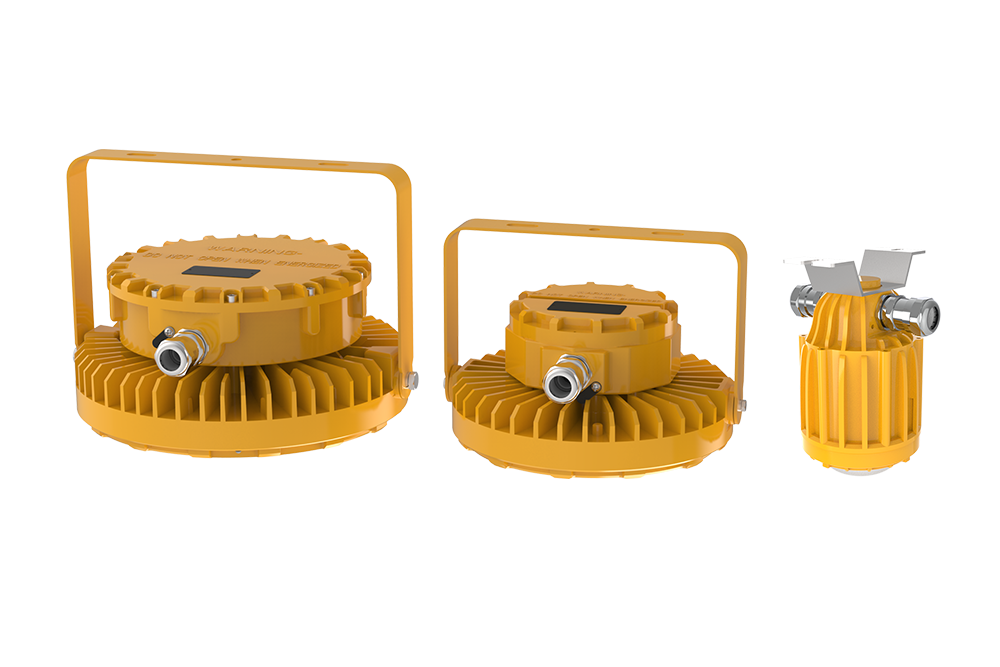
LED explosion proof high bay lights are designed for Zone 1, Zone 2, Zone 21 and Zone 22 hazardous areas. This page introduces the HB21 Series from SEEKING, including certifications, power options and real application considerations.
View details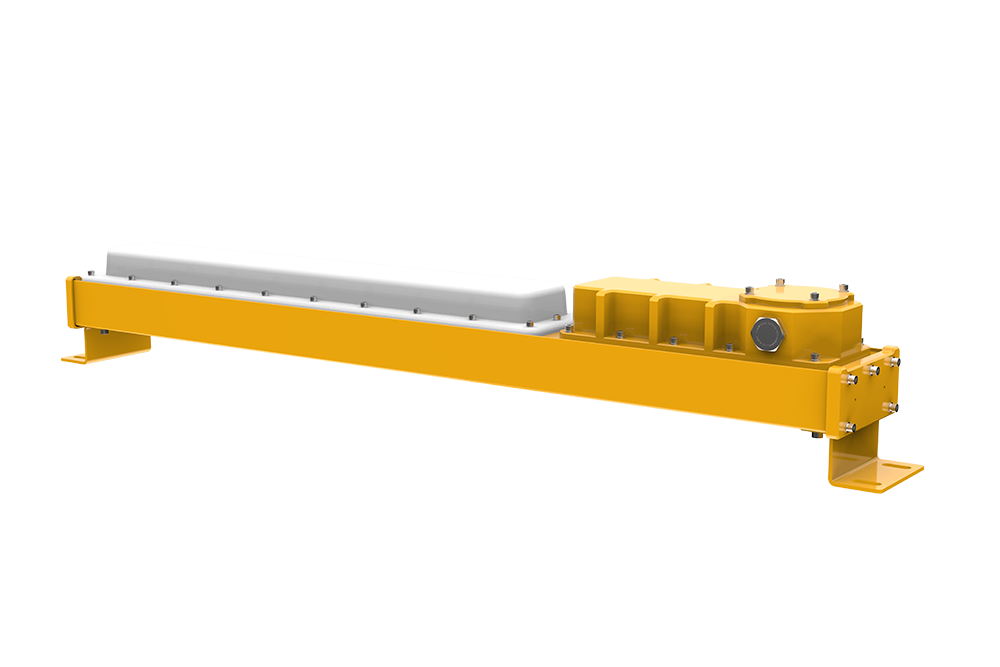
LED Linear Explosion Proof Lights from SEEKINGLED. LU Series Flame Proof lights ATEX-certified explosion proof LED linear lighting for Zone 2 gas and Zone 22 dust areas, IP69K, IK10, long lifetime and flexible power options.
View details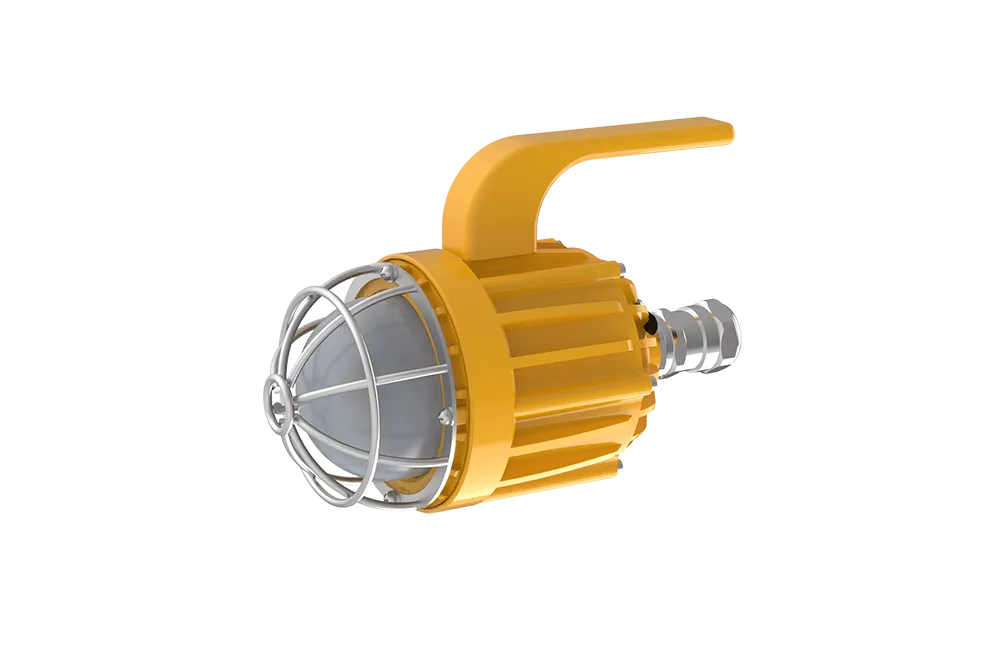
Certified explosion proof work lights for Zone 1 & 21 hazardous areas. Portable, ATEX & IECEx approved, built for oil, gas and chemical plants by SEEKINGLED.
View details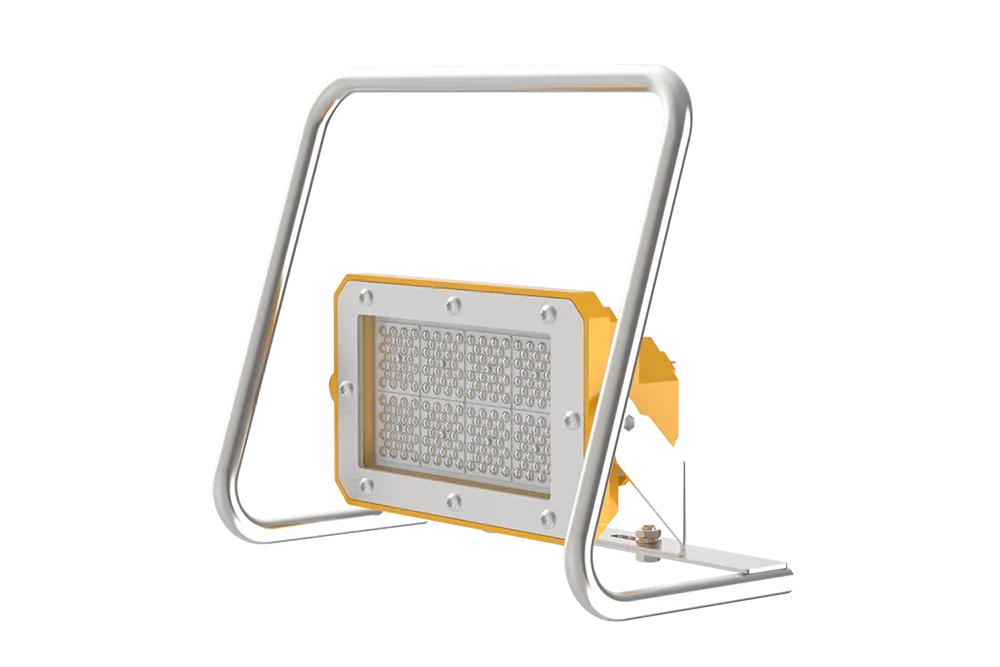
ATEX: II 3G Ex nR ⅡC T6 GcII 3D Ex tc ⅢC T80℃ Dc ATEX Certificate NO: TÜV CY 26 ATEX 0207611 X Feature: ● For Zone 2 and Zone 22● Accepts battery-powered supply● indestructible● Power:AC input:50W,75W,100WDC input:15W,25W,35W Application: Oil and gas, marine, Chemical, pharmaceutical, semiconductor,mining,military industry, paint booth,po…
View details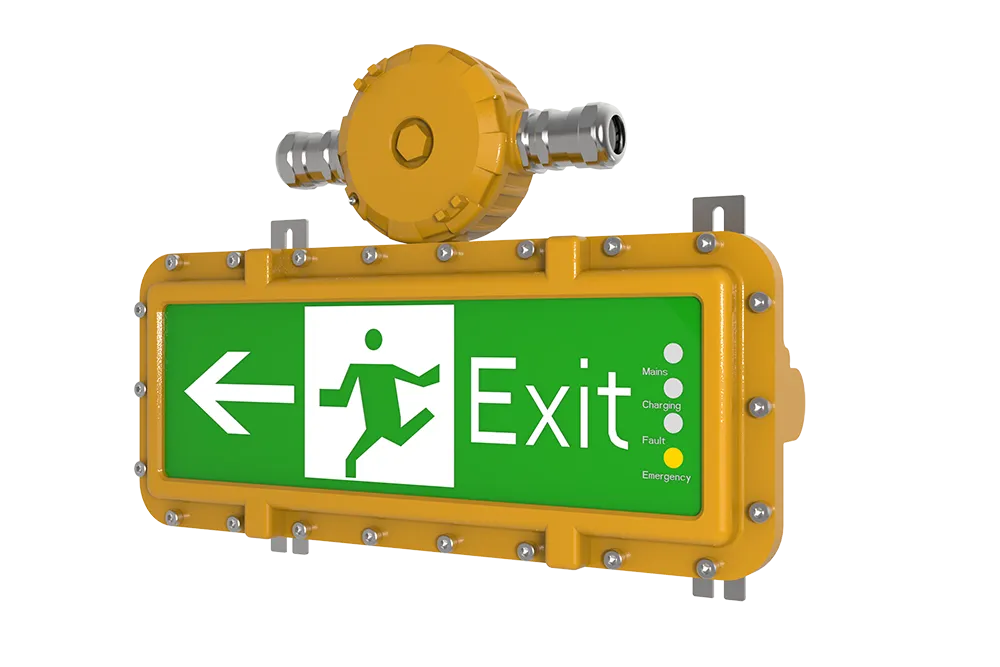
ATEX: Ex II 2G Ex db IIB T6 GbEx II 2D Ex tb IIIC T80°C Db IECEx Ex db IIB T6 Gb;Ex tb IIIC T80°C Db Feature: ● For Zone 1,2 and Zone 21,22● Flameproof type, the strongest Application: Oil and gas, marine, Chemical, pharmaceutical, semiconductor,mining,military industry, paint booth,power plant ETC hazardous area. Technical Specifications:…
View details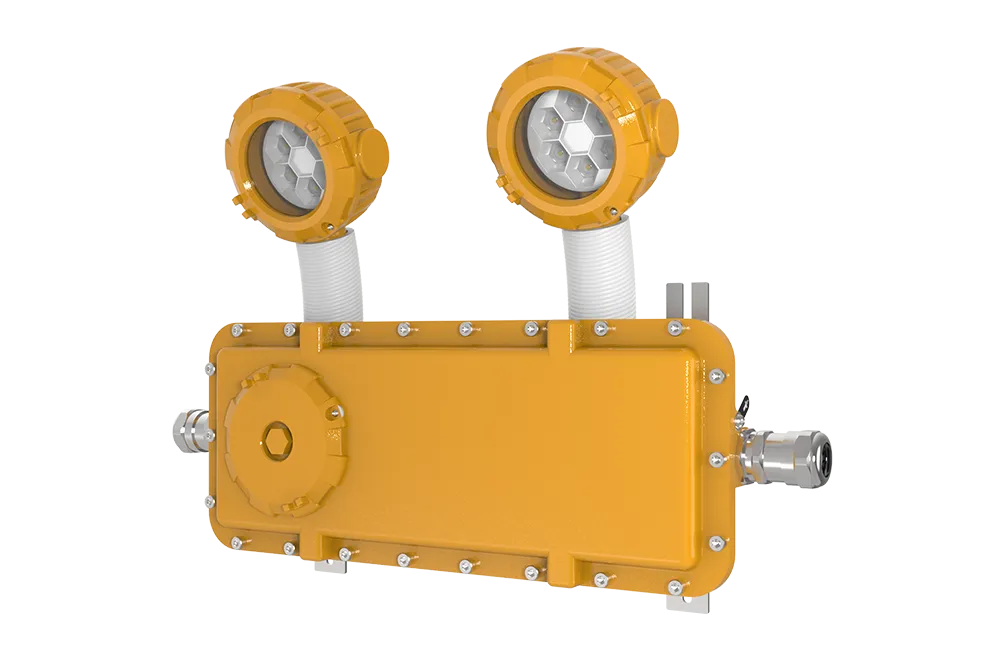
ATEX: Ex II 2G Ex db IIB T6 GbEx II 2D Ex tb IIIC T80°C Db IECEx Ex db IIB T6 Gb;Ex tb IIIC T80°C Db Feature: ● For Zone 1,2 and Zone 21,22● Flameproof type, the strongest Application: Oil and gas, marine, Chemical, pharmaceutical, semiconductor,mining,military industry, paint booth,power plant ETC hazardous area. Technical Specifications:…
View details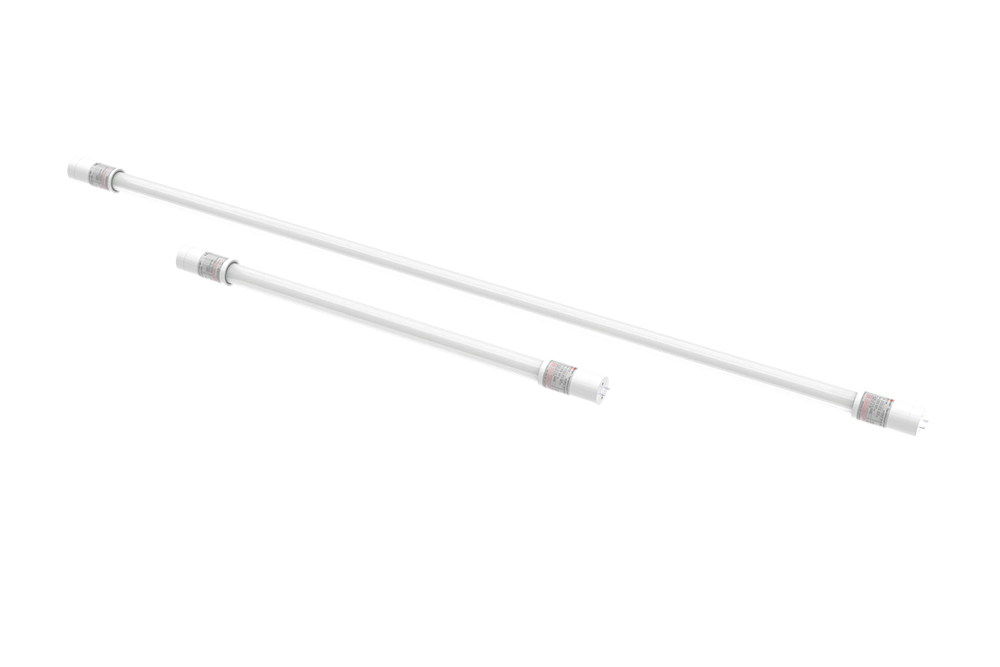
ATEX: Ex II 2G Ex d e IIB T6 Gb ATEX: Ex d e IIB T6 Gb; Feature: ● For Zone 1,2● 9W can replace 18W fluorescent lamps,50% Energy saving Application: Oil and gas, marine, Chemical, pharmaceutical, semiconductor,mining,military industry, paint booth,power plant ETC hazardous area. Technical Specifications: Standards:60079-0, 60079-1, 60079…
View details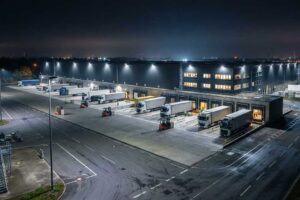
A flood light is an aimable, weather-resistant fixture designed to project a controlled, relatively broad beam across an indoor or outdoor area.
View details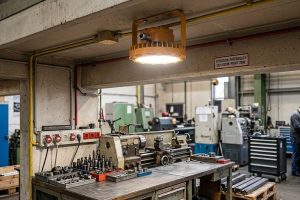
explosion proof led low bay solutions for hazardous areas. Learn applications, certifications, and real-world performance for safe, efficient low ceiling lighting.
View details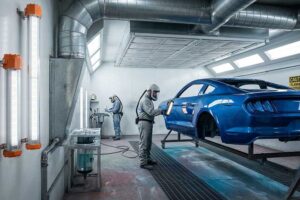
Explosion proof lighting paint booths require specialized hazardous area fixtures to prevent ignition risks from paint vapors while improving visibility and compliance.
View details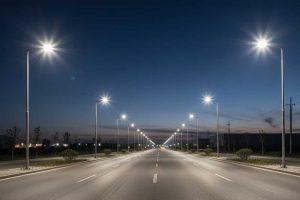
150W LED street light explained from real road projects. When to use it, when not to, and how SEEKINGLED balances output, spacing and cost.
View details