 Seeking LED
What does explosion proof lighting mean?
60What does explosion proof lighting mean? Understand how certified fixtures contain ignition risks in hazardous areas, with real-world insights and safety standards explained.
View detailsSearch the whole station
Hazardous location led lighting is specially engineered to operate safely in environments where flammable gas, vapor, combustible dust, or chemical fumes may exist. Unlike ordinary industrial fixtures, these certified LED systems prevent ignition risks while delivering reliable illumination, lower maintenance, and long operational life in harsh industrial conditions.
I first realized how different hazardous-area lighting really is during a refinery shutdown project in Southeast Asia. The maintenance crew had already replaced standard industrial fixtures twice in less than three years because corrosion, vibration, and heat destroyed internal drivers. The replacement wasn’t simply “a brighter lamp.” It became a full hazardous location led lighting upgrade with IECEx-certified fixtures rated for corrosive offshore conditions.
That project changed the way I evaluate industrial lighting forever.
In facilities handling volatile materials, even a small electrical spark can trigger catastrophic ignition. According to the U.S. Chemical Safety Board (CSB), ignition sources from electrical equipment continue to contribute to industrial explosion incidents in chemical and petrochemical facilities.
Hazardous location led lighting is designed specifically to eliminate those ignition risks.
Unlike standard factory luminaires, these fixtures are engineered to:
Typical applications include:
| Industry | Hazard Type | Common Lighting Zone |
|---|---|---|
| Oil & Gas | Hydrocarbon vapor | Class I Div 1 / Zone 1 |
| Grain Processing | Combustible dust | Class II |
| Marine & Offshore | Salt + fuel vapor | Zone 1/2 |
| Chemical Plants | Solvents & gases | ATEX Zone 2 |
| Mining | Methane & dust | Hazardous tunnels |
| Paint Booths | Volatile fumes | Div 1 spray areas |
According to the International Energy Agency (IEA), industrial facilities account for nearly 42% of global electricity demand. LED conversion projects in hazardous environments often reduce lighting energy consumption by 50–70%.
Source references:
At first glance, many hazardous area fixtures look oversized. There’s a reason.
A real hazardous location led lighting fixture is built more like industrial safety equipment than commercial lighting.
Standard industrial lights prioritize weight reduction and low cost. Hazardous fixtures prioritize containment strength.
SEEKINGLED fixtures typically use:
The enclosure must survive internal ignition without allowing flames or pressure to ignite the outside atmosphere.
This is the part many buyers underestimate.
In hazardous environments, surface temperature can become an ignition source.
Traditional HID fixtures often exceed 300°C. Modern hazardous location led lighting systems usually maintain much lower external temperatures, commonly within T4–T6 temperature classifications.
Typical T-ratings:
| Temperature Class | Maximum Surface Temp |
|---|---|
| T1 | 450°C |
| T2 | 300°C |
| T3 | 200°C |
| T4 | 135°C |
| T5 | 100°C |
| T6 | 85°C |
Most oil and gas projects now request T4 or better.
The price difference between standard industrial LEDs and hazardous location led lighting sometimes surprises purchasing departments.
But once you open both fixtures side by side, the difference becomes obvious.
| Feature | Standard Industrial LED | Hazardous Location LED Lighting |
|---|---|---|
| Housing Thickness | Thin die-cast aluminum | Reinforced heavy-duty enclosure |
| Certifications | IEC 60598 | ATEX, IECEx, UL844 |
| Surface Temp Control | Limited | Strict T-rating control |
| Cable Entries | Standard glands | Explosion-proof glands |
| Internal Sparks | Possible | Contained |
| Dust Protection | Basic IP65 | IP66/IP67/IP68 |
| Corrosion Resistance | Moderate | Offshore-grade protection |
| Maintenance Life | 2–5 years | 5–10+ years |
One refinery manager in Texas told me bluntly:
“Cheap fixtures become expensive after the third shutdown.”
That statement stayed with me.
This remains the largest market segment.
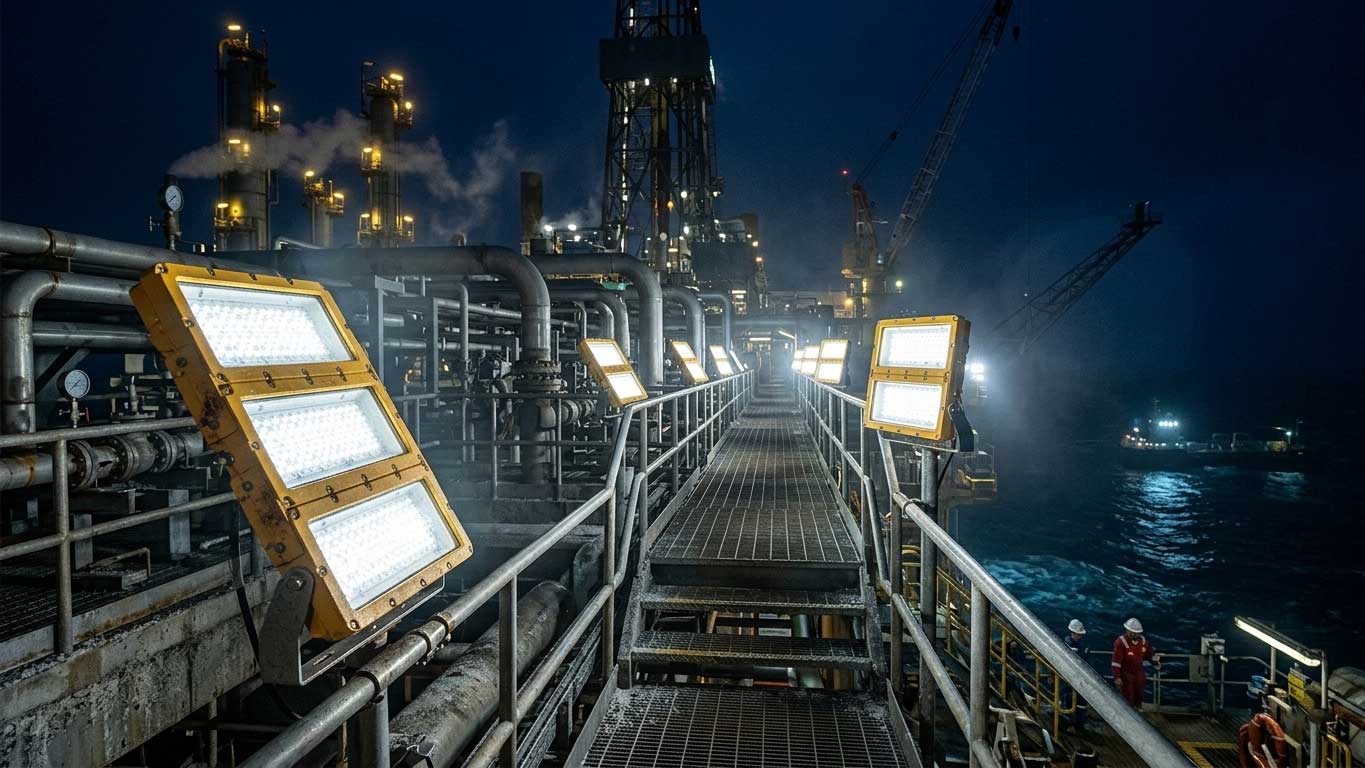
Hazardous location led lighting is widely installed in:
The global offshore oil and gas sector continues investing heavily in hazardous-area upgrades because unplanned downtime costs can exceed hundreds of thousands of dollars per day.
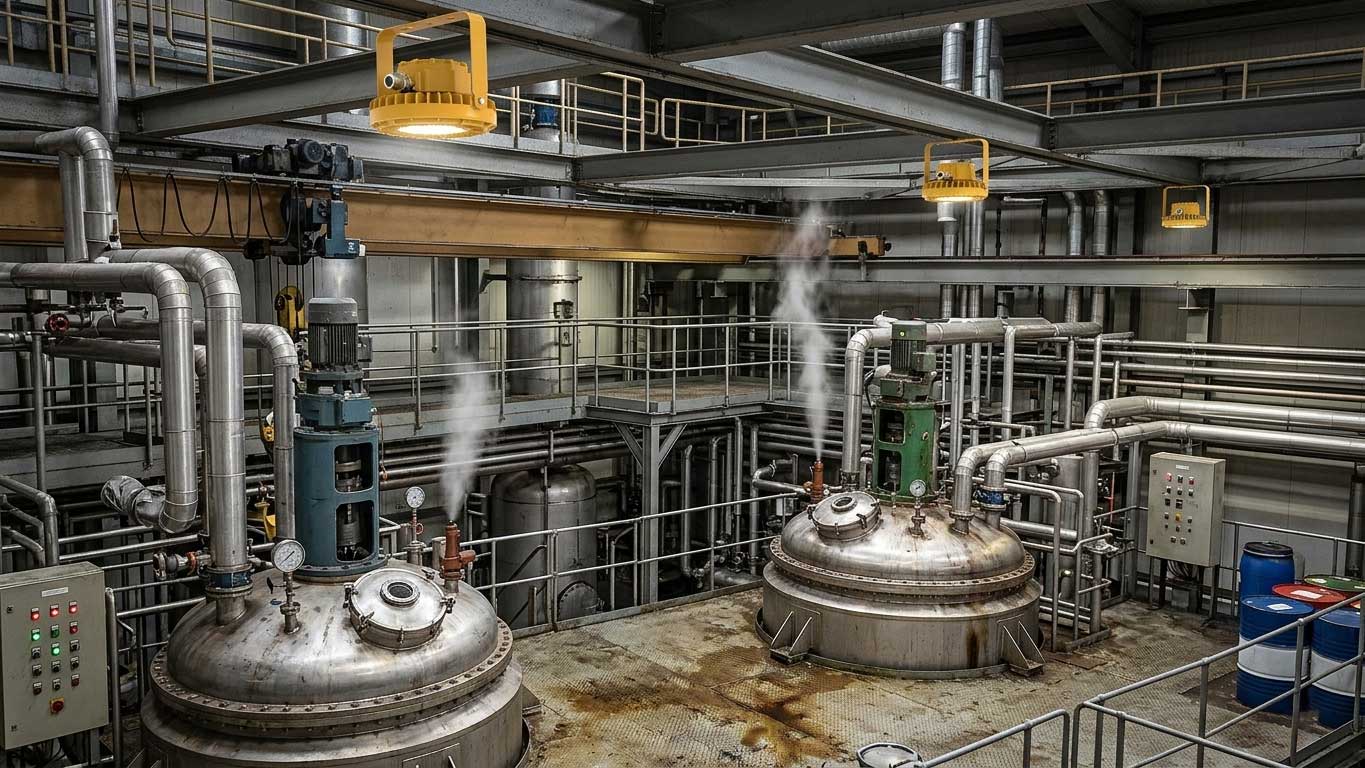
Many people forget combustible dust can explode.
The U.S. Occupational Safety and Health Administration (OSHA) has repeatedly warned about grain dust explosion hazards in:
Dust ignition can occur from:
That’s why hazardous area lighting fixtures are increasingly replacing older fluorescent systems.
OSHA reference: https://www.osha.gov
Salt corrosion destroys ordinary fixtures quickly.
Marine-rated hazardous location led lighting often includes:
In offshore projects, corrosion resistance matters almost as much as explosion protection.
Ten years ago, hazardous lighting usually meant:
LED technology changed everything.
Modern hazardous location led lighting commonly reaches:
That efficiency matters financially.
A petrochemical customer in the Middle East reduced annual lighting maintenance labor by nearly 60% after converting from metal halide fixtures to LED hazardous area lighting systems.
Not because LEDs are “trendy.”
Because workers stopped climbing towers every few months to replace failed lamps.
This part is critical.
A fixture is not truly hazardous-rated simply because marketing material says “explosion proof.”
Always verify certifications.
| Certification | Region | Typical Usage |
|---|---|---|
| ATEX | Europe | Zone systems |
| IECEx | International | Global projects |
| UL844 | North America | Class/Division |
| CSA | Canada | Hazardous locations |
| NEC | United States | Electrical compliance |
A real fixture should display markings like:
If documentation is missing, buyers should walk away immediately.
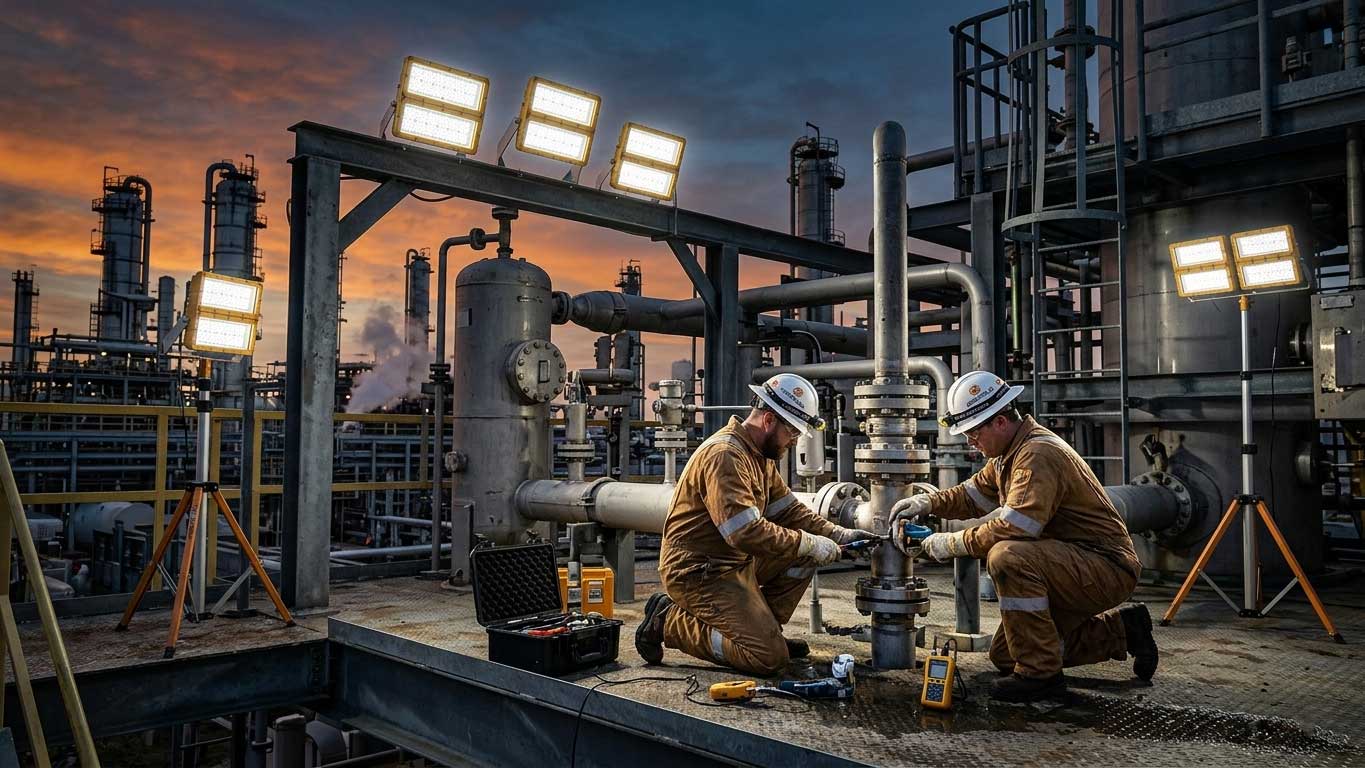
After years in industrial projects, I keep seeing the same purchasing mistakes.
Brightness alone means nothing in hazardous areas.
You must evaluate:
Middle Eastern desert projects sometimes exceed 55°C ambient temperature.
Cheap drivers fail fast there.
A fixture surviving laboratory tests may still fail in real field conditions.
Coastal environments destroy untreated aluminum surprisingly quickly.
That’s why offshore-certified hazardous location led lighting typically uses multi-layer anti-corrosion coatings.
Three things are driving the current replacement cycle:
Many factories installed hazardous fixtures 15–20 years ago.
Now those systems are reaching end-of-life.
Modern LED hazardous area lighting offers:
And honestly, workers notice the difference immediately.
Poor lighting causes fatigue faster than most engineers admit.
SEEKINGLED provides hazardous location led lighting solutions designed for:
Key features include:
Our engineering team has worked directly with EPC contractors, refinery operators, and industrial maintenance teams facing real hazardous-area challenges—not just laboratory simulations.
That field experience matters.
Hazardous location led lighting is certified industrial lighting designed for environments containing flammable gases, vapors, combustible dust, or explosive particles.
Explosion-proof lighting is one protection method within hazardous location lighting classifications. Hazardous-area lighting may also use intrinsic safety, increased safety, or encapsulation designs.
No. Ordinary LED fixtures lack the required certifications and protection systems necessary for hazardous environments.
High-quality hazardous location led lighting systems commonly last between 50,000 and 100,000 operating hours depending on environment and thermal conditions.
Yes. Modern LED hazardous fixtures often reduce energy consumption by 50–70% compared to traditional HID systems.
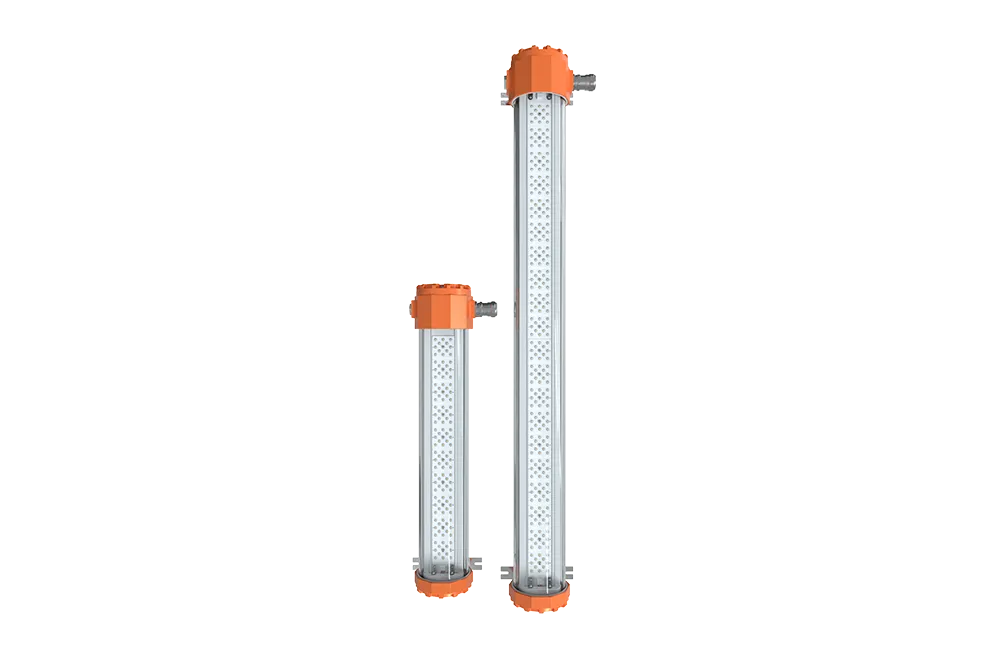
SEEKINGLED LED Linear Explosion Proof Light and Explosion Proof lighting is ATEX and IECEx certified for Zone 1, Zone 2, Zone 21 and Zone 22 hazardous locations, built for long-term industrial use.
View details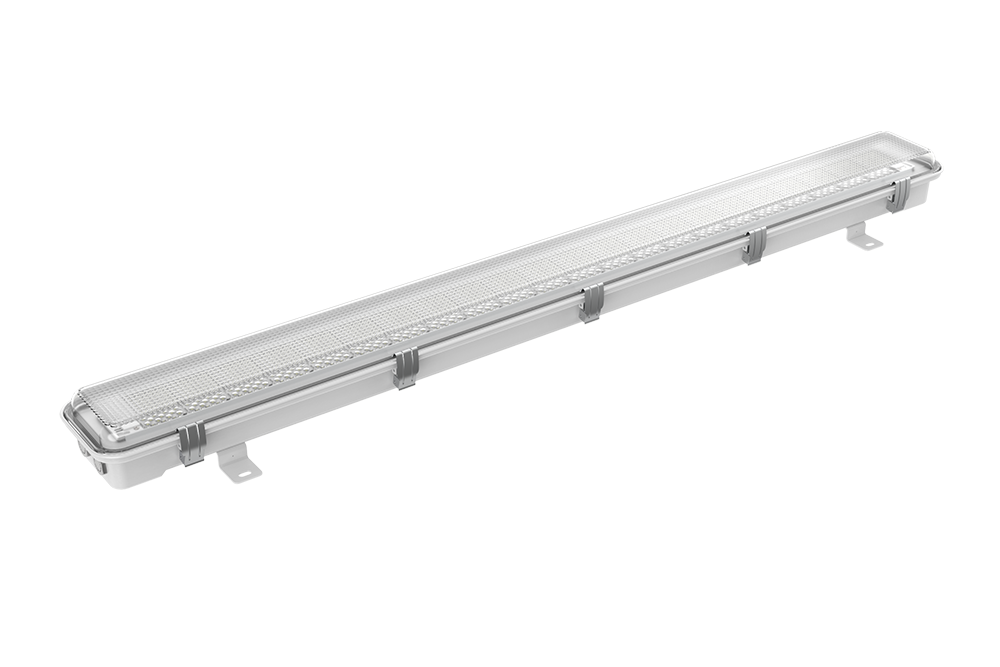
LED Linear Explosion Proof Lights and EX Proof lights for Zone 1, Zone 2, Zone 21 and Zone 22 hazardous areas. ATEX & IECEx certified explosion proof LED linear lighting with emergency function, adjustable power and IP67 protection by SEEKINGLED.
View details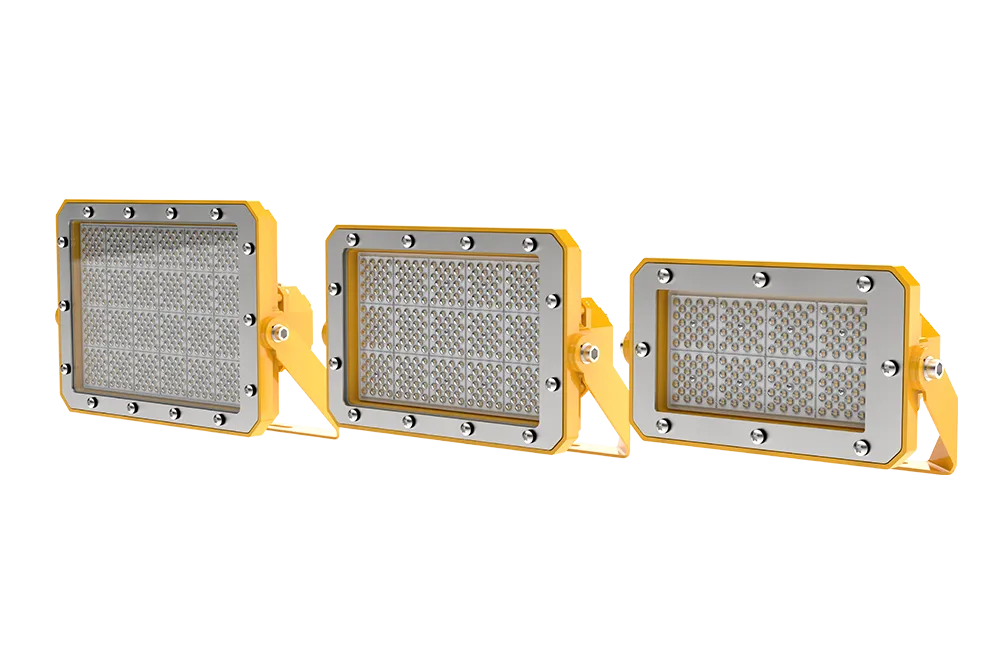
SEEKINGLED LED Explosion Proof Flood Lights are ATEX certified for Zone 2 and Zone 22 hazardous areas, offering high efficiency, adjustable power and integrated junction box.
View details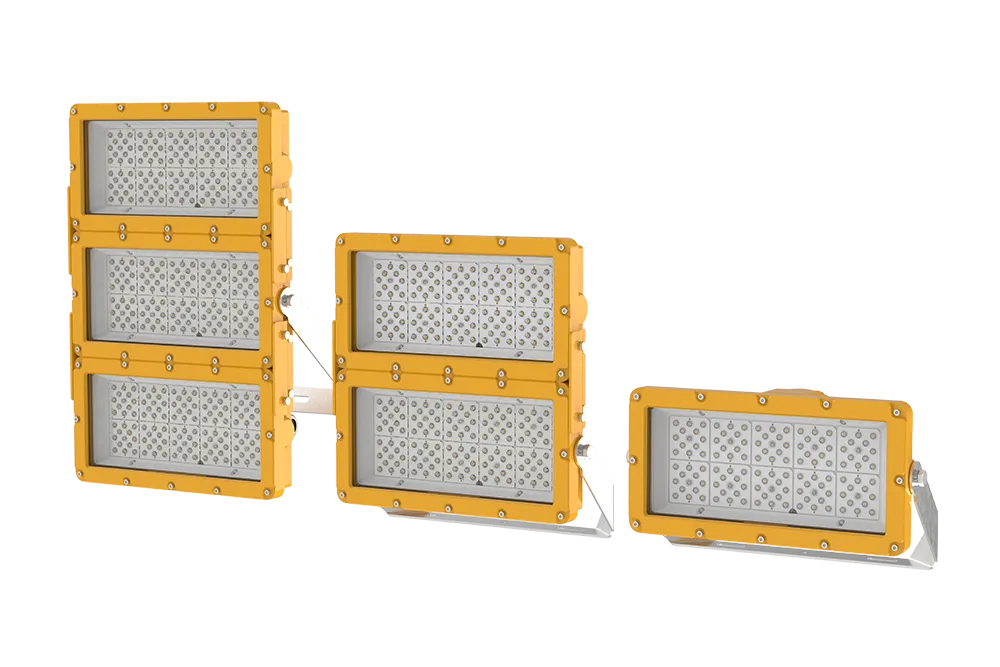
SEEKINGLED LED Explosion Proof Flood Lights are flameproof ATEX and IECEx certified for Zone 1 and Zone 2 hazardous areas, offering high power, adjustable output and long service life.
View details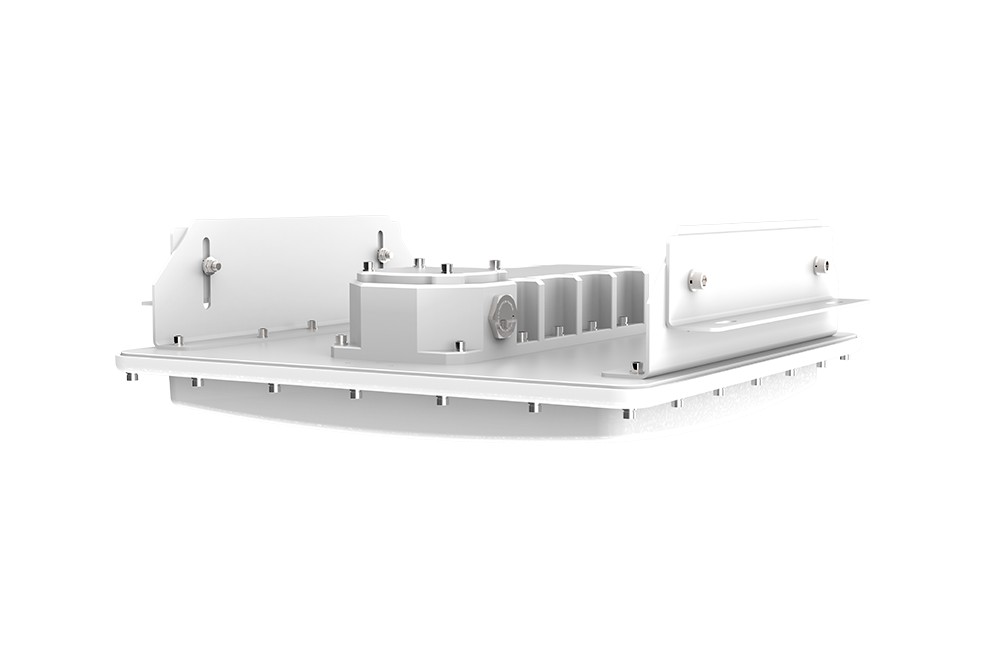
SEEKINGLED LED Gas Station Canopy Lights are ATEX certified for Zone 2 and Zone 22 hazardous areas, featuring adjustable power and built-in explosion-proof junction box.
View details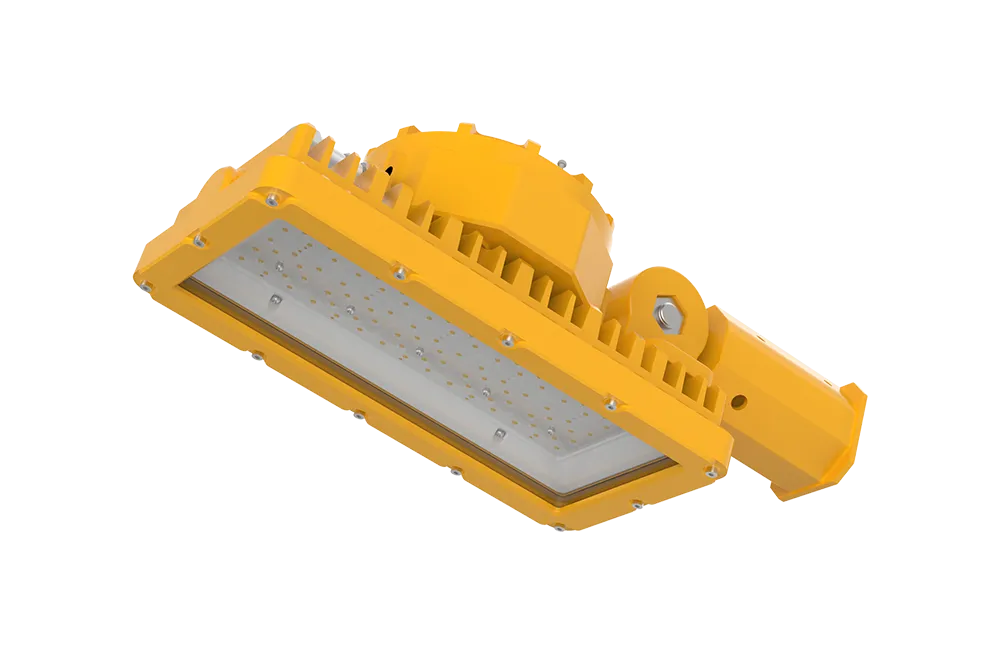
ATEX: Ex II 2G Ex db IIB T6/T5 GbEx II 2D Ex tb IIIC T80°C/ T95°C Db IECEx Ex db IIB T6 Gb;Ex tb IIIC T80°C Db Feature: ● For Zone 1,2 and Zone 21,22● Flameproof type, the strongest● 100W can replace 250W HID,energy saving● Power:60W,80W,100W Application: Oil and gas, marine, Chemical, pharmaceutical, semiconductor,mining,military industr…
View details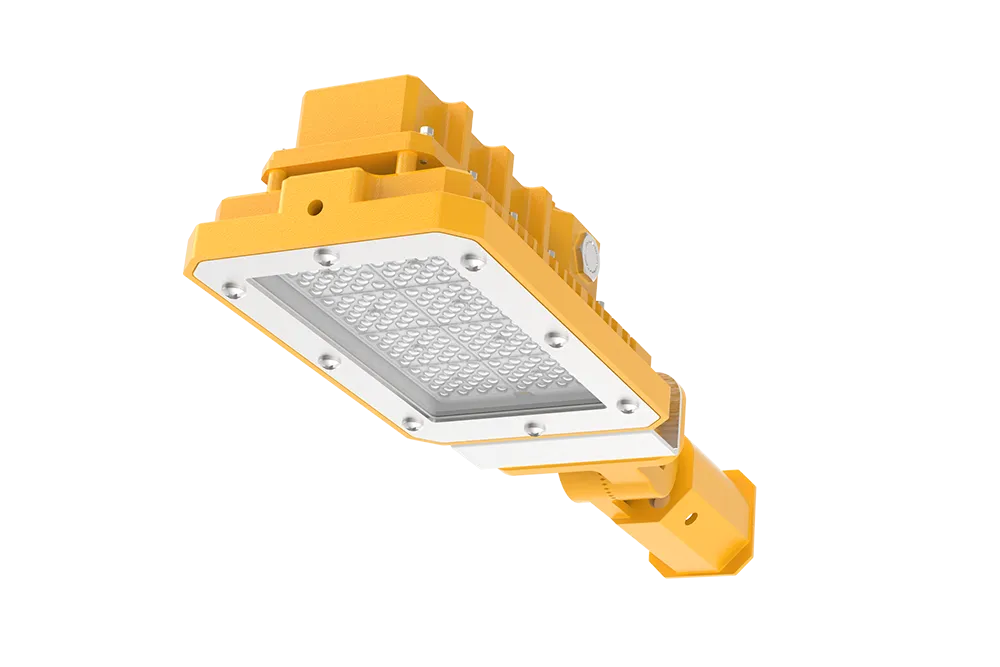
ATEX: II 3G Ex nR ⅡC T5/T6 GcII 3D Ex tc ⅢC T80℃/T95℃Dc ATEX Certificate NO: TÜV CY 26 ATEX 0207611 X Feature: ● For Zone 2 and Zone 22● 150W can replace 250W HID lamps,Energy saving● Power:50W,75W,100W,150W,200W Application: Oil and gas, marine, Chemical, pharmaceutical, semiconductor,mining,military industry, paint booth,power plant ETC…
View details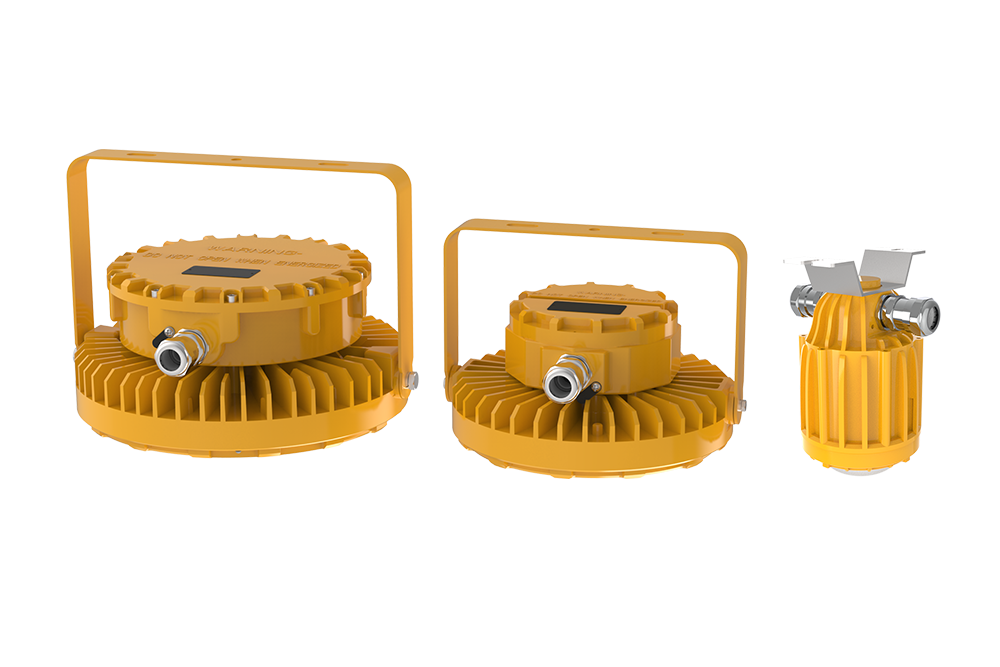
LED explosion proof high bay lights are designed for Zone 1, Zone 2, Zone 21 and Zone 22 hazardous areas. This page introduces the HB21 Series from SEEKING, including certifications, power options and real application considerations.
View details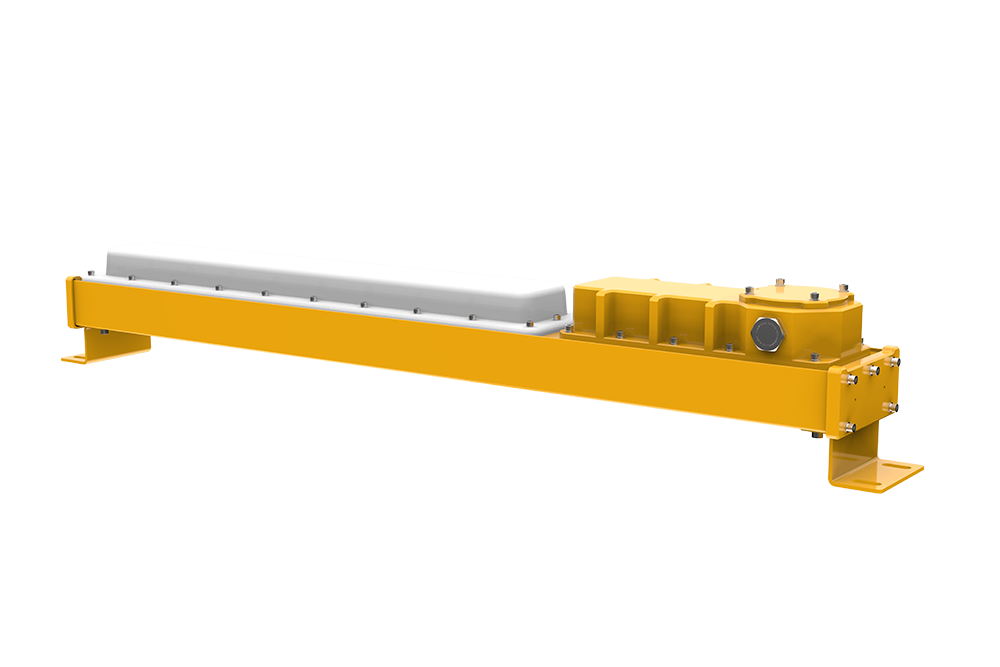
LED Linear Explosion Proof Lights from SEEKINGLED. LU Series Flame Proof lights ATEX-certified explosion proof LED linear lighting for Zone 2 gas and Zone 22 dust areas, IP69K, IK10, long lifetime and flexible power options.
View details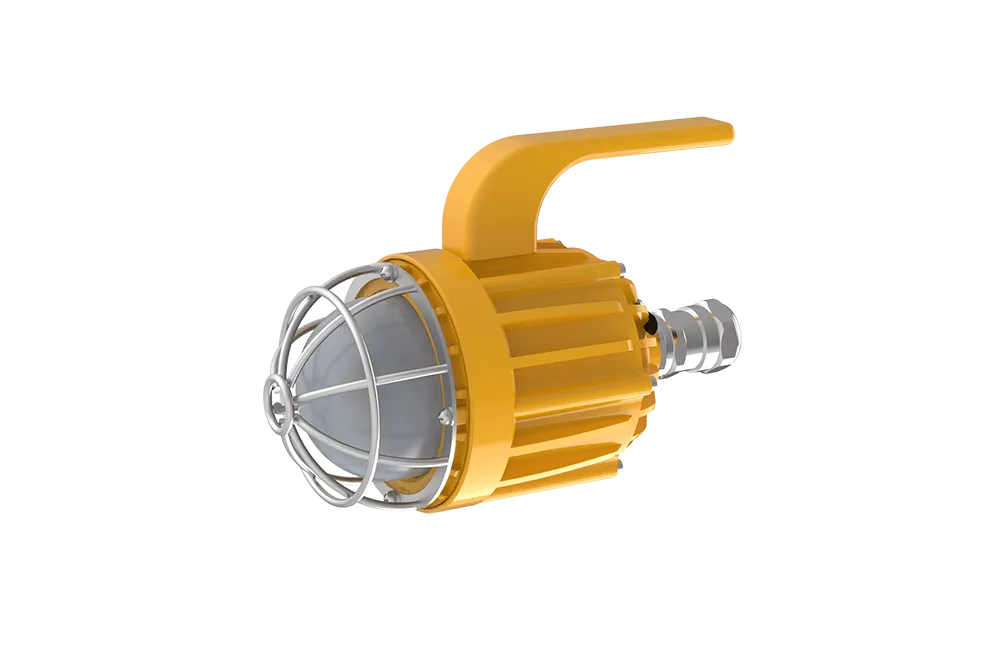
Certified explosion proof work lights for Zone 1 & 21 hazardous areas. Portable, ATEX & IECEx approved, built for oil, gas and chemical plants by SEEKINGLED.
View details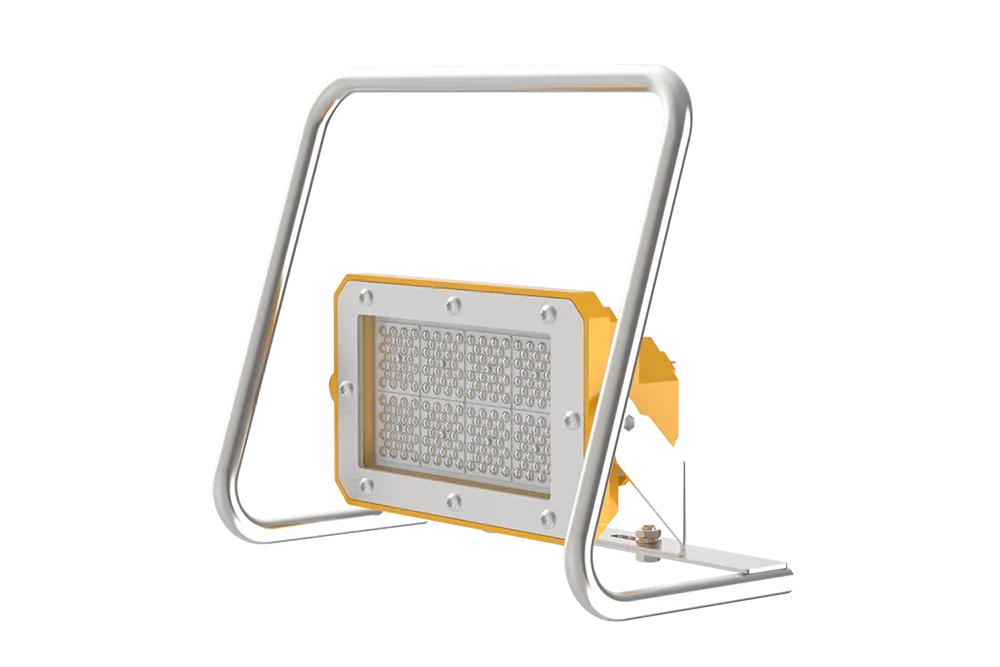
ATEX: II 3G Ex nR ⅡC T6 GcII 3D Ex tc ⅢC T80℃ Dc ATEX Certificate NO: TÜV CY 26 ATEX 0207611 X Feature: ● For Zone 2 and Zone 22● Accepts battery-powered supply● indestructible● Power:AC input:50W,75W,100WDC input:15W,25W,35W Application: Oil and gas, marine, Chemical, pharmaceutical, semiconductor,mining,military industry, paint booth,po…
View details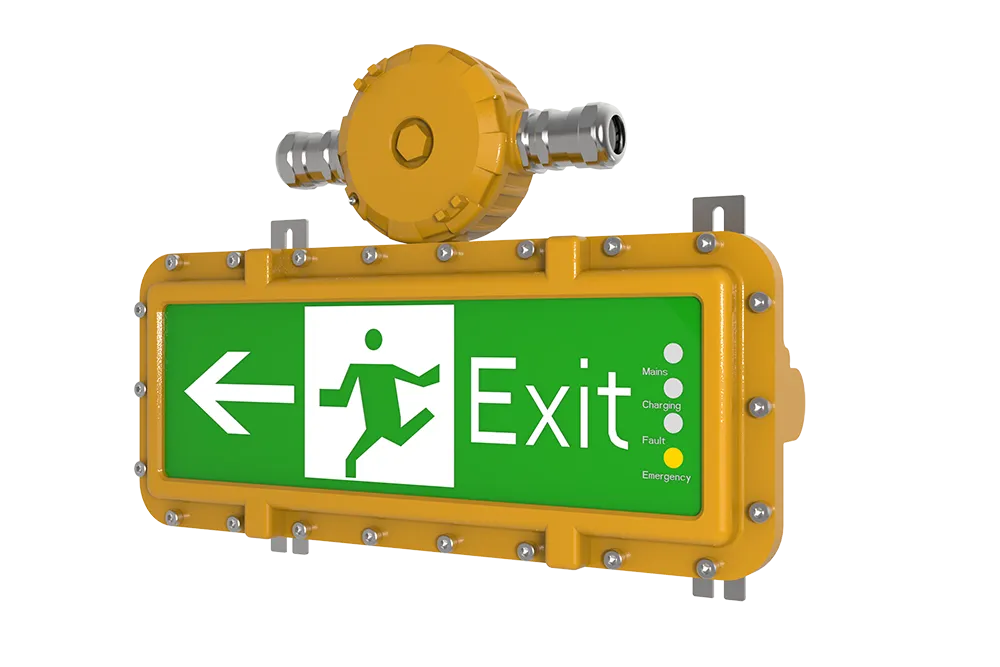
ATEX: Ex II 2G Ex db IIB T6 GbEx II 2D Ex tb IIIC T80°C Db IECEx Ex db IIB T6 Gb;Ex tb IIIC T80°C Db Feature: ● For Zone 1,2 and Zone 21,22● Flameproof type, the strongest Application: Oil and gas, marine, Chemical, pharmaceutical, semiconductor,mining,military industry, paint booth,power plant ETC hazardous area. Technical Specifications:…
View details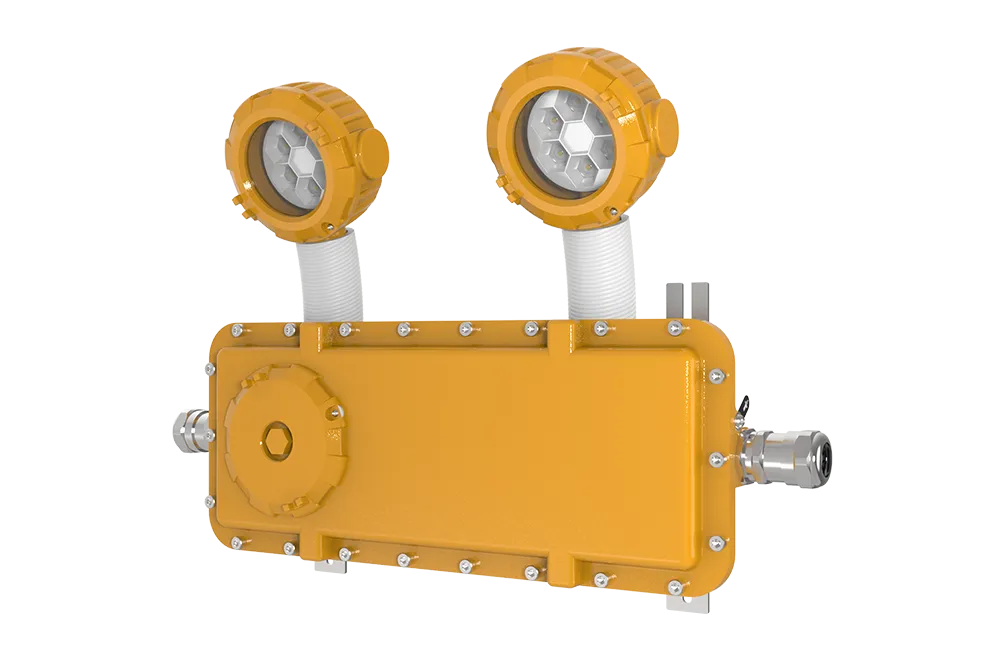
ATEX: Ex II 2G Ex db IIB T6 GbEx II 2D Ex tb IIIC T80°C Db IECEx Ex db IIB T6 Gb;Ex tb IIIC T80°C Db Feature: ● For Zone 1,2 and Zone 21,22● Flameproof type, the strongest Application: Oil and gas, marine, Chemical, pharmaceutical, semiconductor,mining,military industry, paint booth,power plant ETC hazardous area. Technical Specifications:…
View details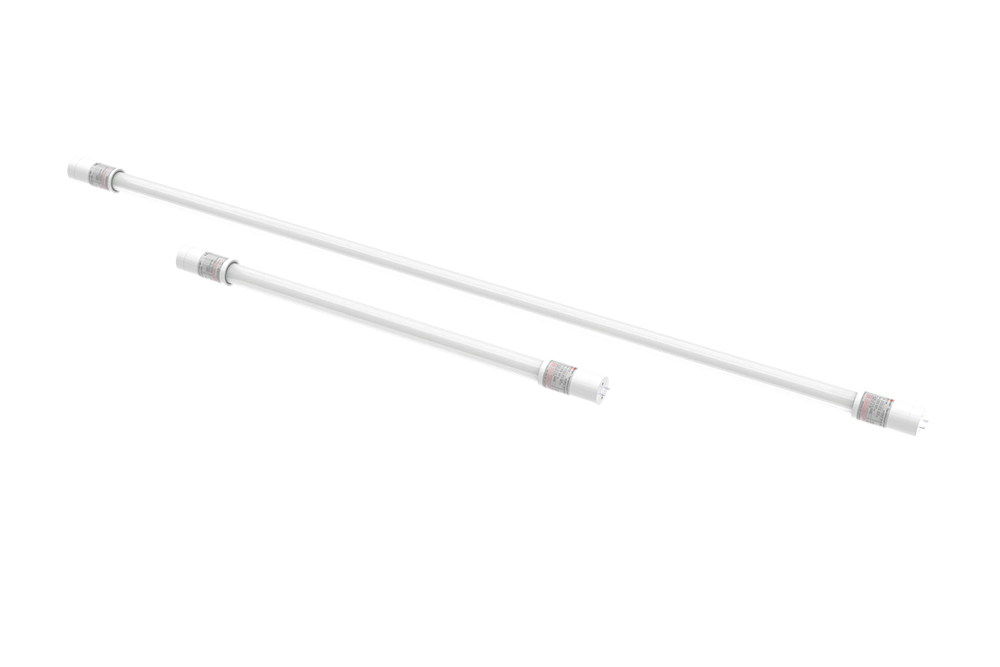
ATEX: Ex II 2G Ex d e IIB T6 Gb ATEX: Ex d e IIB T6 Gb; Feature: ● For Zone 1,2● 9W can replace 18W fluorescent lamps,50% Energy saving Application: Oil and gas, marine, Chemical, pharmaceutical, semiconductor,mining,military industry, paint booth,power plant ETC hazardous area. Technical Specifications: Standards:60079-0, 60079-1, 60079…
View details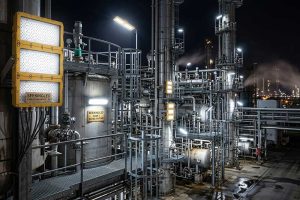
What does explosion proof lighting mean? Understand how certified fixtures contain ignition risks in hazardous areas, with real-world insights and safety standards explained.
View details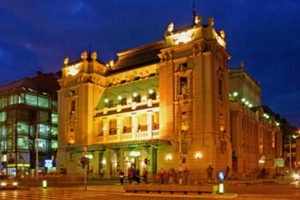
LED High Bay Light installation at the National Theatre using SEEKINGLED HBS Series improves nighttime visibility, architectural presentation, and energy efficiency while preserving historic character.
View details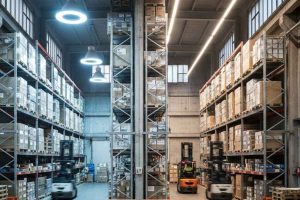
LED High Bay Lighting vs Linear Lighting – Which Works Better | SEEKINGLED
View details
What are high bay LED lights and where are they used? Learn how high bay LED lighting works, typical mounting heights, and common applications from SEEKINGLED.
View details