 Seeking LED
how to install outdoor flood lights?
0Outdoor flood lights should be installed with proper electrical isolation, secure mounting, protected wiring, correct beam selection, and nighttime aiming.
View detailsSearch the whole station
How Do LED Flood Lights Work?
LED flood lights work by passing electrical current through semiconductor chips that convert electricity into visible light with very little heat loss. Compared with halogen fixtures, modern LED flood lights deliver higher lumen output, lower energy consumption, and longer service life, making them the standard choice for outdoor security, industrial yards, parking lots, and construction sites.
I learned this the hard way during a retrofit project at a logistics warehouse in Johor. The site originally used 400W metal halide floodlights mounted above loading bays. Half of them flickered after rainstorms, and the maintenance team was replacing lamps every few months. After switching to integrated LED flood lights, power consumption dropped noticeably on the monthly utility report, but the bigger difference was operational stability. Workers stopped complaining about dark corners near the truck ramps.
That is usually where people misunderstand LED flood lighting. The technology is not only about brightness. It is about controlled light distribution, thermal management, and long-term efficiency under real outdoor conditions.
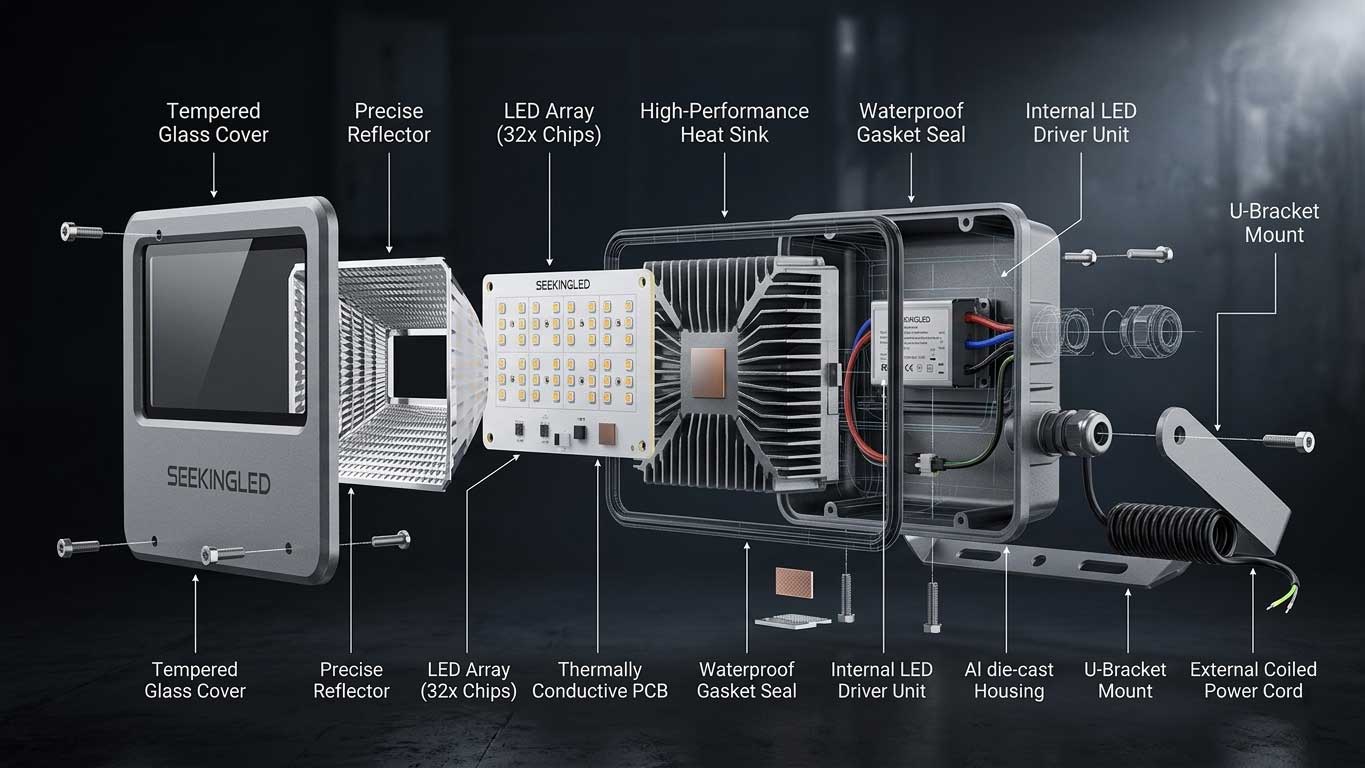
Inside an LED flood light, electricity flows through LED semiconductor chips mounted on a circuit board. The driver converts incoming AC power into stable DC current, while optical reflectors and lenses spread the beam across a wide area. A heat sink removes excess heat to protect the LEDs and maintain brightness over time.
Most outdoor LED flood lights today achieve between 100 and 160 lumens per watt depending on chip quality, driver efficiency, and thermal design.
According to the U.S. Department of Energy, LED lighting can reduce energy use by up to 75% compared with incandescent lighting and lasts significantly longer under normal operation.
Source: U.S. Department of Energy
A flood light may look simple from the outside, but internally it is a combination of several systems working together.
The LED chip is where light is generated.
Unlike traditional bulbs that heat a filament until it glows, LEDs use electroluminescence. When electrons move through semiconductor material, photons are released as visible light.
That process wastes far less energy as heat.
I have opened cheap imported fixtures claiming 200W output that barely produced usable illumination because the chip density and thermal structure were poor.
Reliable industrial flood lights usually use:
A well-designed 100W LED flood light can often outperform older 250W halogen fixtures in real-world visibility.
One thing many installers notice immediately is the lower operating temperature.
Traditional halogen flood lights generate enormous radiant heat. Stand near one for five minutes and you can feel it on your skin.
LED flood lights are different because:
This matters outdoors.
In enclosed loading docks, sports courts, marine facilities, and industrial yards, excessive heat shortens fixture lifespan dramatically.
The International Energy Agency has repeatedly highlighted LED efficiency improvements as one of the largest contributors to reduced global lighting electricity demand.
Source: International Energy Agency
The driver is basically the brain of the flood light.
Outdoor electrical systems rarely deliver perfectly stable voltage. Power fluctuations, surges, and temperature shifts constantly affect performance.
The LED driver converts incoming AC power into regulated DC power suitable for LED chips.
Cheap drivers usually fail before the LEDs themselves.
I have seen flood lights in coastal environments survive rain, salt air, and vibration, only to fail because low-cost drivers could not handle unstable voltage conditions.
A quality driver improves:
| Component Function | Real Impact |
|---|---|
| Voltage regulation | Stable brightness |
| Surge protection | Better lightning resistance |
| Thermal control | Longer lifespan |
| Flicker reduction | Safer visual comfort |
| Power efficiency | Lower operating cost |
Industrial-grade outdoor flood lights commonly include 4kV–10kV surge protection for unstable environments.
Brightness alone means nothing without beam control.
This is where reflectors and optical lenses become important.
Flood lights use optics to distribute light over targeted areas:
| Beam Angle | Typical Application |
|---|---|
| 30° | Building facades |
| 60° | Loading docks |
| 90° | Parking areas |
| 120° | Sports fields |
| Wide asymmetrical | Roadways |
At one warehouse project, narrow-beam flood lights created bright hotspots directly below the fixtures but left the forklift lanes dim. We replaced them with wider optics, and visibility improved immediately without increasing wattage.
That experience changed how I evaluate outdoor lighting. Beam distribution is often more important than raw lumen numbers.
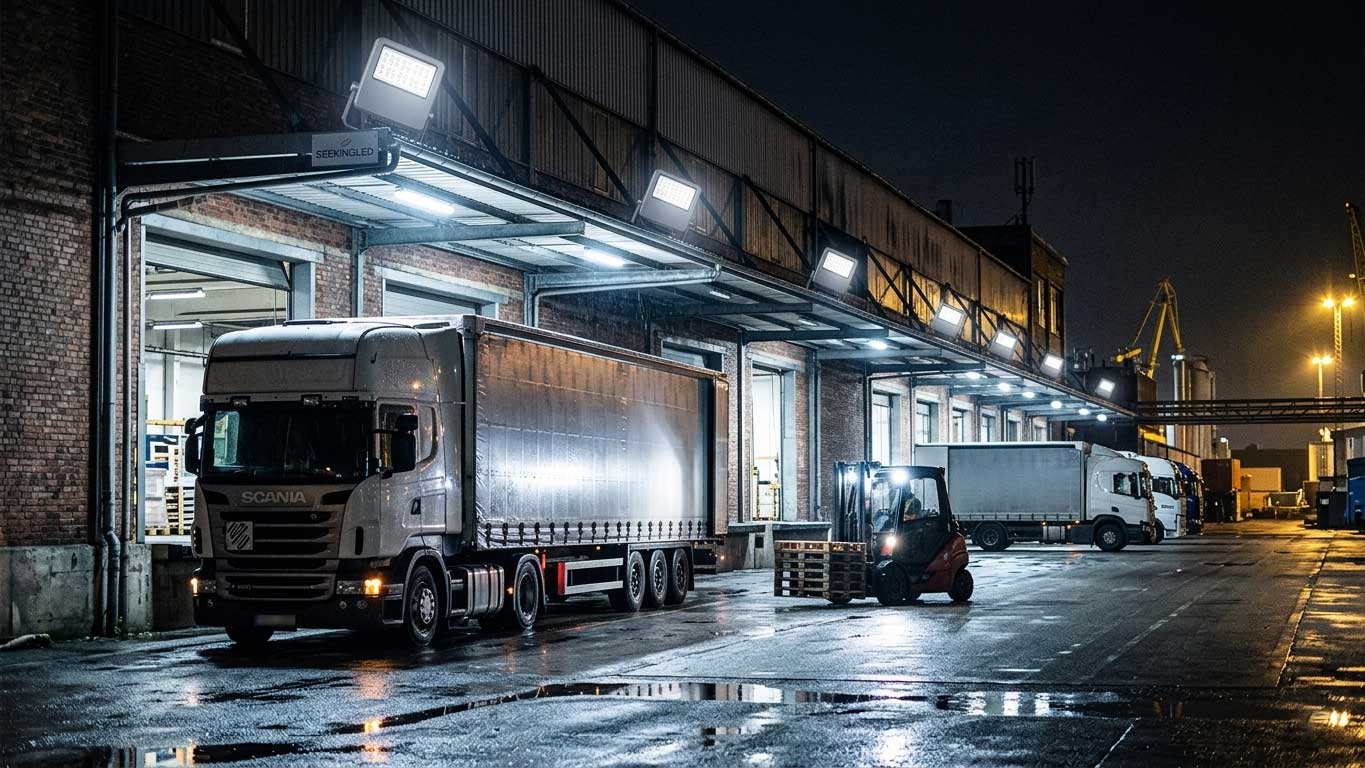
Outdoor LED flood lights operate in harsh conditions:
That is why IP ratings matter.
| IP Rating | Protection Level |
|---|---|
| IP65 | Dust-tight + water jets |
| IP66 | Strong water jets |
| IP67 | Temporary immersion |
For most outdoor commercial applications, IP65 or IP66 is sufficient.
In reality, poor sealing destroys more flood lights than LED chip failure.
I once inspected several failed fixtures near a shipping yard. Water had entered through cable glands, corroding the internal driver within months. The LEDs themselves were still functional.
People often ask why two flood lights with the same wattage can look completely different.
The answer is lumens.
Watts measure energy consumption.
Lumens measure actual visible brightness.
Typical LED flood light performance:
| Wattage | Approximate Lumens |
|---|---|
| 10W | 900–1200 lm |
| 20W | 1800–2400 lm |
| 50W | 5000–7000 lm |
| 100W | 10000–15000 lm |
| 200W | 22000–32000 lm |
Higher-end industrial fixtures can exceed 160 lumens per watt under laboratory conditions.
According to ENERGY STAR, certified LED products use significantly less electricity while maintaining equivalent brightness compared with conventional lighting technologies.
Source: ENERGY STAR
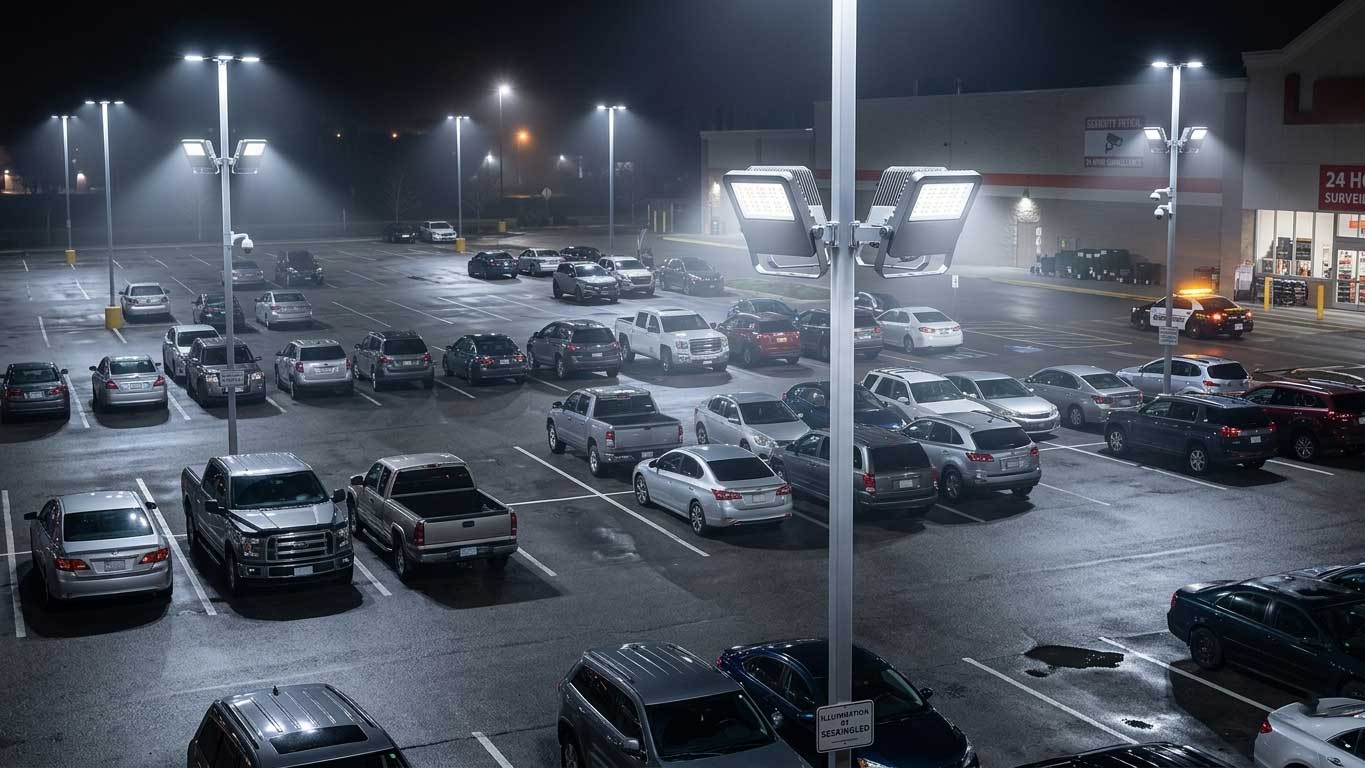
Warehouses, ports, oil terminals, and manufacturing plants benefit from:
LED flood lights instantly reach full brightness, unlike older HID systems that require warm-up time.
That immediate illumination improves:
Modern LED flood lighting improves visual clarity on:
Uniform illumination reduces glare and dark spots.
Not every failure is caused by the LEDs.
The most common problems I encounter include:
Cheap flood lights often advertise huge lumen output numbers but lack proper heat dissipation.
That becomes obvious after six months outdoors.
After years around industrial lighting projects, these are the details I look at first:
The fixture body tells you a lot.
Thin lightweight housings usually indicate poor thermal management.
Yes. LED flood lights typically consume 50–75% less electricity than halogen or metal halide systems while producing similar or higher brightness.
LEDs generate less heat and use solid-state semiconductor technology instead of fragile filaments or gas discharge systems.
Yes. Outdoor-rated LED flood lights with IP65 or IP66 protection are designed for rain, dust, and harsh weather conditions.
Absolutely. Instant brightness, wide beam coverage, and low energy consumption make LEDs highly effective for outdoor security applications.
Understanding how do LED flood lights work becomes much easier once you look beyond the outer housing. A quality flood light is really a combination of semiconductor technology, thermal engineering, optical control, and power management working together in one compact system.
In actual outdoor installations, the difference between a cheap fixture and a professional-grade LED flood light becomes obvious within the first year. Better drivers survive storms. Better heat sinks maintain brightness. Better optics improve usable visibility instead of wasting lumens.
That is why professional contractors increasingly move toward reliable LED systems for long-term outdoor lighting performance.
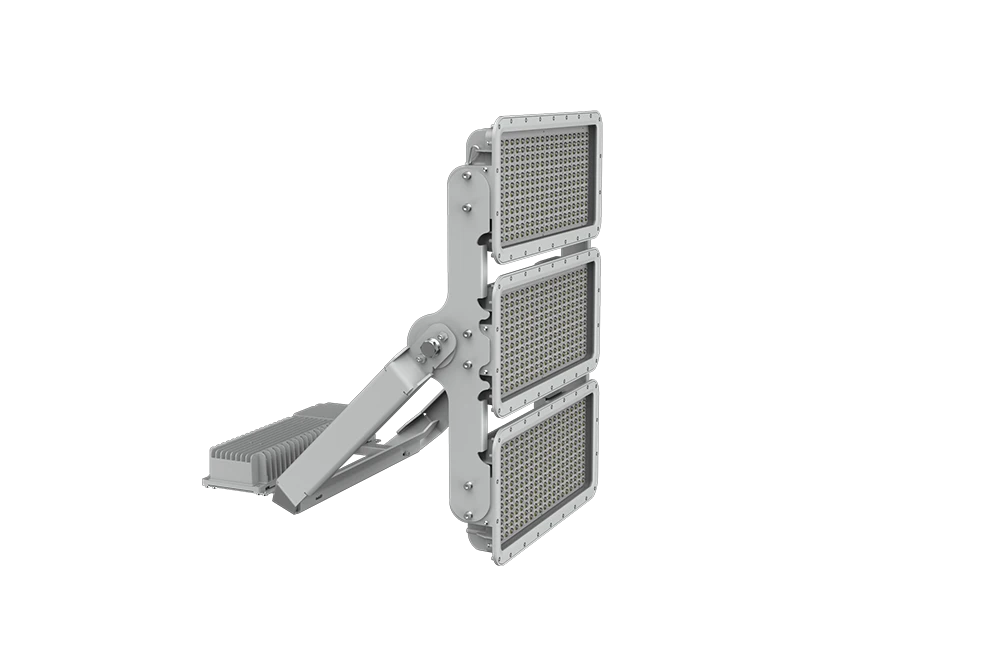
Sports Stadium LED Lighting by SEEKINGLED delivers high mast illumination, precise beam control, and EN 12193 compliant performance for professional venues.
View details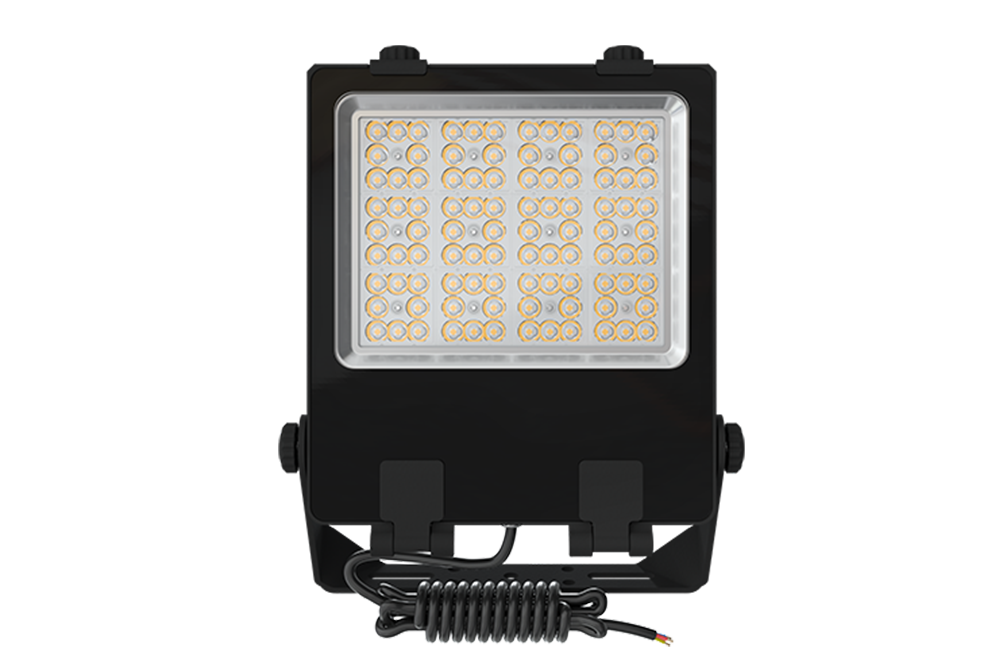
SEEKING FLX Series LED flood light outdoor for sports courts and open-area projects with 170lm/W efficiency, IP66 protection and multiple beam distributions. Designed for long-life commercial and public outdoor use.
View details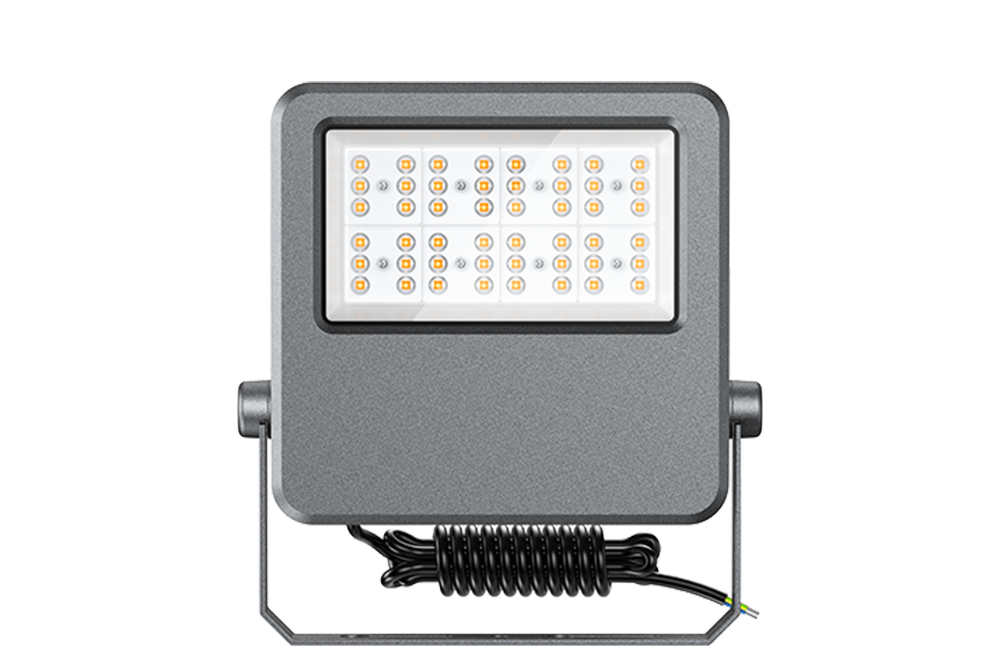
SEEKING FLE Series LED outdoor flood lights for sports grounds and open areas with multiple beam angles, IP66 protection and up to 170lm/W. Designed for long-life outdoor installations with professional driver options.
View details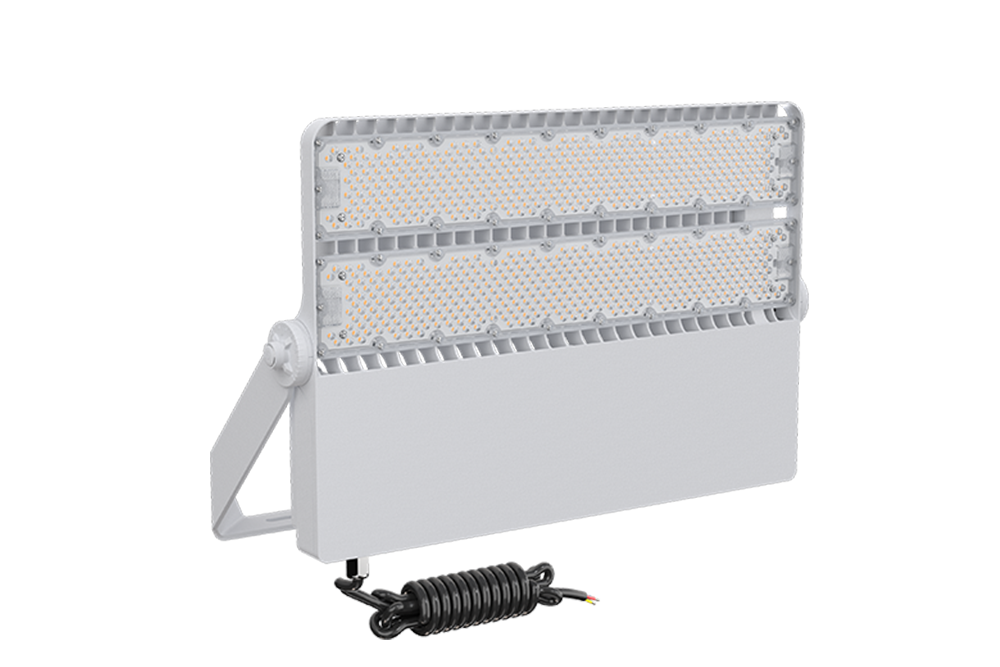
SEEKING FLD Series outdoor LED flood lights and high power led flood light deliver up to 960W with precision beam angles for sports fields, stadiums and large outdoor areas. IK08 & IP66 protection, 170lm/W efficiency and 100,000h lifetime.
View details
Outdoor flood lights should be installed with proper electrical isolation, secure mounting, protected wiring, correct beam selection, and nighttime aiming.
View details
what is atex certification? Learn how ATEX certification verifies hazardous area equipment safety, explosion protection standards, and industrial applications.
View details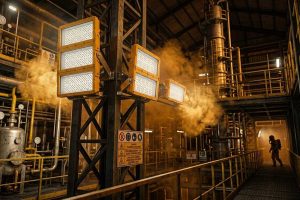
Explosion proof LED lighting Class 1 Division 1 ensures safe operation in hazardous gas environments. Learn standards, applications, and SEEKINGLED solutions.
View details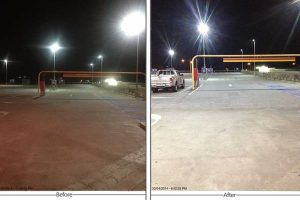
LED Flood Lighting for Parking Lot Safety was implemented in an Australian parking lot after on-site sample testing. This project record documents the replacement of metal halide lamps with XJ-FL100W flood lights.
View details