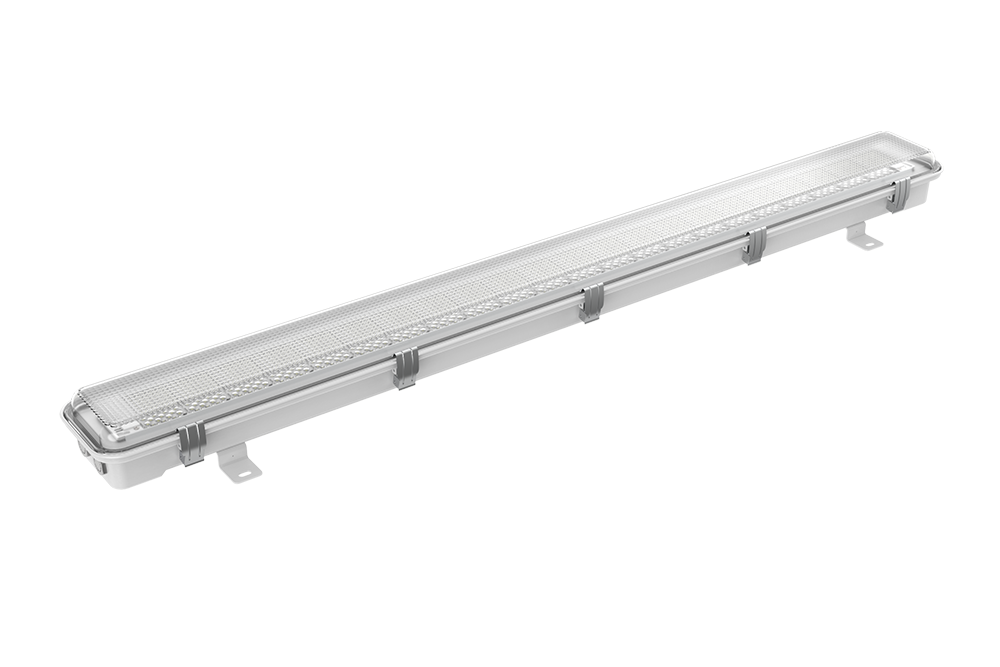
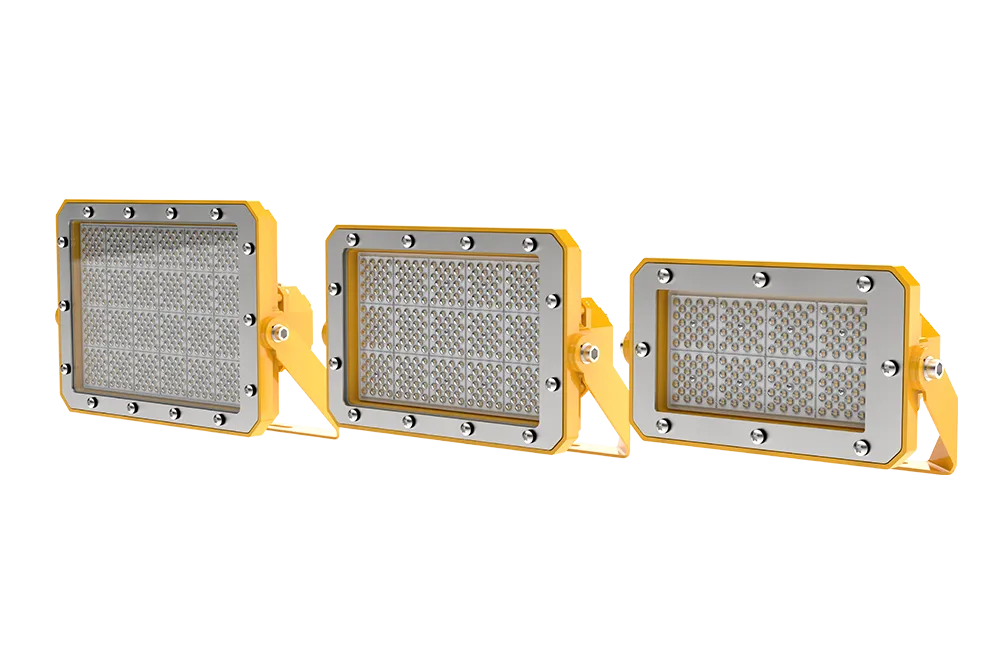
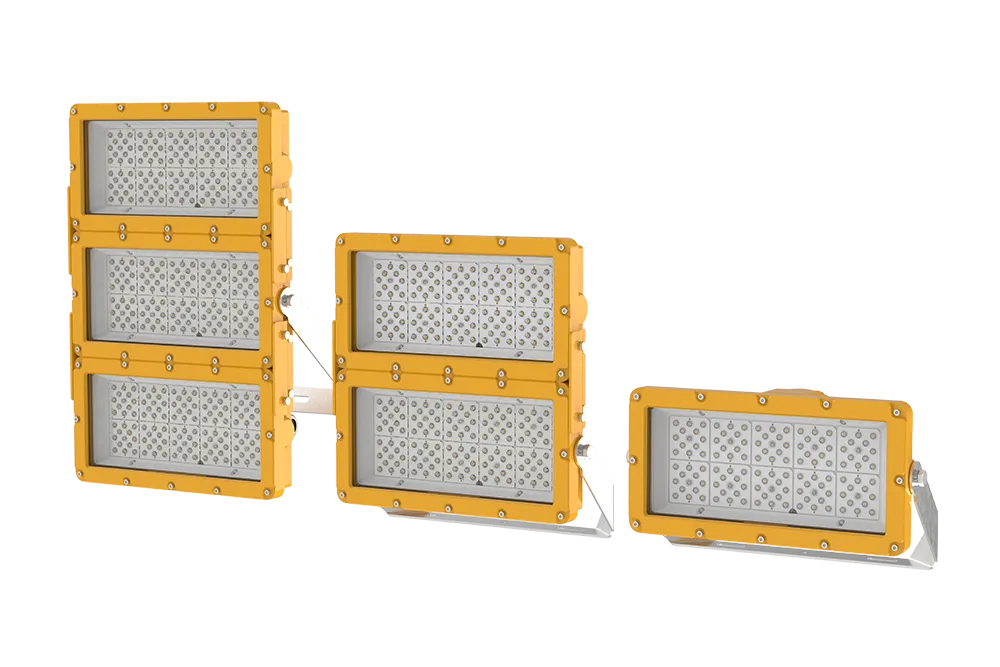
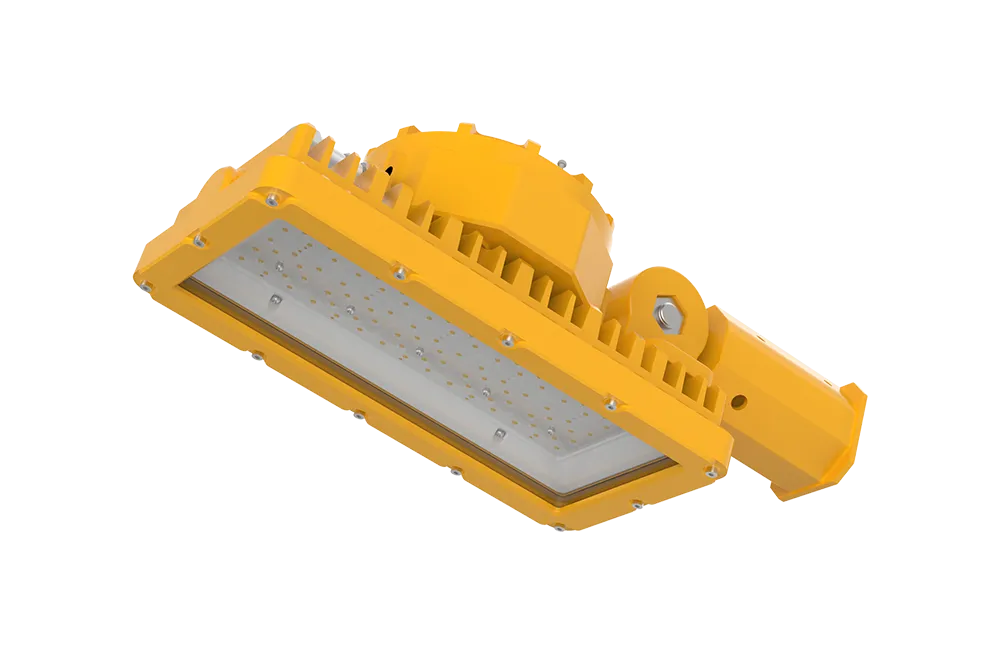
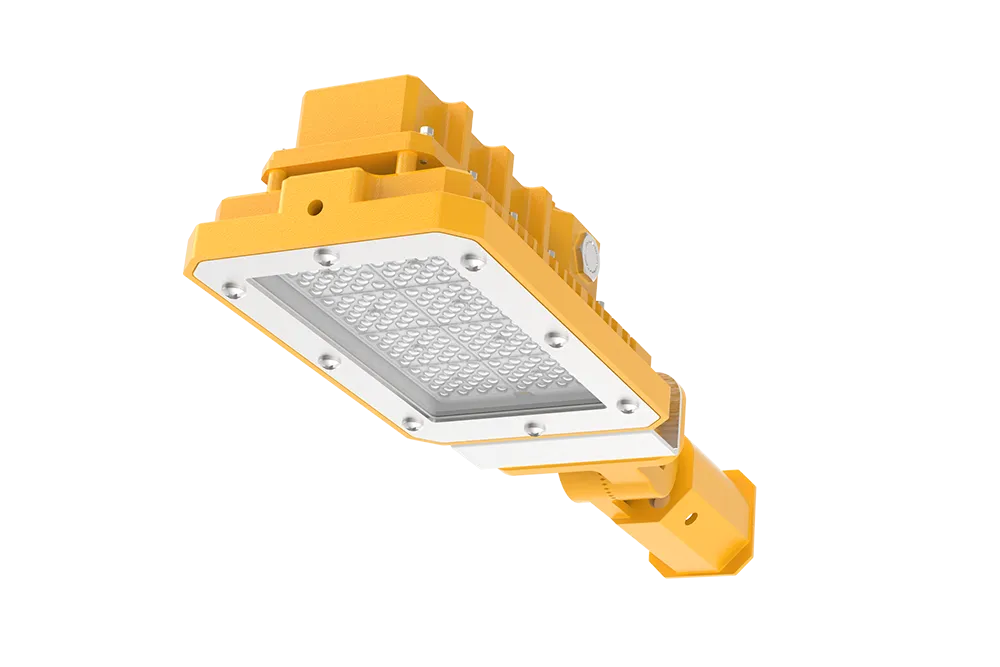
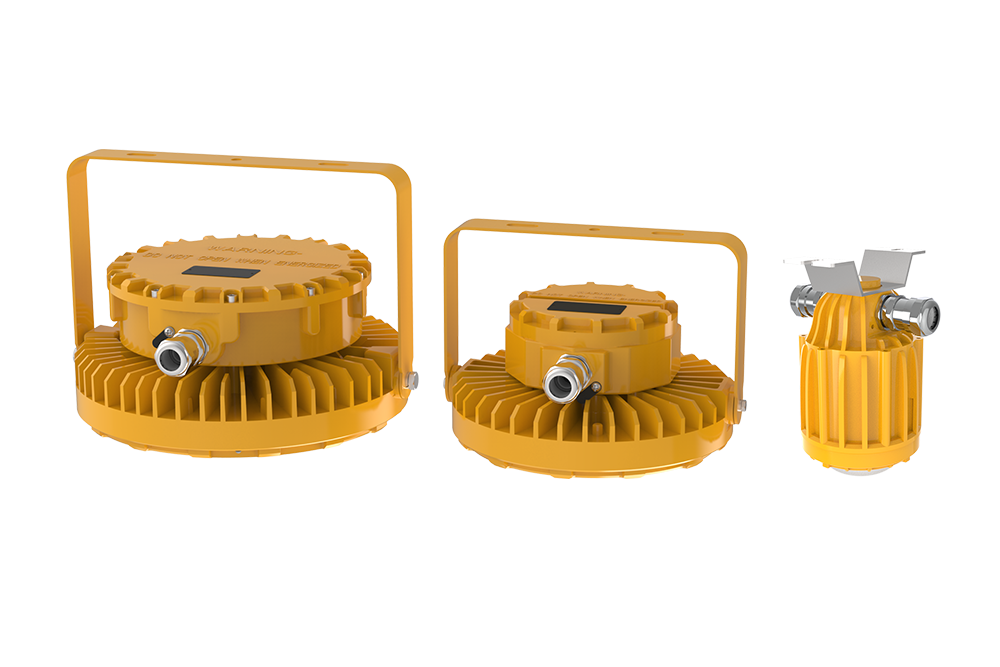
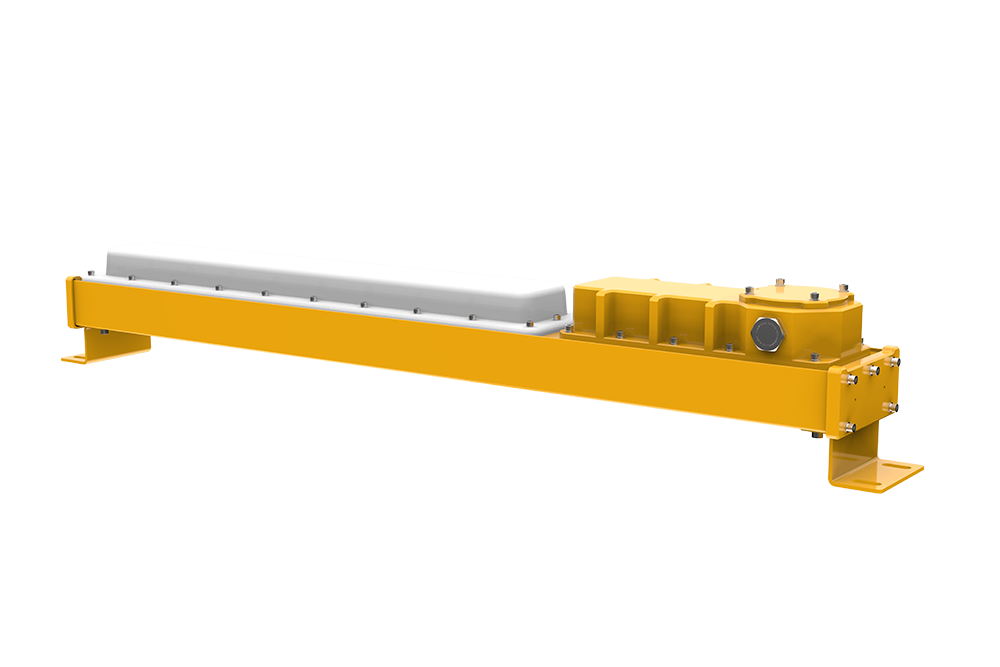
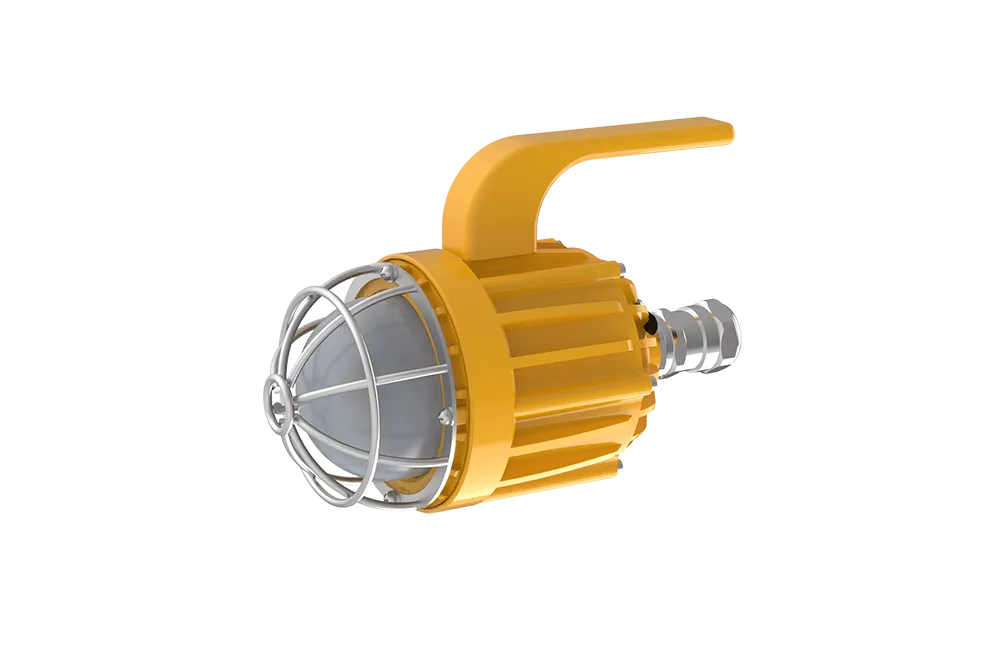
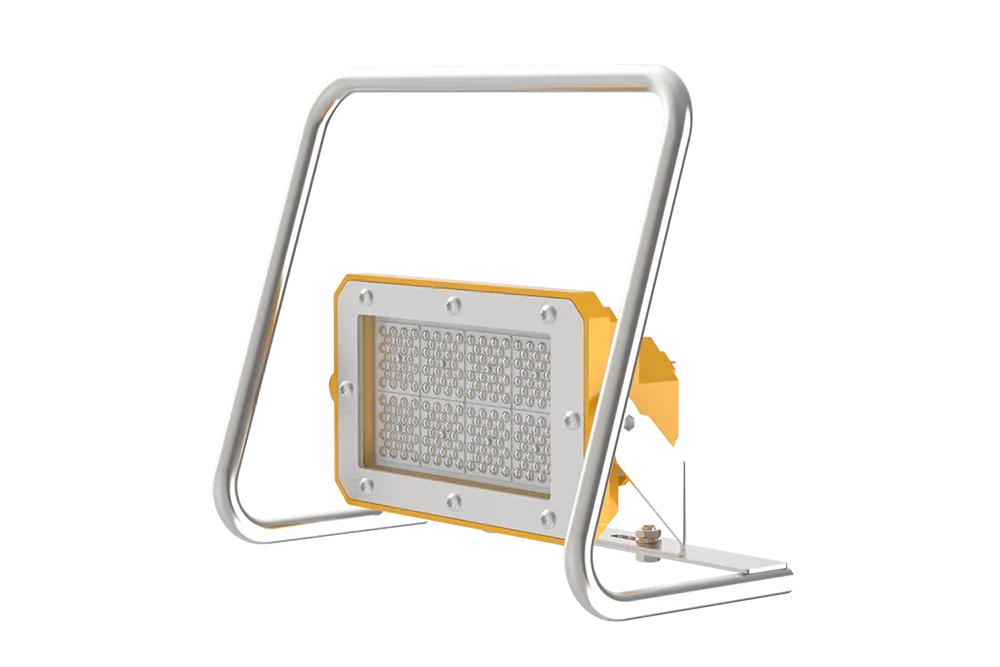
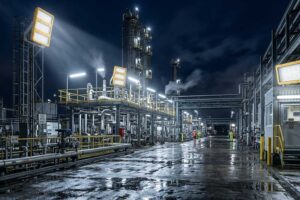
A properly certified led flood light hazardous area fixture is designed to operate safely in explosive gas or dust environments without becoming an ignition source. Unlike ordinary floodlights, hazardous area LED flood lights are engineered to meet ATEX or IECEx standards, providing reliable illumination, reduced maintenance, and long service life in oil & gas, chemical, mining, and marine facilities.
When I first visited an offshore maintenance platform several years ago, something immediately stood out. None of the floodlights resembled the commercial LED fixtures commonly seen in warehouses or parking lots. Every luminaire had thick aluminum housings, heavy-duty cable glands, stainless-steel fasteners, and certification markings carefully engraved on the nameplate.
At that moment, I understood an important lesson that many purchasing teams overlook:
In hazardous locations, lighting is not simply about brightness—it is part of the site’s explosion protection strategy.Visit the product page: Explosion proof lights
After years of working with EPC contractors, industrial distributors, and facility engineers, I’ve found that selecting the right hazardous area LED floodlight requires balancing certification, environmental resistance, optical performance, thermal management, and maintenance costs. This guide summarizes those practical considerations while referencing internationally recognized standards.
What Is a LED Flood Light Hazardous Area Fixture?
A led flood light hazardous area fixture is a high-output industrial luminaire specifically engineered for environments where flammable gases, vapors, or combustible dust may be present.
Unlike conventional floodlights, hazardous area floodlights are certified under standards such as:
ATEX Directive 2014/34/EU
IECEx Certification System
IEC 60079 Series
EN 60079 Standards
These certifications verify that the luminaire will not ignite an explosive atmosphere when installed and maintained correctly.
Typical hazardous applications include:
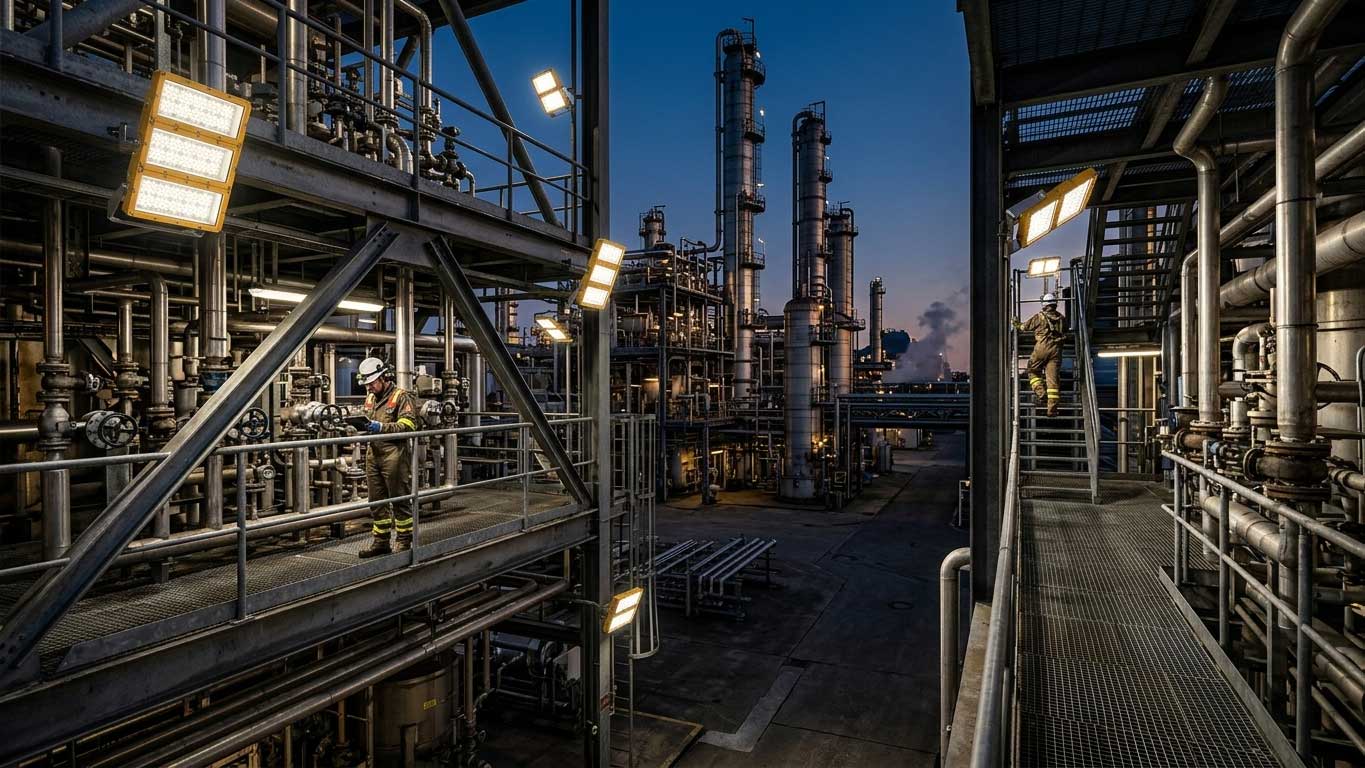
Oil refineries
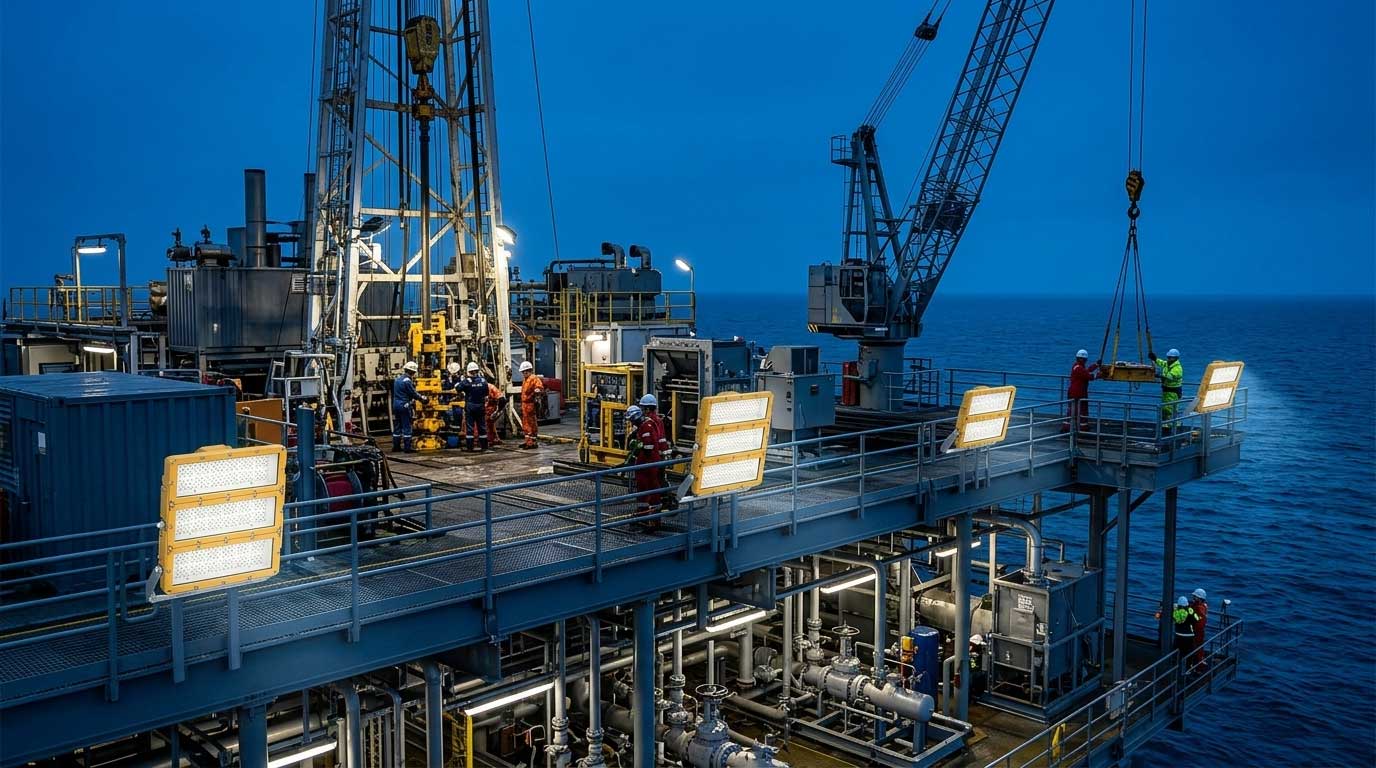
Offshore drilling platforms
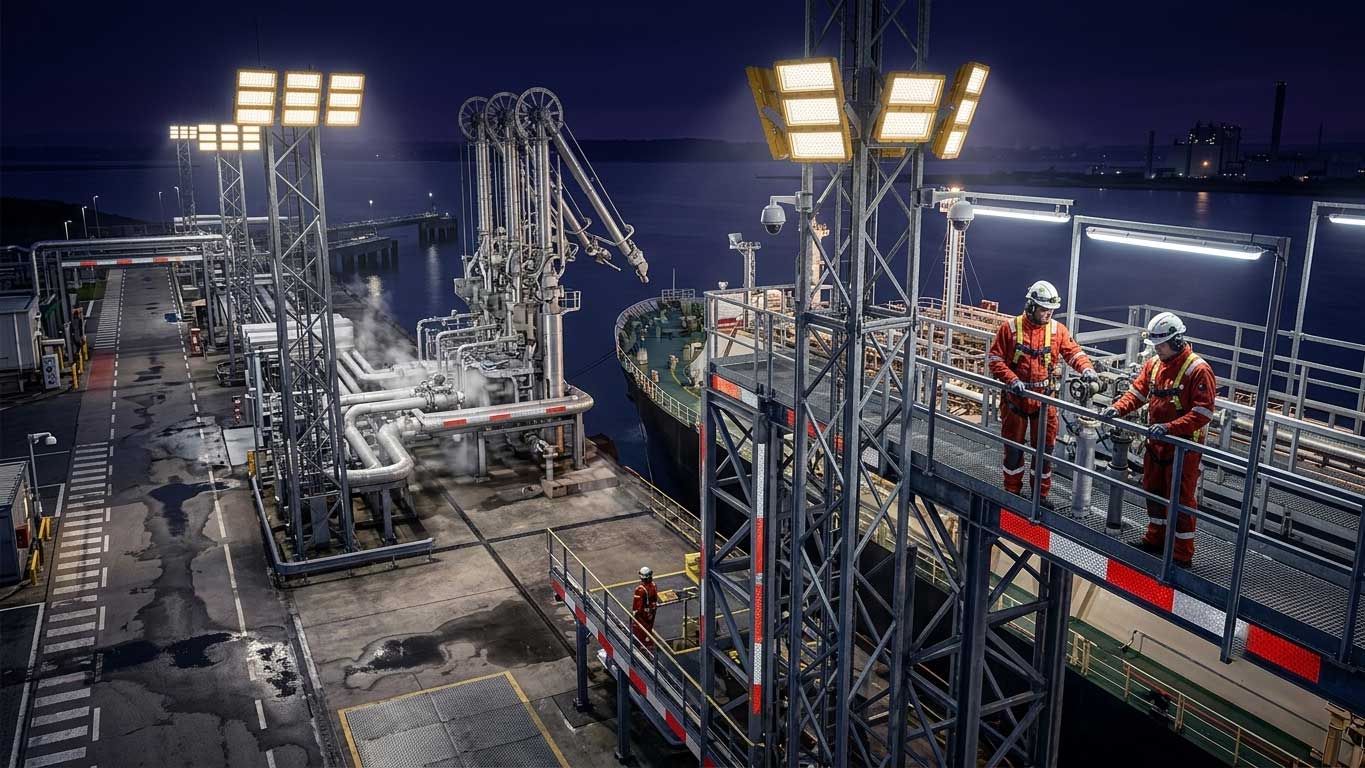
LNG terminals
Chemical processing plants
Fuel storage depots
Pharmaceutical production
Paint manufacturing
Grain handling facilities
Mining operations
According to the International Energy Agency (IEA), global industrial electricity demand continues to rise as facilities expand automation and electrification, making efficient industrial lighting increasingly valuable.
Why Ordinary Floodlights Cannot Be Used in Hazardous Areas
Many industrial buyers initially assume an IP66 or IP67 floodlight is sufficient.
It isn’t.
Ingress protection only measures resistance to dust and water.
It says nothing about preventing ignition.
Potential ignition sources include:
Electrical arcs
Internal sparks
Hot LED junction temperatures
Driver failures
Static electricity
Mechanical impacts
Explosion-protected luminaires are designed so these ignition sources remain safely contained or prevented.
This distinction is why ATEX and IECEx certification exists.
Explosion Protection Methods Used in Hazardous Area Floodlights
Different hazardous locations require different protection concepts.
Ex d Flameproof Enclosure
The enclosure contains any internal explosion and prevents flames from reaching the external atmosphere.
Typical applications:
Oil refineries
Gas processing plants
Offshore platforms
Advantages:
Extremely robust
High mechanical protection
Proven technology
Suitable for Zone 1
Ex e Increased Safety
Instead of containing explosions, Ex e minimizes the possibility of sparks or excessive temperatures through enhanced electrical design.
Often used alongside other protection methods.
Ex n Protection
Generally applied to equipment designed for Zone 2 environments where explosive atmospheres occur only occasionally.
Provides a cost-effective solution for lower-risk hazardous areas.
Ex t Dust Protection
Designed specifically for combustible dust environments including:
Flour mills
Grain silos
Cement plants
Wood processing
Food manufacturing
Dust explosions remain a significant industrial hazard. The European Agency for Safety and Health at Work (EU-OSHA) continues to highlight combustible dust as a major workplace safety concern.
Correct fixture selection begins with understanding the hazardous area classification.
Zone
Gas Presence
Recommended Floodlight
Zone 0
Continuous
Special certified equipment
Zone 1
Likely during normal operation
Ex d / Ex e LED Floodlight
Zone 2
Occasional only
Ex n or Ex ec LED Floodlight
For combustible dust:
Zone
Dust Presence
Zone 20
Continuous
Zone 21
Occasional
Zone 22
Rare
Selecting a higher-certified luminaire than required is acceptable, but selecting a lower-rated product creates unacceptable safety risks.
Why LED Technology Has Become the Preferred Choice
Over the last decade I’ve watched facilities gradually replace metal halide floodlights with LED technology.
Initially, the motivation was energy savings.
Today, maintenance reduction has become equally important.
Compared with HID lighting, hazardous area LED floodlights offer:
Instant startup
No warm-up period
Higher efficacy
Lower operating temperature
Longer service intervals
Better color rendering
Improved directional optics
Lower maintenance costs
Reduced energy consumption
The U.S. Department of Energy has reported that LED lighting can significantly reduce electricity consumption while providing longer operational lifetimes than traditional lighting technologies.
Not all hazardous area floodlights perform equally.
Professional buyers typically compare several critical specifications.
Specification
Why It Matters
ATEX / IECEx Certification
Regulatory compliance
Luminous Efficacy
Lower operating costs
IP66/IP67 Rating
Water resistance
IK10 Rating
Mechanical durability
Housing Material
Corrosion resistance
Driver Quality
Reliability
Ambient Temperature
Safe operation
Beam Angle
Light distribution
Color Temperature
Visual comfort
Warranty
Long-term support
One purchasing manager once focused only on wattage.
After reviewing photometric files, they realized a lower-wattage fixture with better optics achieved higher ground illumination while reducing total fixture count.
That single adjustment lowered project costs without sacrificing visibility.
Real Factors That Influence Service Life
Manufacturers often advertise long operating lifetimes, but actual field performance depends on much more than LED chips.
Based on project experience, the biggest factors include:
Ambient temperature
Driver quality
Thermal management
Corrosive chemicals
Salt spray exposure
Installation quality
Vibration
Maintenance frequency
A floodlight installed beside offshore flare stacks will experience a very different operating environment than one installed inside a pharmaceutical facility.
Consequently, engineers evaluate the complete operating environment—not just the catalog specifications.
Installation Best Practices for LED Flood Light Hazardous Area Applications
Installing a led flood light hazardous area fixture correctly is just as important as choosing the right certification. Over the years, I’ve seen expensive ATEX-certified luminaires fail inspections—not because of manufacturing defects, but because installers used non-certified cable glands or overlooked sealing requirements.
A hazardous-area lighting system should always be treated as a complete certified assembly.
Before installation, verify:
Hazardous area classification report
ATEX or IECEx certificate
Gas group compatibility
Temperature class (T-rating)
Ambient operating temperature
Mounting bracket strength
Certified cable glands
Earthing continuity
Driver accessibility for maintenance
Following the installation instructions provided by the manufacturer is essential to maintaining certification.
Recommended Mounting Options
Mounting Method
Typical Application
Advantages
Adjustable Bracket
Tank farms
Flexible beam aiming
Wall Mount
Chemical processing units
Easy maintenance
Pole Mount
Loading bays
Wide-area illumination
Ceiling Mount
Compressor buildings
Uniform lighting
High Mast Mount
Offshore decks
Long-distance coverage
Proper aiming is equally important. Poor beam direction often creates glare while leaving critical walkways or equipment in shadow.
Corrosion Resistance Matters More Than Many Buyers Expect
Hazardous environments are often corrosive environments.
A floodlight installed near offshore drilling operations experiences constant exposure to:
Salt spray
Humidity
UV radiation
Strong winds
Temperature fluctuations
Similarly, chemical plants expose luminaires to acids, solvents, and aggressive cleaning chemicals.
For these applications, I generally recommend looking for:
Marine-grade aluminum alloy housing
Powder-coated corrosion-resistant finish
Stainless steel 304 or 316 fasteners
Tempered impact-resistant glass
Silicone sealing gaskets
IP66 or IP67 enclosure
These features significantly reduce maintenance costs over the fixture’s lifetime.
Maintenance Recommendations
One of the biggest operational advantages of LED technology is reduced maintenance—but “maintenance-free” does not exist in hazardous locations.
According to IEC 60079-17, explosion-protected electrical equipment should be inspected regularly throughout its service life.
Routine inspections should include:
Checking cable gland integrity
Verifying enclosure seals
Inspecting tempered glass
Removing accumulated dust
Tightening mounting hardware
Checking grounding continuity
Inspecting corrosion
Confirming certification labels remain legible
Facilities located offshore or in coastal environments often perform inspections more frequently due to accelerated corrosion.
When Should a Hazardous Area Floodlight Be Replaced?
Replace the luminaire if inspectors identify:
Cracked glass lens
Damaged flame paths
Water ingress
Severe corrosion
Missing fasteners
Damaged cable entries
Unauthorized modifications
Failed insulation resistance tests
Explosion-protected equipment should never be modified on-site unless specifically permitted by the certification.
Typical Industries Using Hazardous Area LED Flood Lights
Hazardous area LED floodlights are designed for industries where reliability, safety, and compliance are equally important.
Common applications include:
Industry
Typical Installation Area
Oil & Gas
Drilling platforms, wellheads
Refineries
Distillation units
LNG Plants
Storage tanks and loading terminals
Chemical Plants
Reactor buildings
Mining
Underground processing areas
Marine
Offshore platforms and ports
Aviation Fuel Depots
Fuel transfer stations
Pharmaceutical
Solvent production facilities
Each application has unique environmental challenges, requiring different beam angles, corrosion protection levels, and certification markings.
Why Industrial Buyers Choose SEEKINGLED
At SEEKINGLED, we design hazardous area LED lighting solutions with practical industrial use in mind—not simply laboratory certification.
Our engineering team has supported distributors, EPC contractors, and industrial end users across oil & gas, petrochemical, marine, mining, and heavy manufacturing sectors.
Our hazardous area LED floodlights feature:
ATEX & IECEx certified models
High-efficiency LED technology
IP66/IP67 environmental protection
IK10 impact resistance
Corrosion-resistant aluminum housing
Stainless steel hardware
Wide beam angle options
Operating temperatures suitable for harsh climates
Long-life LED drivers
OEM & ODM manufacturing capability
Every project starts with understanding the environment first, then selecting the most appropriate certified solution—not the highest wattage.
FAQ About LED Flood Light Hazardous Area
Can hazardous area LED floodlights be used outdoors?
Yes. Most certified models are designed for demanding outdoor industrial environments and typically feature IP66 or IP67 protection against water and dust.
Are ATEX and IECEx both required?
Not always. ATEX is mandatory for equipment placed on the European market, while IECEx is internationally recognized and commonly requested for global projects.
Do hazardous area floodlights consume less energy?
Yes. Modern LED floodlights generally consume significantly less electricity than metal halide or high-pressure sodium systems while delivering comparable or higher illumination.
How long do hazardous area LED floodlights last?
Premium industrial fixtures are commonly rated for L70 lifetimes exceeding 100,000 hours, depending on operating temperature, installation quality, and environmental conditions.
What documents should buyers request from suppliers?
Request:
ATEX Certificate
IECEx Certificate
Declaration of Conformity
Photometric Report
Datasheet
Operating Temperature Report
IP & IK Ratings
Warranty Documentation
Conclusion
Choosing the right led flood light hazardous area solution is not simply about achieving higher brightness. It involves understanding hazardous area classifications, selecting certified explosion-protection methods, evaluating environmental conditions, and ensuring long-term reliability. A properly specified LED floodlight can reduce maintenance, improve energy efficiency, and enhance operational safety across oil & gas, chemical, marine, mining, and heavy industrial facilities.
At SEEKINGLED, we combine certified engineering, rigorous quality control, and practical field experience to deliver hazardous area LED floodlights that perform reliably in some of the world’s most demanding industrial environments.
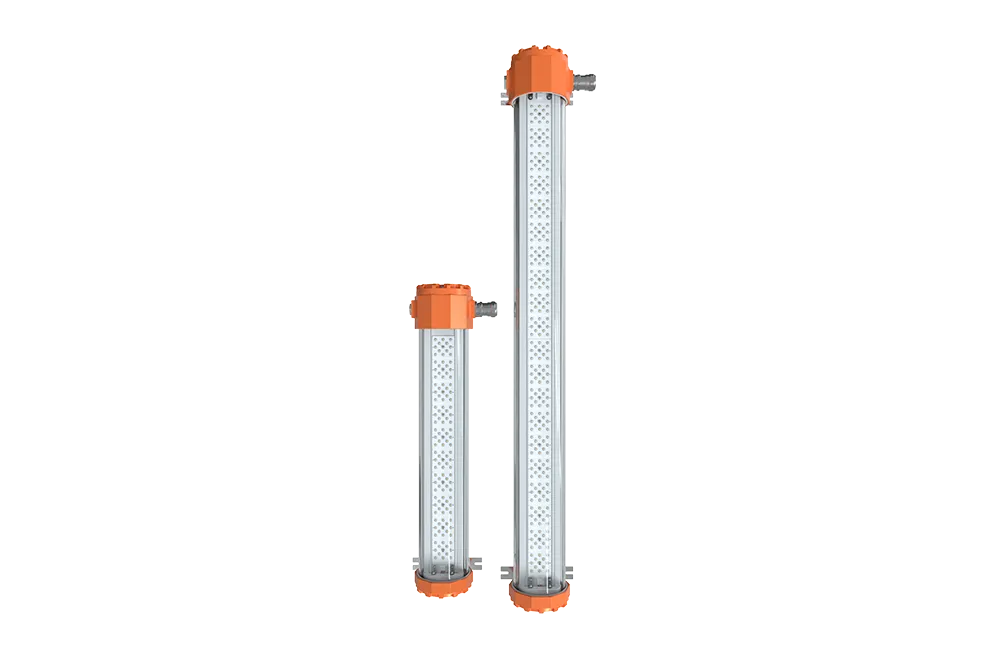
SEEKINGLED LED Linear Explosion Proof Light and Explosion Proof lighting is ATEX and IECEx certified for Zone 1, Zone 2, Zone 21 and Zone 22 hazardous locations, built for long-term industrial use.
LED Linear Explosion Proof Lights and EX Proof lights for Zone 1, Zone 2, Zone 21 and Zone 22 hazardous areas. ATEX & IECEx certified explosion proof LED linear lighting with emergency function, adjustable power and IP67 protection by SEEKINGLED.
SEEKINGLED LED Explosion Proof Flood Lights are ATEX certified for Zone 2 and Zone 22 hazardous areas, offering high efficiency, adjustable power and integrated junction box.
SEEKINGLED LED Explosion Proof Flood Lights are flameproof ATEX and IECEx certified for Zone 1 and Zone 2 hazardous areas, offering high power, adjustable output and long service life.
SEEKINGLED LED Gas Station Canopy Lights are ATEX certified for Zone 2 and Zone 22 hazardous areas, featuring adjustable power and built-in explosion-proof junction box.
ATEX: Ex II 2G Ex db IIB T6/T5 GbEx II 2D Ex tb IIIC T80°C/ T95°C Db IECEx Ex db IIB T6 Gb;Ex tb IIIC T80°C Db Feature: ● For Zone 1,2 and Zone 21,22● Flameproof type, the strongest● 100W can replace 250W HID,energy saving● Power:60W,80W,100W Application: Oil and gas, marine, Chemical, pharmaceutical, semiconductor,mining,military industr…
ATEX: II 3G Ex nR ⅡC T5/T6 GcII 3D Ex tc ⅢC T80℃/T95℃Dc ATEX Certificate NO: TÜV CY 26 ATEX 0207611 X Feature: ● For Zone 2 and Zone 22● 150W can replace 250W HID lamps,Energy saving● Power:50W,75W,100W,150W,200W Application: Oil and gas, marine, Chemical, pharmaceutical, semiconductor,mining,military industry, paint booth,power plant ETC…
LED explosion proof high bay lights are designed for Zone 1, Zone 2, Zone 21 and Zone 22 hazardous areas. This page introduces the HB21 Series from SEEKING, including certifications, power options and real application considerations.
LED Linear Explosion Proof Lights from SEEKINGLED. LU Series Flame Proof lights ATEX-certified explosion proof LED linear lighting for Zone 2 gas and Zone 22 dust areas, IP69K, IK10, long lifetime and flexible power options.
Certified explosion proof work lights for Zone 1 & 21 hazardous areas. Portable, ATEX & IECEx approved, built for oil, gas and chemical plants by SEEKINGLED.
ATEX: II 3G Ex nR ⅡC T6 GcII 3D Ex tc ⅢC T80℃ Dc ATEX Certificate NO: TÜV CY 26 ATEX 0207611 X Feature: ● For Zone 2 and Zone 22● Accepts battery-powered supply● indestructible● Power:AC input:50W,75W,100WDC input:15W,25W,35W Application: Oil and gas, marine, Chemical, pharmaceutical, semiconductor,mining,military industry, paint booth,po…
ATEX: Ex II 2G Ex db IIB T6 GbEx II 2D Ex tb IIIC T80°C Db IECEx Ex db IIB T6 Gb;Ex tb IIIC T80°C Db Feature: ● For Zone 1,2 and Zone 21,22● Flameproof type, the strongest Application: Oil and gas, marine, Chemical, pharmaceutical, semiconductor,mining,military industry, paint booth,power plant ETC hazardous area. Technical Specifications:…
ATEX: Ex II 2G Ex db IIB T6 GbEx II 2D Ex tb IIIC T80°C Db IECEx Ex db IIB T6 Gb;Ex tb IIIC T80°C Db Feature: ● For Zone 1,2 and Zone 21,22● Flameproof type, the strongest Application: Oil and gas, marine, Chemical, pharmaceutical, semiconductor,mining,military industry, paint booth,power plant ETC hazardous area. Technical Specifications:…
ATEX: Ex II 2G Ex d e IIB T6 Gb ATEX: Ex d e IIB T6 Gb; Feature: ● For Zone 1,2● 9W can replace 18W fluorescent lamps,50% Energy saving Application: Oil and gas, marine, Chemical, pharmaceutical, semiconductor,mining,military industry, paint booth,power plant ETC hazardous area. Technical Specifications: Standards:60079-0, 60079-1, 60079…
foco led 100w floodlights deliver efficient, bright outdoor lighting with low energy use, long lifespan, and reliable performance for residential and commercial use.
Can you use a LED flood light to grow plants? Learn when it works, when it doesn’t, and why outdoor LED flood lights like SEEKINGLED are not designed as grow lights.
A flood light bulb is a directional light source designed to spread strong illumination across a relatively wide area for outdoor and architectural applicati...
Can ATEX flood lights be used outdoors? Learn how explosion-proof LED flood lights handle rain, salt spray, dust, and hazardous outdoor industrial environments.
 Seeking LED