 Seeking LED
Do High Bay Lights Work at Low Level?
0Do high bay lights work at low level? Learn when high bays can be used on low ceilings, how glare and beam angle change, and when low bay lights are better.
View detailsSearch the whole station
People usually ask how many amps does a 4 foot led light draw when they are planning a workshop upgrade, garage lighting, or warehouse installation.
The question often comes up when someone is staring at the breaker panel.
“How many lights can this circuit handle?”
It’s a fair question. But the answer isn’t always a single number because 4-foot LED lights come in several wattage levels.
Still, the current draw is almost always low compared with older fluorescent fixtures.
Electricians normally calculate current using the relationship defined by Ohm’s Law.
The formula looks like this:
Amps = Watts ÷ Volts
Most 4 foot LED lights use between 18W and 40W, depending on brightness and design.
So let’s look at a few realistic examples.
18W 4-foot LED tube at 120V
18 ÷ 120 = 0.15 amps
25W 4-foot LED shop light
25 ÷ 120 ≈ 0.21 amps
40W high-output 4ft LED fixture
40 ÷ 120 ≈ 0.33 amps
So in most cases, a 4 foot LED light draws somewhere between 0.15 and 0.35 amps.
That’s a tiny load compared with traditional lighting.
Theory is helpful, but real installations always show small variations.
A while back we upgraded the lighting in a small mechanical workshop. The old fluorescent fixtures were replaced with modern LED shop lights. Each one was rated at 40 watts.
On paper, that meant about 0.33 amps per fixture.
When we measured with a clamp meter, most lights were pulling 0.35 amps.
Close, but not identical.
The difference came from the LED driver. Drivers convert AC power into the stable current needed for the LED chips. During that process a small amount of energy is lost, and the power factor slightly changes the measured current.
Nothing unusual — just real electrical behavior.
LED technology is dramatically more efficient than the fluorescent fixtures many buildings still use.
Fluorescent lamps rely on ballasts and gas discharge tubes. A lot of energy turns into heat.
LED systems avoid most of that waste.
According to research from the U.S. Department of Energy, LED lighting can reduce electricity consumption by 50–75% compared with conventional lighting technologies. That efficiency is exactly why the amp draw stays so low.
Even a bright 4 foot LED shop light rarely draws more than a third of an amp.
Now we get to the real reason people ask how many amps does a 4 foot led light draw.
They want to know how many lights can run on a circuit.
Let’s assume a 15-amp breaker, which is common in garages and workshops.
If each fixture draws 0.3 amps, the circuit could theoretically run around 50 lights.
But electricians don’t design systems that aggressively.
Groups like the National Electrical Manufacturers Association recommend keeping circuit loads well below maximum capacity for safety and reliability.
In practice, installers usually run far fewer fixtures per circuit.
Still — the electrical demand is extremely manageable.
At SEEKINGLED, customers often replace long rows of fluorescent shop lights with LED fixtures.
The concern before the upgrade is always similar.
“Will we need more circuits?”
Almost never.
When the new LED Flood Light switch on, the total electrical load usually drops significantly. Buildings that once ran dozens of fluorescent tubes suddenly consume far less power.
The lighting becomes brighter, the maintenance drops, and the circuit load becomes easier to manage.
That’s why LED shop lights have taken over workshops, garages, and warehouses so quickly.
When electricians estimate lighting loads quickly, they often use simple guidelines.
For 4 foot LED lights:
These numbers are reliable enough for planning circuits and wiring layouts.
Actual measurements usually land very close.
More answers
So, how many amps does a 4 foot led light draw?
In most real installations:
That extremely low current draw is one reason lighting systems from SEEKINGLED are widely used in garages, workshops, warehouses, and commercial spaces.
You get bright, consistent light — without putting serious pressure on the electrical panel.

Do high bay lights work at low level? Learn when high bays can be used on low ceilings, how glare and beam angle change, and when low bay lights are better.
View details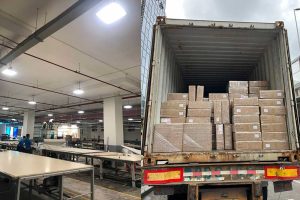
Even during the Qingming Festival holiday, SEEKINGLED remains fully committed to production and shipment. 880 units of GSL Series Canopy Lights are currently being loaded into containers and will arrive at a food processing plant in Belgium in two...
View details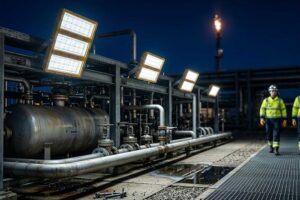
How long do LED ATEX fixtures last? Discover real industrial lifespan data, hazardous-area maintenance insights, and why quality ATEX LEDs can exceed 50,000 hours.
View details
Discover hazardous area light fittings for Zone 1 and Zone 2 applications. Learn certifications, installation requirements, safety standards, and industrial lighting solutions.
View details